I don’t think anyone plans to finance tires.
Here’s what I think happens:
You go in for a routine visit, get told you need new tires, and suddenly, you’re looking at a bill you were not ready for.
That’s why this topic matters (and if you couldn’t tell, yes, I’m speaking from personal experience). So, I had to figure out who lets me split the cost up, what kind of financing it actually is, and how expensive it gets once everything is added together.
In this guide, I talk about the parts that actually matter when you’re having a tire crisis: where these offers show up, how they usually work, and what to know before signing on the dotted line.
Key Takeaways
- Not All Tire Financing Is The Same: Some options are true BNPL, while others are store cards or lease-style agreements.
- The Store Changes The Offer: The financing you see depends a lot on where you shop for tires.
- The Full Cost Matters Most: A low payment can look fine until you add up the whole deal.
- Approval Can Work in Different Ways: Some plans lean more on credit, while others are built to feel faster and easier.
- It Makes Sense For Real Needs: Splitting up the cost can help when you need safe, reliable tires right away.
Where You’ll Usually See It
A few major tire sellers make pay-over-time options pretty easy to find.
- Discount Tire: Offers financing through BNPLs along with its own store card.
- Tire Rack: Offers BNPL and also pushes its own credit card.
- Goodyear: Uses BNPLs and also points shoppers to other financing routes.
- SimpleTire: Lists multiple providers, including Klarna, Affirm, Katapult, PayPal Credit, and Synchrony Car Care.
That’s usually the first thing I’d want to know. Not every tire seller uses the same setup, so the store you choose changes the kind of offer you’ll actually see.
Virtual Cards Can Open Up More Options
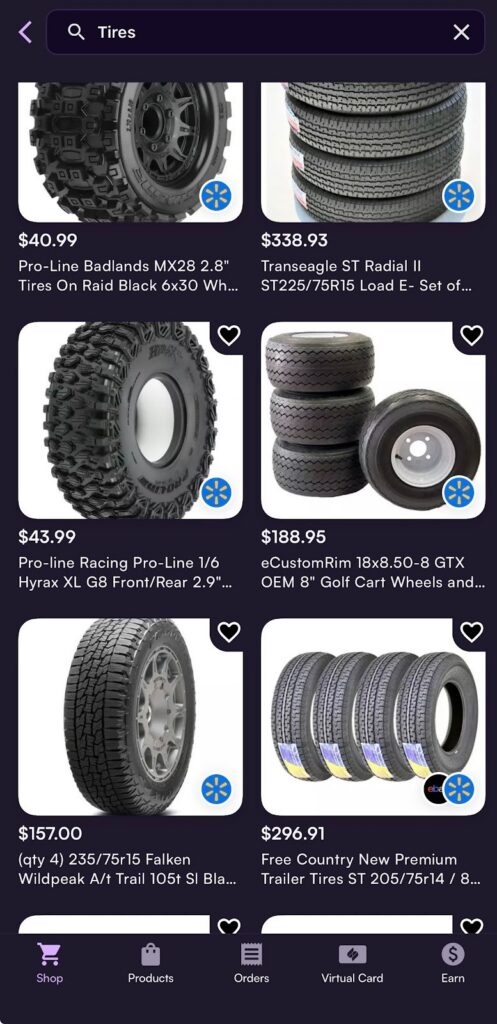
One thing I’d keep in mind is that the BNPL option on the site isn’t always your only route. Some services let you use a virtual card, which can help if the tire shop accepts card payments but doesn’t directly offer pay-over-time at checkout.
Sezzle is a good example. I like it here because it can give people another way to split up a tire purchase without opening a store card.
How It Usually Works
Most of these offers follow the same basic flow.
Customers pick the tires, add installation if needed, and get to checkout. That’s where the financing option shows up. From there, you review the terms, see the payment schedule details, and decide whether the numbers make sense.
Some plans break the purchase into a few smaller payments. Others stretch it out longer. Some are standard installment financing. Some are store cards. Some are closer to lease-style agreements.
That’s why I wouldn’t treat all of this as one category just because it falls under the same general pay-later label.
The Part I’d Pay Attention To
The first number is not the one I care about most.
I care about the total cost.
A small payment can look manageable, but that does not tell me what I’ll end up paying from start to finish. That’s the part I’d check first, along with whether there are late fees, whether the offer depends on credit approval, and whether the plan includes installation or just the tires themselves.
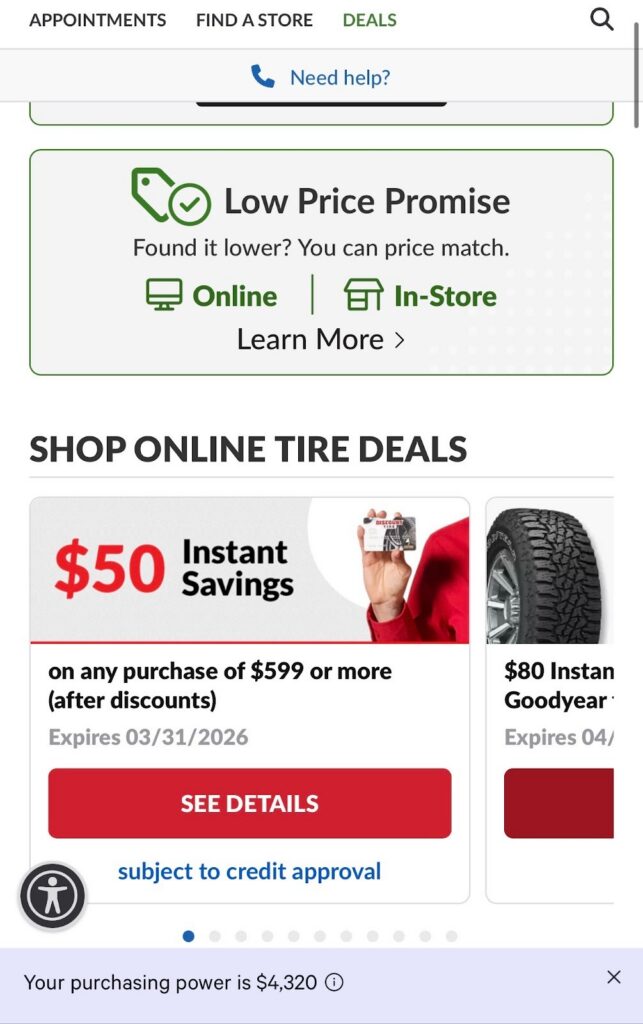
I’d also want to know what the scheduled payments actually look like in practice. It’s one thing to see a clean little number at checkout. It’s another thing to have that number hitting your account for months.
Not Every Option Works The Same Way
This is where I think people can get tripped up.
Some financing options are pretty straightforward. Others are structured in a way that changes what you’re actually agreeing to.
Some options care more about your credit than others. A few are easier to qualify for, while others look a lot more closely at your financial background. Then there are lease-style plans, which are a little different. At that point, I’d want to know when the tires actually become mine and how much the whole thing ends up costing if I keep the agreement the full way through.
That difference matters a lot more than the checkout language makes it seem.
What I’d Check Before Buying
Before I agreed to any tire financing, I’d look at whether:
- The plan covers the tires and installation together
- It works online, in-store, or only at participating locations
- There’s a credit check (and if it’s a hard or soft check)
- The total amount still feels reasonable after all the payments are added up
- The payment terms solve the problem without creating a bigger one later
That’s really the whole game here. The short-term fix is easy to understand. The long-term cost is the part worth slowing down for.
When It Can Make Sense
I think financing tires can make total sense when the need is real, and the numbers are still manageable.
Most people are not financing tires because they got carried away shopping. They’re doing it because they need their car to be safe and drivable, and sometimes they need to deal with that expense right away.
In that situation, splitting up the cost can be practical. I just wouldn’t assume the first financing option I see is automatically the best one.
Final Verdict
If I were looking at tire financing, I’d want to know exactly what I’m agreeing to before I click anything. The “pay later” part sounds simple, but the details can look pretty different depending on the store and the provider.
At the end of the day, I’d just want an option that helps me deal with the cost now without making the purchase more expensive than it needs to be later.
FAQs
Yes. A lot of tire sellers offer some kind of financing, whether that’s BNPL, installment financing, or a store card.
No. The provider depends on the retailer, which is why the financing option can look different from one tire seller to the next.
Sometimes. Some options are more flexible than others, but approval still depends on the provider and the type of financing.
Sometimes, but not always. It depends on the retailer and how the purchase is set up at checkout.
The biggest things are the full cost, the payment terms, any fees, and whether the plan actually fits your budget after the first payment.