I’ve always thought it was a little strange that you can do everything “right” with your money—pay things off, stay on track, avoid interest—and still not see any progress in your credit history.
That’s kind of the gap Sezzle Up is trying to fill.
If you’re already using buy now, pay later for everyday purchases, Sezzle Up takes that same behavior and turns it into something that may actually show up on your credit report.
But can something that simple really make a difference in your credit history? That’s the idea behind Sezzle Up.
Key Takeaways
- It Turns Payments Into Credit Activity: Sezzle Up takes your regular Sezzle payment history and reports it to credit bureaus, which means your activity may start showing up on your credit report.
- On-Time Payments Matter Most: The whole point of Sezzle Up is to reward consistent, on-time payments, so staying on schedule is the biggest part of making it work in your favor.
- Missed Payments Can Backfire: Sezzle Up can help build credit history, but it can also hurt if you miss payments or fall into a pattern of paying late.
- It’s Not The Same As A Credit Card: Sezzle Up is tied to short-term installment plans, not a revolving credit line, which can make it feel simpler and easier to manage.
- You Should Understand It Before Enrolling: Once you sign up, it’s not something to treat casually, so it makes sense to know how reporting works before you opt in.
What is Sezzle Up?
If you’ve ever used buy now, pay later and thought, “This is helpful… but is it doing anything for my credit?”—that’s exactly where Sezzle Up comes in.
Sezzle Up is a credit history-building feature inside the Sezzle app that allows your payment history to be reported to credit bureaus.
In simple terms:
👉 You use Sezzle like normal
👉 Make your payments on time
👉 And those on-time payments may contribute to your credit history over time
It’s Sezzle’s way of bridging the gap between flexible payments and traditional credit tools.
How Sezzle Up Works
At its core, Sezzle Up works by turning your everyday Sezzle payments into something that can show up on your credit report.
Here’s how the process generally works:
- You make purchases using Sezzle’s interest-free installments
- Payments are split into four equal installments over about six weeks
- Your payment history is tracked
- Once enrolled, Sezzle may report that activity to credit bureaus
How to Enroll in Sezzle Up
Unlike a typical credit product, you don’t just click a button and instantly qualify.
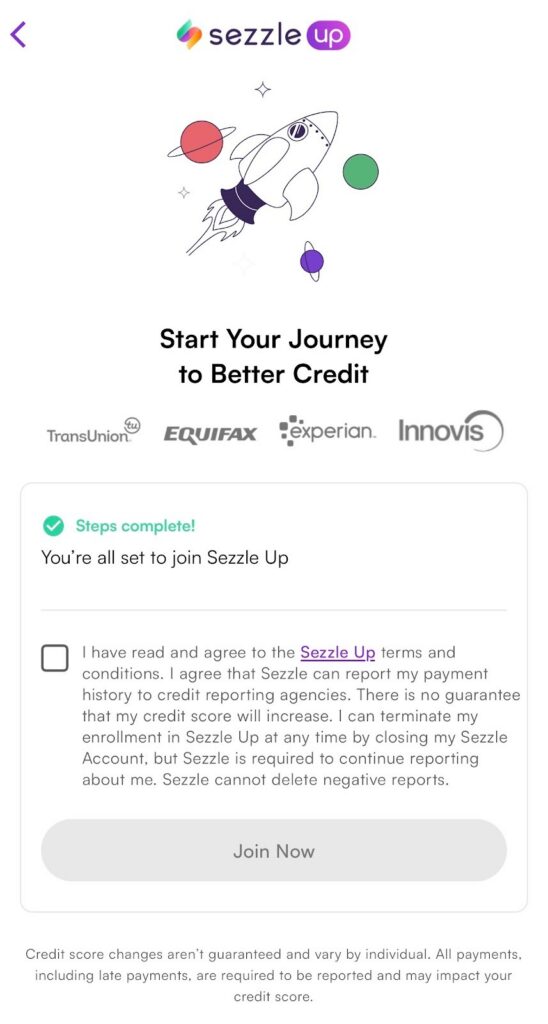
There are a few steps to get started:
- Pay off at least one order on time and in full
- Link a bank account as your default payment method
- Complete identity verification (including personal information like your SSN)
Once you’re enrolled, Sezzle begins tracking and reporting your activity—though it can take some time before it shows up on your credit report. One important thing to know: once you sign up for Sezzle Up, you’re in. This isn’t something you can easily toggle on and off, so it’s worth understanding how it works before enrolling.
What Gets Reported (And Why It Matters)
Sezzle Up focuses on one thing above all else: your payment history.
This includes:
- On-time payments
- Missed payments
- Overall payment behavior
That’s important because payment history is one of the biggest factors tied to your credit profile. If you consistently make payments on time, you may develop a positive credit history over time. But the flip side is also true: Missed payments or repeated missed payments can negatively impact your credit history.
How Sezzle Up Is Different From Traditional Credit
Sezzle Up doesn’t work like a credit card or loan—and that’s actually the point. With traditional credit cards:
- You get a set credit limit
- You may pay interest charges
- You carry balances over time
With Sezzle:
- You’re making short-term purchases
- Payments are structured and scheduled
- Plans are typically interest-free
There’s no revolving balance in the same way, which can make it feel more manageable, especially if you’re newer to credit or trying to avoid debt.
Does Sezzle Up Help With Building Credit?
This is the question everyone really wants answered. The honest answer: It can contribute to credit history building—but it depends on how you use it.
Sezzle Up may support credit history building if:
- You make consistent on-time payments
- You follow your payment schedule
- You avoid missed or late payments
It may have a negative impact on your credit history if:
- You miss payments
- You develop a pattern of repeated missed payments
So while it’s not a guaranteed outcome, it does give you a way to contribute to your credit history using purchases you’re already making.
Pros and Cons of Sezzle Up
Pros
- Supports credit history building through reported payment behavior
- No interest charges on standard plans
- Easy to manage inside the Sezzle app
- More accessible than some traditional credit products
Cons
- Missed payments can negatively affect your credit history
- Once enrolled, it’s not something you can easily opt out of
My Take: Who Should Use Sezzle Up?
If you’re trying to improve your credit profile but don’t want to rely entirely on traditional credit cards, Sezzle Up is a really interesting option. I wouldn’t think of it as a replacement for traditional credit—but more like a low-risk way to support credit history building using purchases you’re already making.
It’s especially helpful if you’re just starting to build your credit history, you prefer structured payments over revolving balances, or you’re just looking for a simple option inside an app you already use.
FAQs
Sezzle Up is a feature that allows Sezzle to report your payment history to credit bureaus as part of credit history building.
Sezzle Up can affect your credit profile because it reports payment behavior, including on-time and missed payments.
Sezzle Up typically uses a soft credit check or identity verification rather than a hard credit check.
It can take several weeks (often up to 60 days) after your first qualifying purchase for activity to appear.
Sezzle Up can negatively impact your credit history if you have missed payments or repeated missed payments reported to credit bureaus.