The LSAT has been the gateway to law school for over 70 years, making focused prep essential if you want a competitive score.
If you’re serious about law school, you’ve probably narrowed your LSAT prep down to two of the biggest names: Kaplan and Princeton Review. Both are long-established, widely used, and packed with resources, but which one actually gives you the kind of prep you need?
Here’s the thing: most students aren’t looking for bells and whistles. They want a course that feels manageable, effective, and worthwhile. I’ve tried both, and while Princeton Review has its strengths, Kaplan’s structure and flexibility make it easier to stick with in the long run.
In this LSAT prep course guide, I’ll break things down from core features to study experience so you can see which course fits you best.
Kaplan or Princeton Review: Which Matches How You Learn?
- If you learn best from polished video lessons and flexible study tools, Kaplan’s course is a stronger fit.
- If you want tons of live instruction and don’t mind a more traditional feel, Princeton Review delivers.
- If you need a score guarantee for peace of mind, Kaplan stands out with its higher score promise.
- If you’re the type who thrives on in-person classroom time, Princeton Review is still one of the few options.
- If you want tech that adapts to your weaknesses, Kaplan makes practice more targeted.
Kaplan LSAT: Modern and Adaptive

Kaplan has been around for decades and has helped millions of students get ready for big exams. On average, students who stick with the program raise their LSAT score by about 15 points, which can make a huge difference when applying to top law schools.
When I tried the Kaplan LSAT prep course, the first thing I noticed was how polished the video lessons were. They weren’t boring lectures; they were sharp, clear, and easy to follow. The LSAT Channel quickly became one of my favorite features. Being able to drop into live sessions on specific topics whenever I needed extra help made studying feel less stressful.
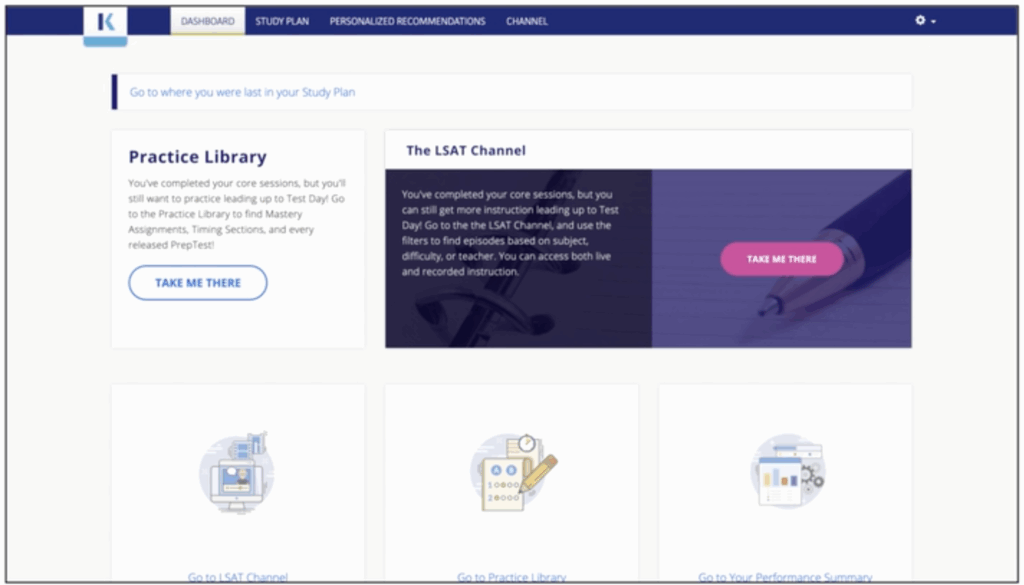
Practice was another highlight. Kaplan offers thousands of official LSAT questions and full-length practice exams that look and feel like the real test. The explanations were straightforward, and the system kept pulling me back to the types of questions I struggled with most.
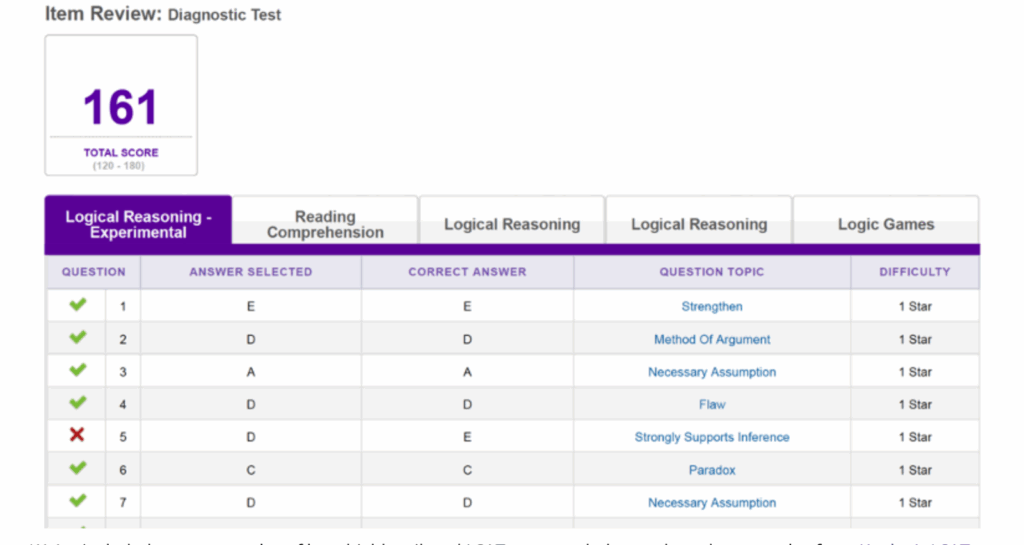
On top of that, you can take a free practice test that gives you a detailed breakdown by section and question type, which is a great way to see exactly where you stand before diving into full prep.
Package Options
- On Demand: Best if you want to prep 24/7 on your own schedule. Includes instructor Q&A and interactive hints.
- Live Online (Most Popular): Real-time classes with 99th-percentile instructors, plus flexible scheduling and the LSAT Channel.
- In Person: 24 hours of classroom instruction for those who learn best face-to-face.
- Tutoring Packages: 10–40 hours of private tutoring with premium 99th-percentile instructors. Comes with a score guarantee up to 170+.
➡️ Best for students who want flexible access and smart study tools that adjust to their weaknesses.
“All of my instructors were extremely supportive and helpful while I was preparing for the LSAT. Kaplan provides extensive options for preparation where you can always find what works for you.”
Student Review.
What Kaplan Includes
Official Questions: Nearly 8,000 LSAT questions with detailed explanations
Practice Exams: 55+ full-length exams through LSAC’s LawHub
Curated Quizzes: 180+ quizzes for targeted practice
LSAT Channel: 60+ hours of live and on-demand extra instruction
Adaptive Support: Personalized study recommendations based on performance
Study Materials: Digital prep ebooks with the option to add physical books
Score Guarantee: Higher score promise or your money back
“The instructors and the channels on the website truly make a difference. Kaplan offers the best LSAT prep I’ve dealt with. Very hands on and so informative and even some tricks and secrets along the way.”
Student Review.
Pros
- Polished Video Lessons: engaging and easy to follow. When I tested Kaplan, the videos felt sharper and less boring than typical lectures.
- LSAT Channel: 60+ hours of live and on-demand sessions
- 8,000+ Official Practice Questions: all with detailed explanations
- Smart Performance Analytics: targets your weak spots. I liked that the platform kept pushing me back to the question types I struggled with most
- Score Increase Guarantee: peace of mind if you need results
Cons
- Less traditional classroom time: If you want long lectures, this might not be your style.
Kaplan LSAT Review
Princeton Review LSAT: The Classroom-Style Approach
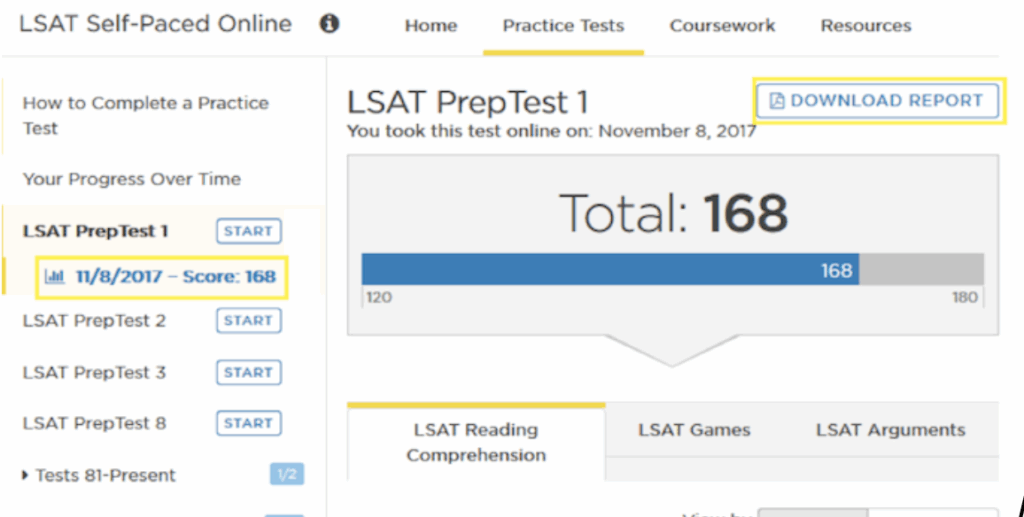
The first thing I liked was how much structure it gave me. The schedule was set, the instructors kept things organized, and the proctored practice exams felt close to the real LSAT. Having thick prep books and plenty of live instruction hours also made it clear that nothing was going to be left uncovered. If you like accountability and being walked through material step by step, this course will give you that.
The hard part for me was staying locked in. After a long day, sitting through hours of live lectures wasn’t easy, and I found my attention slipping more than once. Still, I can see why some students like it. The content is thorough, the instructors are helpful, and you finish the program with the sense that you’ve seen every type of LSAT question out there. It might feel heavy at times, but it’s reliable.
Package Options
- LSAT 170+: 65 hours of live instruction with a 170+ score guarantee
- Immersion 170+: 130 hours of live instruction plus 56 hours of content workshops
- Self-Paced: 150+ recorded video lessons and 1,800+ pages of study materials
- Fundamentals: 30 hours of live targeted instruction
- Tutoring: 10–30 hours of personalized one-on-one sessions
➡️ Best if you learn best in a classroom environment and want extensive instructor time.
“I enjoyed the instructor. I do think the testing was too frequent. I wish all the answers to the book were compiled in one pdf (not just the drills).“
Student Feedback.
What Princeton Review Includes
Official PrepTests: 90+ full-length exams through LSAC’s LawHub
Video Lessons: 150+ hours of recorded instruction
Study Materials: 1,800+ pages of prep books plus LSAT Course Manual eBook
Practice Library: Access to all previously released LSAT questions
Live Instruction: Extensive class hours depending on package level
Pros
- Extensive live instruction: Options up to 130 hours during my test run, the classes felt structured, though sometimes a little long after work
- 90+ Official PrepTests: Included with every course
- 1,800+ Pages of Study Materials: Plus LSAT Course Manual eBook
- Score guarantee: The built-in safety net gives you nice reassurance
Cons
- Can Feel Overwhelming: Long hours aren’t ideal for everyone.
- Less Tech-Driven: Platform feels more old-school compared to Kaplan.
“The classes were very informative, but three hours is a long time to be in class.”
Student Feedback.
Princeton LSAT Review
| Feature |  |  |
|---|---|---|
| Price | $899-$3999 | $167-$3,999 |
| Access Length |  4-12 Months | 12 Months |
| Video Content | 60+ Hours Polished, Modern, Engaging | 150+ Hours of Recorded Lessons |
| Live vs. On-Demand Instruction | Flexible Live + On-Demand via LSAT Channel | Heavy Live Classes (Up to 130 Hours) |
| In-Person Classes | Available in Select Locations |  Not Offered |
| Printed Textbooks | Optional Add-On (E-Book Only) | Included (1,800+ Pages + LSAT Course Manual) |
| Mock Exams | 55+ | 90+ |
| Adaptive Features | Personalized Performance Analytics, Custom Quizzes | No Adaptive Tracking, Same Material for All |
| Guarantees | Score Increase + 170+ (With Tutoring) | 170+ Guarantee or Free Repeat |
| Get Started | Start Now | Start Now |
Kaplan or Princeton Review?: Breaking Down the Essentials
Kaplan is the best choice if you want flexibility, modern tech tools, and polished videos that make prep easier to stick with. Princeton Review works better for students who want long blocks of classroom-style instruction, heavy printed books, and more proctored practice. Both are strong LSAT prep courses, but Kaplan leans digital and adaptive, while Princeton Review leans traditional and intensive.
Here’s how they stack up where it matters most:
How the Courses Feel
- 🆚 Kaplan focuses on flexibility. You can study at your own pace or join live sessions when you need structure. The LSAT Channel was the standout, quick, targeted classes, which made studying less stressful and more efficient.
- 🆚 Princeton Review emphasizes seat time. With six proctored exams and long live classes, it offers plenty of structure, but that much time can feel heavy if you’re busy.
The Winner: Kaplan- more flexible and less overwhelming
Which Platform Is Easier to Use
- 🆚 Kaplan’s videos feel modern and interactive. You can pause, speed them up, and take notes right inside the platform. The design is clean, and the mobile app actually works well, so I could sneak in practice whenever I had downtime.
- 🆚 Princeton Review’s videos are more traditional. They cover the material, but the lecture style can drag, especially if you’re not used to long class sessions.
The Winner: Kaplan– cleaner design and better video quality.
What You Get More for Your Time
- 🆚 Kaplan gives you a score increase guarantee, which makes the commitment feel less risky. Their self-paced option is also nice if you don’t want to lock yourself into a rigid schedule.
- 🆚 Princeton Review offers more live instruction hours than Kaplan. If that’s how you learn best, it’s a plus, but the trade-off is less flexibility and a heavier time investment.
The Winner: Kaplan– stronger balance of value and security
Help and Access When You Need It
- 🆚 Kaplan has responsive support and flexible access, with 4, 6, or 12 months of unlimited prep resources that can cover multiple test dates.
- 🆚 Princeton Review also offers solid support and gives you 12 months of access across all packages, which is generous compared to some providers.
The Winner: Princeton Review– for slightly stronger baseline access across its courses.
Bottom Line: Kaplan or Princeton Review?
Kaplan and Princeton Review are two of the biggest names in LSAT prep, and I’ve tried both. The Princeton Review stands out for its structure. You get long blocks of live classes, heavy prep books, and plenty of proctored practice. For some, that feels reassuring. Kaplan felt different. The videos were sharper, the LSAT Channel gave me quick help when I needed it, and the adaptive tools kept me focused. Add in the score guarantee, and Kaplan comes out on top.
Find the LSAT course that keeps you moving forward and prepares you for the law school path ahead.
FAQs
Kaplan LSAT prep typically takes about 2–3 months of study for most students. Kaplan gives you flexible access plans of 4, 6, or 12 months, so you can pace your prep around your schedule.
Yes, Kaplan uses real LSAT questions. In fact, you’ll have access to more than 8,000 official questions plus over 55 full-length practice tests.
Kaplan is a strong option for self-paced learners. You can move at your own speed with on-demand lessons, while still adding live classes or the LSAT Channel for extra support.
Yes, Kaplan offers one of the best LSAT tutor services. Packages range from 10 to 40 hours with 99th-percentile tutors to help you target weak areas.
Yes, Kaplan has a score guarantee. If your LSAT score doesn’t improve after completing a course, you can either get your money back or retake the program for free.