
Inside or outside? The big question facing both diners and restaurant owners in Yolo
Peter Palamidessi waited patiently, watching Yolo County’s COVID-19 infection rate steadily fall over the last month-and-a-half. When California health officials announced Tuesday county restaurants could reopen their dining rooms at 25% of usual capacity the following day, he was ready.
The co-owner of Club Pheasant in West Sacramento knew an increasing number of restaurants were illegally open for indoor dining with minimal consequences in Sacramento, Placer and El Dorado counties. Yet Palamidessi, like the overwhelming majority of Yolo County restaurateurs, limited customers to outdoor and to-go service throughout the winter. Now, he said, they’ll reap the benefits.
“I hate to sound like this, because Sacramento is not open, but that’s a big advantage for us. People can come here and sit inside,” Palamidessi said. “We played by the rules all this time. Maybe now we’re being rewarded.”
Palamidessi opened Club Pheasant’s dining room for lunch Wednesday at the first legal opportunity. The 86-year-old restaurant can fit about 50 people inside at 25% occupancy, he said, in addition to 30-35 on an outdoor patio. Banquets are still off the table, but after losing money when restricted to takeout-only service and breaking even with outdoor dining, Palamidessi’s looking forward to Club Pheasant being profitable again.
Two miles down Jefferson Boulevard, manager Jose Mendoza wasn’t sure Tuesday he’d start letting Taqueria Ay Jalisco’s customers sit indoors. The indoor dining ban, in place since November and for several months before that last spring and in late summer, cost Taqueria Ay Jalisco #2 money and forced Mendoza to trim his staff from 18 to 12.
Yet Mendoza’s worried about customers not taking COVID-19 seriously enough — or to be more precise, a few bad apples making others sick. The taqueria installed six tables outdoors during the pandemic. Maybe that’s enough until the threat of infection is lower, he said.
“We have safety concerns,” Mendoza said. “There’s some people that don’t really believe (the coronavirus) exists and those people never keep away from other people, so it makes us nervous. Someone could bring it in and give it to somebody else.”
Buoyed by Davis’ nationally-heralded testing network, Yolo County’s COVID-19 test positivity rate fell to just 1.6% this week, enough on its own to qualify for the least-restrictive yellow tier in the state’s reopening blueprint. Its health equity quartile rate — the positivity rate in the lowest 25% of Healthy Places Index census tracts — dropped to 5.2%, enough to qualify for the orange tier.
Yolo County’s 5.6 new cases per 100,000 people keeps it in the red tier, but even that represents a 1-per-100,000 drop from the week prior, according to county statistics. All other counties in the region remain in the most-restrictive purple tier, though El Dorado County could move up to red next week.
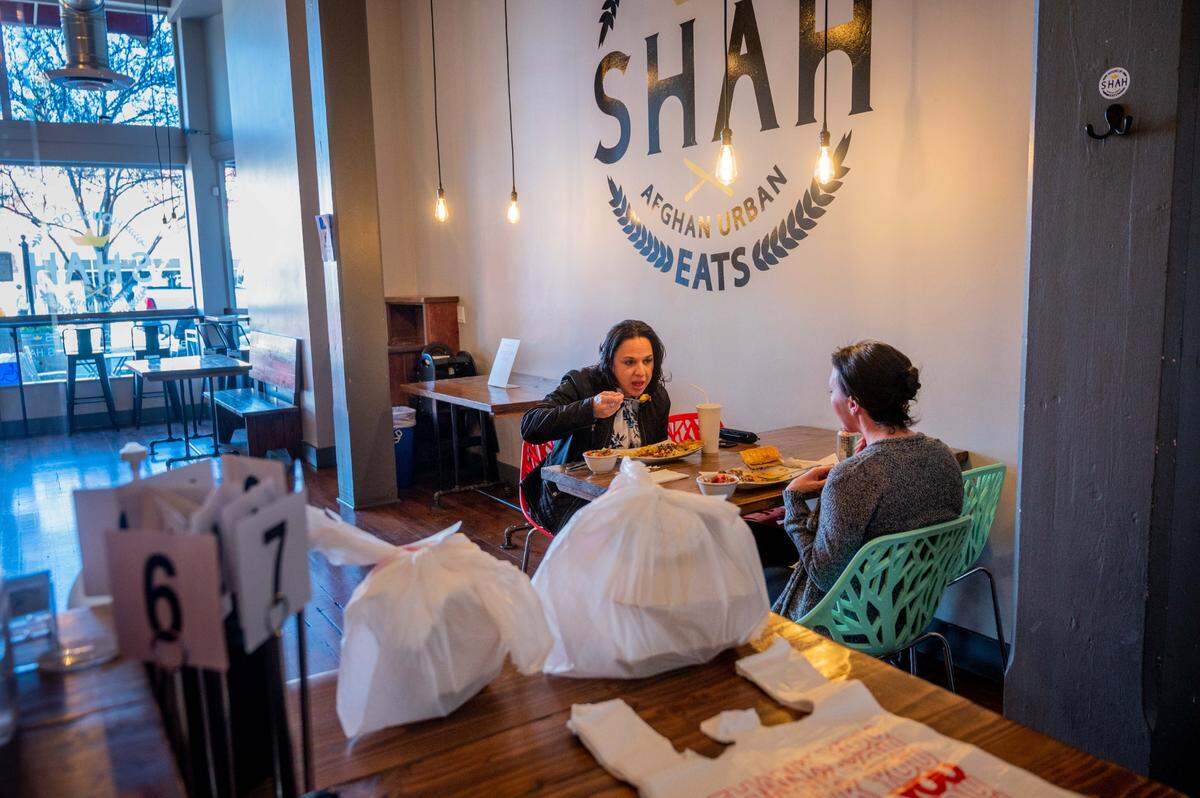
In Woodland, co-owner Sal Shahsamand set up House of Shah Afghan Urban Eats’ three indoor tables for lunch Wednesday — not much, he conceded, but a welcome spark after revenue dropped 25-40% over the last year. The cost of goods has risen as well, because of pandemic-caused supply chain interruptions and increased reliance on to-go boxes and utensils, Shahsamand said.
House of Shah is using a $9,000 city of Woodland grant to build out a patio with flooring, roofing and heaters, but can only accommodate three or four tables outside. As high temperatures in the low 70s over the next week push people outside, Shahsamand hopes a few extra indoor tables can motivate people to order dishes like the chapli kebab burger or hand-cut Shah fries (topped with garlic yogurt sauce, green chutney, jalapenos and cilantro) that wilt quickly in takeout boxes.
“I’ll take whatever we can get, you know?” Shahsamand said. “(Indoor dining) helps, especially with the way the weather is and everything. Even if it’s just for lunch, you can come in and get out and get some food.”
For some restaurants, though, the costs of reopening a dining room makes indoor service unpalatable. Pooja Indian Grill employed about 10 people before the pandemic; now it’s just Geeta Rani, her husband Pooja and their two employees, Rani said.
The West Sacramento restaurant’s buffet and banquet hall must remain closed under the state’s current operating restrictions, leaving à la carte orders as the only option. But Rani would have to hire staff back to serve and clean up after indoor dining, and 25% occupancy won’t cover those costs, she said. They’ll stick to four outdoor tables and takeout, and would probably do so even if allowed to fill Pooja to 50% capacity.
“It’s expensive. It’s too much,” Rani said. “(With outdoor dining and takeout), it’s okay — good enough. People are helping out in the community.”
This story was originally published February 25, 2021 at 5:00 AM.