
Can you still find gold in California? Inside a 21st century hunt for riches
READ MORE
Introducing Bee Curious
We’re launching a new community-powered project to answer your questions about the Sacramento region. Read more:
Expand All
Bee Curious: Sacramento, what do you wonder? Ask our journalists your quirky questions
Can you still find gold in California? Inside a 21st century hunt for riches
How to strike gold while doing your own mining in the Sacramento area
Bee Curious: We answer your questions

Essential stories for your best Sacramento life: Sign up for The Canopy newsletter
Casually scraping dirt from the crevices of bedrock, Laura Fierro sat by the American River near Colfax, where she could enjoy the peace, listen to the river and search for gold.
It was one of her secret spots.
While digging, she found nails buried underneath the dirt, which were likely washed up in the river from old cabins in the mountains. She couldn’t believe it.
“If you’re finding those in a crevice, like those little old nails, you’re looking good because that means that nail’s been sitting there for who knows how long. And it’s heavy,” said the Sacramento teacher from Orangevale, looking back a few years later.
“But what’s underneath is even heavier.”
First glimpse of glimmering gold
Gold was first found in what is now the Sacramento region in the 19th century, sparking the historical Gold Rush; but more than a hundred years later, gold fever is still running rampant.
Many locals from the Sacramento area, like Fierro, take part in recreational gold mining. With pans, buckets and shovels in their hands, these modern-day fortune seekers are hoping to unearth some shiny, natural treasures.
At the riverbank, in a tan hat and bright green shirt, Fierro kept digging and sifting through the dirt that she scraped from the crack of the bedrock.
The 48-year-old librarian said her interests in geology, rock collecting and California history led her to gold panning. Apart from being able to enjoy the outdoors when she’s at the river, she said, searching for gold lets her connect to the past.
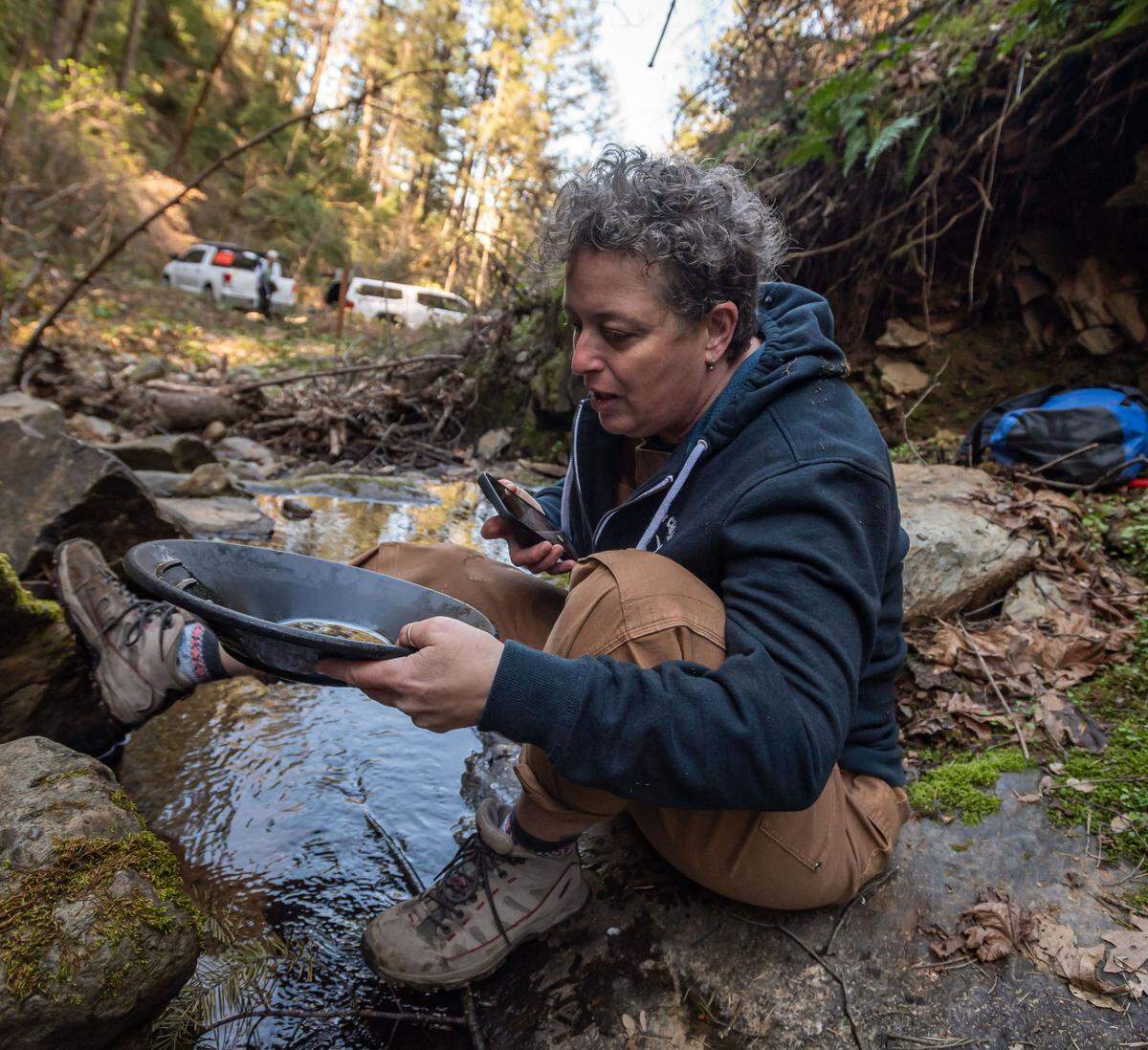
“It always reminds me of all the people that were struggling during that time to gold pan just for their own dinner and for food and their supplies,” Fierro said. “So I always kind of have that in the back of my mind because I don’t think I’ve even made enough to buy myself a meal yet.”
Occasionally dipping her pan into the clear river water, Fierro shook out big rocks and filtered the dirt. And as she sifted the wet sediment, a bright yellow clump peaked from the black sand.
“It certainly wasn’t a nugget,” she said, which usually refers to a lump of gold. Instead, it was a picker, a small piece of gold that you can pick up with your fingers.
Marking it as one of the best panning days so far, Fierro posed for a picture with her speckles of gold on the north fork of the American River — some 30 miles from where the river lines Coloma, where James Marshall caught his first glimpse of glimmering gold flakes more than 170 years ago.
Gold frenzy and the rise of Sacramento
In 1848, James Marshall, a carpenter who was building a sawmill for John Sutter at the time, found gold flakes in the south fork of the American River in Coloma.
And it wasn’t long until gold fever spread across the globe.
“People suddenly arrived in California,” said Gage McKinney, author and mining historian from Grass Valley.
Before the Gold Rush, the California territory had about 160,000 people, many of whom were Native Americans. But the number quickly grew.
According to the Library of Congress, 20,000 Chinese people were among the thousands that immigrated to California at the peak of the Gold Rush in 1852, met with anti-immigration sentiments in the mining camps. By 1855, more than 300,000 settlers from the United States, Europe, Asia and South America had arrived to mine for gold.
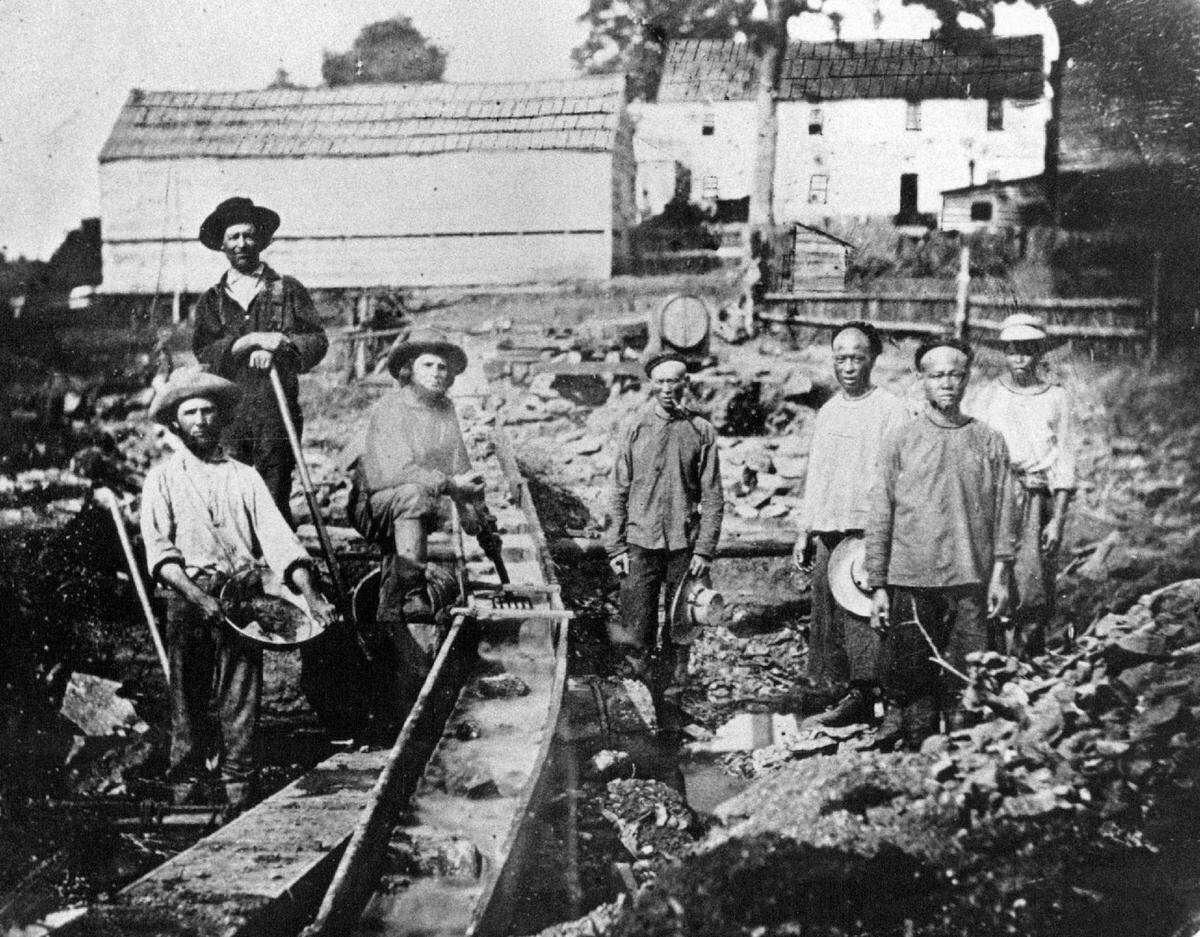
McKinney said that enslaved people from the southern parts of the country were also brought to California to work at mines in Grass Valley.
According to the Old Sacramento Waterfront, once news spread of the shiny flakes, local merchant Sam Brannan hastily opened a store on the Sacramento River to cash in on the convenient location.
As people settled into California to find the valuable antidote to their gold frenzy, cities began cropping up. Sutter’s Embarcadero, later known as the city of Sacramento, was a trading center of supplies for miners.
McKinney said Sacramento became “supply city,” as mining goods from the area were sent up to the mines in Grass Valley and Nevada City.
‘Everything was in a rush’
The industrialization of gold mining took a few years, McKinney said, but it happened with amazing speed.
“Everything was in a rush,” he said. “And California has been in a hurry ever since.”
Initially, most of those prospecting for gold in 1849, also known as forty-niners, were from Europe.
“It was either individuals or small teams of men working by hand,” said McKinney. He said they would pan the gravel by the streams and sift it until only fragments of gold remained.
By the 1850s, mining became more mechanized, as people with a lot of capital brought in heavy equipment to extract gold from the mines. Hydraulic mining was one of the popular mining techniques. It entailed blasting high pressure water onto a cliff to wash away boulders, dirt and gravel to reveal ounces of gold, according to the U.S. Geological Survey.
These new industrial forms of mining quickly shifted the landscape of California.
Physically, environmental impacts from gold mining can still be seen across the state, said Genevieve Sparks, a geologist and lecturer at California State University, Sacramento. The long-lasting effects of mining include changes in water quality, disruption to salmon redds, mercury and heavy metal contamination in water, Sparks said.
She said that mining also disturbed Native American sacred sites, including burial grounds.
And while some local and new miners struck gold and riches, many people — a large part of the native population — died from disease, murder and accidents. McKinney said some of the most common mining-related accidents included explosions, drowning, fire, electrocution and falling down shafts.
Can you still find gold in California?
Gold is still being deposited into streams, McKinney said, because the natural process that puts them into rivers is ongoing.
“So there’s still gold to be found,” he said.
According to a flier from the California Geological Survey, most gold deposit sites have been thoroughly inspected at least twice — first during the Gold Rush and second during the Great Depression.
“Nevertheless, a chance for success may still remain if you choose favorable areas after a careful study of their geology and mining records,” the agency said on the flier.
While most of the gold may have been found far in the past, there are still some hopeful adventurers in the Sacramento area with pans in their hands, hoping to unearth bright yellow nuggets in the dirt.
Modern-day gold miners
Fierro, from Orangevale, has been gold panning for a “couple years” now and has participated in the California Gold Panning Championships in Foresthill. She’s also the secretary of the River City Prospectors GPAA, a prospecting club in Sacramento.
Like Fierro, many current-day recreational gold miners enjoy the hunt for valuable treasures because it’s an opportunity to be out in nature.
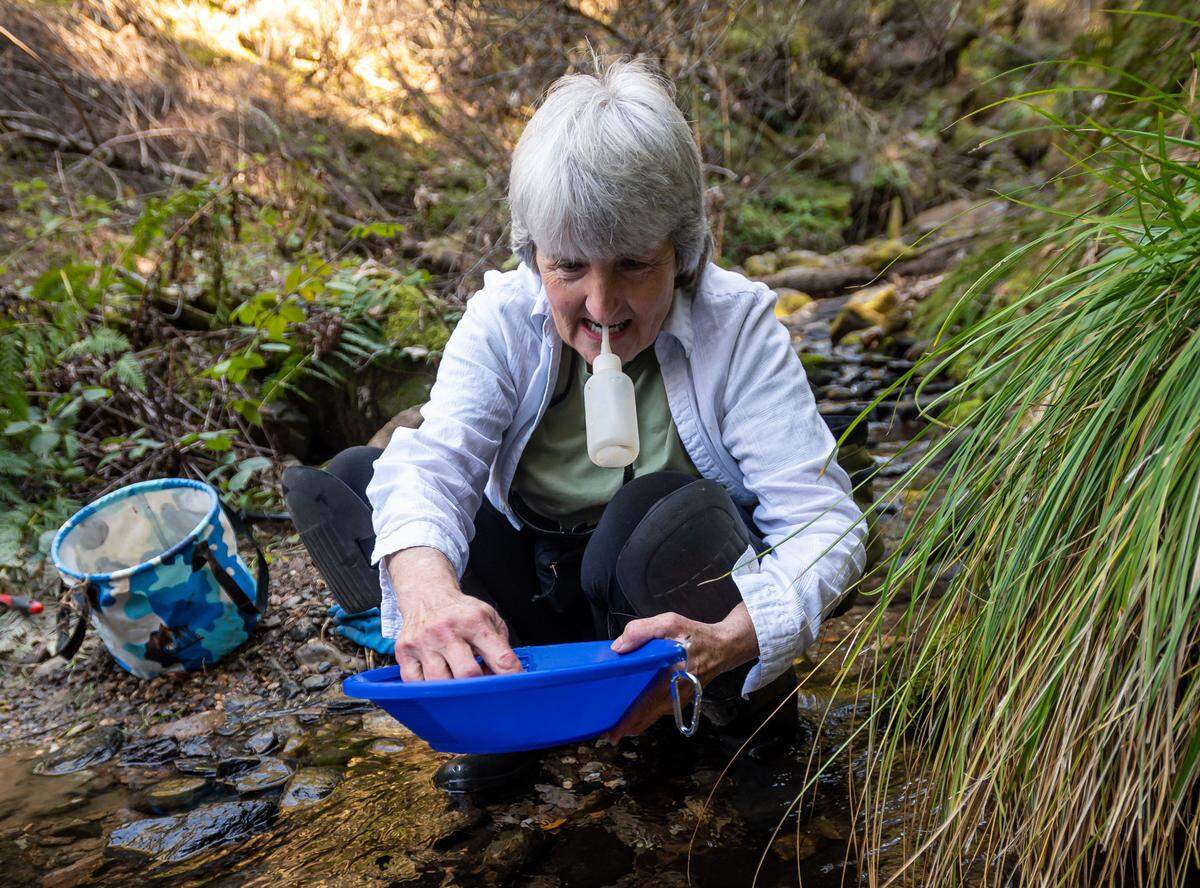
Christopher Castillo, a 33-year-old West Sacramento resident, does metal detecting and is starting to get into gold panning and sluicing, which is the practice of putting a special box into a stream to filter gold from gravel.
“I just love the outdoors and like to be away from everyone,” he said. So far, he’s found jewelry in Sacramento, but is hoping to uncover “a nice chunk of rock with gold in it.”
Benjamin Goza from Colfax, has been treasure hunting for years.
“I’ve always been interested in adventure, and have learned over the years to not wait to do what you want to do, but do it now,” the 47-year-old said. Looking for gold is a stress free environment, he said, one that allows for “infinite sights of nature and old pioneer camps and towns unseen by most.”
He added that prospecting for gold also allows you to invest in precious metals that have everlasting value.
Where can people search for gold today?
If you want to do some recreational gold panning, you can go to Marshall Gold Discovery State Historic Park, Auburn State Recreational Area or South Yuba River State Park. At state parks, gold seekers can only use their hands and shallow pans.
Cory Dykstra, a prospector from Dixon with 10 years of mining experience on his belt, also recommends Bear River or the American River for gold hunting.
Before heading out with your pans, call ahead to know park rules about panning for gold. It’s helpful to be aware of environmental laws that may prohibit some forms of mining at California rivers and streams. For example, suction dredging, which is the use of a motorized tool to remove minerals near or in a body of water, is prohibited in the state.
“Environmental impacts of gold panning on a small scale are probably minimal,” said Charles Alpers, a research chemist at the California Water Science Center.
Sparks, of CSUS, said environmental effects depend on the season, amount of water in the stream, how many people are panning, prospecting methods and pre-existing conditions of the river.
Some dedicated gold hunters today are also purchasing claims to have the right to extract gold and other minerals on a parcel of land. This means only those who own the claim can pan and prospect on the land, and others must have permission before doing so.
Rich Dvoracek, geologist and gold mining historian, said he recommends first-time prospectors join local groups, such as the Mother Lode Goldhound in Auburn or the Sacramento Valley Detecting Buffs.
“Those places, they really know what they’re doing and they can take people out to the different sites that they have permission to work at and then people can learn,” Dvoracek said.
Many of today’s gold hunters take part in responsible mining. This means not silting, or clogging up rivers and streams, and filling up dug up holes so no one falls or hurts themselves, said Dvoracek, who also works at Placerville’s Gold Bug Mine.
Simply: When you’re done, leave no clues behind that you were there.
What do you wonder? Submit your questions about the Sacramento region to “Bee Curious” at beecurious@sacbee.com or online at sacbee.com/bee-curious.
This story was originally published March 18, 2022 at 5:00 AM.