
Tower Bridge wasn’t always gold. When and why did Sacramento change it?
When night falls and the lights glow from under the Tower Bridge, a picturesque view of Sacramento comes to life.
The gold bridge overlooks the Sacramento River, connecting West Sacramento to the city’s core.
It’s an icon for residents, tourists and frequent visitors, like Monica Ocon from the San Francisco Bay Area.
Ocon visits Sacramento once every other month with her family to see the historic district, Old Sacramento, museums and the Capitol Mall.
After a recent outing to the city, following a trip to San Francisco’s Golden Gate Bridge, Ocon wondered about Sacramento’s aureate landmark.
“Why is the tower bridge gold and was it always that color?,” she asked Bee Curious, a community-driven series where journalists answer reader-submitted questions about the Sacramento region.
The Bee talked to a historian with the city of Sacramento, the California Department of Transportation, and researched newspaper archives to answer Ocon’s inquiry. Here’s what we found:
Why is the Tower Bridge gold?
Sacramento’s Tower Bridge was the first vertical lift bridge — a bridge constructed to be raised for when large ships travel through — on the California highway system. Known for its two distinct towers, as its name suggests, the pillars are supported by concrete cylinders that were built 50 feet below the surface of the Sacramento River.
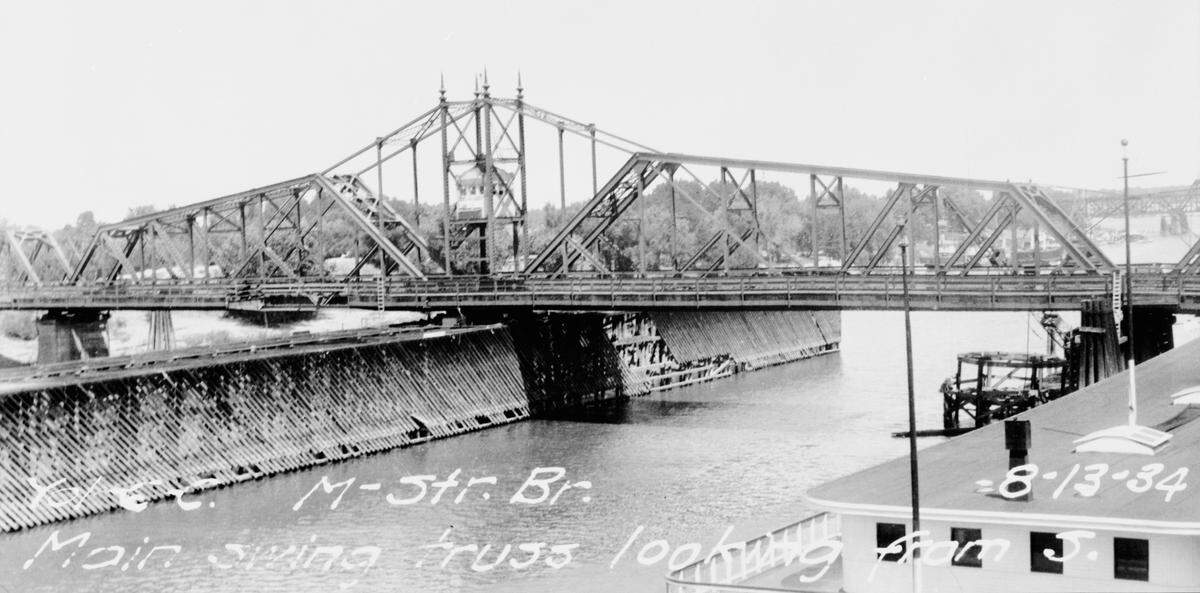
Completed in 1935, the Tower Bridge replaced the M Street Bridge, constructed in 1911, to accommodate the growing influx of traffic at the time, and to beautify the state capital, said Marcia Eymann, a Sacramento city historian.
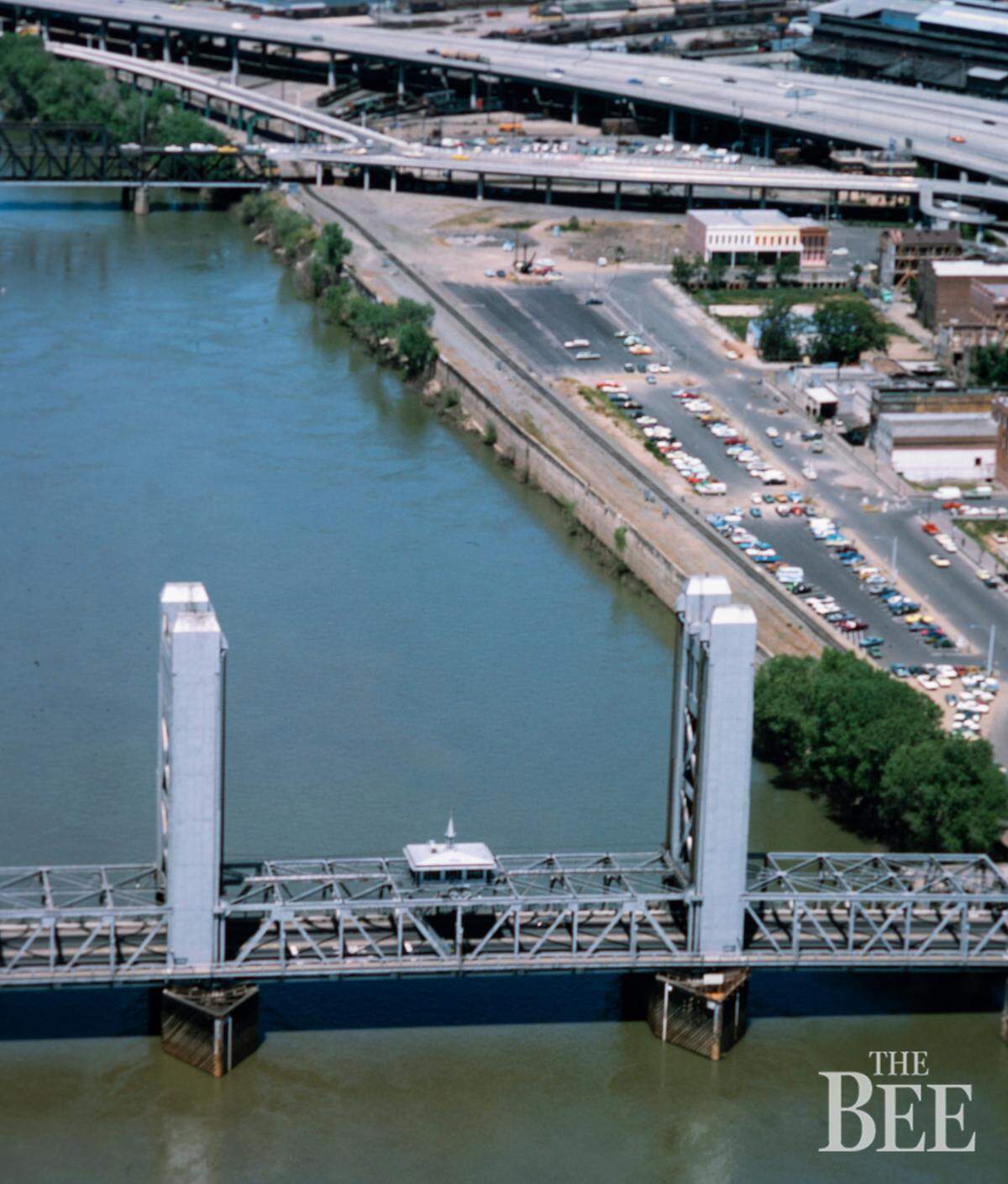
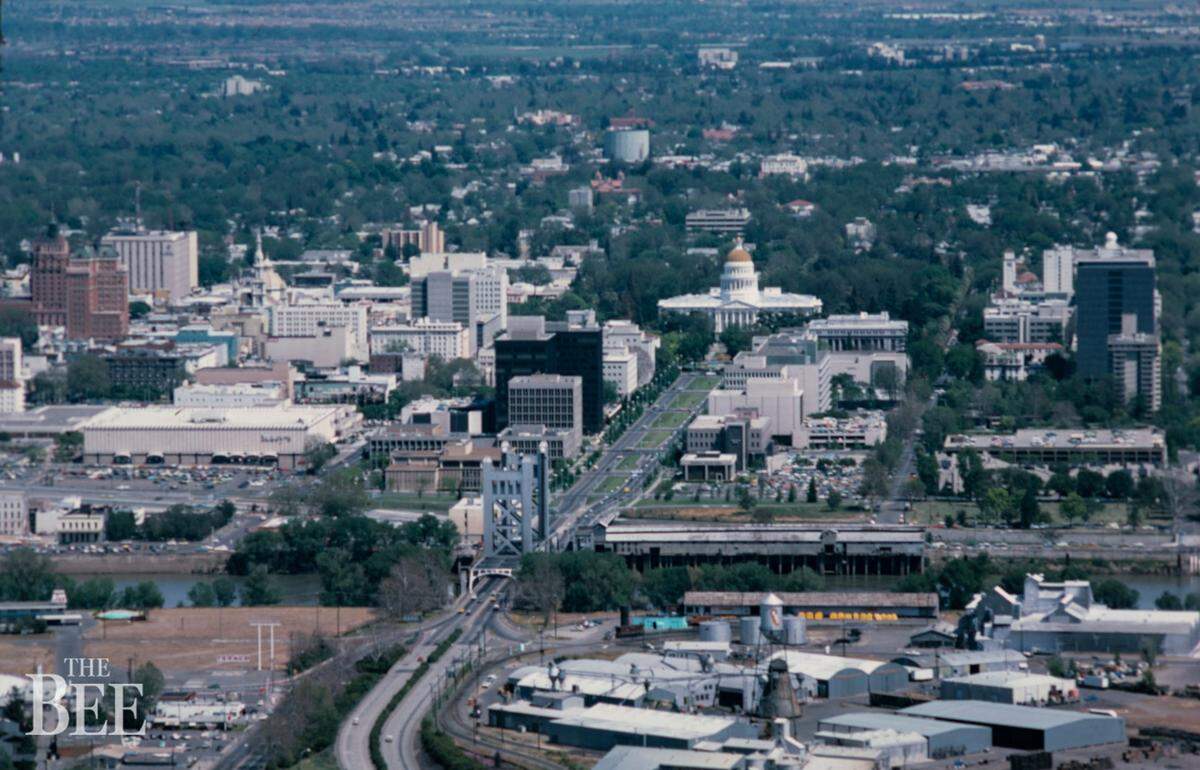
Initially, the 737-foot bridge and its two 250-foot towers were painted aluminum silver, according to a Caltrans statement. It was then repainted in 1977 to golden ochre, a yellow gold color with a touch of red, to match the hues of the Capitol dome, located east of the bridge.
According to a 1976 Sacramento Bee article, the idea to revamp the bridge with gold came from Dr. Max Dallas Shaffrath, a commissioner at the Sacramento Museum and Historical Society. Shaffrath thought repainting the bridge was a way to honor the country’s bicentennial, symbolizing Sacramento as a gateway to gold for miners in 1949.
But it wasn’t exactly gold.
In another Bee report, Dan Pengilly of the State Department of Transportation said the gray bridge will be painted a “gilded brown,” similar to the Bryte-Bend Bridge on Interstate 80.
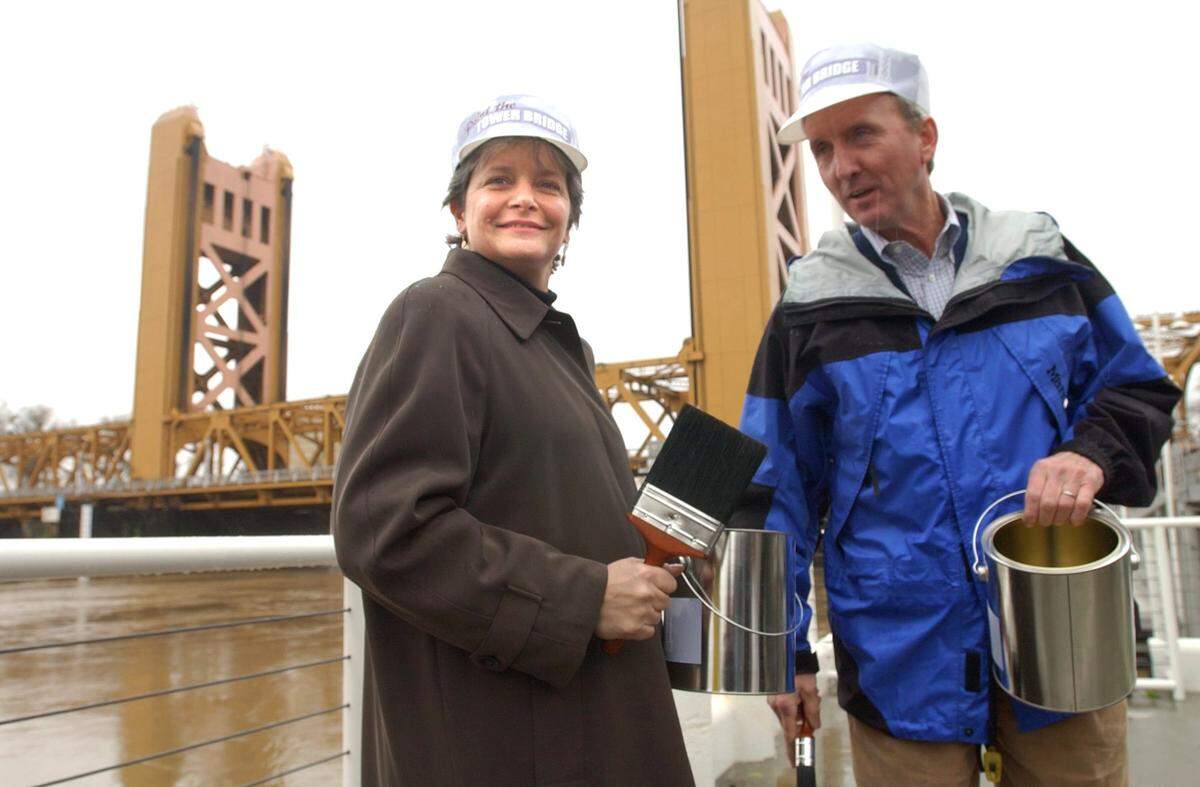
In 2002, the Tower Bridge was doused in a new color again — but this time, it was up to Sacramento-area residents. For the first time in Caltrans history, locals were able to decide the color of a state bridge with three options: metallic gold; forest green, gold and silver; or burgundy, gold and silver.
According to Caltrans, the choices were picked based on historical and cultural factors, with silver hinting to the Tower Bridge’s original color and gold signifying the “Golden State” and the history of “Gold Country.” The options were also dependent on how well it could enhance the natural and manmade skylines in downtown and West Sacramento, and whether residents wanted to maintain the golden ochre hue.
Voting began on Jan. 2, 2002, by phone and online, where residents could see daytime and nightime re-touched photos of the bridge in the three color options, their significance and the latest vote count. After more than 43,000 votes, then-Gov. Gray Davis announced the winning color on Feb. 4, 2002 — metallic gold.
Caltrans selected Iriodin 9307 StarGold to paint the bridge, ensuring that it would be visually attractive and protected against the weather.
“The pigment creates an extremely radiant and natural gold-like effect,” Caltrans said in a recent statement to Bee Curious. “It is one of the most intense and lustrous gold pigments that offered a water-based chrome-free weather resistant application at the time.”
The rise of Sacramento’s landmark
The Tower Bridge braces cars, trucks and pedestrians traveling to and from Sacramento to Yolo County every day, but its construction served other purposes too.
The bridge was built roughly a decade after the “City Beautiful” movement swept the United States, revamping city landscapes — including Sacramento’s — with parks and monuments.
Nationwide, the movement has been revered for making many cities what they are today. However, it also perpetuated inequities across the country.
.JPG "CC TOWER BRIDGE RAISED (1).JPG")
Eymann said Sacramento was trying to establish itself as a “city of quality and dignity.” The Tower Bridge is a “symbol of the progress of the Capital of California,” The Bee reported on Dec. 16, 1935, when the bridge was opened and dedicated.
In July 1934, construction of the concrete bridge started, under contractors George Pollock Construction Company, the California Department of Public Works, the city of Sacramento and Sacramento and Yolo counties.
The $994,000 project — worth roughly $21,445,846 in 2022 — was also a part of the Works Progress Administration, a program created by the then-president Franklin D. Roosevelt to support those who were unemployed during the Great Depression, Eymann said.
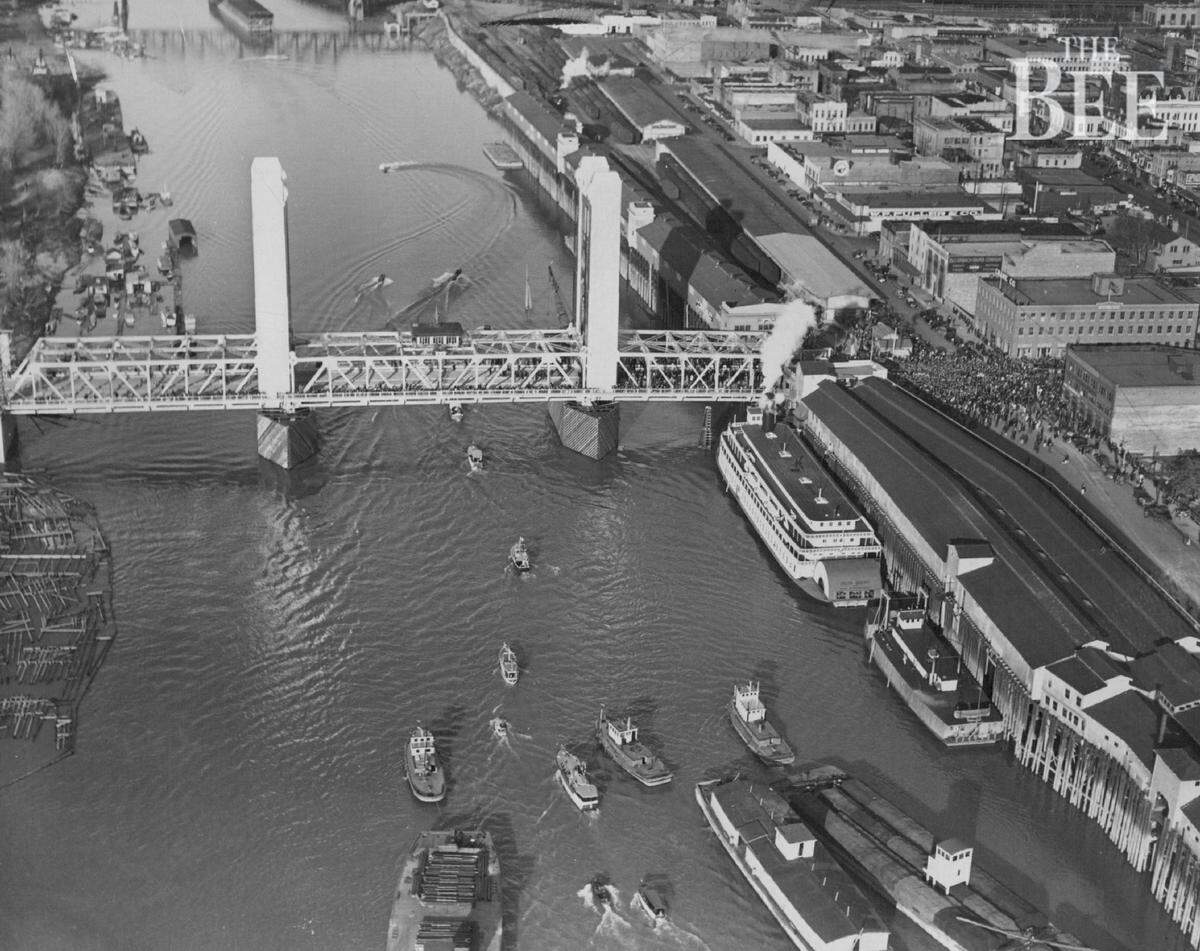
Like the rest of California, Sacramento was struck during the depression era.
“There were encampments, not unlike there are today, all around the city,” Eymann said, referring to the “Hoovervilles” — shanty towns named after President Herbert Hoover who was seen as responsible for the economic downturn at the time. There were sparse job opportunities and residents relied on charity and federal work programs.
More than 1,500 men were employed to build the bridge, according to the 1935 Bee report, in addition to hundreds of others who worked in the forest, mills and steel factories to furnish materials. Eymann said 130 men worked on the bridge for a 16-month period.
Featuring cross-bracing, uniquely arched pillars and clean lattices designed by the state’s architect, Alfred Eichler, the Tower Bridge has been revered for its streamlined, modern architectural style.
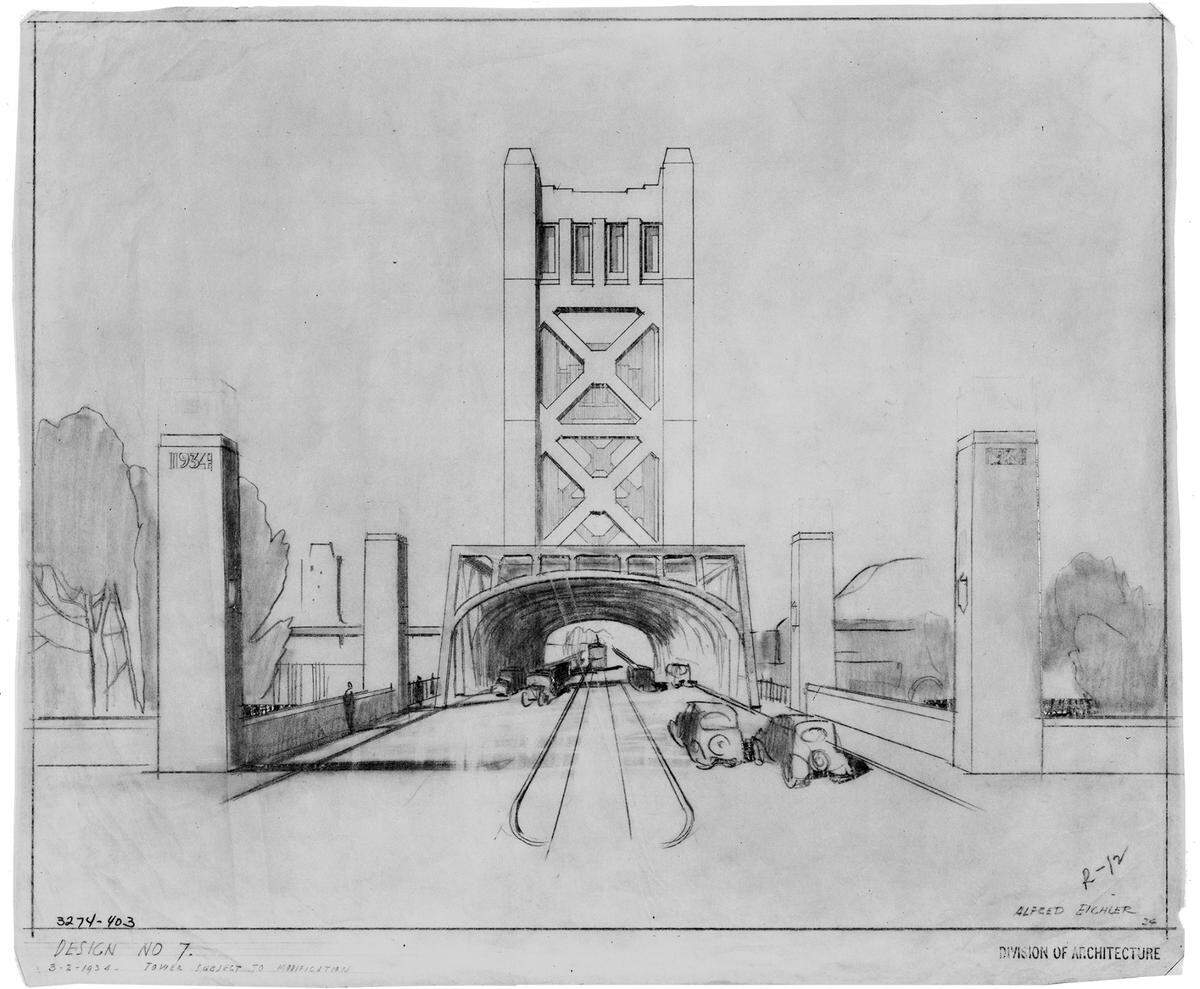
“California during the depression has been a bridge building state,” said the governor of California at the time, Frank Merriam, at the dedication ceremony of the bridge, according to the 1935 Bee report. “And the bridge right here is the most beautiful.”
Then-mayor Arthur Ferguson also spoke, proclaiming: “These towers shall stand through the years indicating the true friendliness and welcome of the City of Sacramento.”
After its creation, builders of the Tower Bridge received an award from the American Institute of Steel Construction for the “most beautiful bridge built during the past year.” In 1982, the Tower Bridge was added to the National Register of Historic Places.
Where to catch the best glimpse of the Tower Bridge
The Tower Bridge is more than just a conduit for cars. It’s home to the Farm-to-Fark Festival’s popular Tower Bridge Dinner. The bridge also has pathways for passersby to stroll and admire the Sacramento River.
To get a perfect view of Sacramento’s golden landmark, Eymann, who’s lived in the Sacramento area for 15 years, recommended going down to the docks in Old Sacramento. There, you can see the bridge up close and maybe catch it being elevated for passing boats.
According to Trip Advisor, you can also head to the riverbank in the evening to watch the golden bridge light up from the flood lights, shining brightly against the backdrop of a darkening sky.
Have a question of your own? Email beecurious@sacbee.com or fill out the form below.
This story was originally published June 6, 2022 at 5:00 AM.