
You might start seeing more ladybugs around Northern California this month. Here’s why
Editor’s note: This story was originally published on June 11, 2022. It’s being reshared as temperatures rise again and you may start seeing more of these insects around.
Some lucky Sacramentans have been seeing a bevy of ladybugs rushing the foothills, the American River to Folsom Lake with their classic red and black speckled coats.
Also known as a loveliness of ladybugs, the recent swarm of the red insects intrigued one reader to ask Bee Curious, a community-driven series that answers reader questions about the Sacramento region: Why are there so many ladybugs right now?
The Bee spoke to an entomologist at California State University, Sacramento and the California Department of Food and Agriculture to find the answer.
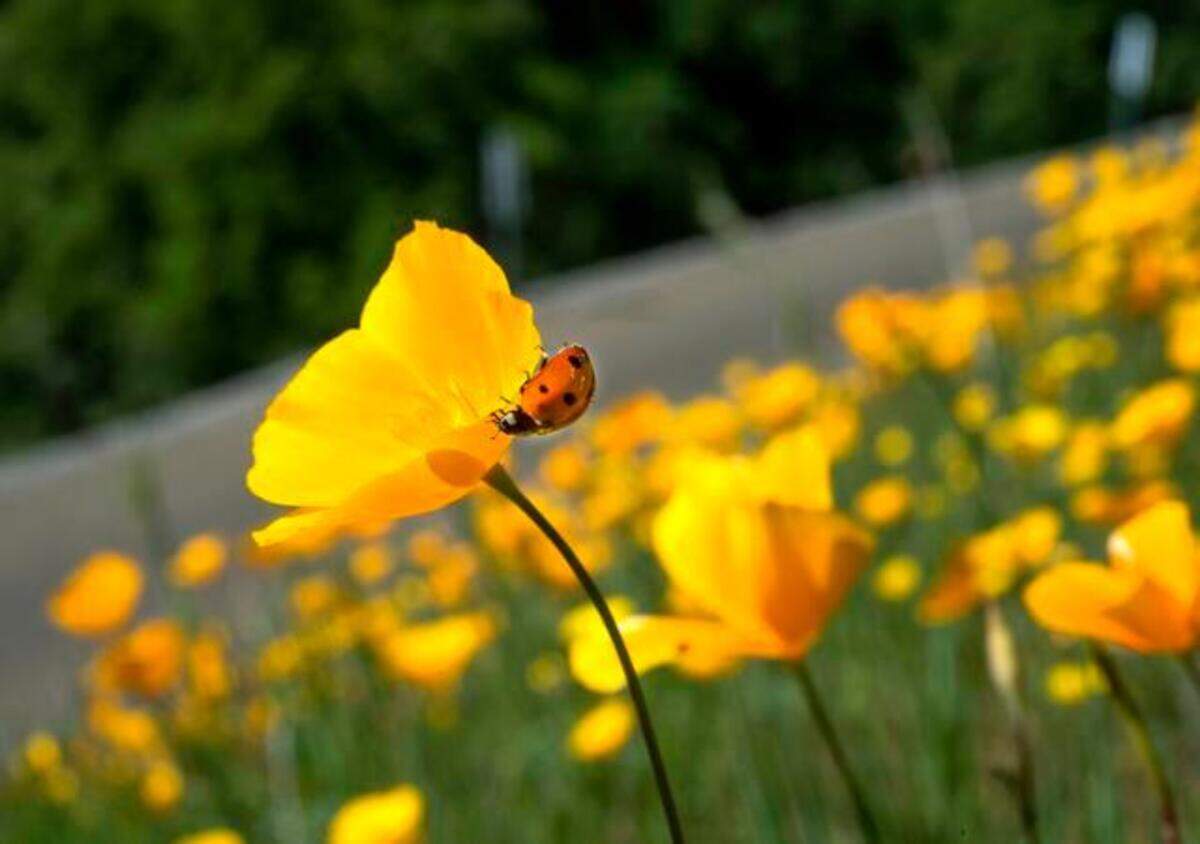
Why are there so many ladybugs?
Essentially, the warm weather beckons ladybugs — and many other insects — to come out.
Like bears in the winter, ladybugs, also known as lady beetles and ladybird beetles, go through their own hybernation process in the winter, called “overwinter,” said Jimmy Pitzer, entomologist and associate professor at Sacramento State.
When temperatures drop, ladybugs go into hiding — under leaves, rocks and tree bark, and in the nooks and crannies of houses and buildings. Pitzer said once the weather starts heating back up and the photo period shifts, meaning the length of the day increases, the red beetles reappear in the sky.
“When things start to heat up, it’s almost like you see, suddenly, lots of ladybugs because they’ve all been waiting for essentially this moment for it to be warm enough,” Pitzer said, “for them to get their cue that they need to become active again.”
Steve Lyle, spokesman for the California Department of Food and Agriculture, said the ladybugs may be drawn to the Northern California area, generally, for warmth and to find mates. He added that ladybugs drink water, citing evidence that the beetles are concentrated in California urban areas because of the availability of water.
“[L]adybirds increased with urbanization in California, but decreased with urbanization in Michigan,” according to a study from 2018. “We propose that in California water availability in gardens and the urbanization history of the landscape could explain the divergent pattern.”
In the spring, the beetles are also out to look for egg laying sites and food, namely aphids and mealybugs, according to a guide from Cornell University’s College of Agriculture and Life Sciences.
Is there an unusual amount of ladybugs in the region?
Lyle said the department is unaware of an unusually large population of lady beetles at this time. But this “doesn’t mean there is not a large population of ladybugs somewhere.”
Ladybugs’ role in local ecosystems
About 200 species of ladybugs call California home, experts said.
“We consider ladybugs to be good bugs, beneficial insects, and we’re happy to see them,” Lyle said.
Pitzer said ladybird beetles provide a very valuable service in pest control.
According to Cornell’s guide, lady beetles are beneficial for crops, such as grains, vegetables, strawberries and legumes because they prey on aphids. Some species will also eat mites, moth and beetle eggs and small insects.
“We owe probably the citrus industry to a few ladybugs because of this pest called cottony cushion scale,” Pitzer said, referring to a fuzzy white insect that likes to prey on citrus trees. “There’s a particular species of lady beetles that feeds on that citrus pest and it’s only because of that that any citrus agriculture is successful in California.”
Do ladybugs bite?
Ladybugs can nip at you, but they prefer not to, according to Terminix, a pest control company.
“They do have chewing mouthparts, they feed on other insects,” Pitzer said, although he hasn’t personally been bitten by a ladybug.
These mouth parts, however, likely do not have enough force to break through skin and bites are not poisonous and do not transmit diseases or parasites.
They also have a defense mechanism called reflex bleeding where they produce yellow droplets from their joints to repel birds and other insects that want to grab them, Pitzer said. He said it’s distasteful, and is also known for staining walls and garments.
Ladybugs are considered lucky to some, but before you go out to chase them, you might want to think twice.
Have a question of your own? Email beecurious@sacbee.com or fill out the form below.
This story was originally published May 18, 2023 at 5:00 AM.