
‘Not in my world.’ Pandemic weighs down Sacramento business despite roaring economic data
The economy was coming out of hibernation, reawakening at a pace never seen before — just as Pat Murakami was putting her restaurants in Sacramento to sleep for good.
Murakami has permanently closed both of her Ambrosia Cafe locations, erasing two lunchtime spots from the downtown scene that were popular with the state-worker and lobbyist crowd. Her reasoning: The COVID-19 pandemic, by hollowing out the central city’s daytime population, made it impossible to continue.
The closures came, ironically, as the national economy went on a tear. The federal government reported last week that gross domestic product, the measure of total economic output, grew by a record-setting 7.4% between July and September, or 33.1% on an annualized basis.
To which Murakami says: What recovery?
“It’s not happening in my world,” said Murakami, who let dozens of employees go. “In my world, it’s not good at all.”
This is the business scene in greater Sacramento, nine months into a public health crisis that forced hundreds of restaurants, shops, movie theaters and other businesses to close down.
Many businesses have reopened, at least partially, as coronavirus restricts eased and the economy perked up in late summer. But others remain shuttered, some permanently — and fewer than half of the 151,000 area residents who lost their jobs during the first wave of furloughs are working again. The area’s unemployment rate, which peaked at 14%, is at 8.9%.
Perhaps most worrisome: This far-from-complete recovery appears to be losing momentum, just as the all-important holiday shopping season approaches.
Congress’ failure to pass another stimulus package has taken some of the steam out of the economy, said Jeff Michael, an economist at the University of the Pacific.
“Households have lost that support, and that’s certainly going to reduce their consumption, their spending,” Michael said. “The chance of a stall ... is pretty significant in the next couple of months.”
Another factor darkening the economic forecast: With coronavirus infection rates rising again, another shutdown could occur at a time when shopping malls are supposed to start bustling with shoppers. Although California’s COVID-19 numbers have stayed fairly low in recent weeks, several counties in the Sacramento area have seen a worrisome increase in caseloads that could result in a new round of restrictions. Sacramento and Yolo counties, for instance, might have to discontinue indoor dining at restaurants.
Even without another shutdown, economist Scott Anderson said the coronavirus pandemic will continue to hurt economic activity. Anderson, chief economist at Bank of the West in San Francisco, forecasts the economy will expand by 0.9% in the last three months of 2020, a sliver of the third-quarter growth rate.
“We’re not going to be out of the woods economically until we get a workable vaccine,” Anderson said.
Which isn’t a particularly helpful prognosis for Murakami. Though her Ambrosia cafes have closed, she’s desperately trying to keep alive a catering operation based in north Sacramento that has suffered as in-person gatherings have given way to Zoom calls.
“My fingers are crossed that people are going to start having meetings in January,” she said. “I think I can last until January.”
In Roseville, ‘economy’s pretty strong’
Bryce and Erika Beamer, their infant dozing peacefully, were relaxing by the outdoor fire pit at the Fountains of Roseville, taking a break during an afternoon outing at one of the leading shopping centers in one of the wealthiest communities in greater Sacramento.
All around them, the Fountains seemed busy. All but two merchants, the Burger Lounge and the Furnitalia furniture shop, had reopened from the pandemic shutdown. The parking lot was about two-thirds full.
“The economy’s pretty strong,” said Bryce Beamer, a medical-device salesman. “It looks like people are spending money wherever they can.” The Beamers bought a hot tub a couple of months ago.
A few yards away, though, Roseville retirees Mike and Sandra Garibaldi said the pandemic was continuing to weigh down the economy. Their own behavior is a testament to that belief. They avoid heavily crowded places. Their only vacation has been a two-night trip to Monterey.
“I’d rather be contributing more to the economy by going out more,” Sandra Garibaldi said. “We don’t go out to eat hardly at all. We don’t have travel plans in sight because we don’t know what’s around the corner.”
Recessions don’t strike with the same ferocity everywhere, and a downturn caused by a public health crisis is no exception. Unemployment is just 7.1% in Roseville and the rest of Placer County, one of the lowest rates in the state, in part because the coronavirus risk has been deemed “moderate” by state officials and businesses have greater leeway to open. In Sacramento County, where the risk is “substantial” and shutdown rules are stricter, unemployment is 9.8%.
In Sacramento’s Little Saigon, a working-class business district along Stockton Boulevard, significant numbers of businesses are struggling. Although many restaurants are doing better, the large banquet halls that serve as anchors in the neighborhood are limping along, said Tido Hoang, president of the Vietnamese American Community of Sacramento.
Hair and nail salons, a fixture in Little Saigon, are also faring poorly. While they were among the last businesses allowed to reopen, customers haven’t responded. “A lot of folks are reluctant to come back,” he said.
As a whole, California’s economy has been hit harder than the nation. Unemployment soared to 16.4% in the early weeks of the pandemic before falling to 11%. The national rate got as high as 14.7% but now has fallen to 6.9%, well below California’s rate. (The national rate, announced Friday, includes job gains recorded in October. The state and local rates are for September and won’t be updated to include October results until Nov. 20).
Why the disparity? It’s partly due to California’s relatively tough approach to controlling the pandemic, said Michael, the UOP economist.
Gov. Gavin Newsom began reopening much of the economy in late spring, only to impose new shutdown orders in mid-July when infection rates spiked. Only in the past few weeks have some sectors started reopening again.
“We’ve had a higher level of lockdown,” Michael said.
Michael said the shutdowns have punished some industries more than others. “Job loss has been concentrated in lower-income occupations, services,” he said. “We’re spending more at the grocery store, less at restaurants. We’re spending less at the salon, but more on hair dye on Amazon.”
He said California’s peculiar mix of industries has also contributed to its woes.
For instance, the state relies heavily on tourism, which has taken a beating. The leisure and hospitality sector of the economy, which includes hotel workers, has lost 579,000 jobs — more than a third of the state’s total job loss.
Lake Tahoe was one of those travel destinations that suffered. Even after shutdown orders eased and hotels reopened on both sides of the state line, the big events that draw motorists were scrubbed.
“We didn’t have July 4th fireworks,” said Carol Chaplin of the Lake Tahoe Visitors Authority. “We didn’t have the concert series at Harveys (Casino).” The American Century celebrity golf tournament was held, but without fans.
Still, Chaplin said “we had a lot of day-trippers” as Northern Californians sought relief from the heat. Overall, the summer “was as pleasant as it could be,” she said.
Sacramento retailer reinvents as COVID-19 persists
It was early May and Newsom was allowing California retailers to welcome shoppers for curbside pickup — a small but significant step in the reopening of the economy after the initial March shutdown.
To mark the occasion, the governor held a news conference at Display California, a gift shop in Sacramento’s Oak Park neighborhood that, like many retailers, was “struggling to make ends meet and hold things together,” Newsom said.
Co-owner Roshaun Davis said hosting Newsom for an hour made a significant difference in his business. It just wasn’t in the way you might think.
Davis said his customers didn’t really respond to the opportunity for curbside pickup, and he quickly discontinued it. But Newsom’s appearance generated a wave of publicity that energized Display California’s fledgling online business. The shop still hasn’t reopened its doors but now sells to shoppers all over the country.
Newsom’s visit “really opened our eyes to the vastness of the Internet,” Davis said.
Still, business isn’t as strong as it was a year ago, and Display California plans to reopen Nov. 28 — better known as Small Business Saturday, the day after Black Friday.
In a twist, the store will only stay open through the day after Christmas, close down for a couple of weeks, and then reopen again with a different product mix and display.
Davis plans to repeat that process, again and again, hoping to constantly reinvigorate the business — something that he believes could be essential in an era when brick-and-mortar stores are increasingly struggling against digital rivals. The initial shutdown in March gave him the inspiration to try this unusual model.
Before the pandemic, “we were on a hamster wheel,” he said. “This pandemic made us stop and re-evaluate. ... We want to re-imagine retailing.”
Will shoppers turn out for the holidays?
Tim Cowan is trying to re-imagine retailing, too. In particular, he’s trying to figure out how to sell sports apparel to fans who aren’t allowed to attend games.
Cowan, who manages the Sports Fever store in Arden Fair mall, said he normally sells a lot of jerseys, caps and other gear to fans who are preparing to go to a game. The two or three days leading up to a 49ers home game can turn the store into a madhouse.
“When fans can go to the games, it makes a significant difference in our business,” he said.
For all that, the store had a solid October anyway, thanks in part to strong sales of Los Angeles Dodgers and Lakers merchandise after those teams won their respective championships.
The other factor was simply that the store had reopened. “It was that pent-up thing,” Cowan said.
Yet Cowan isn’t sure what the holiday season will bring. Traffic in the mall still isn’t what it used to be, and he doubts Arden Fair will be as busy in December as it normally is.
“I don’t see how it could possibly be close to what it was,” he said.
The mall’s management sees it differently.
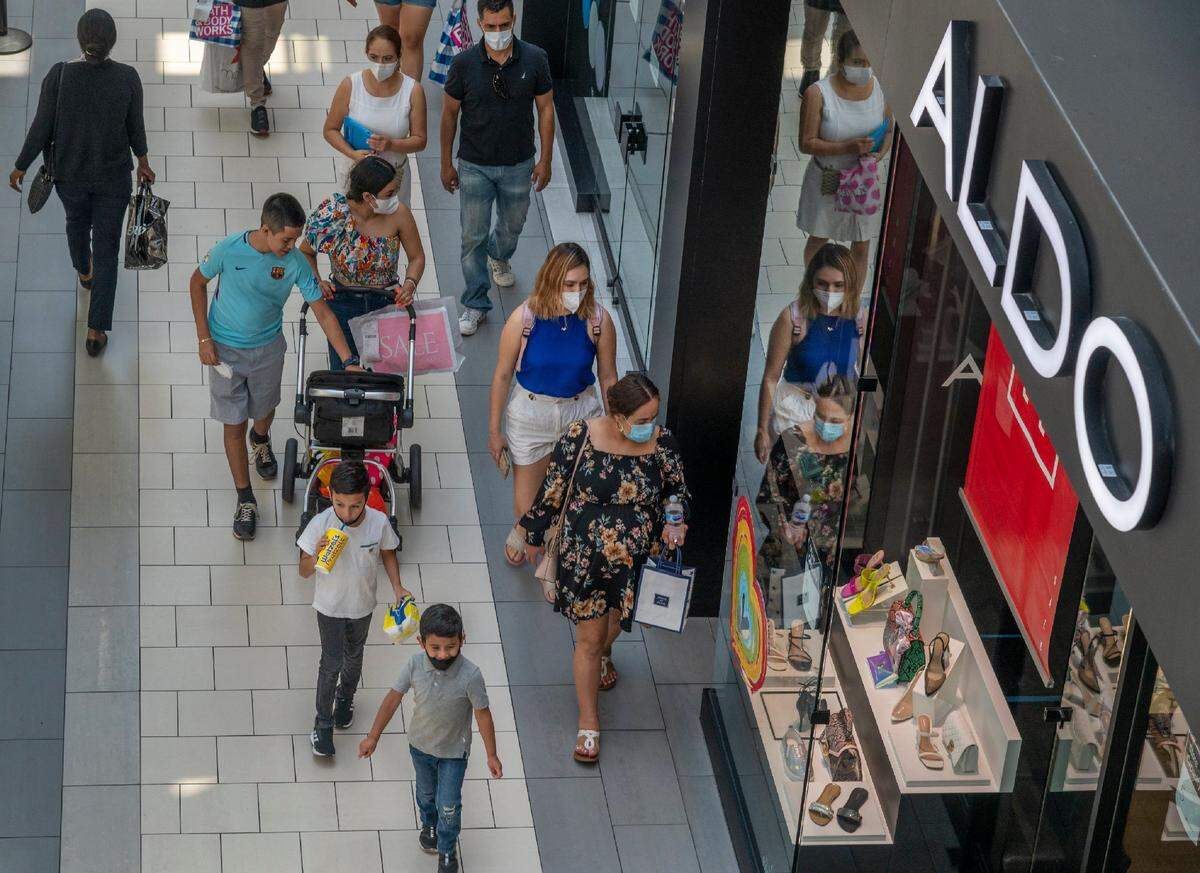
Doug Elmets, a spokesman for Arden Fair, said the mall enjoyed a strong third-quarter resurgence despite the permanent closure of Nordstrom, one of its four anchor stores.
Elmets said the reopening of the mall has ushered in a significant change in consumer habits. Traffic is lighter, but the people who come to Arden Fair aren’t there to browse.
“Customers are going to Arden Fair with the intent to buy ... not to window-shop,” he said.
As for the crucial holiday fourth quarter, Arden Fair officials believe mall traffic will continue to be affected by COVID-19 concerns, but the sales revenue will be there. Instead of everyone jamming into the mall on Black Friday, shoppers will likely come in at a more leisurely pace.
The result will be a strong quarter. “We anticipate there’s going to be a sizable increase in sales,” Elmets said.
This story was originally published November 5, 2020 at 5:00 AM.