For this group of Sacramento classic car enthusiasts, the journey is the point
AI-generated summary reviewed by our newsroom.
- Model A driving classes teach hands-on skills at California Automobile Museum.
- Capitol A’s club fosters inclusivity, emphasizing driving over perfection.
- Enthusiasts favor Model A’s simple design, affordable parts and road feel.
For some classic car enthusiasts, the imperative is preservation. For others, driving is the point.
As John Anderson drove his Model A through the Sacramento Marina — a dark teal model from 1928 — the horn made a loud “awooga” noise. The fraction on the gas gauge bobbed up and down, and the engine snorted as he changed gears.
“You can’t be in a hurry in a car like this,” he said.
Anderson was one of several instructors out Saturday morning from the California Automobile Museum teaching people to drive a Model A, the Ford that was once standard on American streets and succeeded the Model T.
Some of the instructors and students said they were drawn to the car for its relative affordability compared to other classic cars. Several are also members of the Sacramento Capitol A’s, a club for Model A enthusiasts.
Joe Arostegui, a docent at the museum, said it’s a supportive group: You could bring in a 1949 Chevy barely running, he said, or a 1977 Gremlin, and everyone will gather around. Bring in a 1969 Volkswagen, he said, and people will go nuts.
“I like the anti-snootiness of it,” he said.
Arostegui, for years, had fixed up old Alfa Romeos with his brother. He became a docent at the museum after retiring from state work, and learned to drive a Model A Saturday morning. He said he liked the visceral feeling of driving the classic cars, sensing the road and the vehicles’ limitations.
“I love fixing things up, because you can make mistakes and learn by doing... Get motor oil splashed on your goggles,” he said. “That kind of stuff’s fun.”
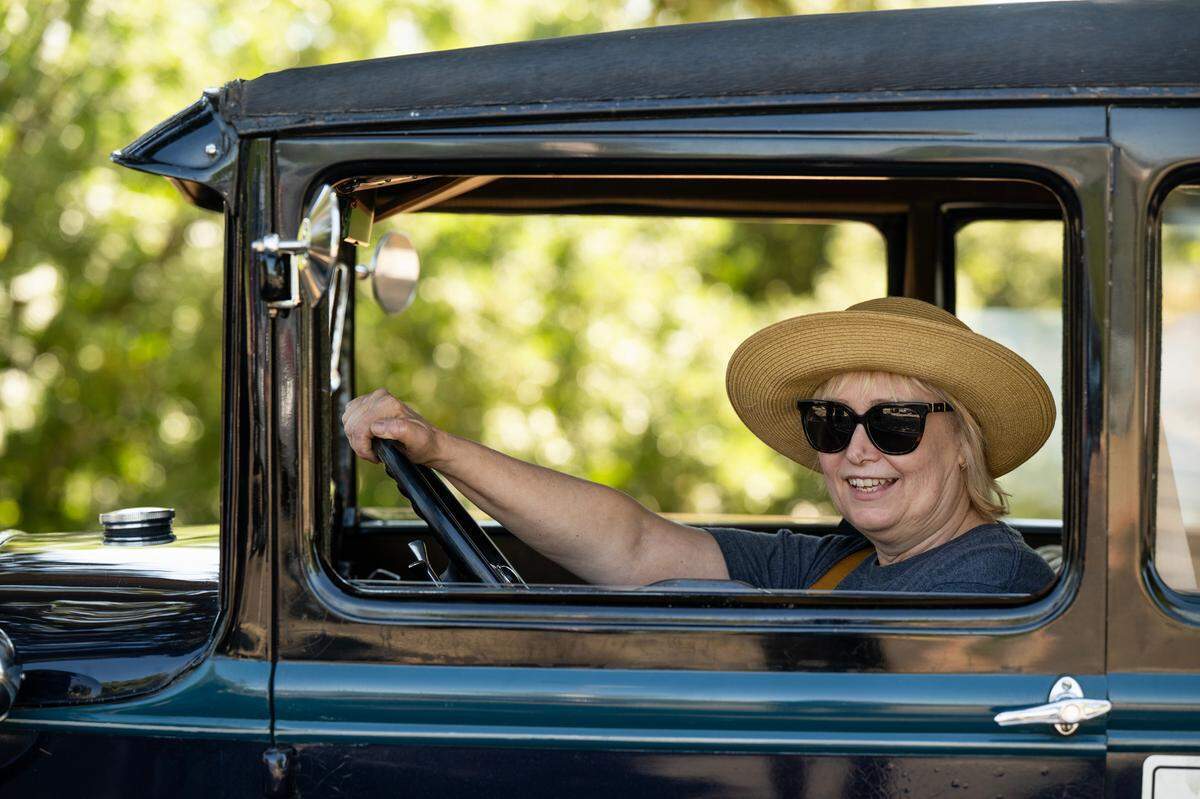
Anderson, now 82, bought his first Model A in West Sacramento when he was 15 years old.
The price was right: $80, equivalent to roughly $900 in 2025 dollars. The design was simple, and easy to work on. To this day, because they were once ubiquitous, it’s easy to get parts for Model A’s, he said.
“They’re very primitive, but you can work on them,” he said. “What you see is what you get.”
Historical accuracy vs. just ‘having fun’
There are two schools of thought among classic car clubs, said Al Smith, another instructor. Some revolve around car shows, and members will notice a lug or bolt that is incongruous with its era.
“It has to be exactly as Henry built it,” Smith said, referring to Henry Ford.
But the Capitol A’s, he said, are drivers. Smith had driven his Model A to the museum that morning — on the freeway, thanks to an overdrive he installed that knocks the maximum speed about 10-12 mph faster.
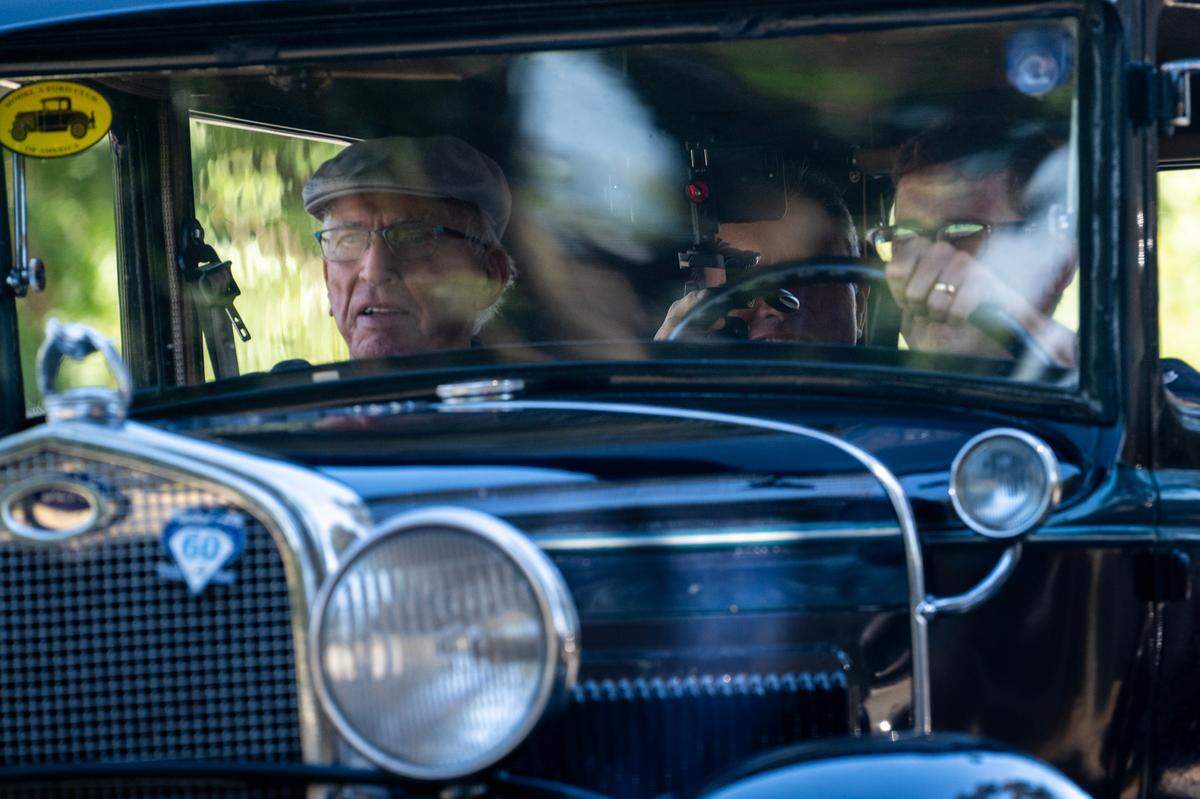
Smith bought his Model A in 1995, originally for his parents. They drove it, he said, from California to their home in Pennsylvania. They had one flat tire in Indiana, Smith said, and a problem with a brake rod that his father fixed on the road.
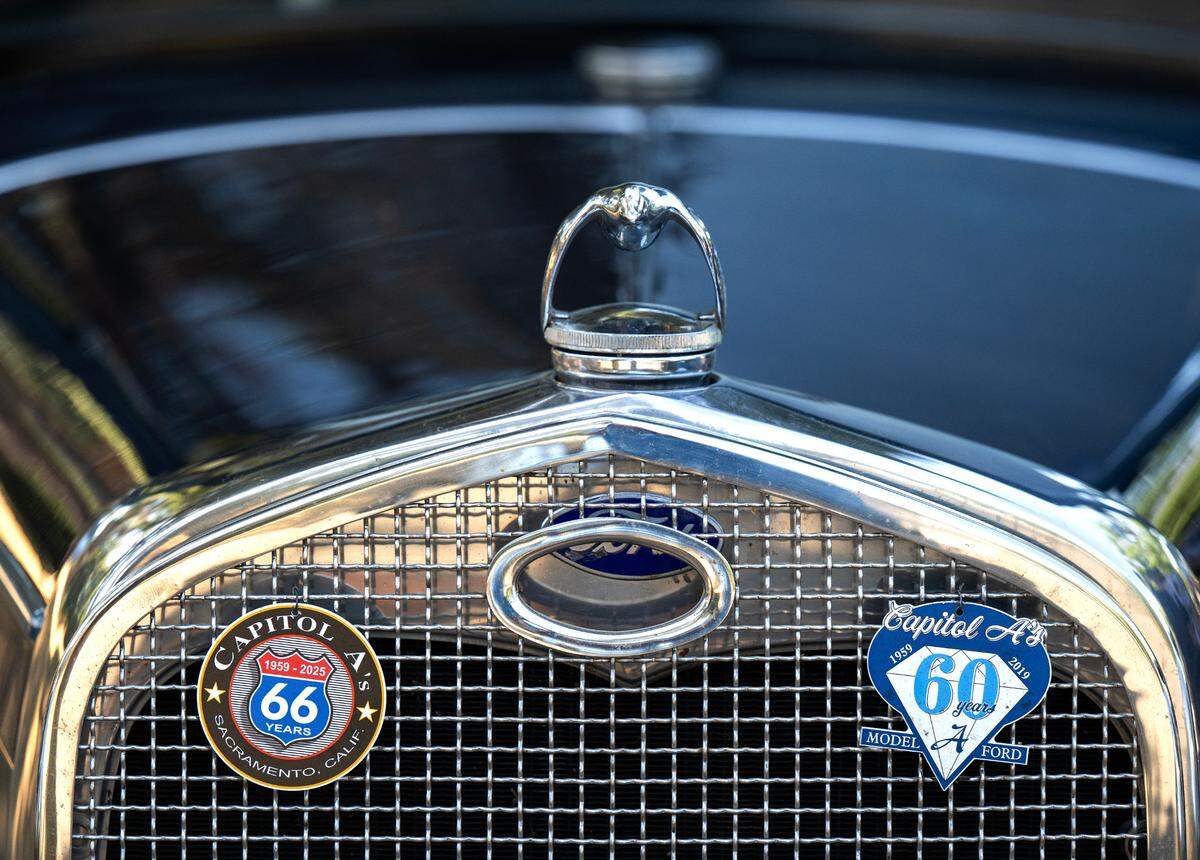
His 1930 model was painted Washington Blue, a shade so dark it appears black. It had a quail hood ornament, which he said was a reference to what the car sounded like when it was newer and quieter: a flock of quails taking off.
David Frank, another instructor from the California Automobile Museum, said that as long as it doesn’t change the way the car drives, he doesn’t mind small modifications, like LED bulbs to make the headlights brighter. He plans to install seat belts in his Model A, as his wife has urged him to do.
“I don’t really care if the lug nuts are the wrong lug nuts,” Frank said as he rambled along the Sacramento River, catching stares and waves the whole way. “My cars are more about having fun.”
The classes are held occasionally at the museum, and private sessions can be booked anytime on its website.
This story was originally published July 20, 2025 at 6:00 AM.