Inside the ambitious plan to build a $175M soccer arena in Rancho Cordova
AI-generated summary reviewed by our newsroom.
- Developers plan a $175M indoor soccer arena and plaza in Rancho Cordova by 2027.
- City agreed to land and revenue-sharing terms to attract two MASL teams.
- Developers seek private funding, corporate sponsors and a broader mixed-use build.
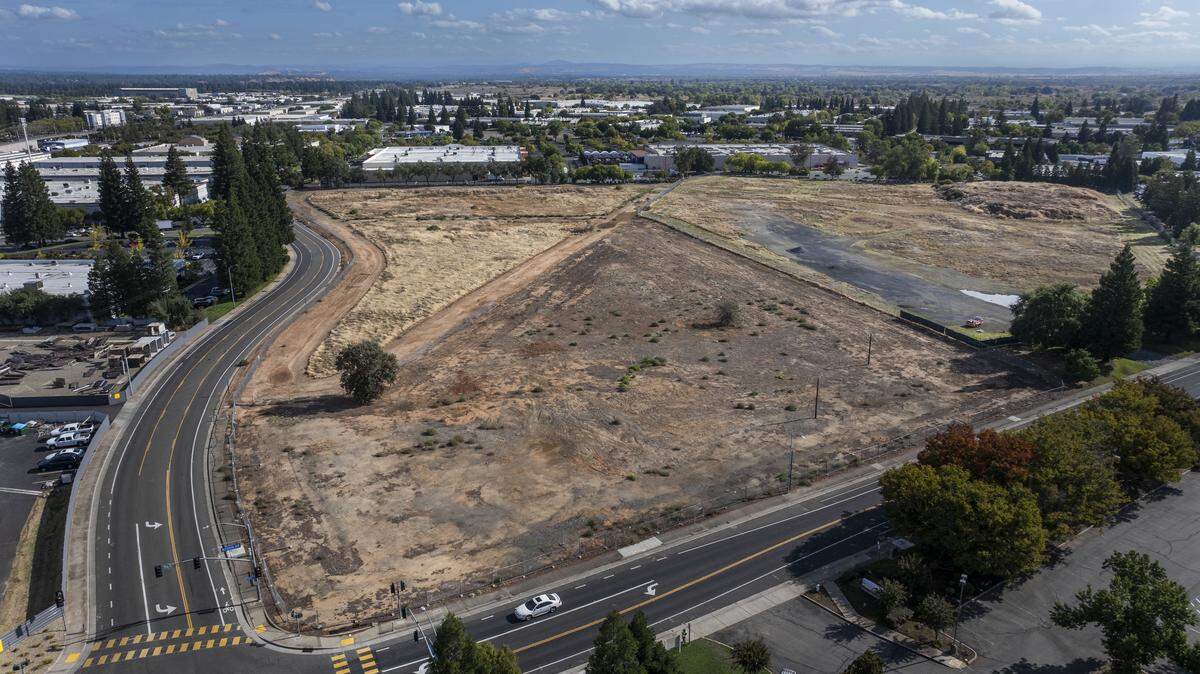
It’s an empty lot on a nondescript corner in Rancho Cordova, bordered to the west by office parks and to the east by a shopping center with a Home Depot, an Asian supermarket and a Wendy’s fast food restaurant.
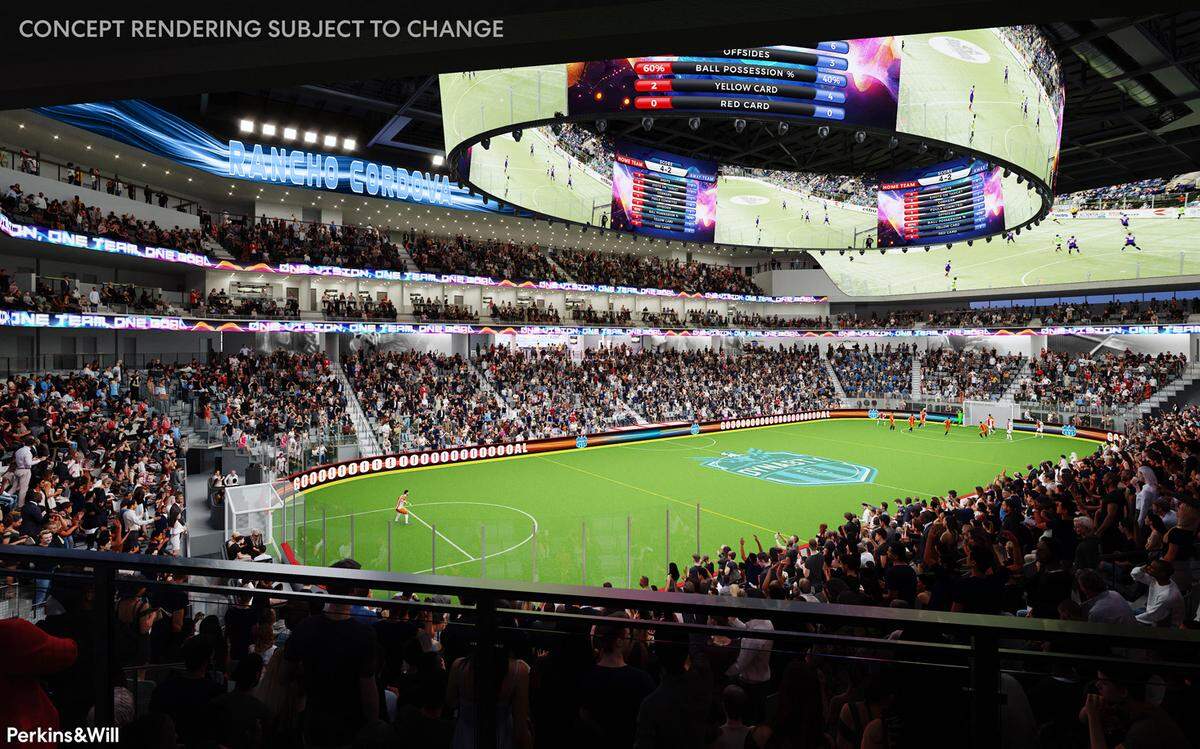
In two years’ time, developers say, it will be an indoor soccer arena and plaza, poised for a larger buildout with housing, hotels, retail, dining, a card room and what would be the suburban city’s only movie theater.
The “Downtown Dova” project became public in late September, when the Major Arena Soccer League awarded the Sacramento region two soccer teams — one men’s and one women’s — and Rancho Cordova officials inked an initial deal that laid the groundwork for public contributions of land and tax revenues.
It’s an ambitious idea by several dimensions: Developers expect costs for the arena and plaza will round out to $175 million. They plan to build it in less than two years, in time to host games in late 2027.
The totality of the project, they say, might land shy of $1 billion.
The $1 billion estimation would be similar to the total cost of Golden 1 Center and the surrounding Downtown Commons project a decade earlier. The planned new Republic FC stadium in the downtown Railyards, which is expected to open in spring 2027, has a similar price tag of $175 million with an entertainment district that adds up to $321 million.
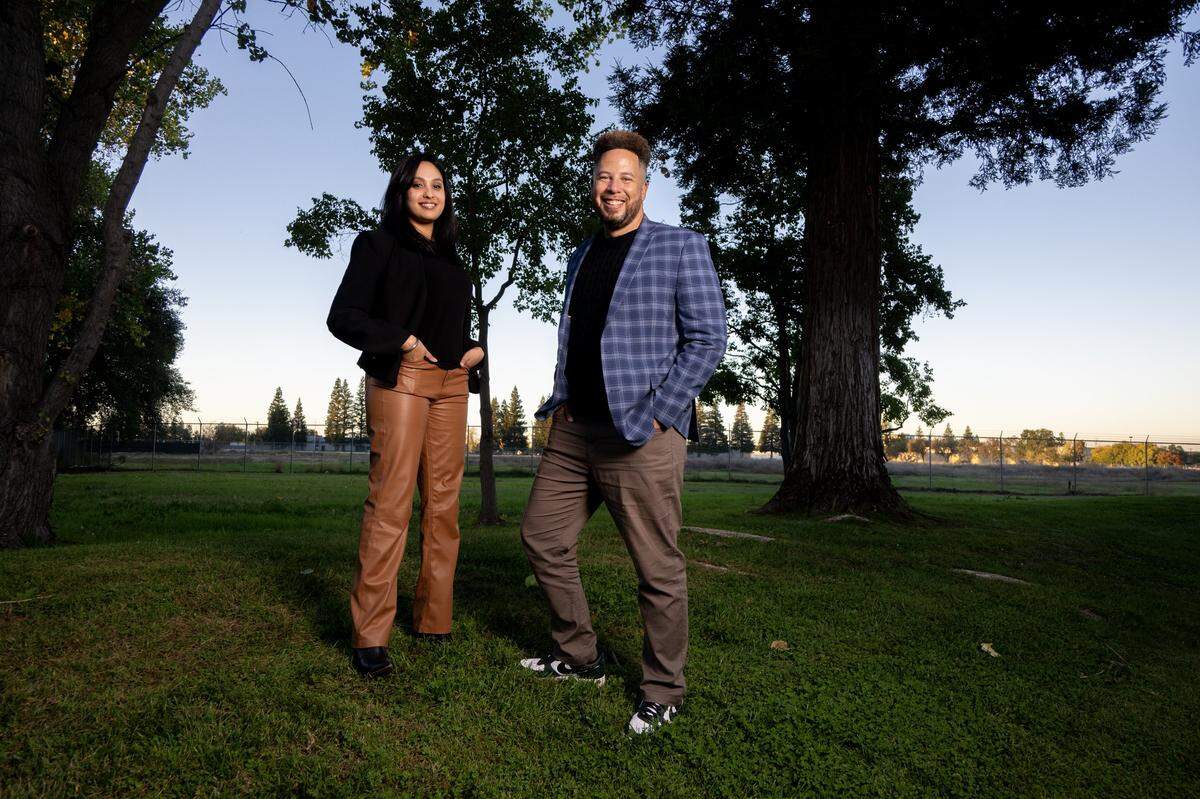
Joshua Wood, a 13-year Rancho Cordova resident, said he was driven by the cause of bringing entertainment to his home city. His identical twin brother, Sacramento State President Luke Wood, is also pushing to elevate Sacramento’s sports scene with a new football stadium for the Hornets and a renovated basketball arena.
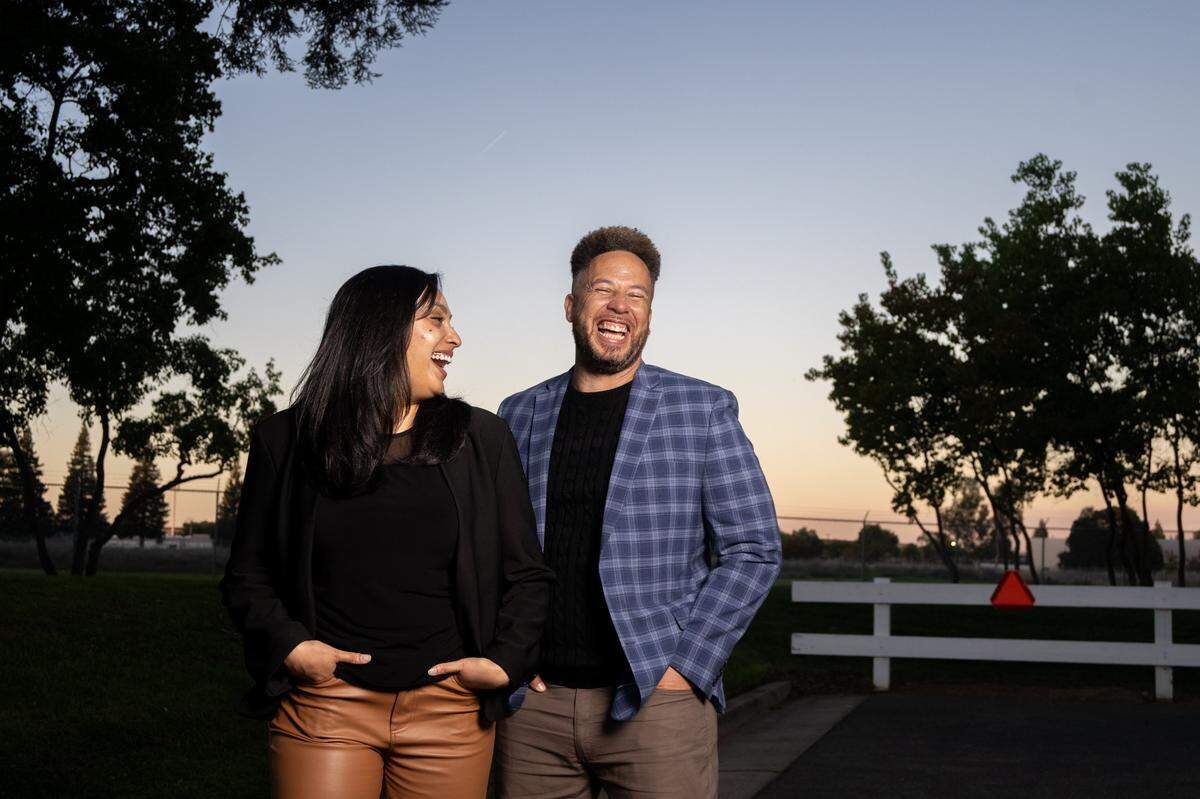
Wood and his business partner, Charanjeet Kaur Tiwana-Purewal, founded the development firm heading up the project last year, and the soccer arena would be its first major project. They’ve won over City Hall: Council members unanimously approved the initial agreement, which contemplates offering city-owned land to the developers and sharing expected tax revenues. The deal passed on the hope that the project would bring long-awaited entertainment and a central gathering place to Rancho Cordova, a city that has struggled to establish a traditional Main Street.
“Rancho Cordova is not blessed with a cute little downtown,” City Councilmember Linda Budge said in an interview about the project last month.
In an interview with The Sacramento Bee, Wood and Tiwana-Purewal said they’re confident that Rancho Cordova and the surrounding area have the business presence to sell corporate sponsorships, and residents who can afford to buy tickets.
The arena would not depend solely on one tenant, they said — it will host other live events, like concerts, graduations, college sports, volleyball, boxing and MMA. And Sacramento once supported an indoor soccer team, called the Knights, which played in Arco Arena for the World Indoor Soccer League from 1993 to 2001.
“We’re feeling stronger and stronger every day,” Wood said.
Stadium politics
Wood attended Sacramento State, majored in government and served as student body president in 2004-05. After college, he said he “pretty quickly got into development, entitlement politics and things that helped bigger projects.”
Wood, 43, has been described as passionate about Sacramento and wanting to make it more dynamic. He worked with former Mayor Kevin Johnson’s administration on the campaign to build Golden 1 Center and keep the Kings in Sacramento.
Wood was a prominent member of The4000, a group that worked with the mayor’s office to combat an initiative that sought to stop Sacramento from using taxpayer subsidies to help fund the Kings’ new arena. The group was named for the estimated 4,000 construction workers who would benefit from the arena project.
Wood served as the executive director of The4000 and held the same title at DowntownArena.org.
Golden 1 Center was built with Sacramento contributing $273 million in construction bonds, to be paid off with parking revenue, while the Kings’ estimated cost was $254 million.
Wood went to Sacramento State and was part of the SAC 12 committee — local officials, prominent alums and other stakeholders who launched a push to get Sac State added to the Pac-12 Conference — but recently stepped aside from his role as voluntary chair, after also helping raise money earlier this year for Sac State athletes.
Lining up investors, incentives
Wood and Tiwana-Purewal founded KozPure Development, which will serve as the Downtown Dova project’s developer, and Alpha One Sports and Entertainment Group, the property owner, in 2024 and 2023, respectively.
Their offices are clean and modern, with renderings of the arena project adorning the walls. They are located, fittingly, in a mixed development shopping center in Rancho Cordova, about a mile southwest of the project site.
Tiwana-Purewal said she and Wood are majority owners in the teams, and they plan to bring on more investors. Mark Daya, founder of Sac Platinum Realty in Rancho Cordova, and Caleb Kwong, CEO of Sacramento-based IT advisor Savant Solutions, each have minority ownership stakes.
Wood said they will begin soliciting corporate sponsorships in the coming months. The build will be funded by private investors and with construction loans.
The developers may receive some of the site’s tax revenues. That could include hotel tax, card room tax, admission tax, and local sales and use tax minus the city’s expenses for the project. The agreement with the city also allows for the formation of a Tourism Business Improvement District, and for the exploration of other incentives that would require council approval, like community facilities districts or enhanced infrastructure financing districts.
It is unclear whether the project would be exempt from the California Environmental Quality Act. A city spokesperson said Rancho Cordova can’t determine that until it receives the developers’ formal project application.
But some pieces, Wood and Tiwana-Purewal said, were expedited because of groundwork laid years earlier by city officials.
The city had already zoned an area adjacent to Highway 50 for larger, convention-style uses, City Manager Micah Runner said in an interview last month. The “Downtown Dova” project falls within that zoning area.
“It spurs the downtown that they’ve wanted — all of us who live here have wanted,” Wood said. “Because if you want to do something fun, you’ve either got to go to downtown, you go to Folsom, or you go to Roseville. There’s really nothing for us in this part of the county.”
In contrast with downtown arenas like Golden 1 Center, venues in suburban areas are often built on the idea that fans will flood into an area with fewer postgame activities built in, but easier parking and logistics, said Peter Boumgarden, a professor of strategy and family enterprise at Washington University’s Olin Business School, who has researched stadium incentive deals.
“They come into a highly curated environment,” Boumgarden said. “Oftentimes, stadium projects in the suburbs are making more of that kind of pitch, that the actual in and out experience of getting to that kind of stadium — compared to going and seeing a Cubs game at Wrigley Field in Chicago — is going to be just way easier.”
‘I found it’
Wood said the goal with MASL teams in Rancho Cordova is to adopt a similar model that he believes has been successful with the San Diego Sockers. He was impressed after going to a game in the recently opened Frontwave Arena in Oceanside.
With 85,000 residents, Rancho Cordova is smaller than Oceanside, a city of 170,000. But it is just 15 miles from Sacramento, while the Sockers play 40 miles from San Diego.
“We looked at a lot of different leagues, a lot of different sports,” Wood said. “(We were) trying to figure out what was the right thing that would, one, be able to anchor the arena, but also bring together the most kind of people. And soccer is kind of the universal sport in that sense.
“… So I just popped down there and literally, I wasn’t there long before I was calling (Tiwana-Purewal and saying) ‘I found it!’ Because it’s so fun. It’s basically soccer on a hockey rink.”
The Sockers existed in other iterations of the league and have won four championships since the 2011-12 season. They made headlines by adding former U.S. National Team star Landon Donovan in 2018.
Sockers tickets run from $54 to $75 for an upcoming game in December. MASL teams currently play just 12 home games, but Wood said they plan to expand the schedule with the arena hosting roughly 40 total regular season games between the men’s and women’s MASL teams. Wood indicated there could be more announcements coming.
Part of the appeal is the difference between indoor soccer and traditional soccer.
Indoor soccer features two teams of six, including one designated goalkeeper. Teams have 12 to 16 players on their active rosters. Unlike traditional soccer, there is no limit on the number of substitutions teams can make. And similar to hockey, penalties can lead to power play situations in which one team is undermanned.
“It’s such a family sport, and it’s thrilling,” Tiwana-Purewal said. “It’s just so fun to watch because it’s so fast-paced and so high-scoring that you’re just engaged.”
Frontwave Arena holds 7,500 and appears to have a similar design scope to the Rancho Cordova proposal. It’s part of a larger mixed-use project that includes 22 neighboring youth soccer fields.
The arena also houses the NBA G League’s San Diego Clippers, who started playing home games there in the 2024-25 season.
Filling Sacramento’s midsize venue gap
The new Rancho Cordova arena could bridge the gap between the region’s smaller concert venues. It would be about three times the capacity of Channel 24 in Sacramento, and less than half the capacity of the Golden 1 Center.
“I think one of the knocks on Sacramento has been we either have small venues or large venues, and there’s not a lot in between,” said Mike Testa, CEO of Visit Sacramento. “So I think when you can add something in the mid-range here of 7,500 seats that’s good for the region. The more venues we have that appeal to a number of different kinds of promoters, that ultimately is a good thing for all of us.”
Wood and Tiwana-Purewal said they want to break ground on the Rancho Cordova site and start building the underground infrastructure in the first quarter of 2026. The project area is about a quarter-mile from where Highway 50 carves northeast through Rancho Cordova, and from the intersection of Folsom and Sunrise boulevards, two of the city’s major thoroughfares.
Wood said they submitted for design review last week. The city-owned portion of the property — a 12.5-acre parcel that Rancho Cordova purchased in 2005 — has never been developed.
Still, recent history has thrown obstacles in the way of developers’ timelines for Sacramento-area sports venues. The area’s other soccer team, Sacramento Republic FC, initially planned to have a new stadium in the downtown Railyards as far back as 2019.
But it took the club until 2024 to finalize its financing for the stadium once Wilton Rancheria purchased a controlling stake of the club and committed to privately funding the new venue, which broke ground in August.
“Building a stadium takes a ton of time,” said Boumgarden, the business professor, “and there are hiccups in the process.”
This story was originally published November 3, 2025 at 5:00 AM.