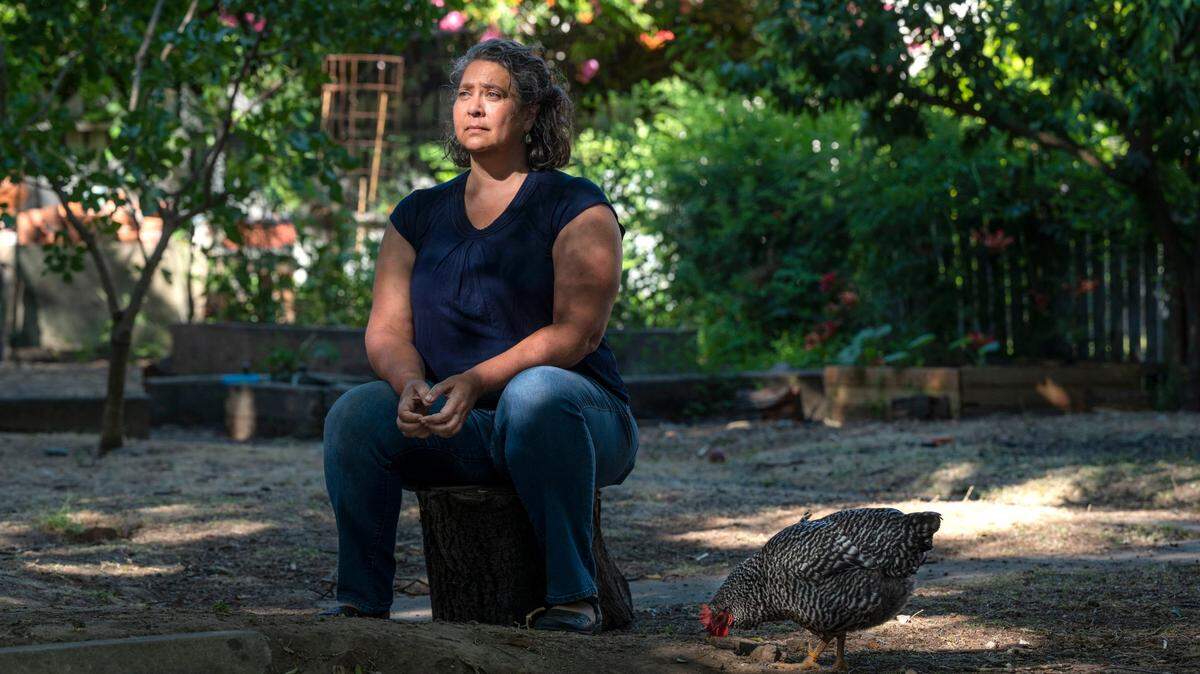
She had an abortion at 31 weeks. Why did California turn her away?
READ MORE
Supreme Court Abortion Ruling
Click the arrow below for more coverage of the Supreme Court’s decision on abortion rights.
Expand All
Megan Fidell went into her third trimester convinced she was pregnant with a healthy baby. One morning in her 31st week, she woke up excited to go to the doctor and see her baby on an ultrasound; by 11 a.m., she and her partner, David Lemon, were pacing through the park in tears, resolved to terminate the pregnancy.
Severe hydrocephalus, Fidell’s doctor had told the couple that spring day in 2012. Pointing to the black-and-white ultrasound images, the obstetrician showed them where the baby’s brain should be. There was a huge dark space. The doctor explained the baby’s head was so large that Fidell would need a risky C-section. She said that the baby’s ventricles were full of fluid; Fidell saw that the brain was a film on the edge of the skull. There was no cure. The baby might never speak words. He would have to endure surgery before he turned 1, if he even lived that long.
This sudden grief was dizzying. Fidell and Lemon were both 39 when they met on a dating site, and they badly wanted children; she was pregnant just a few weeks after they met. It seemed like a blessing. The previous scans and tests had all looked normal. Until that morning, all they’d known was joy.
But the diagnosis was too much, and it took about 45 minutes of talking and weeping at a Sacramento park for them to decide: They did not have the capacity to raise this child, and they did not want to bring a child into the world who would have to bear so much.
Other people might have made different choices — though the baby’s condition was dangerous and debilitating, it wasn’t necessarily fatal. But Fidell and Lemon made an agonizing decision: They wanted an abortion.
And then they realized that, in the worst moment of their lives, they would have to immediately come up with $8,000 and leave California to receive the medical care they needed in, of all places, Albuquerque, New Mexico. The Golden State — whose leaders pride themselves on progressive policies — has outlawed the kind of health care that Fidell and Lemon wanted.
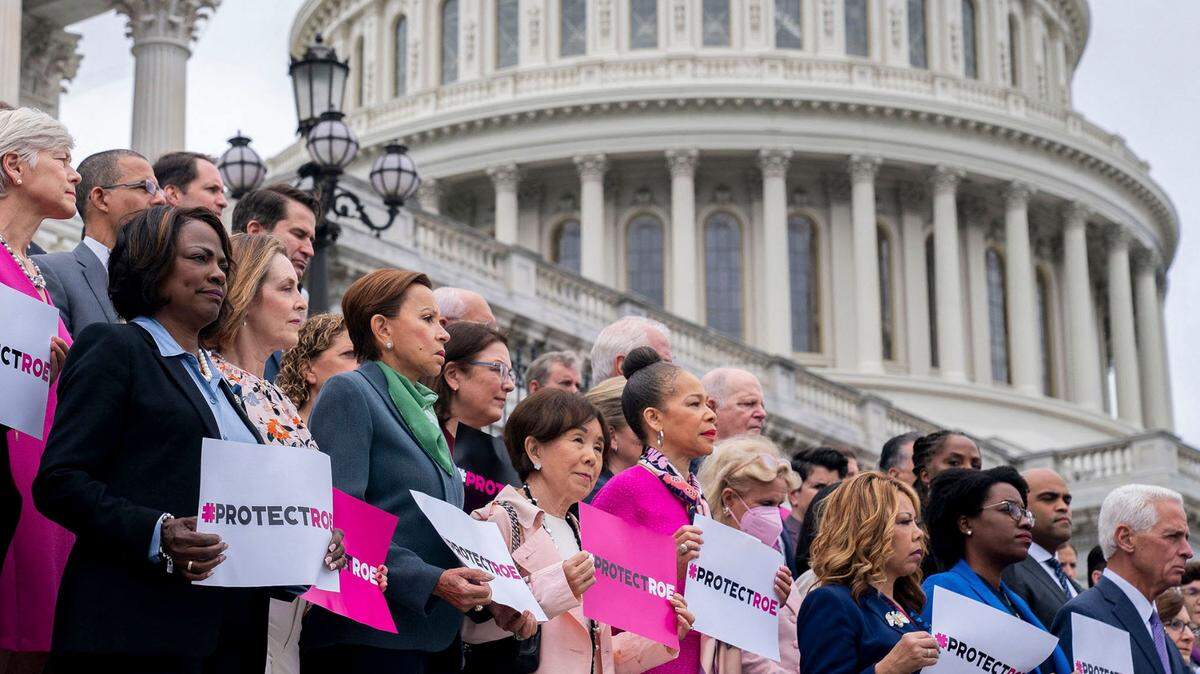
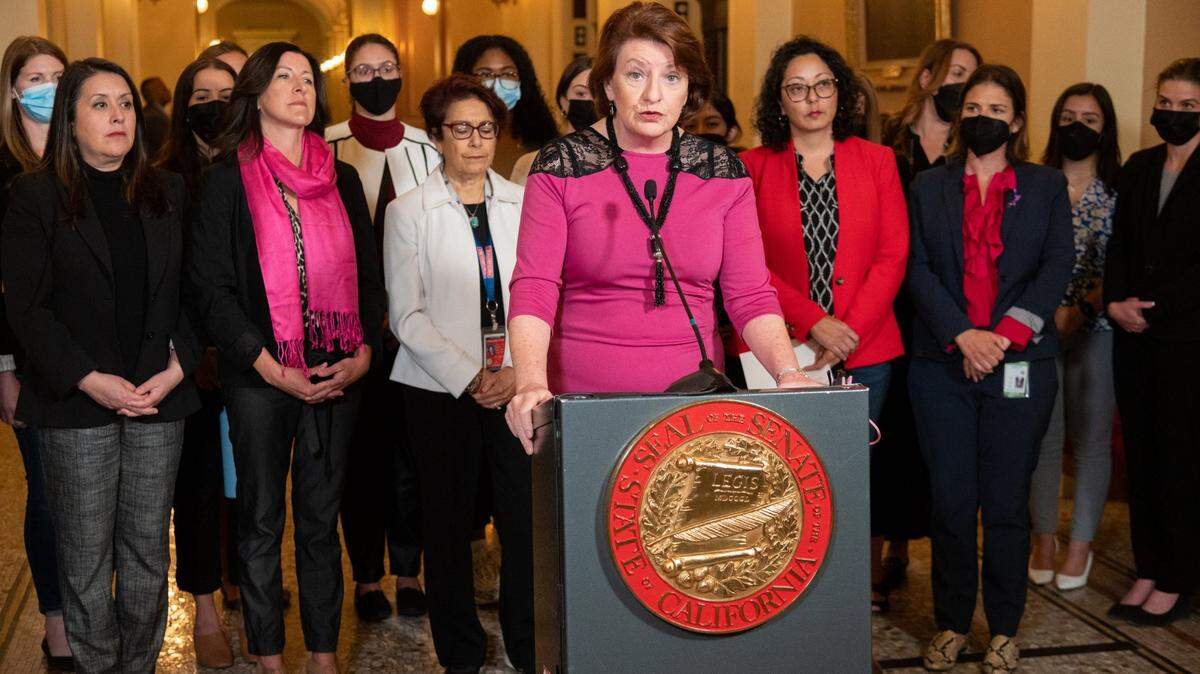
As the Supreme Court has become increasingly conservative and ultimately stripped away the rights of abortion-seekers across the U.S., Gov. Gavin Newsom has led a charge to make California a “sanctuary for abortion.” The state’s Future of Abortion Council proposed a suite of changes — many of which made it into a package of bills — to accommodate both in-state abortion-seekers and people who might come to California if their own states turn them away.
While a state constitutional amendment could override the restriction, there has been no explicit push so far to undo the state’s ban on most abortions after “viability,” an imprecise estimation of when a fetus might survive outside the parent’s body. The notion of viability has been used to delineate at what point during a pregnancy a fetus has rights that supersede the mother’s.
Fidell saw it as a glaring omission: Here was a statewide strategy for becoming an abortion haven that largely ignored the abortion seekers who had the fewest options.
The type of abortion she had was rare. The Guttmacher Institute recorded 132,680 abortions in-state in 2017, the vast majority of which were first trimester abortions; because of the way most doctors interpret state law, few, if any, procedures captured in the data were later than 24 weeks. Nationally, only 1% of abortions happen at or after 21 weeks’ gestation. Shelley Sella, the doctor who helped Fidell in New Mexico, told The Bee, “I think it’s really important to note that the biggest need, of course, is first trimester abortions, because most abortions take place in the first trimester.”
But Sella also noted that the people who need those later abortions are all among the most desperate for support.
They’ve become so sick during the pregnancy that they’re in grave danger; they’ve unexpectedly received a terrible diagnosis, like Fidell did; they have a health condition or a lack of medical care that left them unaware of the pregnancy; they are children themselves, and they were unable to terminate the pregnancy sooner; or, in a scenario that will become increasingly common in a cascade of harsher restrictions, they wanted an abortion much earlier, but could not afford to get that care until later in the pregnancy.
Fidell hasn’t been especially public with her story, but when she saw the news about the state sanctuary — about making California a welcoming place to anyone seeking to exercise their reproductive rights — she felt alarmed and reached out to The Bee. Nothing had changed for people like her in the 10 years since her first pregnancy.
“It was California saying, ‘We’re the future of abortion,’” she said. She thought to herself, “Well, you’re not enough.”
California supports most abortions — but not the rarest
Nearly 50 years after Roe v. Wade, conservatives on the Supreme Court struck down the rulings that protect U.S. abortion rights nationally. In the decision formally made public June 24, the conservative justice Samuel Alito wrote about polarized public opinion on abortion, saying that “far from bringing about a national settlement,” previous cases had “enflamed debate and deepened division.”
However, research shows abortion procedures are widely accessed: A quarter of American women terminate a pregnancy by the age of 45. More broadly, public opinion polling has consistently shown widespread support for the right to end a pregnancy. Pew, for one, found that 61% of Americans believe that abortion should be legal in all or most cases; 37% believe it should be illegal in all or most cases.
When it comes to second and third trimester abortions specifically, Americans are inconsistent. In the abstract, there appears to be significant opposition to abortions later in pregnancy, but when asked about more concrete circumstances, many people change their position. The 2022 Pew poll found that over 73% of people supported abortions unequivocally when the life or health of the pregnant person was at stake, while less than 11% of people thought women should be compelled to sicken or die for the sake of a pregnancy; 15% thought victims of rape or incest should be automatically forced to give birth to their attackers’ babies. And 53% of people support abortion when the fetus is severely sick.
This study demonstrates a phenomenon described by Sella. “When the anti-abortion extremists talk about it,” she said, “their focus is on the procedure. My focus is on the woman, and what is going on for her. And I think when we do that, then it all makes sense.”
California hasn’t fully applied the doctor’s logic to its own statutes: When the legislature passed the Reproductive Privacy Act in 2002 to enshrine “the fundamental right to choose to bear a child or obtain an abortion,” that fundamental right was only codified for people who needed an abortion before viability.
The first version of the 2002 bill banned abortion if a doctor judged that “the fetus was viable” and the pregnancy “posed no risk to life or health of the pregnant woman.” L.A. County Supervisor Sheila Kuehl — who authored the bill when she was in the state Senate — told The Bee that she simply borrowed the framing from Roe v. Wade to avoid disagreement in the legislature. The 1973 opinion allowed this distinction between acceptable and unacceptable abortions. The court found that “the State” has an “important and legitimate interest in potential life,” and allowed states to “regulate, and even proscribe, abortion” after viability unless the pregnancy was dangerous to the mother.
In California, Kuehl said, the matter was never up for debate: There would be no third trimester abortions, and there would be almost no abortions late in the second trimester, either.
This was in step with the political atmosphere at the time. John Ashcroft, the attorney general under President George W. Bush, had loudly supported a bill in his home state of Missouri that would have allowed people to kill health care providers to prevent later abortions (the bill became a law that was overturned in court). In 2000, California legislators attempted unsuccessfully to ban intact dilation and extraction, a method that was used for later abortions.
In 2003, a ban on this type of procedure passed at the federal level, with support from a significant number of Democrats in both houses. When Bush signed the bill into law, he, too, demonstrated Sella’s point about rhetorical focus. Bush spoke of “the rights of the unborn” and said he thought the most convincing argument against these abortions was “a simple description of what happens and to whom it happens.” He was thinking about the horror he felt at the procedure, and imagining the personhood of the fetus; he never mentioned why a pregnant person might have elected to have a later abortion.
Six states and D.C. have no restrictions on the timing of abortions; California is not among them.
While there are tentative plans in place to undo the state’s viability restriction, the issue is on the back burner for policymakers and activists. Fabiola Carrión, director of reproductive and sexual health at the National Health Law Program’s Los Angeles office and a member of the California Future of Abortion Council steering committee, said that committee members view the restrictions of the Reproductive Privacy Act as “a hurdle” to abortion seekers, but said they’re prioritizing other goals first.
“Obviously,” she said, “there’s only so much we can do in the first year.”
The law means patients are pushed out of the state to get help
Fidell was shocked when her doctor told her she had to leave the state for the abortion.
After they made their decision in the park, she and Lemon returned to their home in midtown. A genetic counselor from UC Davis called them, and they told her they wanted to end the pregnancy. Fidell recalled, “She said, ‘Well, I’ll call around, but you should know that (in California,) you don’t have any choices.’”
“The transition from shock and grief setting in just ended after that couple of hours,” Lemon said. “We came to realize that there were certain things that had to happen within the next 48 hours … and they were all gonna be out of state and require travel, or else we would be forced to see the pregnancy through to term. There was no time for anything else but planning.”
The news came on a Monday; Fidell had to be in Albuquerque by Wednesday, and she had to put the $8,000 charge on her credit card, plus the cost of the last-minute flights. “I’ve gone from having a baby in 10 weeks to, you’re gonna need 10 grand by this afternoon, and you’re flying somewhere tomorrow, and you’re lucky they can take you, and this is the most horrific day that you’ve ever had.”
Before that ultrasound in 2012, “I was abstractly pro-choice,” she said. “It hadn’t mattered to me up until the point when I needed it desperately, and the restrictions actually really were a huge factor in my life.”
She and Lemon wept in the Sacramento airport; they wept on the plane; they wept in the Albuquerque airport; they wept in their dingy Albuquerque hotel room.
“It is god-awful to travel in those moments,” she said, recalling how she couldn’t be at home during the worst days of her life.
On the day of the appointment, a Wednesday, they took a discreet car service to Southwestern Women’s Options and had to pass bulletproof glass. Her doctor, Sella, said the clinic is one of only three clinics in the country that routinely provides third trimester abortions.
After visiting the clinic in Albuquerque, Fidell and Lemon returned to California, where doctors helped induce labor. She was in the hospital for three days before she delivered the baby boy. Doctors at UC Davis wouldn’t actually terminate the potentially viable pregnancy, but once it was done in New Mexico, they would willingly deliver the child.
Someone had to drain the fluid from his head before the birth because he was already larger than a baby who’d been born a few weeks prior. She remembered apologizing to her nurse for the heaviness in the room, and the nurse telling her not to worry — she’d known the baby was dead, and she intentionally signed up for it. It was an honor to be there for her.
After the birth, Fidell and Lemon saw the body, touched their son. He was wearing a little hat, and his eyes were shut.
They named him Solomon. It reminded them of “sol,” Latin for “sun.”
Legal abortions are affected by restriction
California has a relatively narrow definition of viability, which occurs when “there is a reasonable likelihood of the fetus’s sustained survival outside the uterus without the application of extraordinary medical measures” — extraordinary measures may very well be necessary to ensure the survival of, for example, a baby born nearly four months premature.
Nonetheless, the viability restriction doesn’t just serve to make certain abortions illegal; it also creates a climate in which doctors are afraid to provide legal care to pregnant Californians. It’s almost impossible to find a clinic in the state that will even consider taking on patients who are past 24 weeks, even though some fetuses wouldn’t be considered viable until several weeks later. The actual gestational age of viability is determined by doctors on a case-by-case basis; there’s no set age, even without the “extraordinary medical measures” caveat.
The Bee spoke with the director of a California clinic that performs abortions after 24 weeks; he pointed out that the law clearly gives doctors flexibility in determining when the restriction applies. And yet, among the small number of providers in-state who will perform abortions later in the second trimester, the director said, “Almost every other provider other than us has an internal policy limit of 24 weeks. … There is a perception, even among a lot of abortion providers, that there is a 24-week limit in California for abortion care, which is not the case.”
The director — who requested anonymity because anti-abortion rights extremists have harassed, attacked and assassinated health care providers in the past — said he wished he could “shout it from the rooftops,” but the clinic does not advertise the services it offers out of fear that the workers and patients at the office would become the targets of violence.
And yet, he said those services are urgently needed in the state. “There are certainly more women referred to us than we can handle,” he said. His clinic serves people who discover a fetal anomaly late in pregnancy, but also low-income Californians from rural areas who simply could not access care sooner. They’ve also begun treating more women from out of state, especially from Texas, as rights in that state have been limited.
Same diagnosis, different abortion experience
Fidell got pregnant again within a few months of Solomon’s death. Immediately, she and Lemon were on high alert, doing tests and scans as frequently as possible. At 20 weeks, she said, “I remember it being awkward,” because her doctors weren’t sure yet about the diagnosis, but they told her to book an operating room for a potential abortion anyway to make sure she had the appointment. They told her, “You can always cancel an operating room.”
She said, “When you’re in this world, it’s all sorts of shocking and morbid decisions.”
They booked the operating room. And at the 22-week scan, there it was again: Hydrocephalus. Fidell and Lemon asked if they could do surgery in utero — was there some treatment, since they’d caught it earlier this time? But once again, there was nothing to be done.
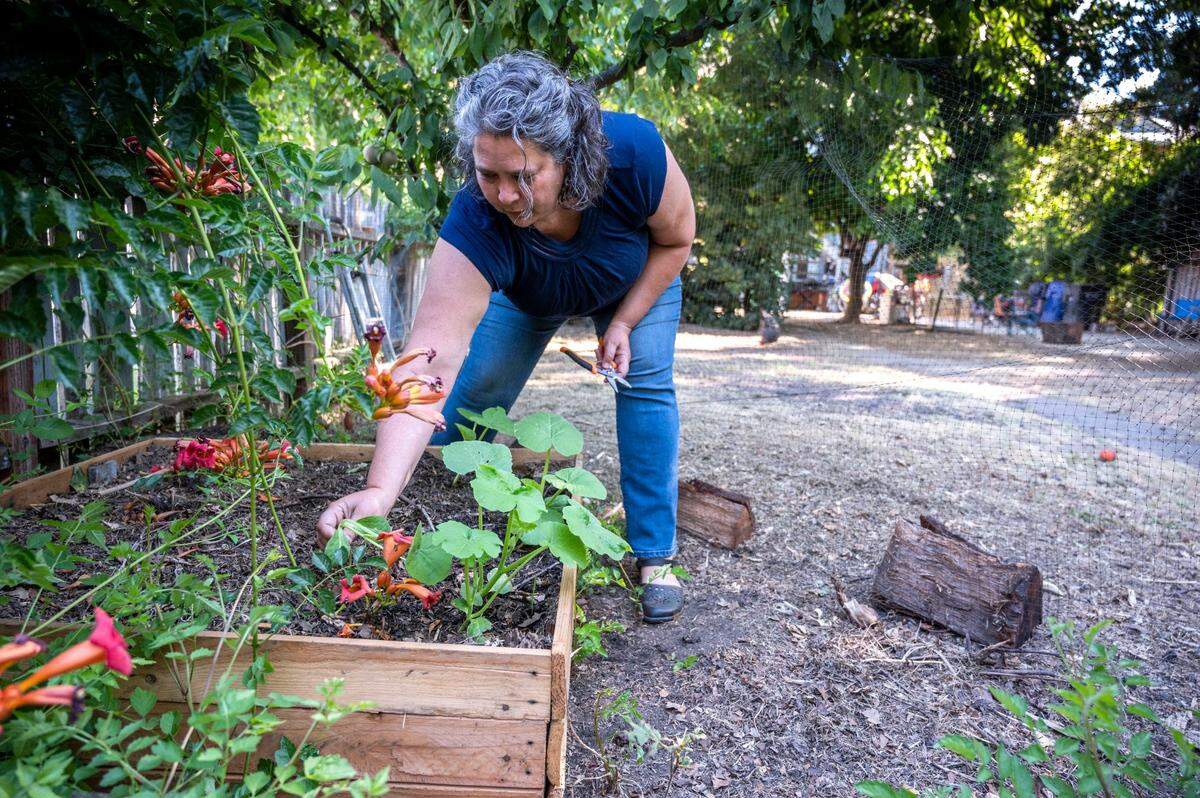
“This is where I can compare and contrast my late-term abortions,” Fidell said with a grim laugh. Because the baby’s gestational age was under 24 weeks, UC Davis did the procedure. Fidell and Lemon were able to sleep in their own bed. They didn’t have to book airline tickets or cry in an Albuquerque airport.
They named the baby Nathan. His cremains are in a little heart-shaped box next to his brother’s, inside a bigger box that’s covered in a soft pale blue fabric. The ultrasound images are in there, too, along with the photos they have of Solomon, bundled up in his blanket.
Fidell and Lemon tried for one more baby, although they were terrified — they’re convinced they both carry a recessive gene that can lead to hydrocephalus, because of the two rare diagnoses in their children. Fidell got pregnant a third time. They spent nine months expecting everything to go wrong, but all the scans looked normal.
When she finally went into labor, she was almost fighting it because in her experience, it seemed that pregnancies only ended with dead babies.
She recalled her OB-GYN coming into her room. “She came over and she whispered in my ear and she said, ‘I’ve read your whole chart. I know everything you’ve been through. You have tried more than any person could possibly try to have this baby, and it’s coming now and it’s gonna be OK — go ahead and have your baby.’”
Her son was born in 2014, a healthy baby boy. She and Lemon told him about his brothers, explaining that the babies’ bodies didn’t grow properly, that they were sick.
And she also told the people around her what happened with the first two babies. She was honest, unashamed. She wants even more people to know now, in the hope that California can begin to change.
With only three clinics routinely providing third trimester abortions nationwide, it was impossible for her to see access to this service as anything other than dangerously imperiled. She said, “Abortion feels so fragile.”
This story was originally published June 24, 2022 at 5:00 AM.