
Wildfire updates: Thunderstorms continue to increase risk of spread in Dixie Fire
Concerns over thunderstorms at the Dixie Fire remain over the weekend, potentially whipping up the blaze Sunday afternoon.
Officials warned Saturday that they do not expect the weather conditions to let up just yet, and a chance of thunderstorms remained Sunday. The National Weather Service predicted a chance of gusty, mostly dry storms with a potential for fire starts through Sunday afternoon along the Sierra Nevada in Northern California. The storms could also bring gusty and erratic winds to the region.
The Dixie Fire, which began July 14, has tended to follow cyclical patterns of growth based on the smoke cover. When the cover is strong, such as for much of the past week, the fire remains relatively suppressed and crews can expand containment lines. When weather conditions cause the smoke to lift, such as Friday, the blaze has the potential to explode once more.
Overnight, the fire grew by only about 4,000 acres, and although containment remained stagnant at 31%, fire officials said Sunday morning that they will be working to improve containment even as winds roll in.
“Firefighters continue to build and improve containment lines on the Dixie Fire,” Cal Fire officials said in a morning update. “Vegetation is extremely dry, and burning conditions are near critical. Fire behavior may consist of wind-driven surface fire, isolated torching, and spotting the next few days.”
Friday’s 23,000-acre expansion was still relatively low compared to the previous Friday, when the blaze charred 110,000 acres in a single day. But officials had said Saturday that the thunderstorms had pushed the fire precariously close to homes in areas such as Keddie Ridge, Wilcox Valley and Westwood.
Now, fire officials say that the North Arm of Indian Valley, as well as Wilcox Valley, will take priority for firefighting resources as crews prepare for possible storms ahead.
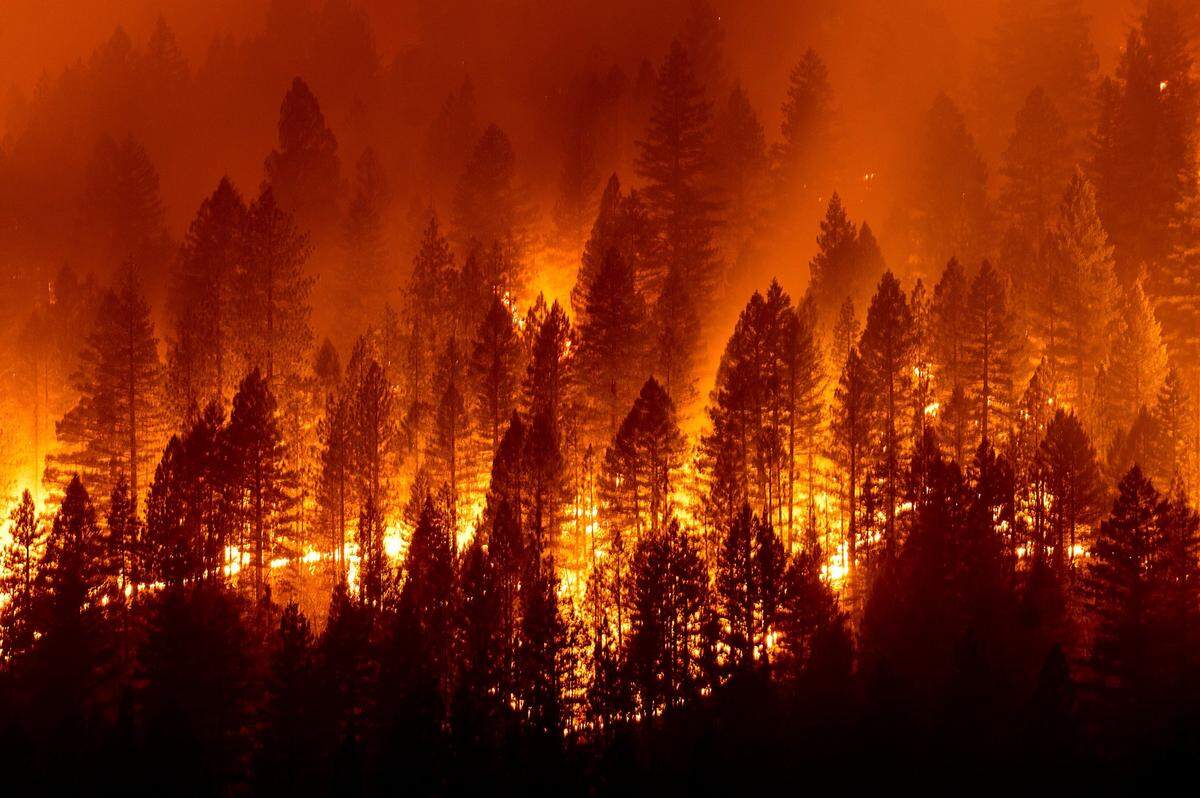
“What we saw yesterday was unfortunately those thunderstorms did materialize and they did have gusty winds that went 360 degrees, up to 50 mph,” Jake Cagle, the operations chief at the east zone of the fire, said in a Saturday morning incident briefing. “So our crews were highly engaged in the afternoon in structure protection in there. It was a very tough day yesterday in there in the afternoon.”
The blaze, California’s second-largest of all time, has burned 544,816 acres (851 square miles). The fire is now burning in five counties after crossing into Shasta County near Lassen National Park overnight Friday. The fire is also burning in Butte, Plumas, Tehama and Lassen counties.
Officials said Saturday that as thunderstorms remain in the forecast, total acreage could continue to increase significantly.
“We do have a forecast of thunderstorms again today,” Cagle said. “A little bit less … but if they do arise we can expect the same kind of fire behavior, winds pushing fire in all directions. So that’s what we’re faced with; another critical day today, another challenging day today.”
Firefighters took advantage of mild weather conditions early in the week to boost containment. Nearly the entire southern portion of the blaze is now secured behind fire lines.
But the fire has continued to spread with limited control in sections in the north and eastern parts of the fire, prompting officials to scrap plans to lift evacuation orders in the Lake Almanor area Friday. Tehama County released additional evacuation orders for the Mill Creek area Friday, and Plumas County did the same for the Genessee Valley.
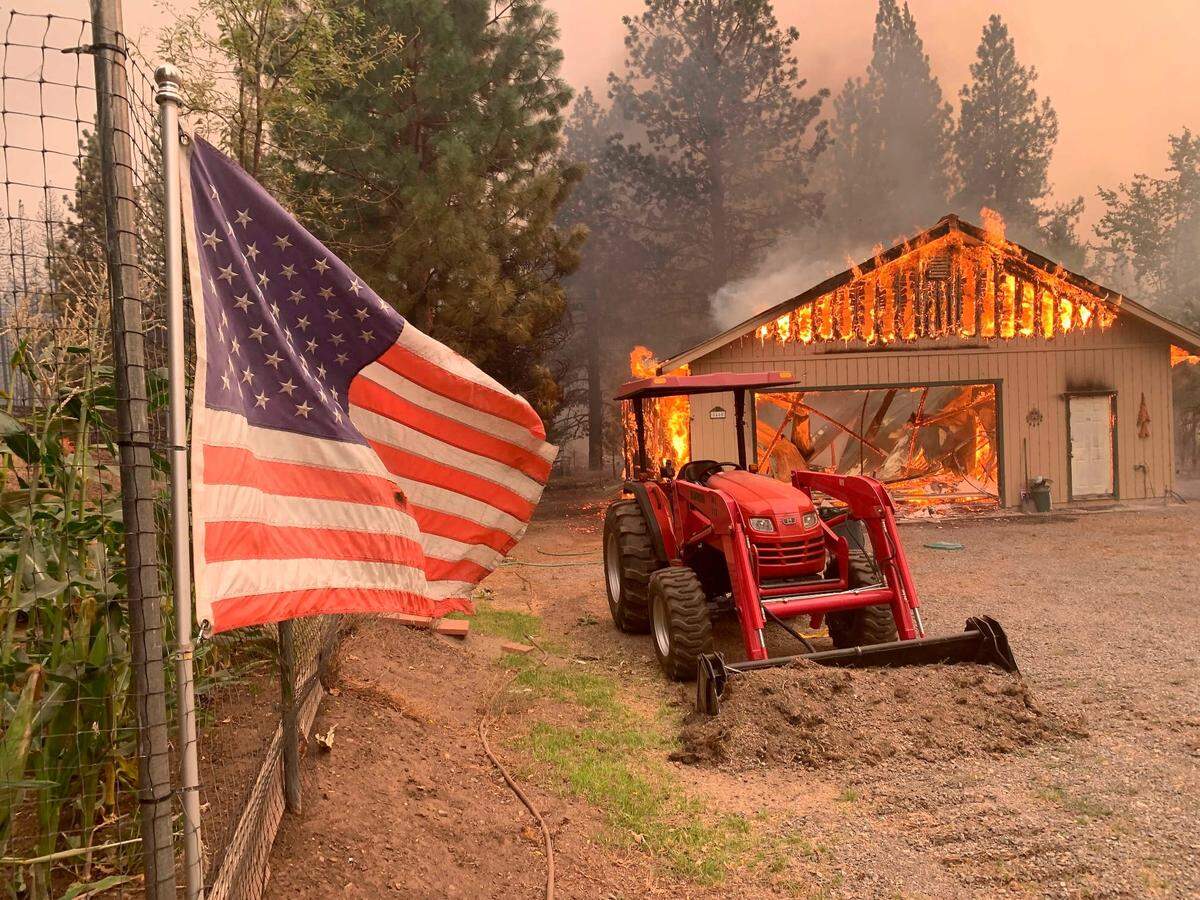
And officials warned Friday that the small Lassen County town of Westwood, just east of Lake Almanor, may be in imminent danger.
“Westwood is now a concern,” said Brian Rhodes, the Forest Service’s deputy fire and aviation director for California, on Friday. “It does appear that the fire wants to move that way.”
The Dixie Fire has destroyed 1,120 buildings and damaged 74. Among the losses are 615 single homes, according to Cal Fire. Last Wednesday, the fire tore through Greenville, destroying most of the Northern California town. Canyondam was also burned last Thursday. No civilian injuries or casualties have been reported yet from either incident.
Through the week, officials have been able to locate 46 previously unaccounted for people from the area of the blaze. On Friday evening, the Plumas County Sheriff’s Office announced that it was still searching for one person: Ronald Avila of Greenville.
As of Sunday, 14,838 homes and businesses remain threatened.
Many areas near the fire remain under evacuation orders, spanning across Butte, Plumas, Tehama and Lassen Counties. Local officials have an online map available with more details of evacuation orders and warnings.
A total of 6,550 fire personnel are assigned to the Dixie Fire, plus 20 helicopters and 570 engines. Three firefighters have been injured in the blaze, according to Cal Fire’s morning update.
The official cause of the Dixie Fire is still under investigation, but just a few days after the fire started on July 14, PG&E released a report suggesting that its equipment may have sparked the fire. On Monday, PG&E released an additional report saying that they had found no fault with the power lines that allegedly could have begun the Dixie Fire.
Trinity County wildfires
A lightning storm began a series of fires in Trinity County in late July. Of those, two have ballooned into large-scale wildfires: the Monument Fire and the McFarland Fire.
The Monument Fire began near the town of Del Loma two weeks ago and has since grown to 82,435 acres with 7% containment. Overnight, about 3,000 acres were added to the total, and containment inched up by 2%.
The fire is burning squarely within Trinity County. The blaze has prompted evacuation orders for Del Loma, Big Bar, Junction City and other surrounding areas.
On Saturday, officials said that winds in the area pushed crews to focus on structure protection, especially in the Burnt Ranch area, rather than containment operations. On Sunday, fire officials said that winds will once again be a cause for concern.
“Today, firefighters will be challenged with consistent northwest winds aligning with drainages, creating uphill runs,” U.S. Forest Service officials said in a Sunday morning update. “Hidden pockets of heat that exist around the perimeter of the fire will intensify and spread as they become exposed to stronger winds.”
The fire moved forward only modestly in the north, but the Forest Service said that the south flank remains active, backing into Miners Creek. Officials expect that winds could reach 30 miles per hour in some areas of the fire.
The McFarland Fire has charred 43,708 acres south of the town of Wildwood, on the border of Shasta, Trinity and Tehama counties. It is 68% contained.
The fire’s growth has slowed significantly since the weekend. The fire grew around 2,000 acres between Friday and Saturday, and crews increased containment by 6%. By Sunday morning, another 1,000 acres were charred and crews upped containment by 5%.
All evacuation orders have been lifted at the blaze. A few areas remain under evacuation warning Friday, including the community of Platina.
Six firefighters were injured Friday fighting the blaze. All are expected to fully recover.
Other fires
▪ The River Fire exploded more than a week ago on the border of Placer and Nevada counties, near the city of Colfax. But after its initial rapid expansion forced thousands to evacuate, the fire slowed last weekend and hit 100% containment Friday evening.
The blaze charred 2,619 acres in total. It has not grown in the past 72 hours.
The blaze ultimately destroyed 142 structures, 102 of which were homes. Much of the destruction came in the Chicago Park neighborhood near Colfax, which the fire hit during its initial rapid expansion. Two civilian injuries and one firefighter injury were also reported during the blaze’s early hours.
Some ground resources will remain in the area in the coming days to aid in mop up and repopulation.
▪ The Glen Fire, burning in the foothills of Yuba County, ignited and expanded rapidly Wednesday, threatening the towns of Brownville and Challenge. But it ultimately slowed now spans just 184 acres.
The towns were briefly evacuated Wednesday afternoon as firefighters struggled to slow the initial spread of the vegetation fire. The blaze is burning just south of Brownsville.
The blaze is 60% contained as of Sunday morning. Crews are engaged in mop-up operations and continue to construct lines around the fire.
On Friday, Cal Fire officials announced that the fire had been caused by a vehicle malfunction. The state fire agency said that the fire’s ignition appeared to be accidental, and that they “have not found any evidence of malicious or suspicious activity related to this fire.”
This story was originally published August 14, 2021 at 11:27 AM.