California universities promised to repatriate Native American belongings after audit. Did they?
After state audits found that the California State University and University of California held thousands of of Native American ancestors and family belongings, they promised to repatriate and give those items and remains back.
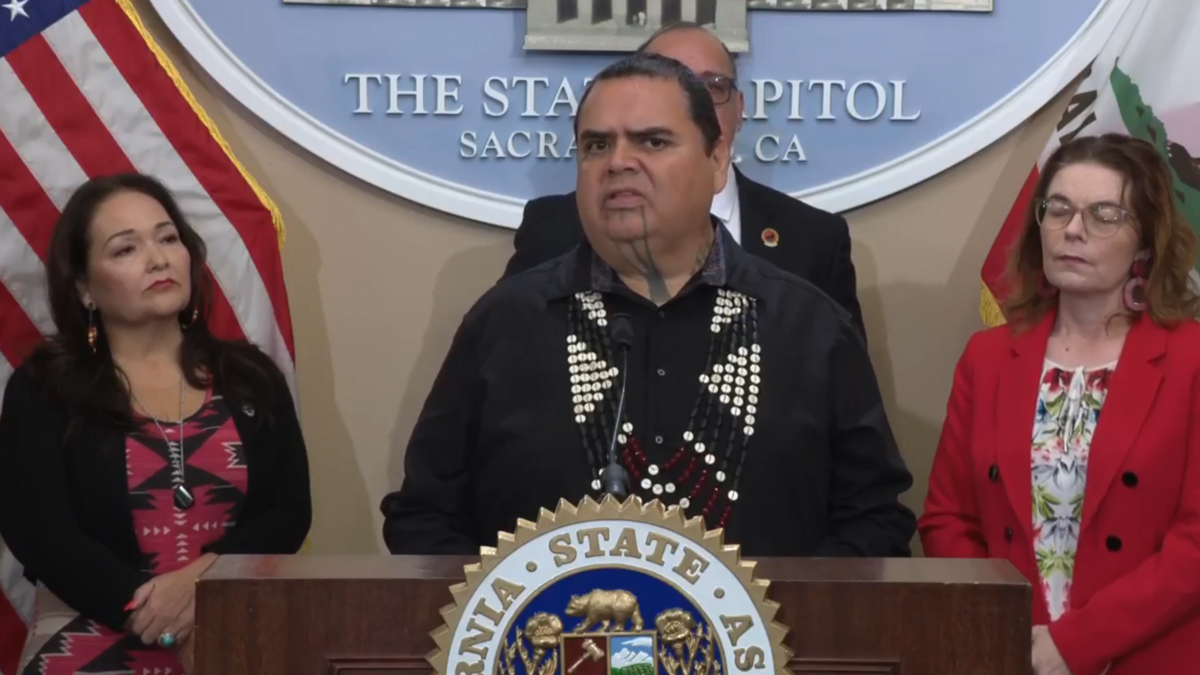
While progress has been made, more work needs to be done, state auditors and tribal leaders said during a repatriation hearing on Tuesday held by Assemblyman James Ramos, D-San Bernardino.
During the hearing, representatives from the California State University and University of California reported on how the systems are complying with the Native American Graves Protection and Repatriation Act. NAGPRA, a federal law passed in 1990, mandated that institutions repatriate Native American ancestors and cultural belongings. Despite this law being passed 30 years, universities violated it through non compliance, tribal leaders said.
As a result of decades of non-compliance and several state audits, California universities were mandated to repatriate.
“It is offensive that we must continue to demand. (Repatriation) is a basic human need and right. That need and right does not fade with time,” said Ramos, who is Serrano and Cahuilla.
Tribal leaders are seeing persistent obstacles with repatriation from campuses. They identified that many campuses have poor storage conditions, a lack of funding for equipment to house the remains of ancestors, they said. Tribes also struggle with meeting the financial requirements to repatriate.
The universities response
A state audit last year showed that a majority of California State Universities failed to repatriate ancestors and family belongings. The California State University had nearly 700,000 ancestors and belongings in its possession across the system’s 23 campuses.
The University of California is also in possession of thousands of ancestors and belongings, with UC Berkeley having the fourth largest collections in the country.
Since their audits, the University of California has allocated $10 million to repatriation efforts. Teresa Maldonado, the vice president for research and innovation, said the University of California still has a “long way to go.”
Campuses like the University of California, Davis have made more significant strides however, Maldonado said. Davis has repatriated 165 ancestors and 9,000 cultural items, with the entirety of its collection to be fully returned by June 2027.
In regards to the California State University system, eight campuses have full time NAGPRA coordinators, while three are in the process of hiring positions. The system has also created an Office of Tribal Relations and is still employing staff. Mildred García, the chancellor of the California State University system, said they have allocated $4.25 million to NAGPRA compliance efforts, and will use funding to hire staff.
García said that the system has “fallen short” to their obligations to repatriate ancestors and family belongings. During the hearing, Garcia promised that ancestors will be fully repatriated at every California State university.
García asked the California legislature to hold the California State universities accountable for complying with NAGPRA. In response, Assemblywoman Luz Rivas, D-Arleta, said they want to see the system commit with specific goals on meeting compliance. That includes hiring full time NAGPRA coordinators. She asked García “how long does it really take to write a job description to hire the staff?”
Frustrations from tribal communities
Some institutions remain unaware of how large their collections are, with estimations totaling in the thousands. This includes collections being held by retired professors, tribal leaders said.
Completion of repatriation is nowhere near the horizon, tribal leaders said. Lorelle Ross, the vice chair of the Federated Indians of Graton Rancheria, said cultural justice has been “undeniably, painfully slow.”
“We must work with a renewed sense of urgency and ensure the efforts are comprehensive across every agency,” Ross said.
There’s a lack of commitment and cultural sensitivity from institutions, tribal leaders said. Tribal communities don’t trust these universities to repatriate their ancestors. Universities aren’t always willing to abide by the audit’s recommendation, or seek to understand tribal communities. Additionally, tribal leaders urged universities to hire full time NAGPRA coordinators to ensure their ancestors are repatriated.
“That’s the one thing that CSU and UC will not understand, the power of our culture — we feel our ancestors,” said Leo Sisco, chairman of the Tachi Yokut Tribe. “We are not science projects. Our ancestors carry values, stories, and we want to bring those stories and values home.”
The collection of Native American ancestors and family belongings can be traced back to the state-sponsored genocide against tribes. Some field schools still continue to this day, said Ramos.
Anthropologists would loot Native American grave sites to study tribal people as a dying species and seen as specimens. This practice was racist, a form of eugenics and dehumanized Native people, tribal leaders said. Many said neglecting to repatriate Native people and belongings is a human rights issue.
Native leaders emphasized that it shouldn’t take 30 years to bring their people home. Universities have had decades to comply with NAGPRA, and it’s about time they hand over ancestors and belongings. Ramos said that California tribes will not stop to ensure their ancestors are returned.
“How many times is money going to be allocated for our people? In the beginning of this state, $5 bounties were put on the heads of our males and $1.50 bounties of our females and our children. These are the ancestors we’re trying to get back today,” said Jack Potter Jr., chairman of Redding Rancheria. “And now these CSUs and UCs want more money to return them to us. It’s a matter of heart. They should just hand them over. They know where they came from. It shouldn’t take so much money.”
“It shouldn’t take 30 years to have our people brought home,” he continued. “Just use your heart, CSU, UC system. You have those lists. Get a hold of those tribes and hand them over.”
This story was originally published August 7, 2024 at 5:00 AM.