
Here’s how Sacramento can become a more equitable place as we head into 2021
What does equity look like in Sacramento? What comes to mind when you hear Sacramento is one of the most diverse cities in America? What keeps you up at night?
As part of The Sacramento Bee’s new community-funded equity lab, we sought out perspectives from all corners of the city and region. We wanted to hear about the successes and the challenges of living here — and what needs change.
We spent hours talking to everyday Sacramentans over the phone and in video interviews. We pored over dozens of responses to our survey. (Feel free to fill out the form now and share your thoughts.)
People love the variety of restaurants and cuisines in Sacramento. The art scene is vibrant. There’s coffee shops and breweries galore. The water is clean, there’s miles of parks and trails. Sacramento has the trappings of a major city — a professional basketball team, for example — while still feeling quaint and homey. Communities are diverse and close knit. The region is close to both the Bay Area and to the Sierras. Sacramento, many said, is a good place to raise kids.
But many worry about their families and their neighbors. They worry about the differences in education quality from school to school. That money is influencing local elections and politics. Traffic commutes are long. Rent is increasing, and buying a home is becoming more and more competitive. Thousands are homeless and unsheltered. Too many struggle to get by.
The racist legacy of Black residents being “redlined” out of certain neighborhoods by banks, white-only community groups and developers has contributed to poorer health outcomes for those residents. Food deserts plague poorer neighborhoods. Public transit hasn’t kept pace with the size and sprawl of Sacramento. There aren’t enough mental health resources or drug rehabilitation programs.
During a pandemic and uncertain economic recovery, some expressed concern about what the next few months and years may bring.
We interviewed nine residents on camera about their thoughts on equity, diversity and progress in Sacramento. Watch highlights of what they had to say, or read snippets of their conversations, below.
‘A politeness to the racism’
My son just turned 4 in August and there were some things that we were reading about the Sacramento school district, and how young Black boys were getting more referrals than other children, and it really made me concerned about what type of experience he’s going to have. Is he going to experience criminalization before he can spell it?
I still think that there’s a politeness to the racism that exists inside of Sacramento. And I think that for me that’s the most uncomfortable part. But as times are changing I’m seeing people have more and more challenging conversions and hopefully we’re getting to the meat of it.
I’m concerned for what this is going to look like in another 5 or 6 months. Like what our community is going to look like when an even more great majority of us are out of work and EDD (the state’s Employment Development Department) is stopped and the moratorium on evictions is gone. Are we just going to see a lot more unhoused folks? Are we just going to continue to criminalize those folks for being caught in the same thing that I get caught in, a pandemic, but just not having the privilege to withstand it?
— Asantewaa Boykin
‘Underserved by who?’
I think the important question (when we say underserved community) is underserved by who? Because you can be underserved in some ways and overserved in others. Maybe you’re underserved by transit and bus lanes and bike lanes, but you’re overserved by policing.
I’ve had a good life here. I don’t think everyone can say that. Stephon Clark can’t say that and his family can’t say that. Darell Richards can’t say that. Darell Richards’ family can’t say that. Some of the kids in my friend’s first grade class, they’re going to have a real uphill battle having a good life here. And the barriers all, many of them seem administrative and it feels like we could try a little harder (to fix those). I do think widening democracy is an important step to that.
Some of my friends are worried about losing their houses and having rent go up. And I have some friends who are really worried about gentrification, because the only places they can afford are in historically Black neighborhoods and they don’t want to gentrify and they would prefer to go somewhere else. I think that that is a policy division we are, as a city, making: Not to provide housing and to instead displace this community. That’s an upsetting problem to me.
— Lilly Allen
‘Resources to those who need it the most’
When I hear equity I think about giving enough means so that everyone can actually have a chance. It’s not providing the same amount of resources but it’s providing more resources to those who need it the most. I love midtown and I think it’s great. We have a great transportation system. It’s walkable. But we can think about a lot of parts of the city and the county, like south Sacramento, that they need more resources. So to me that would be equity, providing more where it’s needed the most.
When I learned that (Sacramento’s slogan) is Farm to Fork, I thought, “We have so many people without access to food. We have so many food deserts around the county.” You have no idea how many people you’re passing by on a normal day that didn’t have a meal. And this is, as an immigrant myself, this is one of the richest countries. For me to see people on the streets not having food, it’s unbelievable because that doesn’t happen in the little town where I grew up.
I think that the thing that most keeps me up is feeling that we are running out of time for building more houses and that I won’t actually be able to afford a home and that there will be a lot more people on the streets.
—Gabriela Chavez
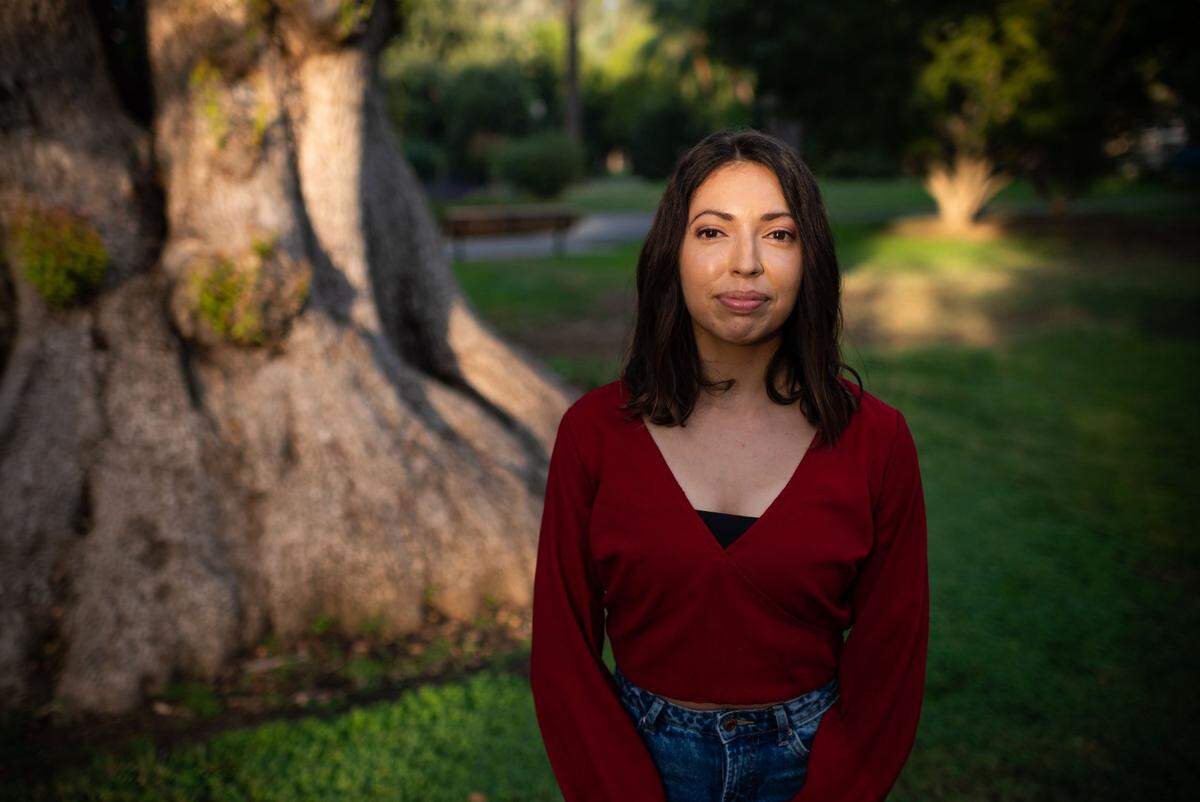
‘I got to see people who looked like me’
I first lived in Antioch, California and that’s very much a commuter, cookie-cutter city. There wasn’t much to really grow off of that, besides being the only Asian American at my school, the only person of color, and really being negatively seen in that way. The experiences I had back where I grew up, I was bullied for being Korean American. I was really wanting this idea of not being hurt anymore, and so there were a lot of barriers that had to come down.
So coming to Sacramento and being as diverse as it is, I got to see people who looked like me. Sacramento for me was this new awakening of accepting myself, loving that aspect of it and finding people who could really communicate with me and relate to the experiences I had.
— Ashley Jun
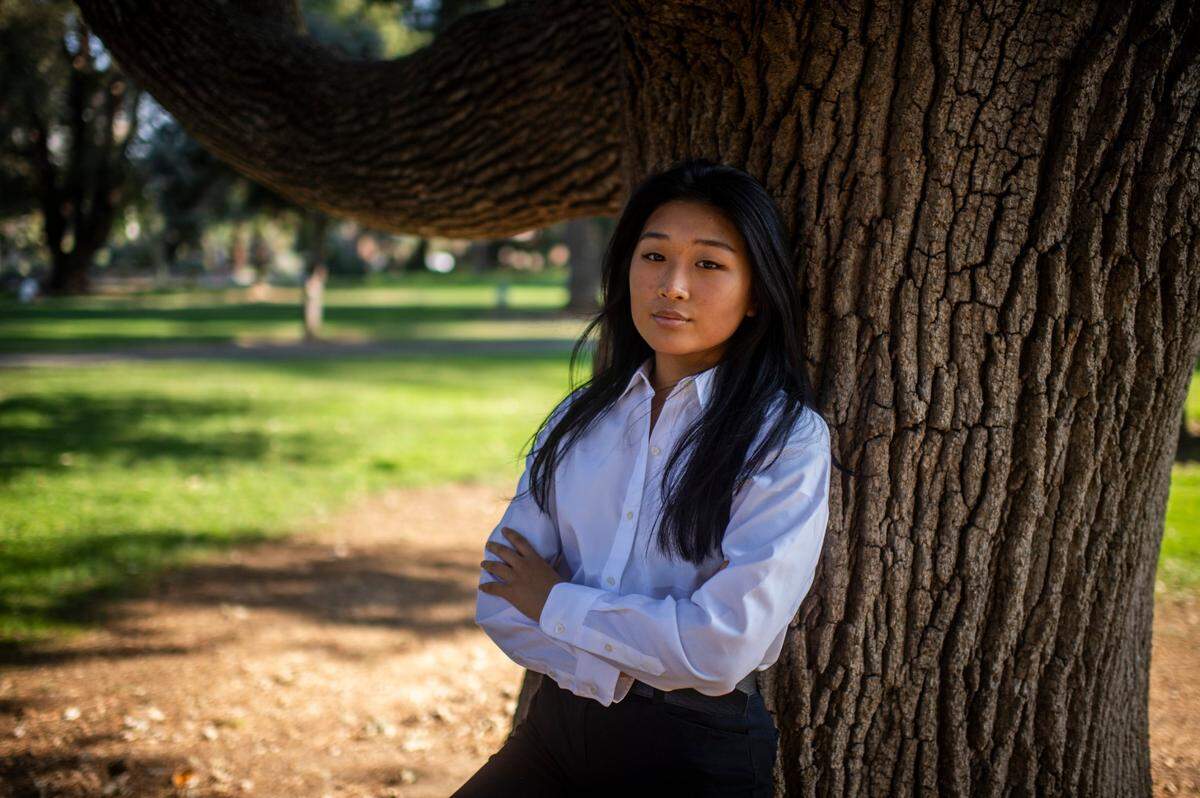
One step away from ‘another path’
I think me and where I stand as an individual right now is a direct reflection of the opportunities I was awarded. It had nothing to do with my difference in intellect, drive. I was blessed and fortunate enough to have a two parent household, to have a father and a mother that was invested in me. I was fortunate enough to have teachers, faculty members, to have people in my corner looking to help me succeed. I was one turn or one step away from turning down another path.
I went to Sac High where 90% of that class went on to college, or got accepted to a 4-year school. That wouldn’t have happened at another school where the majority was Black and Latino. That just wouldn’t have happened at the other schools for reasons — I don’t know. Because again, I easily could’ve been in the other situation.
I think Sacramento, like any place in America that we live in, has underlying racism, underlying prejudices. I’m a Realtor. It is difficult to get a loan, to get approved for a loan. There is a lot of discrimination. There’s multiple offers and maybe you send a letter with a picture, and it’s the same (offer) price but, “I’m going to go with this person because I like them a little bit more, they look a little bit more like a person who could stay in this neighborhood.”
— Darius Graham
‘Equal opportunity to everyone’
I came to the U.S. as an asylee. The U.S. is one of the most liberal countries, equal opportunity to everyone, especially in Sacramento. I don’t feel any difference between local people and the immigrant people. When I came here, people treated me very equally and I feel I’m glad to be here. I feel like I’m in a very safe place in Sacramento. I don’t feel any discrimination and I feel I’m happy with this community. People are complaining about discrimination and all this. I mean, if you start to complain about the U.S. as a discrimination country, you can’t live in any part of the world. Other parts of the world is worse.
We came here to start our lives. Life here is not easy, especially networking without knowing anyone. I hope Sacramento (provides) a lot of opportunity for immigrants like networking. See, I want to start my food truck business in Sacramento. I want to introduce some Malaysian food. So for me to start, somebody needs to brighten up my future. I need some guidelines, I need some business network and then some business events. That’s the thing that Sacramento could help us to get more. It would be much better for us to start something in this country.
— Balan Krishnan
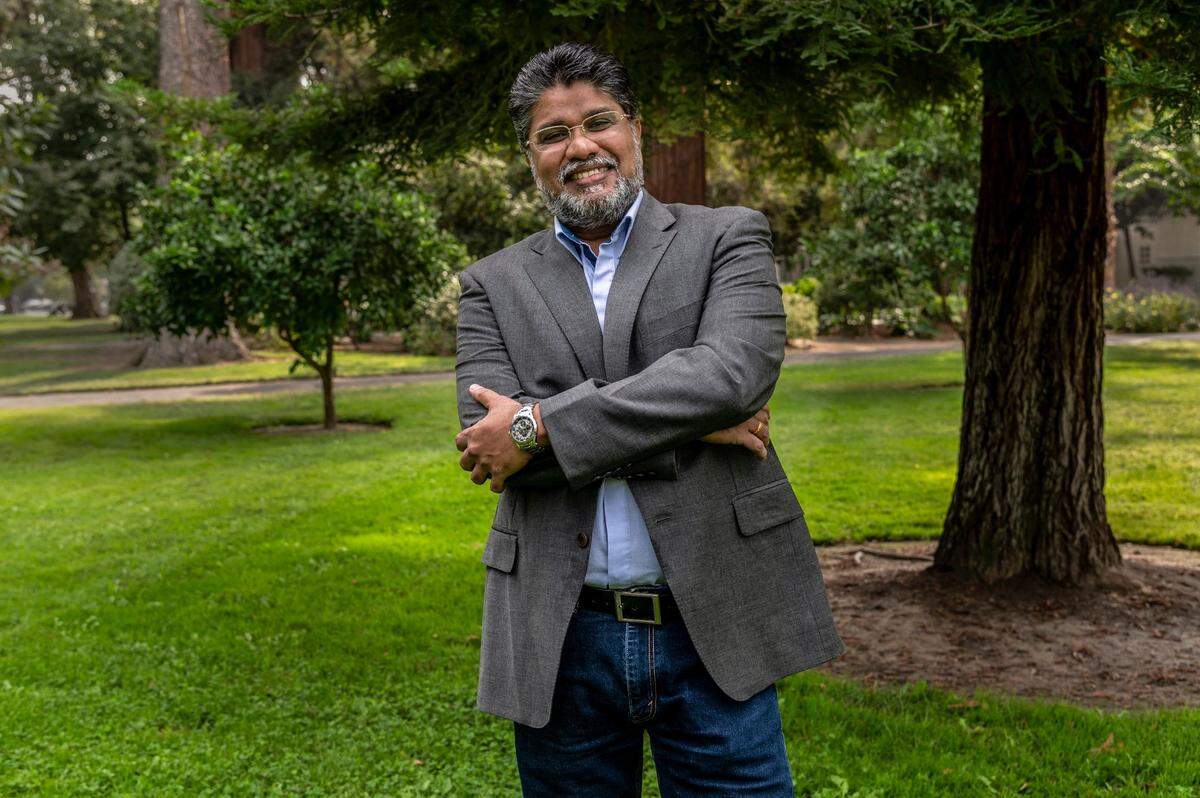
‘The pandemic has been a disaster’
I realize that for a lot of people across the country, the pandemic has been a disaster for them. A lot of people have had their lives impacted in a really hard way, with unemployment and losing loved ones. I think with the protests this summer, it was really no coincidence the level of the protest when you put into perspective our economy is kind of crashing and unemployment rates are shooting through the roof.
Before this summer, I didn’t really see a lot of ways we could make improvements to the policing system or the educational system. I knew that changes needed to be made but I didn’t really understand where we could start as a community. A lot of people have been discussing police reform and reallocating budgets, and just in general rewiring some of the responsibilities of police. I’ve just become more aware and interested in learning more about those methods.
A better Sacramento has a lot to do with the education system. I really think that anti-racism begins at the very beginning in elementary school. I went to Crocker/Riverside, and only residents of Land Park send their students to Crocker. I loved Crocker, but there was not very much diversity.
Making that very young population more diverse is the first step when we talk about anti-racism and learning to be more tolerant and making educational opportunities more equal. If elementary schools are more diverse, then middle schools could recruit more equally, and then high schools could recruit more equally from those middle schools. What you end up with is a high school with more diversity that offers more equal resources to a more diverse population of students, and then hopefully they have better opportunities or a path to college.
— Eleanor Love
Systemic issues ‘hold people back’
It’s hard to say that everyone can live a good life here because I know that there are systemic issues in place that hold people back, so technically anyone can rise above, but why should people have to try so hard to have a good life, because you live on this side of Meadowview versus living this side of Pocket?
Why do parents have to sleep overnight to get their kid into the best school? Why can’t they send their kid to a school down the street? Why do we have families that are being squeezed from all sides because you have a job, you have a full-time job, but you can’t make enough to pay your rent and to send your kid to daycare, so what are you going to do? If you have this mom who needs to go to the doctor, but she also has to get her kid to daycare or wherever they’re going, and then also go to work, what does that look like? Where are the health centers located? Can people get to them?
We see especially in Sacramento that we’re building all of these mixed-use places and there has to be a certain percentage for low-income. OK great, we’re going to give people a place to live. But they can’t afford to get a sandwich over there, there’s no grocery stores that they can afford, there’s no restaurants they can afford, and all the fancy people who live there now have cars so there’s not a great bus stop. What does that look like?
— Jeanine Gaines
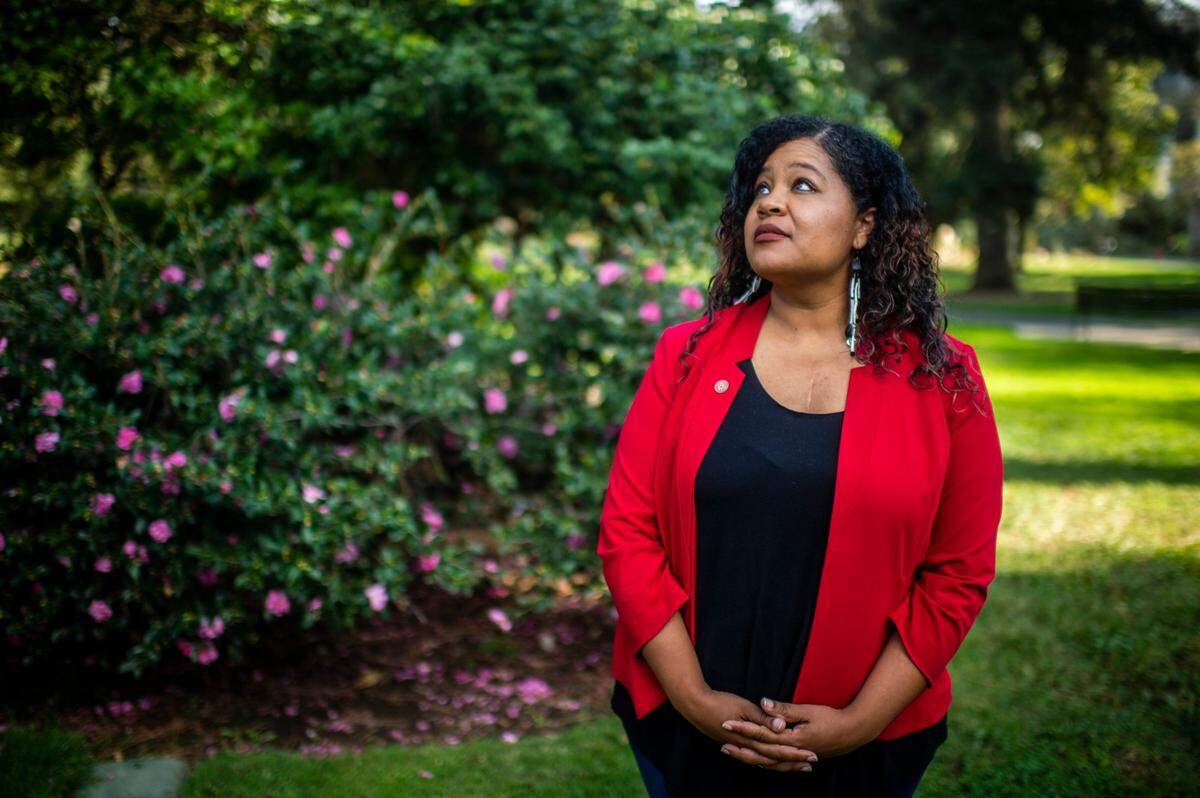
‘A symptom of the problem’
I think the battle right now that’s first and foremost is a racial one. It seems as if there’s almost a civil war brewing. I know in our nation what has popped to the front page was what’s going on between the relationship between law enforcement and the African American community. But I think that’s just a symptom of the problem.
Most in my community fall in the camp that there’s still a lot of progress to be made and there’s still systemic racism that needs to be excavated out. I think those people feel like there’s a wall they’re being met with, I think those people feel like they’re not being heard still. I think those people feel like people are using some of the same old push backs that they used in the ’60s during the civil rights era and they used when slavery was being abolished, some of the same, just be quiet, some of the same muting, some of the same oppressive tactics.
I think if somehow, someway, if we could rally people in our community to make a conscientious effort to spend time with people that don’t look like them, don’t vote like them, don’t laugh at the same jokes, don’t listen to the same music, don’t eat the same foods, if there was some sort of grassroots large-scale movement to have people doing that on a regular basis, I think that those relationships that are formed help become an ointment for all of the wounds that people have. I know that sounds pie in the sky and sounds ridiculous but honestly conversation is the only way we get to solutions, and right now, none of us are really conversating.
— Bob Balian
BEHIND THE STORY
MOREWhy did we create this project?
As part of The Sacramento Bee’s new community-funded equity lab, we sought out perspectives from all corners of the city and region. We wanted to hear about the successes and the challenges of living here — and what needs change.
Read more by clicking the arrow in the upper right.
How did you find participants?
Sacramento is an diverse area filled with people from intersecting and diverging backgrounds, incomes, educations, ages, ethnicities, religions, occupations and more. Some people have lived here all their life. Some have moved here as recently as this summer. With limited resources given COVID-19 restrictions, we tried our best to share a range of experiences from residents across Sacramento.
Some participants we reached out to from past stories or source relationships. We contacted community groups and advocacy agencies who connected us to other participants. Some participants are active in local government, and others are friends of friends.
More than 50 people responded to our survey, and while their answers are not published in full here, many of their ideas and concerns are reflected in this project.
How did you keep participants and Bee staff safe?
The safety of our journalists and the filmed participants was our top priority in the creation of this project. We limited the number of on-camera interviews to eight individuals to help Bee staff manage safety and capacity issues.
All interviews were conducted outdoors during days with good air quality. Bee staff positioned themselves 6 feet apart from participants. Participants were interviewed individually without overlap. Participants wore masks when they arrived to our filming location, and whenever they were not on camera. Bee staff wore masks at all times.
Support journalism such as this
You can support the Equity Lab and local journalism such as this with a donation or digital subscription. We rely on you
Donate to the Equity Lab here.
Subscribe to The Sacramento Bee here, and get full access to all stories and video on sacbee.com.
This story was originally published October 29, 2020 at 8:29 AM.