
‘It just hurts.’ One Sacramento mother’s fierce battle against child-welfare agencies
READ MORE
Broken Home: How Sacramento’s largest group home failed its kids
Why have problems at the Children’s Receiving Home festered for years? Will new reforms make a difference? Read The Sacramento Bee’s investigation:
Expand All
CORRECTION: This story incorrectly reported that Felicia Brent-Velasquez was under the care of the receiving home when she ran away in April 2019 and was subsequently paralyzed in a car accident. Brent-Velasquez was under the care of Sacramento County’s Centralized Placement Support Unit, a separate facility on Auburn Boulevard, and not the nonprofit receiving home. The story also incorrectly reported that Kendra Czekaj, 12, died after chasing a resident of the receiving home who had gone AWOL. The resident she was chasing had run away from the CPSU on campus, not the Children’s Receiving Home. This story and photo captions have been revised throughout to reflect that information.
On a spring day in 2019, Felicia Brent-Velasquez, slung a duffel bag filled with clothes over her shoulder and pushed open the black iron gate of Sacramento County’s child-welfare facility on Auburn Boulevard. She walked out and never returned.
A week later, she was still AWOL and riding in the back seat of a Cadillac traveling at 90 mph on Interstate 80. The rear tire blew. Brent-Velasquez was ejected from the car.
Velasquez spent the next eight months in the hospital. She would never walk again. She would never feed herself or play with her siblings. She could only operate the touch screen on her cell phone with her tongue. She would come to rely on her family for her very life every day.
On June 10, 2020 – 19 months after walking out of the county facility and then surviving the accident that would change her life – she died of an aneurysm at home. She was 19.
The night she went AWOL, she was under the care of the Centralized Placement Support Unit on the Auburn Boulevard campus. The county-run unit, which is moving to Bradshaw Road, served as a gateway to foster-care placements around the region, including the Children’s Receiving Home.
Brent-Velasquez also had been a resident of the Children’s Receiving Home next to the CPSU in the past and had gone AWOL from there several times, her family said.
Since Brent-Velasquez’s accident, her mother, Felicia Clark, has crusaded against the receiving home and Sacramento County’s placement unit. She has been motivated in part by the death in January of 12-year-old Kendra Czekaj, a receiving home resident who had gone AWOL and was struck and killed on the nearby freeway.
Every year, hundreds of children who go AWOL and are often reported missing from the Children’s Receiving Home. The 100-bed facility is the largest in Sacramento County with a mandate to care for the region’s most vulnerable children.
Over the years, the nonprofit Children’s Receiving Home has come under increased scrutiny for its AWOL residents. It averaged four 911 calls per week last year, most of its interactions with police are for missing person reports when children walk away from the facility. In 2019, receiving home staff filed more than 2,000 missing person reports, according to data from the Sacramento Police Department.
“It just hurts,” Clark said outside Lowest Cost Cremation and Burial on Fair Oaks Boulevard on June 16. “I feel like we was cheated out of time. … All she wanted to do was advocate for kids in the receiving home.”
A week later, in the same spot, Clark dissolved in tears as her mother, Arteenis Velasquez, embraced her, Clark’s face stricken and turned to the sky as she gripped the box that held the ashes of her firstborn.
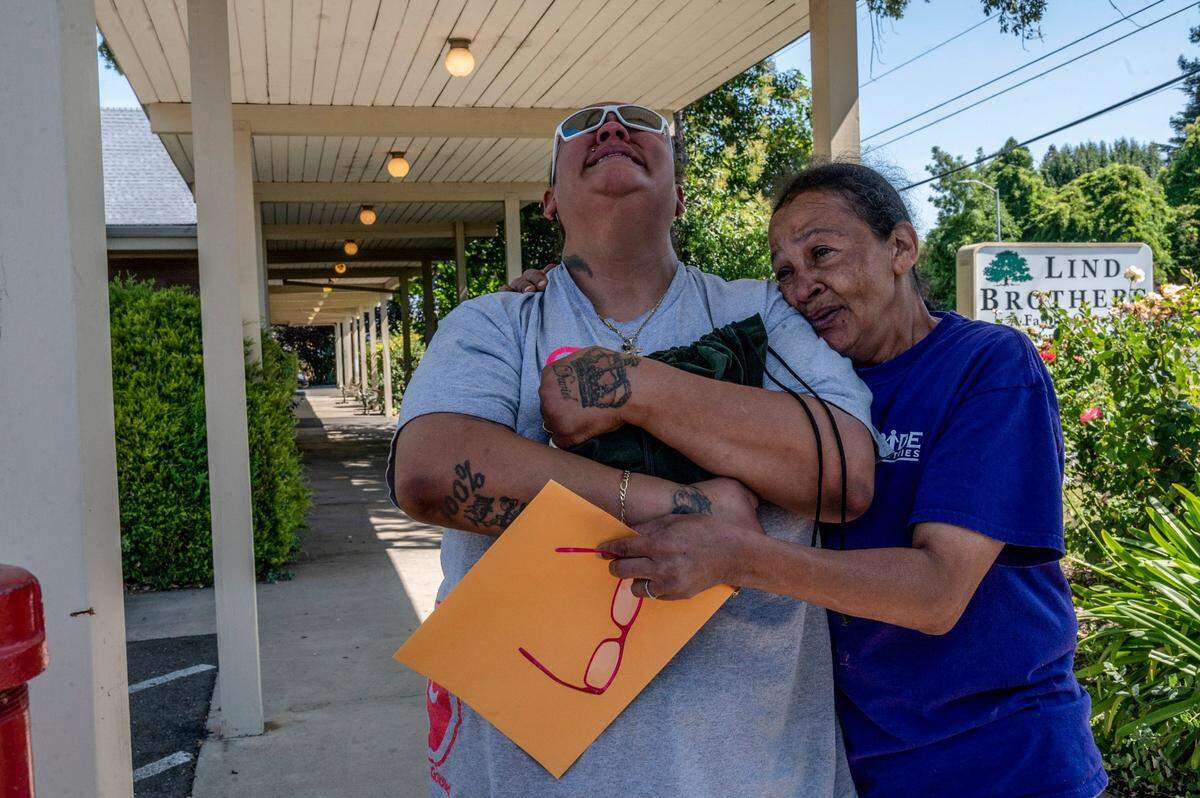
Clark, 36, is a tall, loud and intense woman. A single mother to four children and a self-employed chef, she describes herself as a “hustler.” She sells cartoon drawings on the side to help support her family, and she homeschooled her children part-time long before the COVID-19 lockdown made that a reality for most parents.
Long nights of protests, letters, appeals
In 2016, Clark’s three daughters and son were taken out of their classrooms and placed in the Children’s Receiving Home after a teacher reported seeing an “acorn-sized bruise” on her youngest daughter’s back, she said. She was accused of endangering her children, according to Sacramento County court records.
Clark denied the allegation, telling an officer at the time that she wore several rings across her knuckles, which would have left a larger mark than an acorn-sized bruise. The officer cited her for the alleged offense since she had a record, she said. She has a juvenile record, she said, and a history of misdemeanors dating back to 2002.
According to court records, she was arrested in 2002 on suspicion of burglary, but her case was dismissed within two months. Clark resurfaces in court records in December 2002 for possessing a pipe, and again in 2013 for a graffiti and vandalism charge. In both cases, she was sentenced to three years of probation.
In 2016, she said her lawyer advised her to plead “no contest” to the child endangerment charge rather than risk jail time and not seeing her children for a year.
“I wasn’t guilty of it and my children said I wasn’t guilty of it,” Clark said.
Clark has been fighting to get her children back ever since.
She protests often and writes letters to public officials and Child Protective Services weekly. She files countless complaints with the county, and is known to be a hot head in court.
But her efforts reached a fever pitch this year after 12-year-old Kendra Czekaj, a child placed in the receiving home’s care, was hit by a car and killed on the Capital City Freeway. Czekaj died chasing a girl who had bolted from the CPSU, the county-run intake unit on the Auburn Boulevard campus.
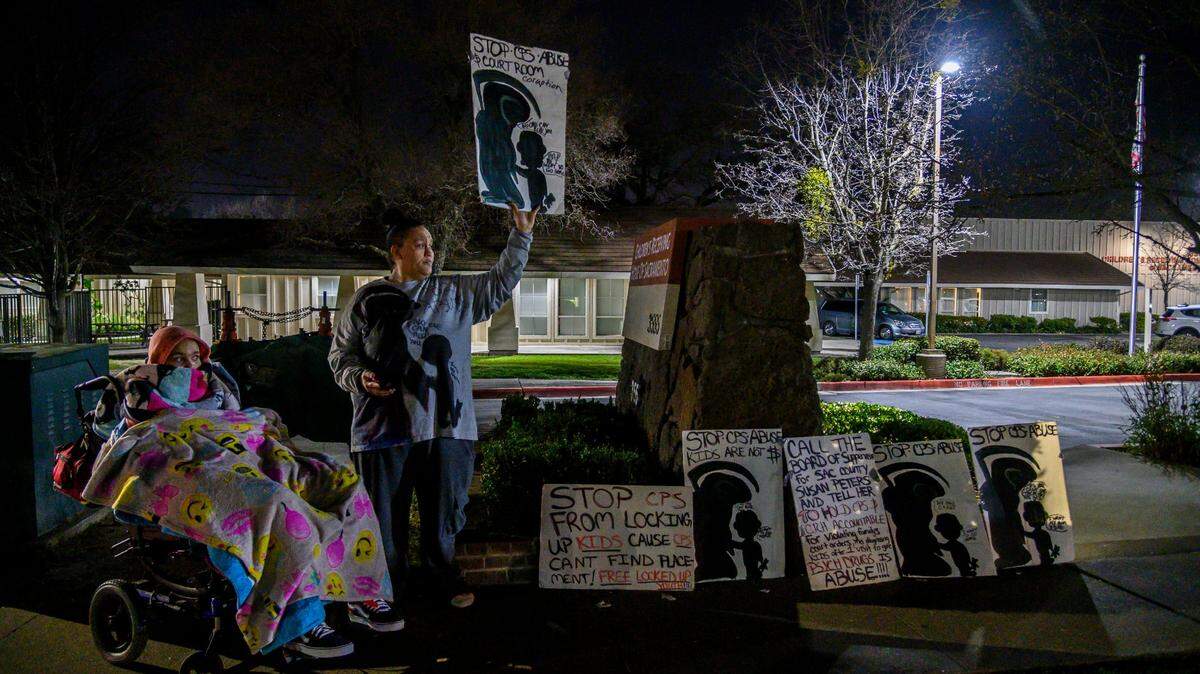
Since then, Clark spent Friday nights at the corner of Watt Avenue and Auburn Boulevard, the site of the Children’s Receiving Home and the county’s CPSU — as well as the most active prostitution stroll in Sacramento County — protesting the treatment of her children inside the 80-year-old Sacramento institution.
She’s been to the facility countless times to visit her children. She’s brought clothes and toys, and even transported children back after finding them AWOL on the street.
“I feel like as long as I’m out there, I’m making a change,” she said, standing on the sidewalk outside the entrance to the receiving home one night in February. “I feel like people are paying attention.”
Brent-Velasquez would often join her, bundled in blankets and sweatshirts in her wheelchair.
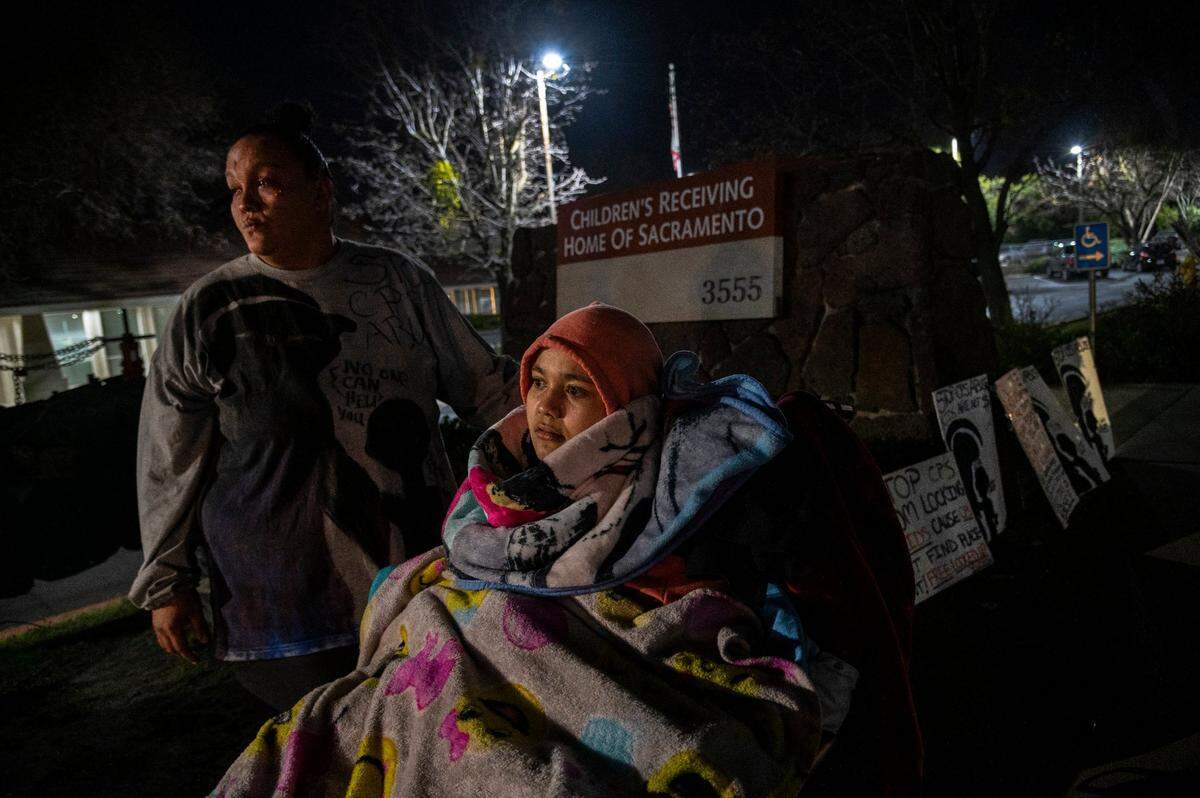
“It’s hard to see the things that I see out there, but that’s why I keep going back,” she said. “I want to stand out there for just one Friday, and see nothing. I want to see no children, people doing what they’re supposed to do, children leaving to go to do activities, parents coming in and happy to be part of some process.”
Clark’s hair is thinning at the temples, the result of toxic stress, she said.
In one of her livestream videos, from Jan. 31, a girl in a pink dress is seen climbing over the gate to the parking lot. A staff member follows her and asks her to come back but the girl ignores her, jumping off the gate down and walks down the road.
Moments later, Clark captures a boy sprinting through the gate and across Auburn Boulevard toward a busy intersection. A staff member can’t keep up with him and loses sight. He later returns with a bag of Hot Cheetos in his hand.
The boy, 13, told The Bee in an interview he often leaves to get snacks from the nearby gas stations.
Daughter frequently AWOL
Although the county prohibited her from living with her mother, Brent-Velasquez said she frequently left to stay with her mom or grandmother, where she said she could always expect a bed and a good meal.
She was not allowed to see her mother outside sanctioned visits, and Clark could lose her opportunity to visit her children if she let her daughter come home.
As time went on, Brent-Velasquez’s outings became riskier. She turned to smoking and drinking, frequently with strangers she met on her nights outside.
On the April 2019 night she went AWOL from the county’s CPSU facility, days before her 18th birthday, she couch-surfed for a week, staying with friends and drinking heavily, she said.
She was lying down in the back seat of a Cadillac sedan without her seat belt on, feeling sick from the alcohol when its tire blew on Interstate 80, throwing her from the car.
“All I know is that I was heading toward a big rig and there was a bright light,” she said. “I fell through like white grass and then just smacked down and everything went black. And then I woke up in the emergency room with tubes coming out of my mouth and all kinds of machines all over my body. I didn’t know what was going on.”
According to a CHP report of the incident, the driver, an adult male, had been speeding over 90 mph when the tire popped, ejecting Brent-Velasquez and her boyfriend from the back seat of the car. Her boyfriend would later die of his injuries.
‘I just hoped we would have forever’
Brent-Velasquez was put into a medically induced coma to mitigate brain-swelling. She endured eight surgeries and nine months of hospitalization. She even “died” on the table during a procedure and was revived.
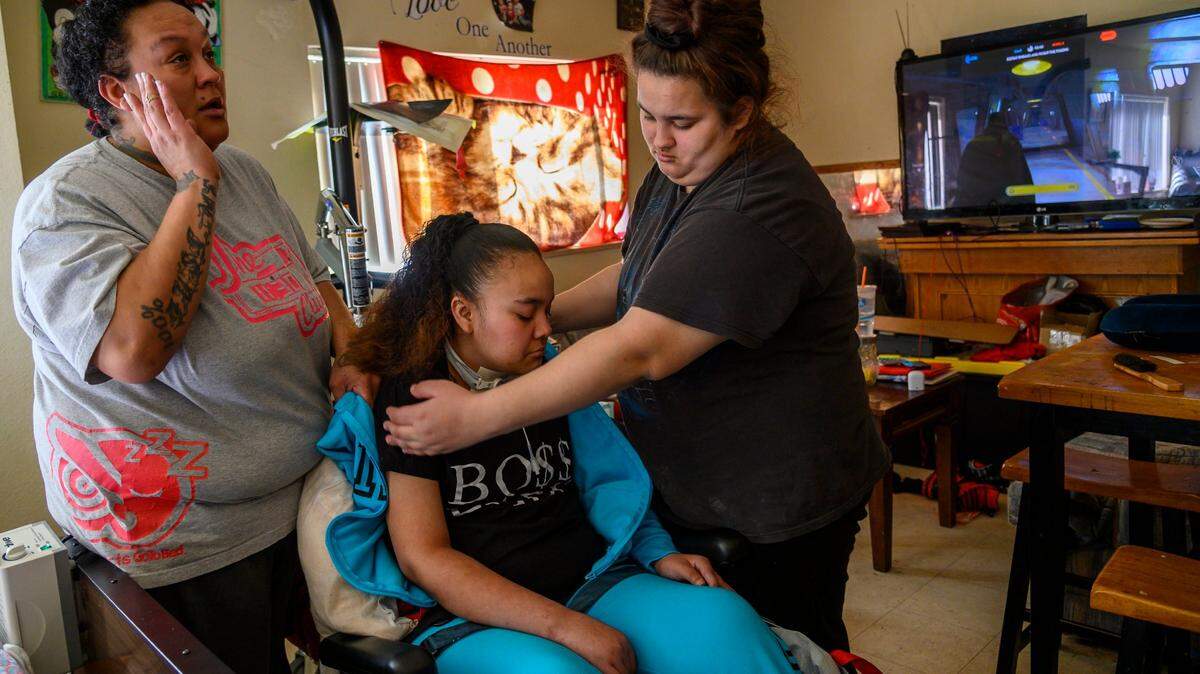
When she was stable enough to be released home, Clark became her primary caregiver. She fed her, changed her, washed her, brushed and styled her hair, and dressed her. She suctioned the opening in her trachea when it became blocked, scratched her itches and massaged limbs at all hours of the day.
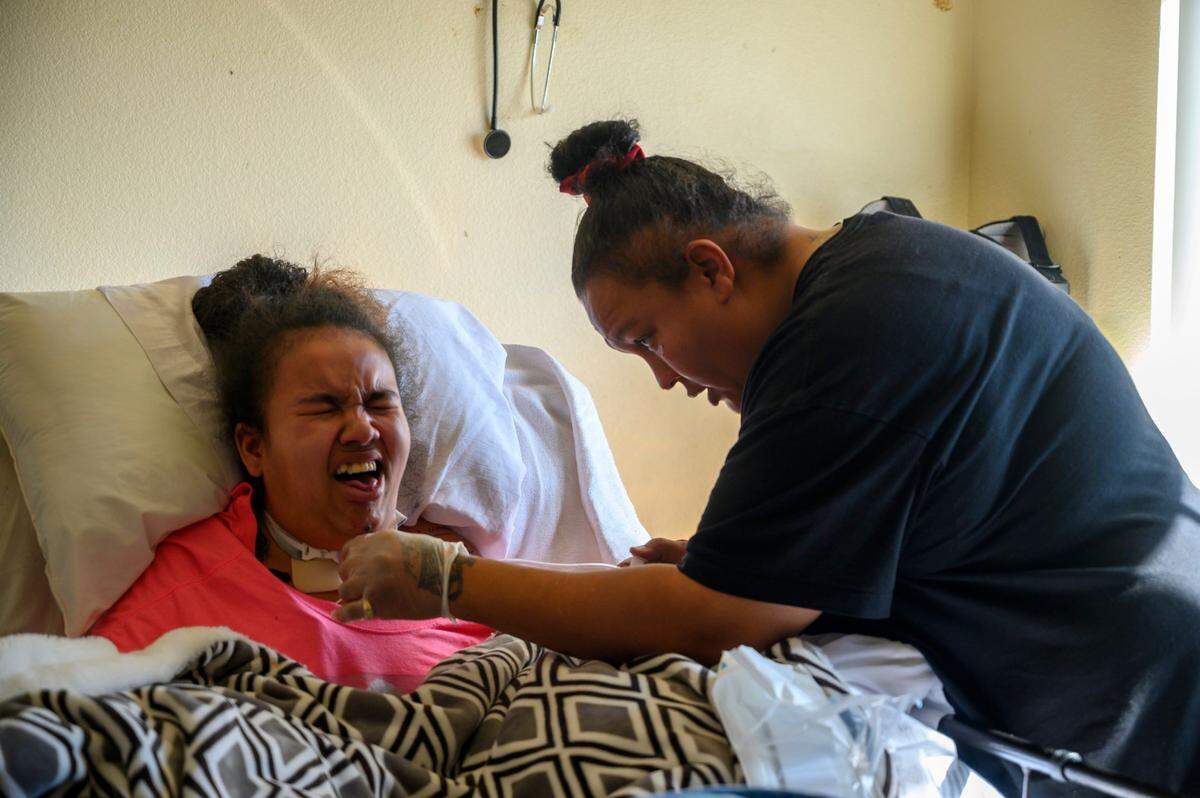
Brent-Velasquez spent the rest of her life living in the adjustable hospital bed in the dining room of her mother’s townhouse. Packages of diapers and wipes were piled on tables and chairs that sat next to the bed.
Pieces of her mother’s artwork — posterboard of a blue Care Bear holding a butterfly, a homemade painting of Goofy, Mickey and Minnie Mouse with the words “I love you” scrawled across the bottom — were tacked to the walls. The pictures are remnants from her days in the hospital, Brent-Velasquez said, when she was unconscious and comatose, and her mom couldn’t talk with her.
Brent-Velasquez was lying there, her bed facing the window, when she had a stroke that led to an aneurysm and cut her young life short.
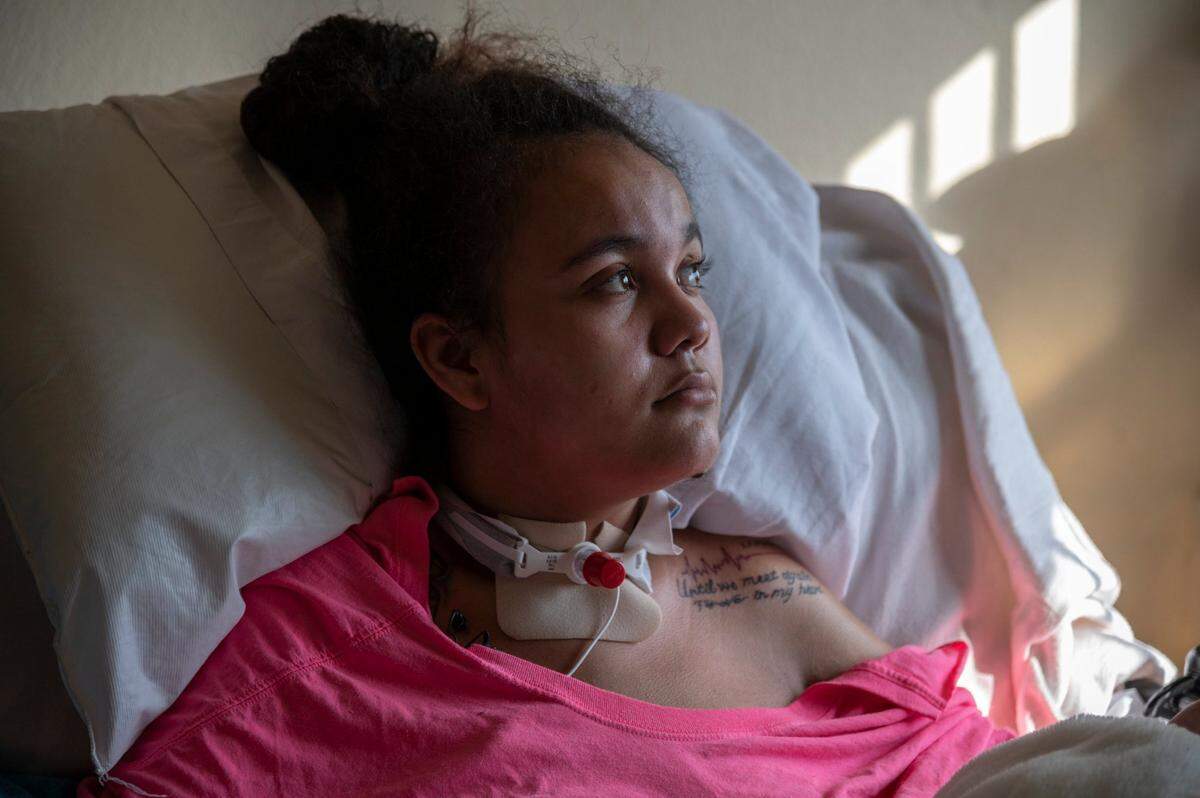
“The nurse told me people in my daughter’s condition usually don’t live very long,” Clark said after her daughter’s death, with a choked voice as she watched a worker carrying pieces of the hospital bed out of the dining room. “I just hoped we would have forever.”
Her daughter’s death did not end her fight. Amid her busy home life and running her own BBQ business to support her family, Clark continues to protest every Friday.
BEHIND THE STORY
MOREWhy we did this story
The Children’s Receiving Home is one of Sacramento’s most important institutions. How the facility manages the children under its care reverberates throughout the community during their stay there, and well after they leave.
The Sacramento Bee is committed to thorough and detailed reporting of our public institutions to illuminate inequality, waste and abuse, and the expenditure of public funds. This story is an important part of the independent oversight that is central to local journalism.
Click on the arrow in the upper right for more.
How we did this story
Reporters Michael Finch II and Molly Sullivan, and visual journalist Renée C. Byer, have been reporting this story since mid- 2019. (The project was put on hold for several months as the team covered COVID-19, the economic shutdown and civil unrest.)
The project included a review of thousands of pages of documents and data from the Sacramento Police Department, the Department of Social Services, Sacramento Superior Court, Sacramento County, and other sources including internal documents from the Children’s Receiving Home.
The team conducted interviews with dozens of people involved with the group home, including children who had gone AWOL and previous residents, their parents, staff members, neighbors, and state and county officials. The Bee is withholding the names of the children.
Read more
The Sacramento News & Review reported on the receiving home in March in a feature story, “Missing,” by Raheem Hosseini. Fox40 Sacramento investigated the facility in 2017. The Sacramento Bee has previously written about the campus, including when state officials ordered a county-run shelter on the property to stop housing children for long periods of time, and well as when it was the target of a civil suit over an employee accused with sex with a minor.
Support local investigative reporting
In-depth investigations such as this are made possible with the support of subscriptions to The Sacramento Bee.
It takes a reporting team — and lots of time — to bring these stories to light.
Subscribe to The Bee to support work such as this.
This story was originally published August 29, 2020 at 5:00 AM.