
Punjabi classes at all UC campuses + Mahjong company criticized: Your AAPI newsletter
It is Thursday, Jan. 7, and this is The Sacramento Bee’s AAPI weekly newsletter.
It’s a new year. Here’s a recap of the stories I’ve covered and ones I’m following:
The University of California will offer Punjabi-language courses at all of its campuses starting in January, marking the first Punjabi-language curriculum to be taught throughout the UC system.
The system-wide Punjabi classes were made possible through funding from an Innovative Technology Learning Initiative grant from the UC Office of the President. At UC Davis, which uses the quarter system, virtual classes started Monday for the winter quarter.
“The launch of Punjabi class this quarter is the culmination of nearly eight years of efforts by generations of students, alumni, community activists, leaders and volunteers,” former UC Davis SCA board member Harfateh Singh wrote on the SCA Facebook page Monday. “It is on all of us to ensure the success of this program ... Let’s aim to create a strong foundation through this program, so we can build upon it and expand it for further learning and research.”
The Elementary Punjabi course is open to anyone, with no prior knowledge of the language required. According to the syllabus description, the class is designed to help students learn how to read and write the Gurmukhi script, as well as become comfortable holding basic conversations in Punjabi.
California has one of the largest Punjabi communities in the world outside of India, with about 250,000 Punjabi Americans as of 2012. In the California State University system, Sacramento State is the only campus that offers Punjabi language courses.
In other news
How 100,000 Pacific Islanders got their health care back [POLITICO]
How Georgia’s 1st Vietnamese American state rep is continuing Stacey Abrams’ fight [NBC News]
Congresswoman wears hanbok at swearing-in ceremony, honors Korean immigrant mom [NBC News]
Rose Ochi, trailblazer for civil rights and Japanese American causes, dies at 81 [Los Angeles Times]
A Nearly Forgotten Photo Archive Becomes A Vivid Exhibit Of Chinatown’s Past [Gothamist]
Listen: Georgia’s Asian American Voters Are Among Record Demographic Turnout [NPR]
San Jose Assemblyman Ash Kalra wants to be the next Attorney General [San Jose Spotlight]
An Ode to the Kamenoko Tawashi, the Turtle Brush [Catapult Magazine]
What It’s Like to Watch a Friend Make a Great Movie — and to Be Expected to Respond to It as an Asian American Critic [Slate]
Opinion: Asian American and Pacific Islanders are ready to lead [The Sacramento Bee]
This week in AAPI pop culture
The big news on Asian Twitter this week was about mahjong. Specifically, how the game was appropriated by a Dallas-based mahjong company, which replaced the traditional Chinese tiles with images like bubbles and bags of flour after the company’s white founders decided the Chinese symbols “did not reflect the fun” they had while playing the game.
Founded by three white women, The Mahjong Line launched its mahjong game sets on Nov. 5 with prices ranging from $325 to $425 a set and mahjong mats reading “Not Your Mama’s Mahjong” for $50 a pop. The company changed the game’s traditional Chinese tiles to designs such as palm trees, the words “BAM! BAM! BAM!” and armored knights.
Their goal, according to a description on their website that has been taken down, was to bring mahjong to the “stylish masses.” In an FAQ section that was also taken down, the company falsely based the origins of mahjong on an American businessman named Joseph Babcock, who wrote a book about the game after visiting China for work.
Critics slammed the company on social media, accusing the founders of whitewashing the centuries-old Chinese legacy of the game, as well as dismissing its players, cultural origins and history.
“My culture is one of the oldest civilizations in the world. It is a product of thousands of years of tradition and history. My culture (is) not some cheap coloring book that can be filled-in and be “made pretty,” wrote one Twitter user.
“You can’t just repackage something belonging to a culture that isn’t yours and act like you started a new cultural phenomenon,” wrote another Twitter user.
There have been small variations on mahjong tiles over the years, such as a Hello Kitty set featuring Hello Kitty on the back of each piece, or tiles with Arabic numerals for players who can’t read Chinese.
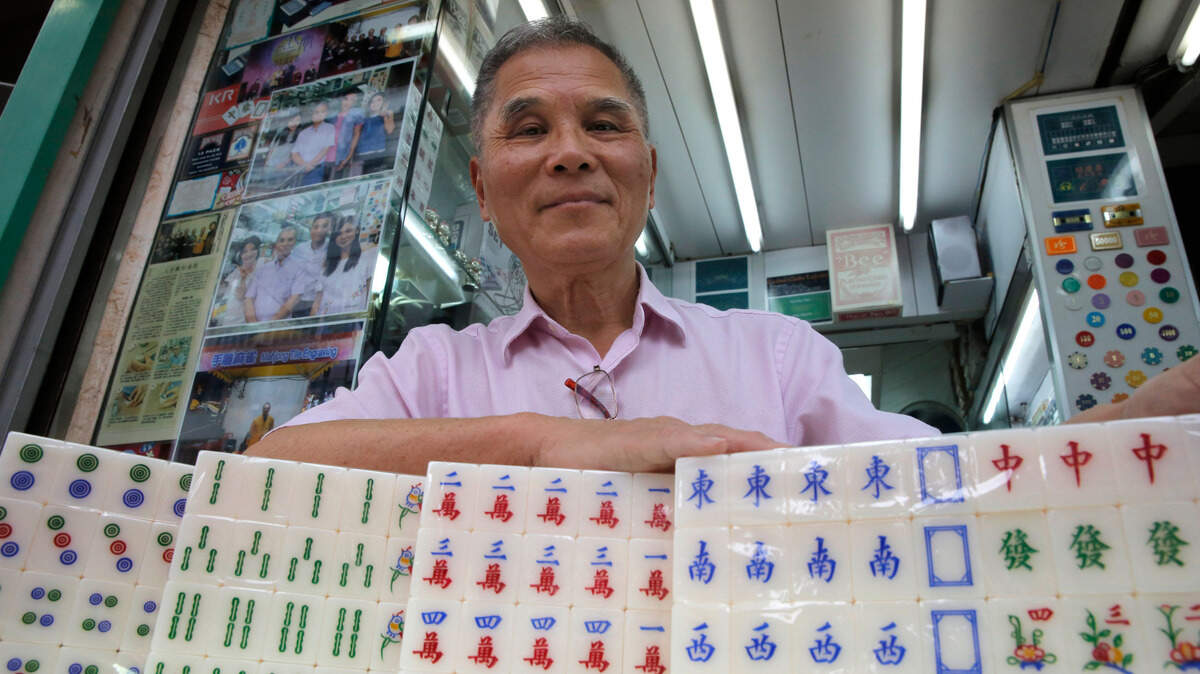
But aside from respecting Chinese culture, the point of keeping the same tile designs for generations is to make it easier to learn and play the fast-moving game anytime, anywhere. Here’s what the original tiles look like — and have looked like for hundreds of years.
Got a story suggestion? Please reach out to me at awong@sacbee.com.
That’s it for this week’s newsletter. Thanks for reading, and see you next week!
Please spread the word about our newsletter and send to a friend. Sign up here to receive this newsletter each week.