Why this potential solution to Sacramento’s housing crisis has made little progress
READ MORE
ADUs in Sacramento
State and city leaders have touted ADUs, also known as granny flats or in-law units, as mechanisms to help alleviate California’s housing crisis. Could they help in Sacramento?
Expand All
Why this potential solution to Sacramento’s housing crisis has made little progress
Want to build an ADU in your Sacramento backyard? Tips from a homeowner on rent, size, rules
After years of infighting, California passes meaningful housing reforms. Now what?
See an ADU, or accessory dwelling unit, being built by a Sacramento City Councilman
More duplexes. Gavin Newsom signs bills aimed at creating more affordable housing in California
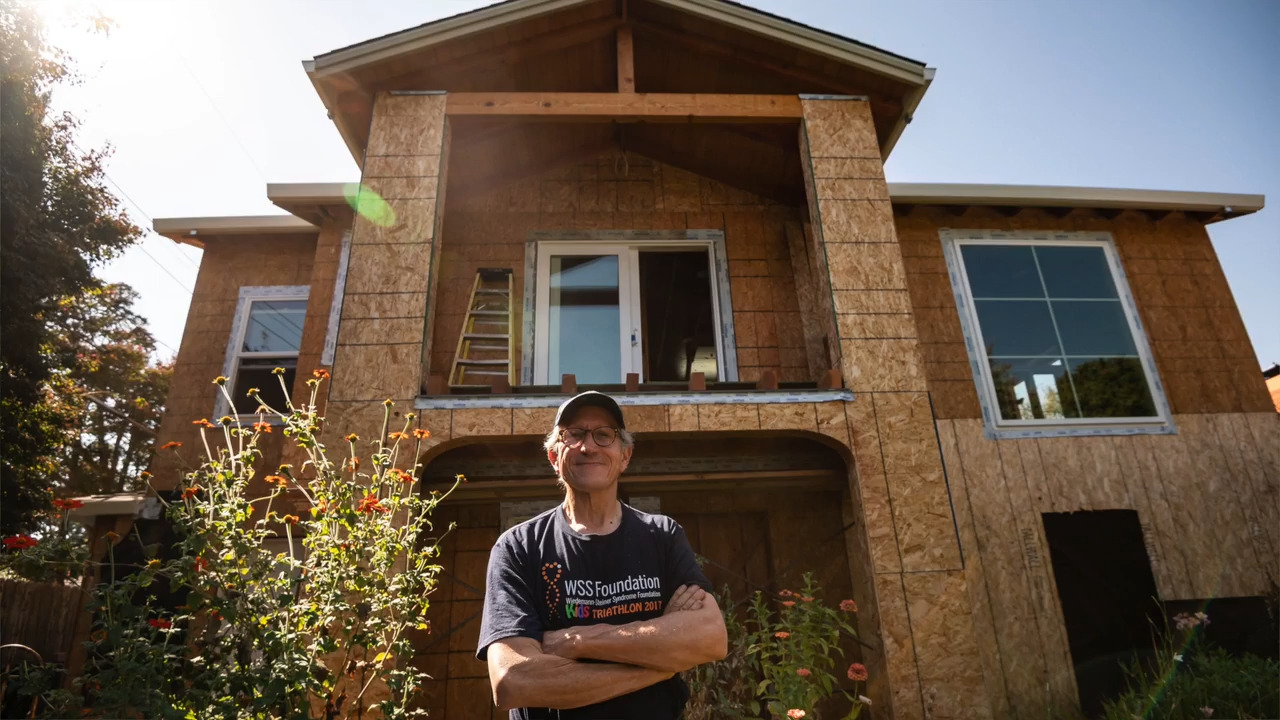
Several months into the coronavirus pandemic, frustrated with Zoom calls and looking for a project to get his hands dirty, Jeff Harris found one — he would build an accessory dwelling unit in his backyard.
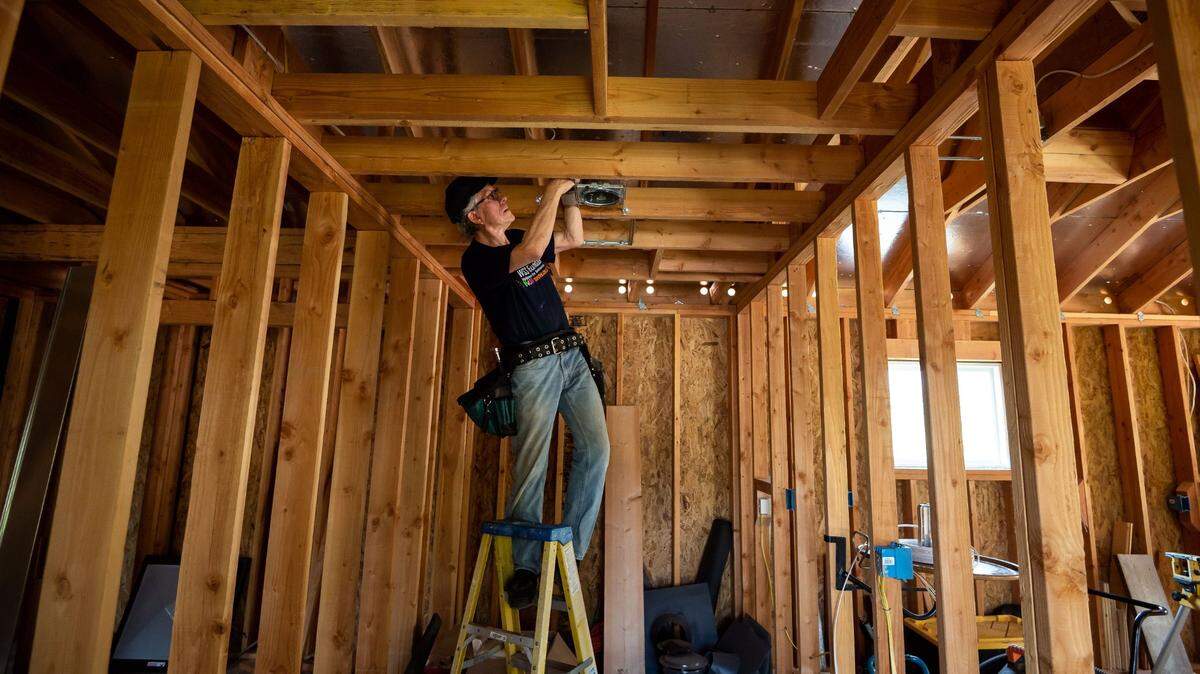
On a recent weekday, the Sacramento city councilman stood atop a ladder in his ADU, a work in progress behind his River Park home, a tool belt strapped to his waist as he installed copper wiring into the ceiling.
“Honestly, there’s a lot of catharsis with coming out here and banging nails,” Harris said.
State and city leaders have touted ADUs, also known as granny flats or in-law units, as mechanisms to help alleviate California’s housing crisis. But not many homeowners in Sacramento are building them. Last year, the city issued 76 building permits for ADUs — only about 2% of all housing units permitted that year.
The number of building permits issued for ADUs in Sacramento has increased in recent years, partly due to a series of bills state lawmakers passed between 2016 and 2019. In 2013, the city issued permits to build ADUs to just four property owners, according to a city housing report. Since that year, the city has issued 212 building permits for ADUs.
Harris is a contractor, so he was able to avoid the main barriers many others face when thinking about constructing ADUs on their properties. City leaders said the major roadblocks preventing more of the units from being built are the costs of labor and construction materials, along with a shortage of contractors. It costs about $200,000 to build an ADU in Sacramento, said Garrett Fenimore-Norman, an associate planner for the city.
It also can be difficult to persuade banks to issue construction loans for ADUs.
“It’s extremely hard to find a contractor to build for you,” Harris said. “There is so much work right now that contractors are charging a fortune. Prices have gone sky high for labor. Additionally because of COVID, materials are hard to source and enormously expensive.”
Last year, right after Harris bought materials, the price for a sheet of 4-by-8-foot OSB wood skyrocketed from $20 to $70. The cost of 250 feet of copper wire went from $70 to $180. If Harris were to hire contractors to build his two-story, 700-square-foot ADU, it would cost him $250,000 to $270,000, he said.
Although the number of ADUs built in the city is relatively low, Ansel Lundberg, co-chair of House Sacramento, a housing advocacy group, said it’s a promising sign for Sacramento that the number is increasing.
“It’s still a low number, but you’re seeing an acceleration,” Lundberg said. “It’s just getting started.”
Some cities have seen a higher interest in ADUs. Oakland, which has a smaller population than Sacramento, approved 359 ADUs from 2016 through 2018. That’s more than Sacramento permitted from 2013 through 2020. In Los Angeles, ADUs account for 22% of all newly permitted housing units, and 6,747 ADU permits were issued in 2019.
Meanwhile, some cities are building fewer ADUs than Sacramento. In Fresno, which has a higher population than Sacramento, only seven ADUs were built from 2018 through August 2020.
Where are ADUs being built?
Due to the cost, many homeowners who are building ADUs are longtime residents of the city’s more affluent neighborhoods, Fenimore-Norman said.
Of the 70 permits issued in 2018 and 2019 where the city had address data available, 14 of them, or 20%, were in East Sacramento. Only four were north of the American River.
“The people with equity in their homes are able to finance these — those areas where people have more wealth in their homes, and where property values have increased,” Fenimore-Norman said.
To encourage more ADUs to be built in all parts of Sacramento, the city is planning to cut down the cost of building the units by providing three free permit-ready floor plans homeowners can use instead of hiring contractors to design the units. The plans will be available in early or mid-2022, said Matt Hertel, long-range planning manager for the city. The city is also overhauling its ADU web page and is teaming up with a software engineer to create a tool where homeowners can upload an image of an ADU onto their lot size to see whether it will fit.
The city is also planning to create a program by 2025 to provide loans and grants to homeowners so ADUs can be used as affordable housing reserved specifically for lower-income tenants.
“One of the goals is to have more equitable distribution of ADUs,” Fenimore-Norman said. “We’re hoping we can get these into the underserved areas that really need this housing the most.”
From House Sacramento’s viewpoint, the high number of ADUs in affluent areas is actually a positive development because it’s making those amenity-rich neighborhoods more accessible to lower-income tenants, Lundberg said.
“In some ways, the promise of ADUs is building them in established neighborhoods as a lower-cost option in neighborhoods that are more traditionally expensive,” Lundberg said.
The city has passed several measures already to help encourage more ADUs.
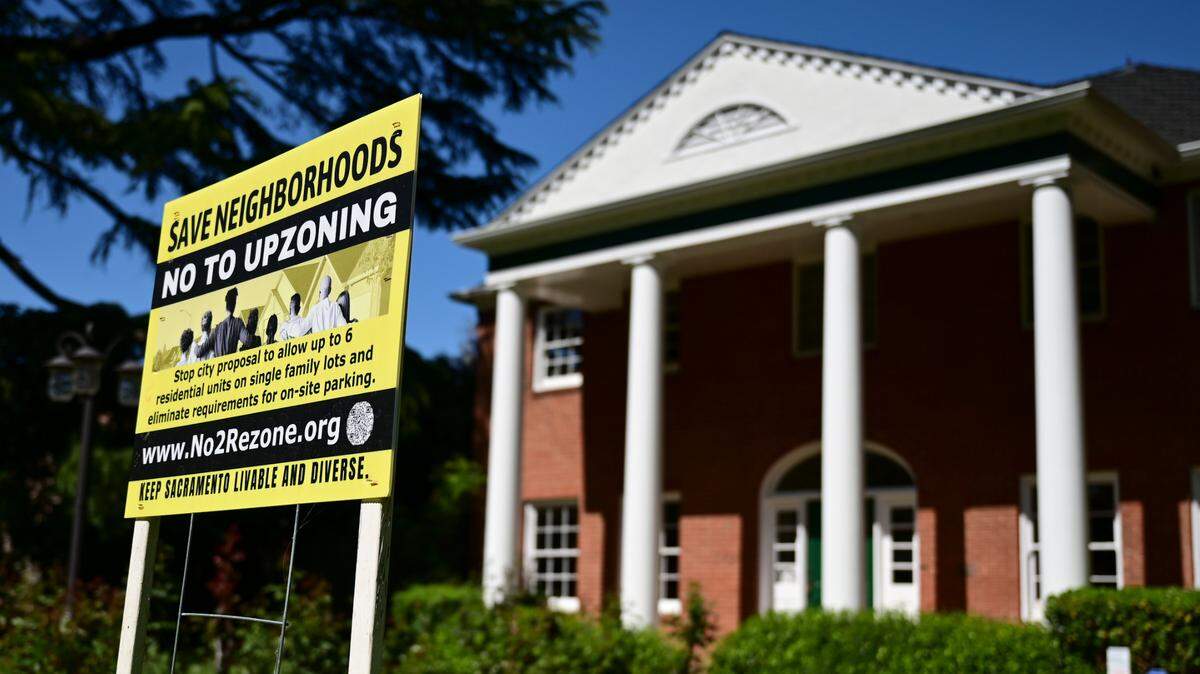
Unlike the state law, the city version does not require ADUs to have separate service entrances and separate utility bills, Harris said. In addition, the city does not require ADU tenants to have parking spaces. And starting last year, the city started allowing two ADUs, up to 1,200 square feet, on each lot instead of one, Hertel said. If the council passes a controversial measure to allow single-family homes to contain up to four units, it’s not yet determined if ADUs will be allowed be added to the lots as well, Hertel said.
The City Council also recently approved an item to remove setback requirements for side and rear yards, while leaving a 60-foot setback requirement in place for front yards. That means ADUs can now be built anywhere in side and rear yards, no matter how close they are to the edge of the property line.
The California Housing Finance Agency recently started offering as much as $25,000 in grants to low-to moderate-income homeowners to build ADUs.
Will ADUs help housing crisis?
Rent for a typical apartment in the Sacramento region hit $1,760 per month this year — higher than New York, Washington, D.C., and Seattle. To meet state housing goals, the city would need to create 45,580 new housing units by 2029.
Sacramento’s housing crisis is being exacerbated by Bay Area residents moving here, seeking larger homes — with yards — to work from during the coronavirus pandemic.
“A lot of people are moving from the Bay Area and doing telework and they’re snapping up all the rentals and many of the for-sale product,” Harris said. “It has put enormous pressure on our housing market, and that’s why the council is trying so hard to get new housing products like ADUs.”
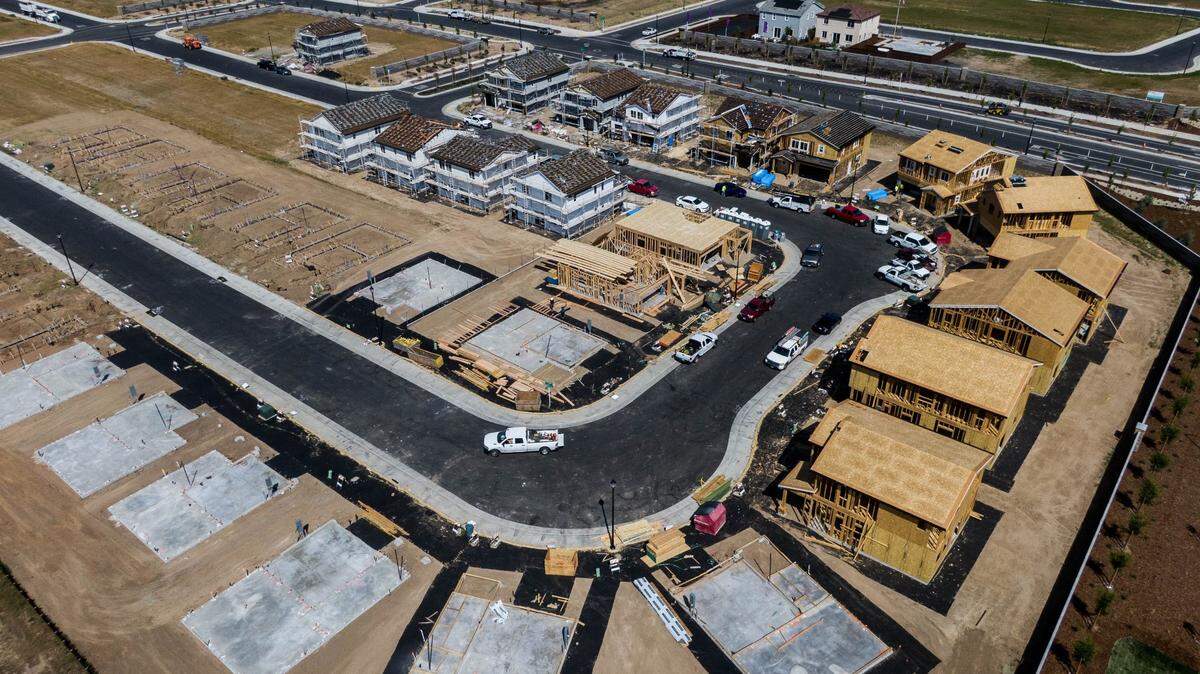
But with so few people building ADUs in Sacramento, Harris does not believe it’s making a noticeable improvement to the housing crisis. It’s the same situation with Senate Bill 9, which Gov. Gavin Newsom signed earlier this month. The new law, which takes effect Jan. 1, allows homeowners to split single-family lots and build a duplex on each one.
“Will it happen in enough areas that it significantly affects our housing stock? I think not,” Harris said. “I don’t think the economics are there or the physical conditions of the actual lot. It will add little bits to our housing stock. Seventy units of ADUs in a year is kind of insignificant. Next year we might have 300 ADUs. We’re getting a lot more permit applications. Then it starts to become a little bit more real.”
Last year, 162 people applied for permits.
Lundberg believes ADUs and SB9 will be enough to make a significant difference in Sacramento’s housing crisis.
“It’s going to take more than that, but I think they are steps in the right direction,” Lundberg said.
Some of the ADUs are being used for Airbnbs or other short-term rentals, which means they’re not helping the housing crisis. The city does not keep data on how many are being used for that purpose but might start tracking it in the future, Hertel said.
“It’s hard to make decisions on policies like this if the city isn’t aware of what’s out there and what these things are being used for,” Lundberg said.
Even at the high cost to build ADUs, Harris thinks homeowners can make a profit from the rent, which might cause more people to build them. He plans to either have his daughter live in his unit, or rent it out.
“Even if you pay a fortune to get an ADU built, with the rental rates the way they are in Sacramento and all the pressure on the market, a person can still make money with an ADU,” Harris said.
This story was originally published September 29, 2021 at 5:00 AM.