Tragic shooting renewed calls for change in Upper Land Park public housing. Will it come?
READ MORE
Upper Land Park Residents Call for Change
Sacramento leaders announced plans to reinvest in public housing in Upper Land Park after a fatal shooting in November 2021. But residents remain doubtful that change will happen.
Expand All
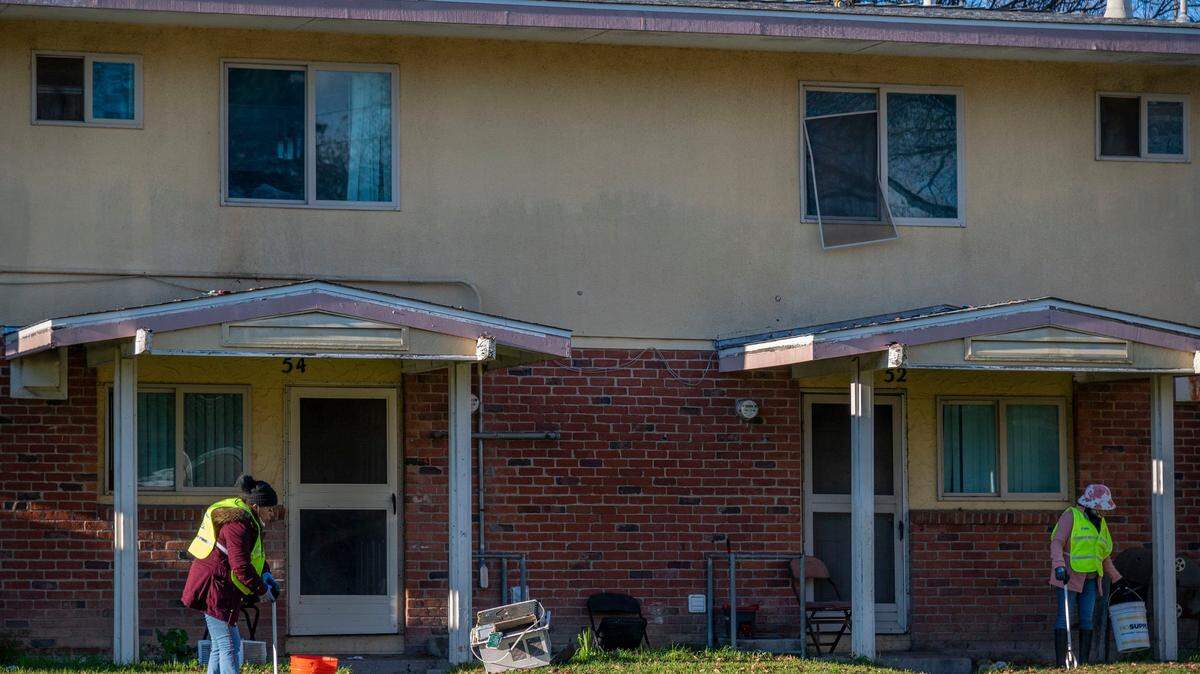

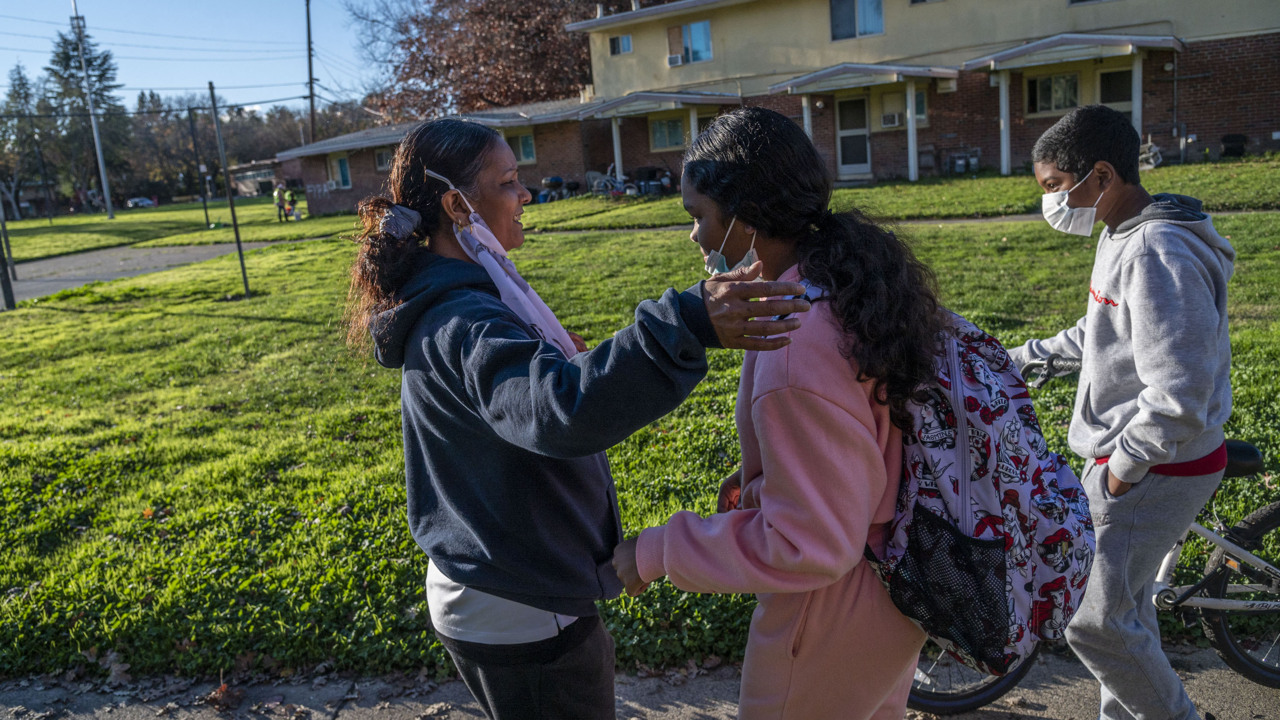
Only three tenants from Upper Land Park public housing complexes sat in a chilly, mid-size room with blue-striped walls on a recent Saturday, listening to a cadre of civil servants. Representatives from the City Council, the mayor’s office and the housing agency that owns and manages their homes far outnumbered them, saying help was on the way.
But it might not be permanent.
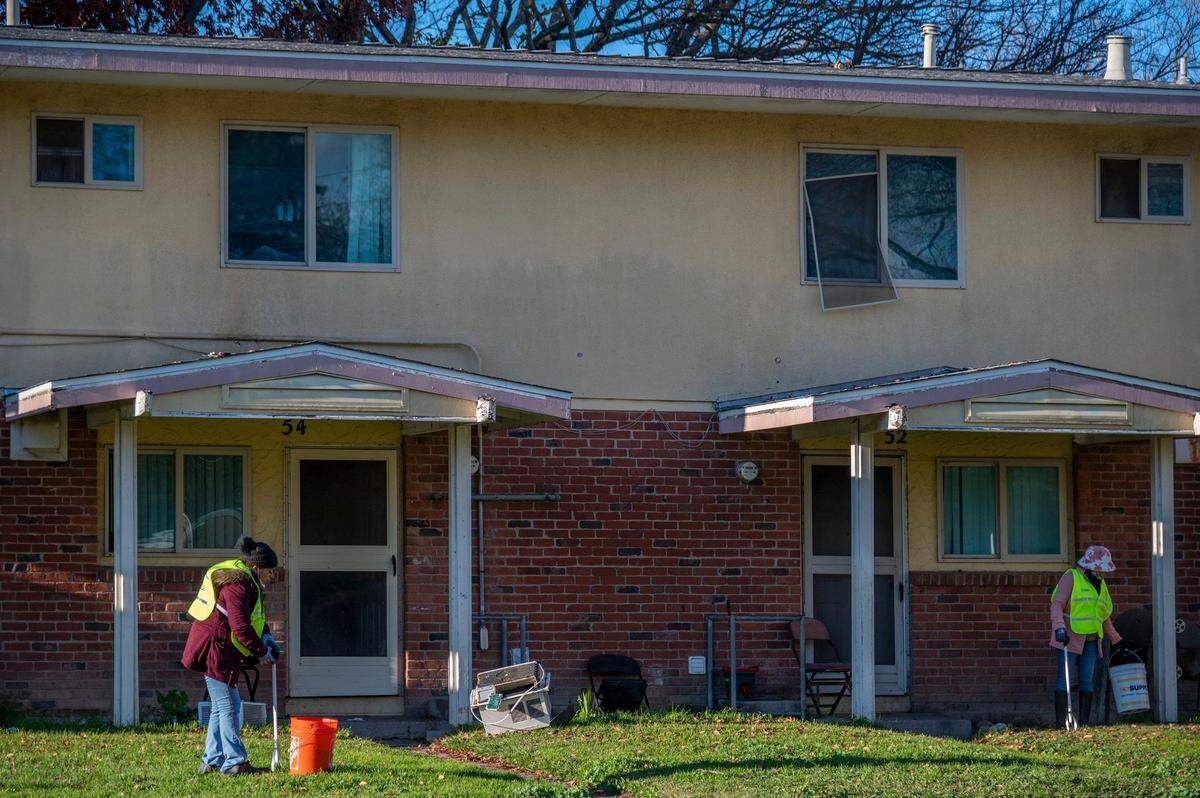
The residents live in Seavey Circle and New Helvetia — the Upper Land Park mid-20th-century public housing developments formally known as Marina Vista and Alder Grove — just down the street from a contemporary condo complex that features pops of bright color and a park with the soaring name “Olympians.” Here, in the two public housing complexes, the homes have similar styles, mostly low-slung one- and two-story buildings with exposed brick, separated by stretches of grass.
The residents, two of whom have lived there for decades, listened to promises of changes to come.
They heard Mark Hamilton, director of maintenance and Rental Assistance Demonstration at the Sacramento Housing and Redevelopment Agency, say the agency was in the process of hiring five more temporary workers for cleanup around the premises, in addition to the porters they had already hired.
“We’ve hired a bunch of porters,” he said. “Trash looks much better.”
The housing agency couldn’t commit to making the staffing change permanent.
“We’re taking a look at that,” Hamilton said.
Frank Maldonado, a mid-60s New Helvetia resident, did not attend the meeting. He was resigned to the status quo.
“I believe they already got their mind set on what they want to do,” Maldonado said of the housing agency and city officials. “They’re just going through the motions.”
Maldonado and his neighbors see a larger picture of encroaching gentrification in the semi-industrial neighborhood, which has intensified their fears, not of neglect or isolation, but of eradication.
And as city officials try to make plans to reinvest in these communities, residents are skeptical of the process and promises. The Upper Land Park community is reeling from a shooting that left a male resident and a little girl dead at Seavey Circle in November, setting off this new push to chart public housing’s future in the rapidly changing pocket of the city.
The buildings have been a haven for low-income people in Sacramento. But increasingly, residents say, their homes appear to be threatened. Seavey Circle and New Helvetia, home to about 2,000 residents, are boxed in by the I-5 and Highway 50, choked off from downtown by the freeways and the old city cemetery.
City Councilmember Katie Valenzuela facilitated the Dec. 11 meeting and a better-attended gathering with the mayor Nov. 29 to address the needs of the people living here. “This is about a community, and so many communities in Sacramento, who are so close to the central city but may as well be miles and miles away,” Valenzuela told The Bee after the shooting.
“I’m feeling optimistic about the engagement we got in the first meeting, and the work we accomplished in the second one,” she said. “We all agree that the situation in this community has been untenable for some time, and the responsibility for that really stops with us.”
.jpg "SAC_20211214seavey01 (1).jpg")
Wishes among a ‘culture of fear’
New Helvetia resident and tenant organizer Marcheri Smith, a mid-30s mother of two, sat next to Valenzuela, who led the meeting. Smith repeatedly said she was concerned that vows of support for public housing would not lead to lasting change.
Smith said she was disappointed that more residents did not show up, but that the lack of resident participation is linked to the housing crisis. And fear.
Many tenants, she said, violate their leases to help loved ones who become homeless, letting them stay in their public housing unit as “unauthorized guests,” and putting themselves at risk of eviction. The result, Smith said, is “a culture of fear” that makes tenants feel hesitant to speak up.
“Housing is so scarce in Sacramento all of a sudden,” Smith said. “It’s so hard for families to survive here now. People have to do what they have to do with their families.”
If they had come, the residents would have heard the officials from the Sacramento Housing and Redevelopment Agency, which manages public housing in the county, explain some of the measures they had already taken to improve Seavey Circle this year. They had hired the new (but maybe temporary) porters, and they had replaced some of the older incandescent lights around the property with brighter bulbs, a project that might be finished by the end of January.
They also had a plan to install security cameras outside, but that wouldn’t be done until the spring.
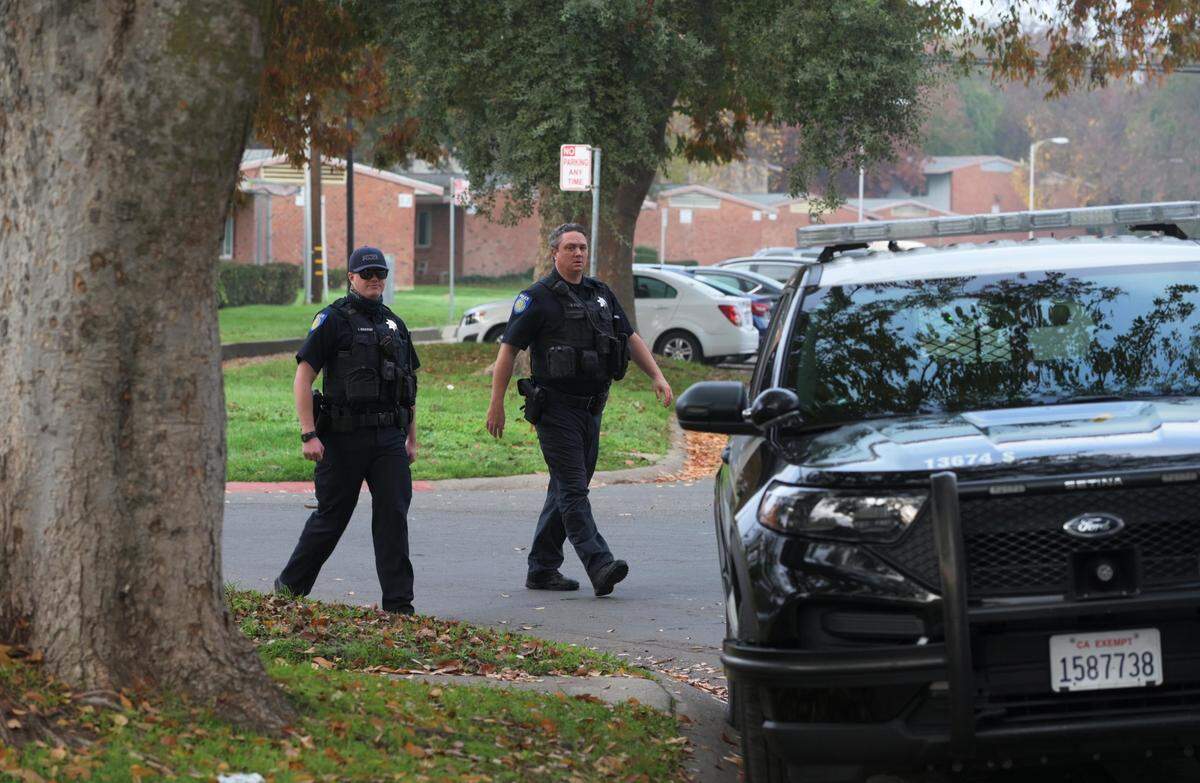
As yet, there was no plan for achieving what residents said they wanted: Permanent after-school programs for their children; a new playground to replace the small, outdated one on-site at Seavey Circle; police officers who were dedicated to their neighborhoods so that when cops responded to their homes, they wouldn’t always feel like strangers; and a library.
Smith said this was frustrating, because they were asking for services that the housing authority “should already be doing.”
And residents who have lived in public housing for decades said that the agency had already sponsored some of the programs they asked for this winter — and the programs had lapsed or lost funding for reasons they did not understand.
They said a history of half-measures puts officials’ actions under a microscope for them.
“The reason I feel that we don’t have the commitment of residents and people, is because it’s like, they fight, they go to these meetings, and nothing happens,” longtime Seavey Circle resident Jasmine Singh, 49. “After a while, of course, people gonna stop and give up, too. Because no change is happening, no matter what they ask for.”
Shooting renews promises of transformation
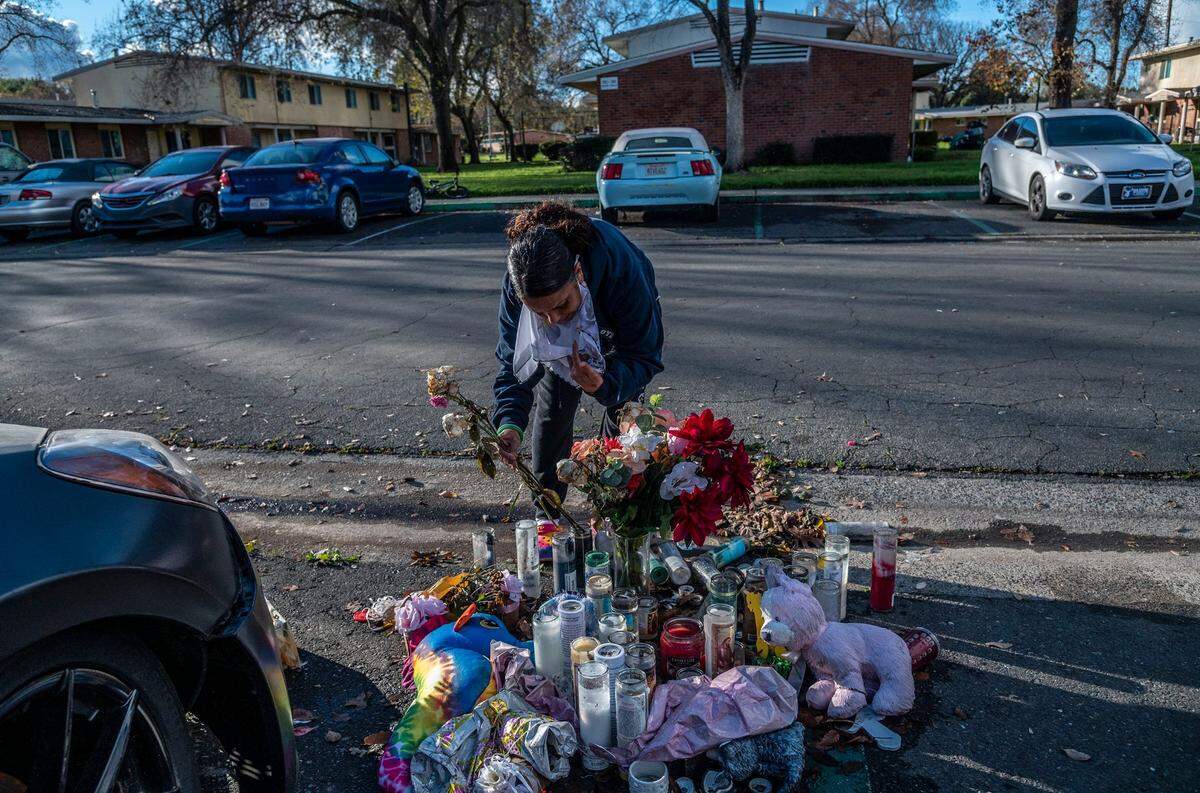
Isabel Agnes Delgadillo Martin was just shy of her eighth birthday, walking through Seavey Circle the night of Nov. 16. She was caught in gunfire, shot, rushed to the hospital, and died there. Clifford Hall, 42, was also killed.
After the girl’s death, the calls from city officials came swiftly: Valenzuela demanded that the city invest “millions” in Upper Land Park communities. Sacramento Mayor Darrell Steinberg tweeted that “there has never been a more important time for the city to create a new dedicated source of annual funding for youth.”
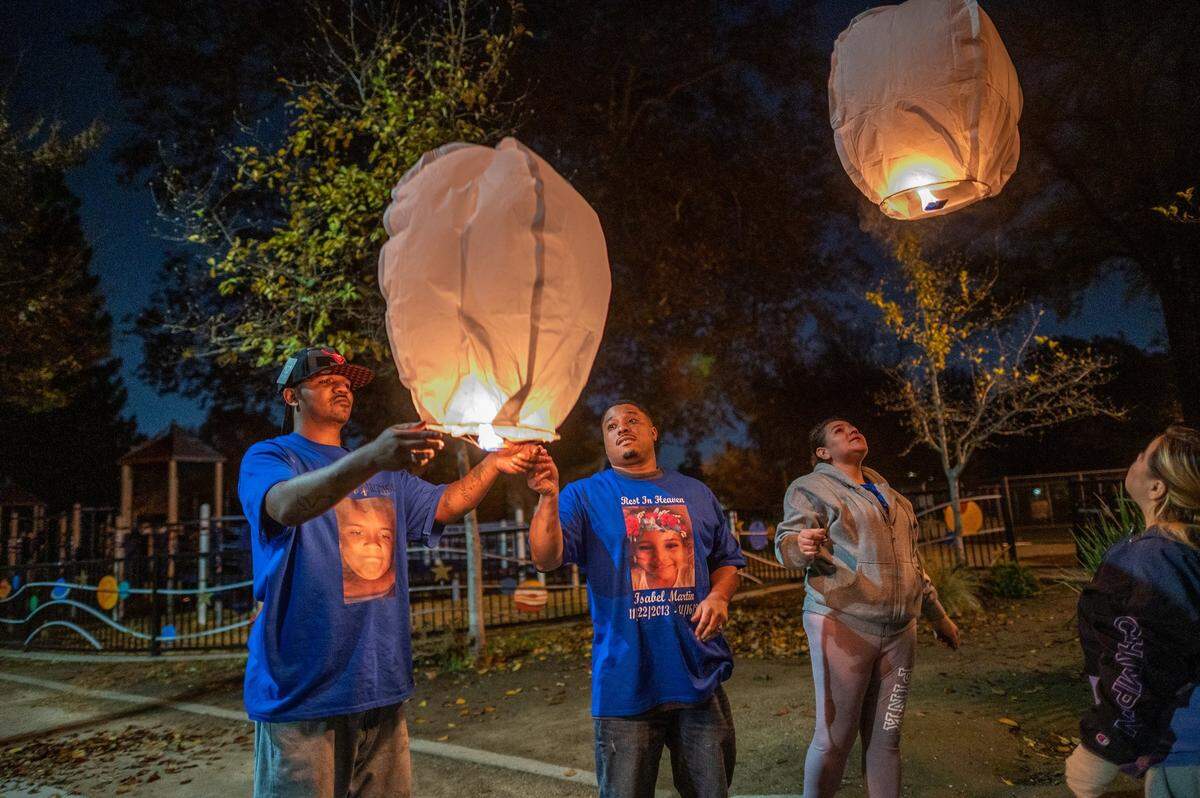
Valenzuela has been leading the charge for transformation, and working alongside the housing agency to restore faith between authorities and tenants. But the distrust and its sources were on display at her meeting.
The complex used to have a teen center with pool tables and games, Singh and other residents said. Kids could hang out there on weekends and after school. In the drafty building where Valenzuela was writing their suggestions on large sheets of paper with bright markers, children once did art projects, tenants recalled. Now, the linoleum-tiled community room is mostly empty.
New Helvetia once had a medical center for residents’ basic care, and on-site social workers so residents wouldn’t have to travel to access services, Singh said.
But over the last 30 years, those resources have disappeared — and private housing in the county has only become more scarce and unaffordable, leaving residents even more trapped.
Tenants in Upper Land Park have watched the “Mirasol Village Redevelopment Project” flatten the former public housing development known as Dos Rios on 12th Street just south of Richards Boulevard and force former residents to move out, with many going into the Housing Choice Voucher Program known as Section 8. The new construction broke ground in 2020.
Although the grant to demolish Dos Rios required that all 218 affordable units be replaced, many of the units in the new complex will be market-rate, according to the proposal.
That was a choice designed to integrate and uplift the community, the housing agency said. But government officials and residents said the public housing waitlist also can leave people in limbo for a decade or more, angering New Helvetia resident Maldonado. He said the supply of public housing doesn’t even come close to meeting the demand. He said he waited for the one-bedroom he keeps meticulously tidy for close to 10 years.
“They’re gonna put a bunch of other stuff in there that, it’s not low-income, it’s for regular people,” Maldonado said. Maldonado, a Sacramento native, used to hang out with friends in Dos Rios as a child. He said that currently, “They’re trying to just make it a ‘better area’ over there. I think they want to do the same thing here (in Upper Land Park).”
In 2015, the Sacramento Housing and Redevelopment Agency proposed tearing down both Seavey Circle and New Helvetia, a plan that it didn’t adopt but also later dismissed as “disinformation.” A current city plan to “revitalize” the neighborhood, the West Broadway Specific Plan, has safeguards for public housing, but still leaves the door open for demolition and conversion to Section 8.
At the community meeting Dec. 11, New Helvetia resident Smith told housing agency and city officials that past efforts to help the housing communities have been weak.
“People come in and they disappear,” Smith said. She said it usually feels like a publicity stunt to “get on the news and say ‘we’ve done this for New Helvetia, we’ve done this for Seavey Circle.’” This time, she pleaded, “Let’s keep it sustained.”
Singh moved to New Helvetia as a child in 1979 after her family emigrated from Fiji and later moved to Seavey Circle. She echoed Smith’s feelings. “If (change) does happen, then it’s just one time. And people are looking at it like, OK, that’s it?”
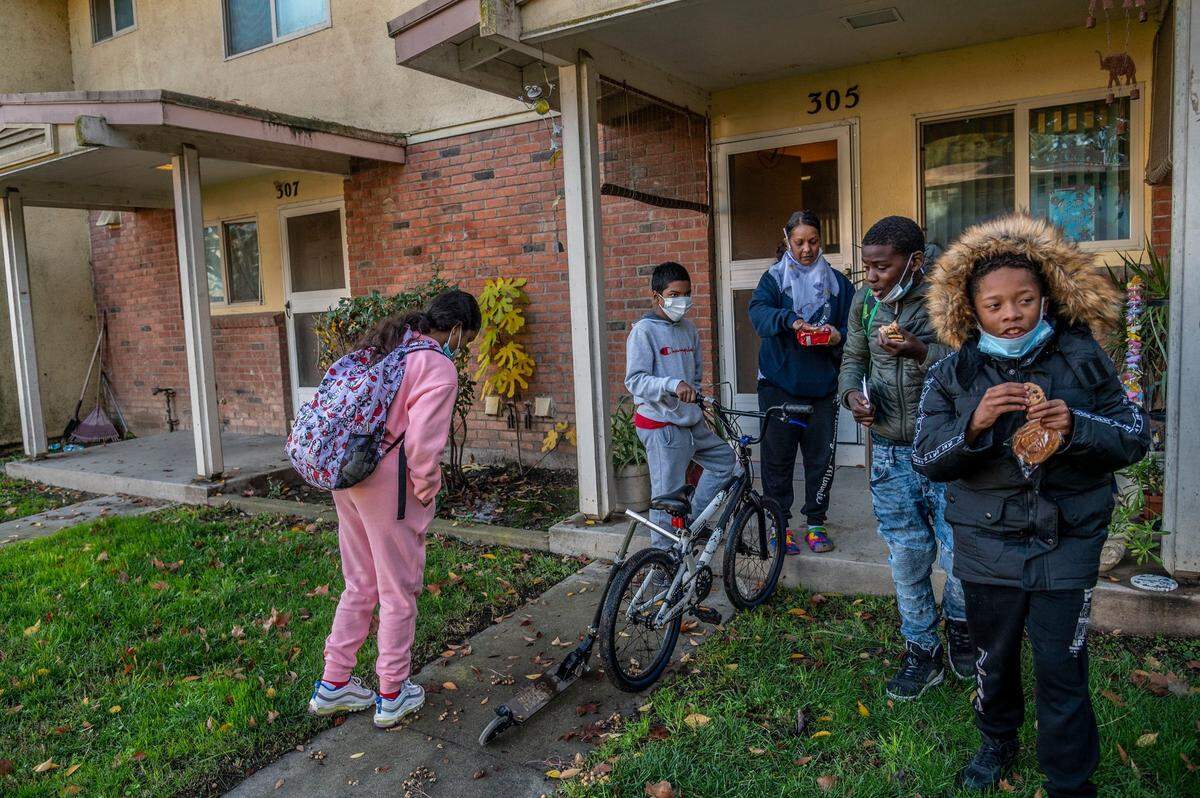
She cited a successful — and short-lived — outdoor movie night that ended without clear explanation.
Singh said the sparse attendance that morning was the result of hopelessness.
The housing officials who were present — Hamilton and Mayra Jacobs, the new director of property management — explained that maintenance has been deferred during the pandemic because workers had to prioritize only emergencies.
But residents said that the delays predate the pandemic. At the meeting, they also told Hamilton and Jacobs that the agency had not effectively communicated with tenants about how work orders were being prioritized, which the officials promised to work on.
Singh said tenants used to participate far more actively in the governance of their community. She worked closely with Leataata Floyd, the activist and Seavey Circle resident, who died in 2018.
Floyd taught Polynesian dance to kids, enlisted drug dealers as part of a successful neighborhood watch program and organized after-school tutoring and sports programs for children. Singh now works at Leataata Floyd Elementary School, the on-site school named after her friend.
And as Smith said, the stark and increasing power imbalance between Sacramento Housing and Redevelopment Agency and residents creates an atmosphere of distrust.
Smith said that many residents will let family members or friends with unstable housing stay in their units for longer than they’re technically allowed, meaning the tenants are out of compliance with their leases.
“They want to protect their family or friends,” she said. But if the managers find out unauthorized guests are living in a unit, “You don’t get 30 days, you get three days.”
Management will also serve three-day eviction notices for relatively minor infractions, Smith and Singh said. Now that Upper Land Park tenants live in the proverbial shadow of loft-style condos selling for hundreds of thousands of dollars, the looming threat of homelessness and an ever-more-expensive Sacramento housing market only amplifies those fears.
“Housing will be quick to send you a notice if you’re late on rent or anything, and it’s not fair, because it’s like, wow, you guys will communicate when it comes to what you guys need from the residents, but when the resident needs something, it’s like, nothing,” Singh said.
Smith said that SHRA practices retaliation if residents complain.
“Retaliation is big with SHRA,” Smith said.
Hamilton and Jacobs denied that, and said that residents are only penalized with three-day eviction notices when they or their guests have caused grave problems.
For most residents, Smith said, leaving the public housing development would mean homelessness.
Slow progress
Residents said that they wanted summer and after-school programs for their kids — permanent programs, with reliable funding, not partnerships with fly-by-night nonprofits or grants that run out in a year or two. As the San Diego Union-Tribune reported in 2012 in a profile of Leataata Floyd, “Altruistic souls show up in the projects or at the school a time or two and then never again.”
Tenants at the meeting recalled the same pattern. Now a teacher at Leataata Floyd Elementary, Sam Floyd, grew up in Seavey Circle and remembered going on field trips organized by the arm of the city now known as the Department of Youth, Parks, and Community Enrichment. As a child in the 1990s, he played sports in the Police Activities League and played pool in the community rec room.
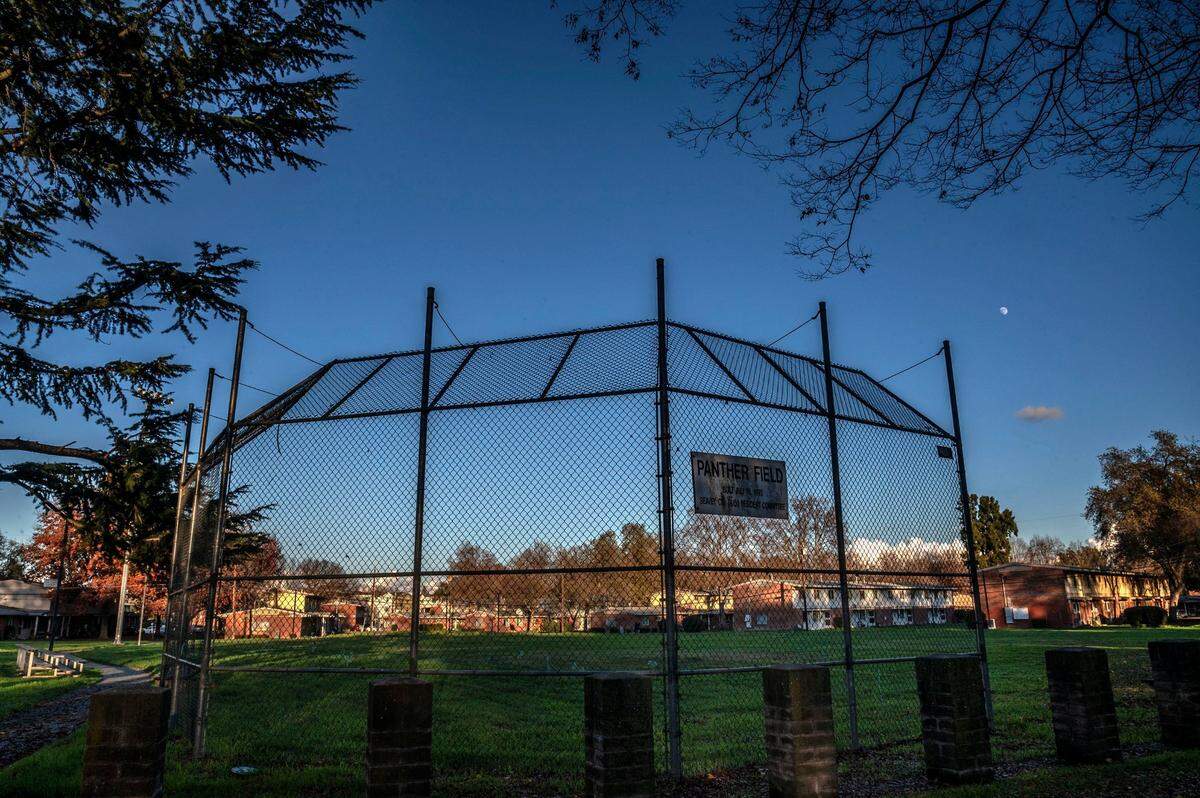
All those options are long gone. He said at the meeting that he wishes kids “had those same resources that I did.”
Singh said that the Sacramento Housing and Redevelopment Agency has a long way to go before residents will trust them — and work with them. Again and again, she said, residents “see nothing is changing, that Housing is not doing nothing. And it’s like now we’re starting from the bottom, because people just lost interest. … The way they looking at it, like, ‘Oh, Housing? They don’t care. They don’t care about our kids, they don’t care about us. All they care about is getting that rent.’ That’s the attitude they have right now with SHRA. They’re just done.”
But she and a core group of organizers are working to build tenant activism in Upper Land Park public housing — and although they’re skeptics, they still hope for change.
“Being here since 1979, I seen it been good, bad, good, bad,” Singh said. “If I could get a handful to two handful of people that are very dedicated and feel the same way as I do … I know we could make the change, and I know we could do it if we had the right people.
“Because I do consider this is my home, this is my heart.”
She had walked to the community room in her colorful Crocs to talk to the housing authorities, she said, “because I haven’t lost the faith.”
This story was originally published December 26, 2021 at 5:00 AM.