
If office vacancies persist, Sacramento should adapt and turn empty buildings into housing
READ MORE
Upper Land Park Residents Call for Change
Sacramento leaders announced plans to reinvest in public housing in Upper Land Park after a fatal shooting in November 2021. But residents remain doubtful that change will happen.
Expand All
The coming closure of the Raley’s 5-ONE-5 grocery store is a concerning bellwether for downtown Sacramento’s pandemic recovery. A company spokesperson cited “significant changes” in nearby office occupancy as the culprit as well as the stalled development of housing around the boutique-style organic market on R Street.
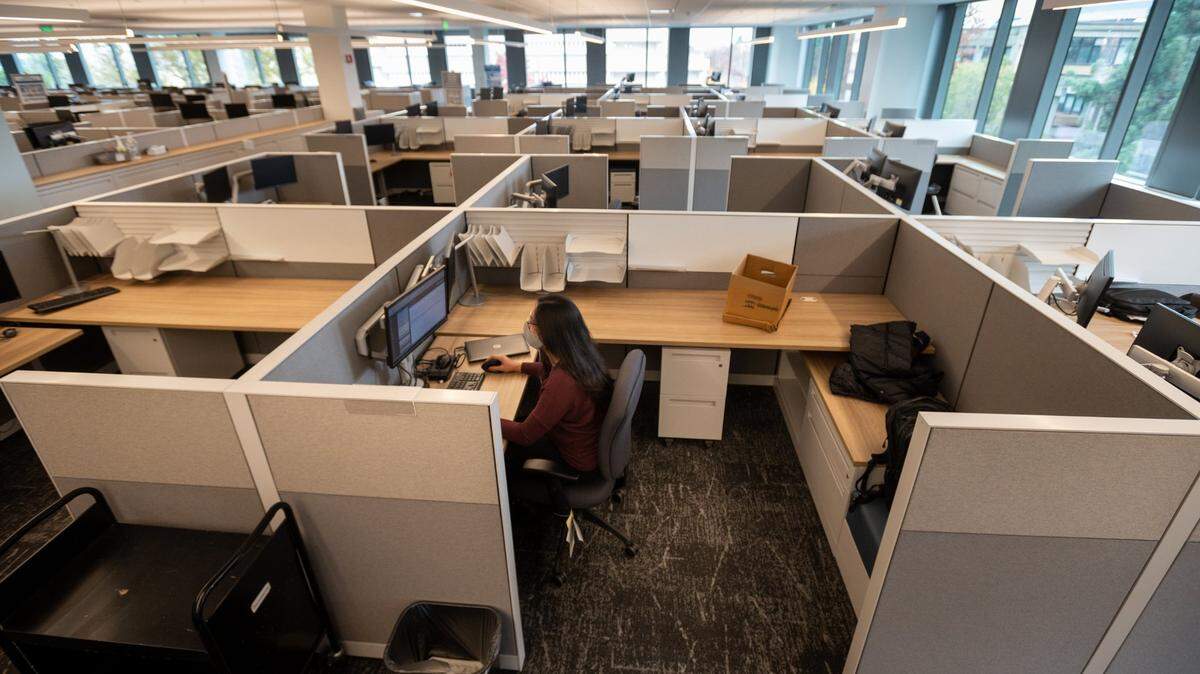
The recovery Sacramento envisioned this year did not materialize, at least not in the way many business leaders and public officials had hoped for. By December, many of the largest office buildings were mostly vacant. The Downtown Sacramento Partnership estimates that some buildings were about 40% occupied. Any hopes of a larger return in January are now being tamped down by the surging omicron variant.
Resuming public life and reopening every business sector in June was a monumental step after California imposed strict pandemic rules to protect its citizens. But the notion that office buildings would once again be bursting with life and that occupancy rates would dramatically improve turned out to be a fantasy to appease our desire for normalcy.
The state government finalized its telework policies in October, making remote work a permanent option for California’s 230,000 public employees — 94,000 of whom are based in greater Sacramento. That is evidence enough that our pandemic adaptations are here to stay, and it should be a warning shot for city leaders to begin exploring creative new options to salvage the surviving infrastructure of our commuter past.
In a city and state struggling to treat its housing crisis, Sacramento has a unique opportunity to repurpose the empty office neighborhoods in the exurbs and office towers downtown and transform them into a diverse array of housing to suit the needs of the region.
Adapting our built environment to address our most pressing economic needs is not just smart; it’s essential.
For Sacramento’s citizens, it offers intriguing new housing opportunities in mixed-use buildings around the city’s core. For the environment, it presents large-scale, transit-oriented options to improve community health and reduce reliance on vehicles. For local governments, it offers a new tool to more effectively address the housing deficit and maintain revenue streams in urban areas. For property owners, it offers a way out. And for the small-business owners who rely on office workers for their customer base, it offers a new outlook.
Since the recession and the untimely demise of redevelopment in 2012, Sacramento has struggled to build anything other than market-rate housing. The affordable projects that are built often face funding gaps or NIMBY backlash that bogs them down. Adaptive reuse presents a way around such challenges and an alternative to demolishing public properties or displacing poorer residents to make way for new ones.
Getting office workers back into Sacramento’s office towers was supposed to be the most effective way to heal the downtown and jump-start the city’s recovery. Now it feels quaint. The fact that it didn’t happen should push business leaders and ranking public officials to shift their thinking about the future of Sacramento’s core and turn to more sustainable alternatives.
Throughout the pandemic, many of us have focused intensely on the idea of going back to the way things were. Yet at the same time, we have also worn out expressions like “the new normal” to describe life with COVID. If the new normal for our office buildings is perpetual vacancy, we need to reconsider what survival looks like in our corporate centers and embrace a new form of mass adaptation.
BEHIND THE STORY
MOREWhat are editorials, and who writes them?
Editorials represent the collective opinion of The Sacramento Bee Editorial Board.
They do not reflect the individual opinions of board members or the views of Bee reporters in the news section. Bee reporters do not participate in editorial board deliberations or weigh in on board decisions. The same rules apply to our sister publications, The Modesto Bee, Fresno Bee, Merced Sun-Star and San Luis Obispo Tribune.
In Sacramento, our board includes Bee Executive Editor Colleen McCain Nelson, McClatchy California Opinion Editor Marcos Breton, opinion writers Robin Epley, Tom Philp, LeBron Antonio Hill and op-ed editor Hannah Holzer.
In Fresno and Merced, the board includes Central Valley Executive Editor Don Blount, Senior Editor Christopher Kirkpatrick, Opinion Editor Juan Esparza Loera, and opinion writer Tad Weber.
In Modesto, the board includes Senior Editor Carlos Virgen and in San Luis Obispo, it includes Opinion Editor Stephanie Finucane.
We base our opinions on reporting by our colleagues in the news section, and our own reporting and interviews. Our members attend public meetings, call people and follow-up on story ideas from readers just as news reporters do. Unlike objective reporters, we share our judgments and state clearly what we think should happen based on our knowledge.
Read more by clicking the arrow in the upper right.
Tell us what you think
You may or may not agree with our perspective. We believe disagreement is healthy and necessary for a functioning democracy. If you would like to share your own views on events important to the Sacramento region, you may write a letter to the editor (150 words or less) using this form, or email an op-ed (650-750 words) to opinion@sacbee.com. Due to a high volume of submissions, we are not able to publish everything we receive.
Support The Sacramento Bee
These conversations are important for our community. Keep the conversation going by supporting The Sacramento Bee. Subscribe here.