
Anne Marie Schubert’s gamble: After ditching the GOP, can she win a statewide office?
Anne Marie Schubert didn’t listen to her friends.
As the Sacramento County District Attorney mounted a campaign to become California’s next attorney general, some of them told her she should register as a Democrat to capitalize in a deep-blue state. Others tried to persuade her to return to her Republican roots.
Schubert wasn’t having any of it. In debates with friends who were eager to chart a course to improve her chances in the race, her message was clear.
“No, I’m authentic to me,” she said in a phone interview last month.
Schubert, 58, is running as an independent in a closely-watched race to be California’s top cop. A former Republican, she dropped her party affiliation in 2018. On ballots for the June 7 primary, instead of “REP” or “DEM,” next to her name will appear the more cryptic, open-ended “Party Preference: NONE.”
In doing so, Schubert is trying to make history. No candidate running without party affiliation has won statewide office in the modern California political era. Political consultants, observers and current and former candidates are split on whether the gamble will pay off.
Some, including those with ties to her opponents, say Schubert won’t find enough votes in a field with Democratic Attorney General Rob Bonta and two Republican challengers – Nathan Hochman, a former federal prosecutor from Los Angeles, and Eric Early, a Los Angeles lawyer who first ran for the office in 2018. Green Party candidate Daniel Kapelovitz rounds out the field.
The top two vote-getters in the June primary will move on to the general election in November. California isa Democratic stronghold, favoring Bonta running as a well-funded blue incumbent. That likely leaves the rest of the field fighting for a spot on the fall ballot.
That could spell trouble for Schubert, especially as primaries tend to skew more partisan with party-affiliated voters often checking the box for their candidate.
“The math just doesn’t work,” said Matt Rexroad, a political consultant who is working on Hochman’s campaign.
Others, including those who have run as independents before, say that if there ever were a perfect storm of political atmosphere and the right candidate to pull it off, Schubert would be the one to do it.
Schubert was elected Sacramento County District Attorney in 2014 and re-elected in 2018. She gained national attention for her role in helping track down the infamous Golden State Killer and cultivated a brand as a tough-on-crime career prosecutor who fights for crime victims.
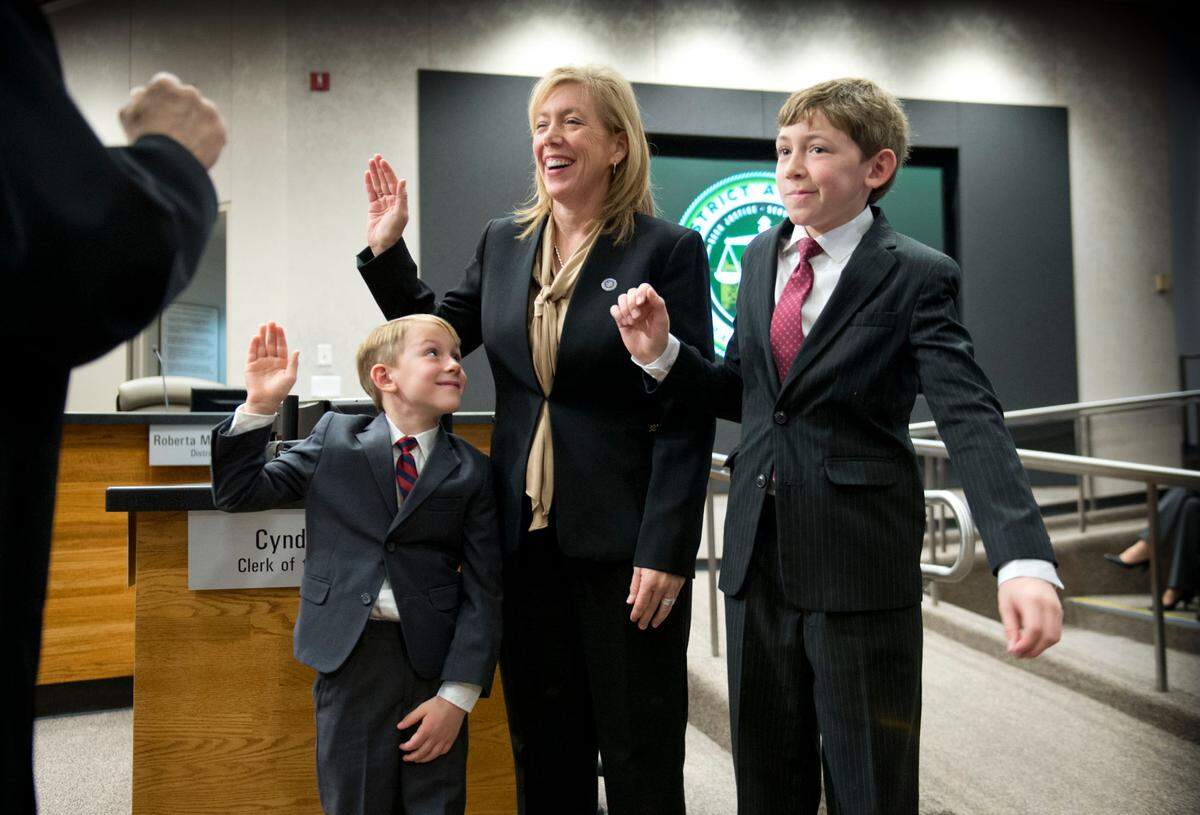
“She was just as capable an individual 10 years ago as she is today,” said Dan Schnur, a former Republican strategist who ran for secretary of state as an independent in 2014. “But the mood of the public is much different now than it was then. There’s much more interest in a more assertive approach on issues relating to law enforcement. That clearly works to her benefit.”
Advocating for crime victims
A Sacramento County native, Schubert grew up in the Arden area as the second-youngest of seven siblings. Her father, an orthopedic surgeon, was a founding member of the Sierra Health Foundation. Her mother, a physical therapist who left her career to raise her kids, died when Schubert was 16 after a breast cancer diagnosis years earlier.
Schubert attended local schools and after graduating from Saint Mary’s College in 1986 she went to the University of San Francisco for law school. “I went to law school for the wrong reasons,” Schubert told KQED’s Political Breakdown in 2019.
She figured she had two career paths: become a doctor or a lawyer. Since Schubert didn’t feel like she did well with blood or science, she chose the latter. “Because I just figured it was a job that I could get that I would have a decent income,” Schubert told KQED’s hosts.
But while interning for a judge in San Francisco, Schubert got “bit by the public safety bug.” She never looked back.
“I grew up in the trenches,” Schubert said. “I have prosecuted, you know, violent crime, homicides, all that stuff, and I have sat with crime victims for years and I understand the human toll, as I call it, of crime, particularly violent crime.”
Over the years, she said she has realized that laws and public policies have to account for that human toll. In Bonta, appointed by Gov. Gavin Newsom in 2021, Schubert sees someone who she says has championed policies that are “essentially weakening accountability and destroying crime victims’ rights.”
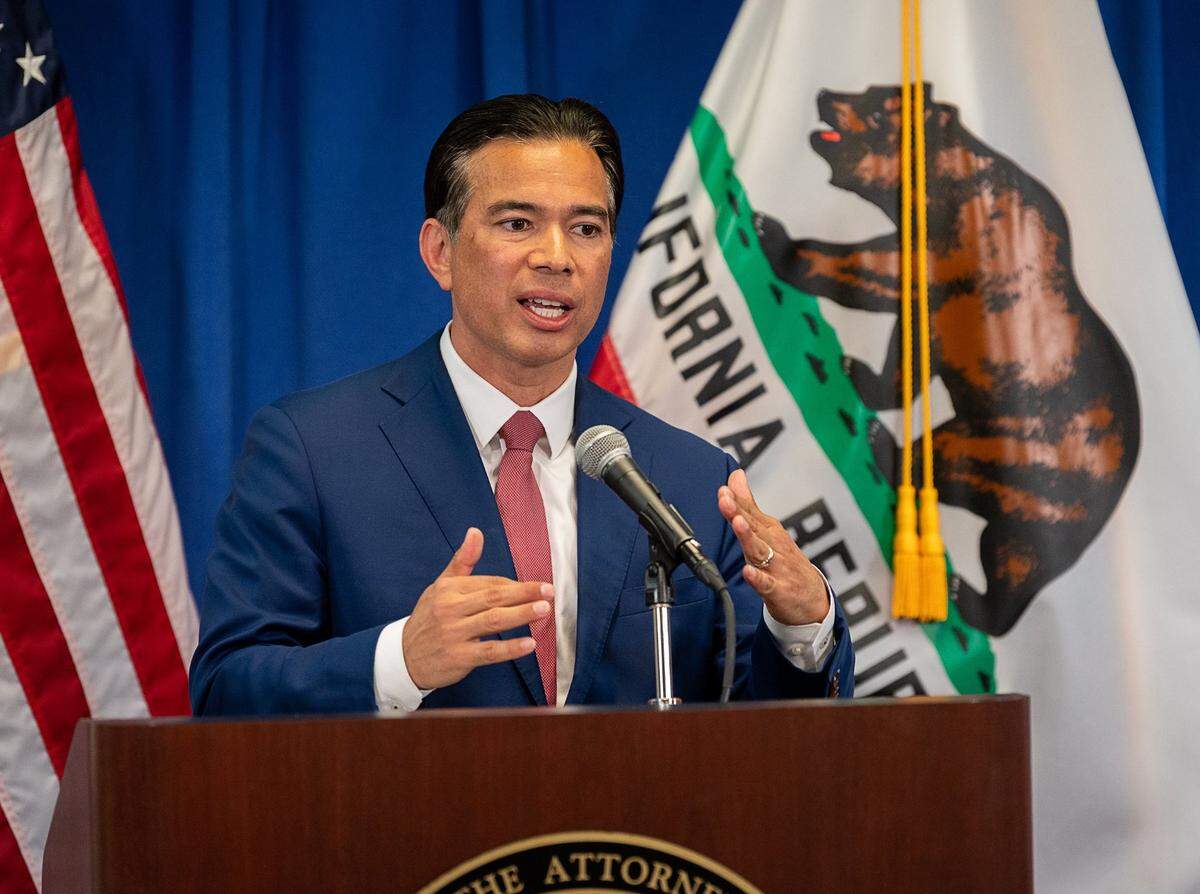
She likens Bonta – a former nine-year state legislator from Alameda – to liberal district attorneys Chesa Boudin, of San Francisco, and George Gascón, of Los Angeles. Both are facing recalls.
“I believe in public safety,” Schubert said. “I believe in rehab – 100%. I am a leader in all that and I advocate for that. But I also have watched the demise in accountability.”
On the campaign trail, however, opponents have seized on crime trends in Sacramento County to ding Schubert. Homicides involving firearms have jumped sharply in the county in the pandemic, reflecting a trend seen across much of the state and nation.
Early, one of Schubert’s Republican opponents, told the San Francisco Examiner he is no fan of Boudin or Gascón, saying both should be recalled, and added: “Schubert shouldn’t be hiding behind those two because her record is perhaps at least as bad as both their records.”
Schubert “is struggling,” said Nathan Click, Bonta’s campaign spokesman. “She is being attacked by Republicans like Eric Early for crime in Sacramento.”
Police unions in Schubert’s corner
Nearly half California’s electorate is comprised of Democrats, leaving Bonta – flush with cash and a large party apparatus behind him –well-positioned to make it to the fall. As of late April, he had five times more money on hand with $5.7 million than Schubert, his next-closest competitor.
If campaign contributions are a barometer for success, the race for the other ticket to the fall runoff could come down to Hochman, endorsed by the state’s Republican party, and Schubert. As of late April, Hochman had raised more than $435,000 since the start of the year compared to Schubert’s nearly $546,000.
Schubert, however, has more than double the cash on hand with $1.15 million compared to Hochman’s close to $458,000. A representative for her campaign said Schubert is running ads, though they declined to say where those will be shown, citing campaign strategy.
One group in particular has helped bolster her campaign coffers: law enforcement.
By late March, the $176,900 in cop cash given to Schubert accounted for about 10% of her total contributions, CalMatters reported.
Since then, law enforcement groups have given at least $17,200 more to her campaign, according to online state campaign finance records. These include the Los Angeles Police Protective League PAC, the Lake County Deputy Sheriff’s Association and the Los Angeles School Police Management Association PAC.
As of late April, Bonta, Early and Hochman had not reported any law enforcement contributions.
When asked what she makes of the financial support from police unions and sheriffs associations, Schubert said it means they know she’s up for the job. “They know that I’ve built my reputation across the state of being very capable as a prosecutor,” Schubert said.
Although Schubert’s law enforcement ties have helped elevate her campaign in the race for attorney general, she also has been scrutinized for her record investigating police shootings.
Weeks-long protests erupted in 2018 in front of her office following the fatal shooting of Stephon Clark – an unarmed 22-year-old Black man – by two Sacramento police officers. The protests were part of an effort to get her to file criminal charges against the officers, but after an investigation Schubert in 2019 declined to do so, saying that the officers feared for their lives and “acted lawfully under the circumstances.”
.JPG "SAC__DMK2385 (2).JPG")
Following an independent review by his office, then-Attorney General Xavier Becerra, a Democrat, announced weeks later that he, too, would not file charges.
A 2019 Bee review of four years’ worth of investigations by Schubert’s office into 33 officer-involved shootings in Sacramento County found that in each instance but one, the district attorney determined that the “the shooting was lawful.”
When asked about her record and the scrutiny it has attracted, Schubert said that her office uses the facts to decide how to apply the law. “So while there may be frustration, it’s not unique to Sacramento…,” she said. “At the end of the day, I’m going to do my job wherever it takes me.”
As an example, she pointed to the March conviction on battery and assault charges of an Elk Grove police officer who was fired two years ago after video footage showed him kicking a suspect. “I make it very clear, irrespective of who you are and what your profession is, it’s not going to change how I do my job,” Schubert said.
What do independent voters want?
Schubert’s platform advocates for restricting early release programs for certain offenders, seeking to end “zero bail” policies and promising to aggressively prosecute gun and violent crimes – all while eschewing a Republican brand that has become near-toxic in California.
Schubert may not be running for a particular party, but her past actions and current policy views paint the picture of a candidate more closely aligned with Republicans, especially on crime and law enforcement.
She co-authored Proposition 20, a 2020 ballot measure that would have meant tougher consequences for certain crimes and would have blocked inmates convicted of certain offenses from getting early release. The measure – which did not pass – was aimed at rolling back elements of previous criminal justice reform efforts passed by voters, specifically Proposition 47 and Proposition 57.
Passed in 2014, Prop. 47 lowered the penalty for certain theft-related crimes from felony to misdemeanor. Prop. 57, passed two years later, was an initiative by then-Gov. Jerry Brown, a Democrat, to slim the state’s prison population by empowering parole boards to grant early releases for nonviolent inmates who better themselves while in confinement.
A UC Berkeley and Los Angeles Times poll, released in February, found that 78% of registered voters said crime has increased over the past year, and 65% said it has worsened in their local areas. Californians’ changing perceptions on crime could play right into Schubert’s hands.
“She’s running at a time when public safety and criminal justice issues are more important to California voters than they have been for almost a quarter of a century,” Schnur said.
Her focus on crime contrasts with recent Democratic attorneys general who’ve used the office in part to defend California laws against challenges from Republican administration.
Becerra spent much of his energy as attorney general fighting former President Donald Trump’s agenda – suing Trump’s administration more than 120 times on matters ranging from immigration to health care.
A leaked Supreme Court draft opinion that could spell the end of a federal right to abortions now is galvanizing the state’s Democrats, from Newsom to Bonta, to prepare for a national fight. California Democrats are looking to make the state a safe haven for women seeking abortions, and in a news release earlier this month, Bonta reaffirmed California’s commitment to protecting reproductive rights.
As attorney general, Schubert said she too would “defend the constitutional right for a woman to have an abortion,” as well as all state laws.
“As a woman who is pro-choice, I am deeply disturbed and quite frankly, shocked, that our Supreme Court would overrule 50 years of legal precedent,” Schubert said in an emailed response through a campaign spokeswoman. “Additionally, the concept that some states would criminalize a woman’s decision to seek an abortion is outrageous to me.”
Diverse California no party preference voters
To win, she needs to tap not just voters who identify as independent, or no party preference, but also disaffected Republicans and Democrats.
They make up a diverse group of voters who won’t cast a party-line vote, said Robert Molnar, who is running as an independent candidate for state insurance commissioner.
Molnar conducted research on independent California voters for Steve Poizner’s 2018 campaign for statewide office as a no party preference candidate.
What Molnar and his team found, he said, is that the pool of no party preference voters – which makes up close to 23% of the state’s electorate compared to 24% for Republicans – in California is not a monolith.
Those voters, Molnar said, have no interest in partisan politics and are just looking to choose the best person for the job. “NPPs generally, regardless of how they lean ideologically speaking, they just want things to get done,” he said.
But the road for Schubert to make history is littered with obstacles.
Unlike candidates running under their party’s banner, she doesn’t have a party infrastructure to lean on.
Despite headline-grabbing accomplishments such as her work on the Golden State Killer case, she likely won’t have the benefit of broad name recognition like Arnold Schwarzenegger did in 2006 when he was one of two non-Democrats to last win a statewide race in California.
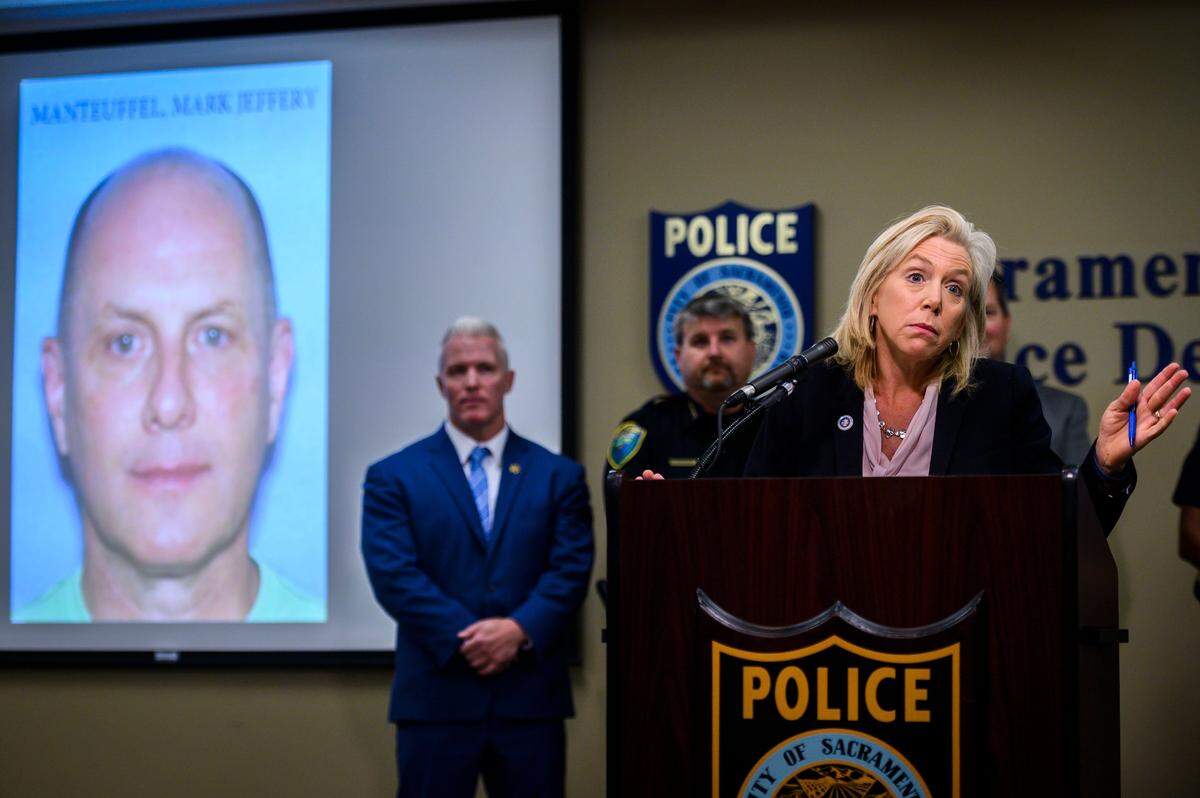
And unlike Poizner in 2018 – the only independent candidate to make it past the primary – Schubert will have Republican opponents to contend with in June.
Still, some political observers are more optimistic about Schubert’s chances.
Schnur said voters are hungry for an alternative to the two major parties. Schubert’s biggest challenge may be putting together the type of infrastructure that turns out votes in a way the two major parties have done for many years.
“On an even playing field, her message is probably better suited for the voters on these issues than either of the leading parties’ candidates,” he said. “The question is whether she can make it an even playing field.”
This story was originally published May 11, 2022 at 5:00 AM.