Special report: Sacramento approved 20 homeless sites a year ago. Here’s why none opened
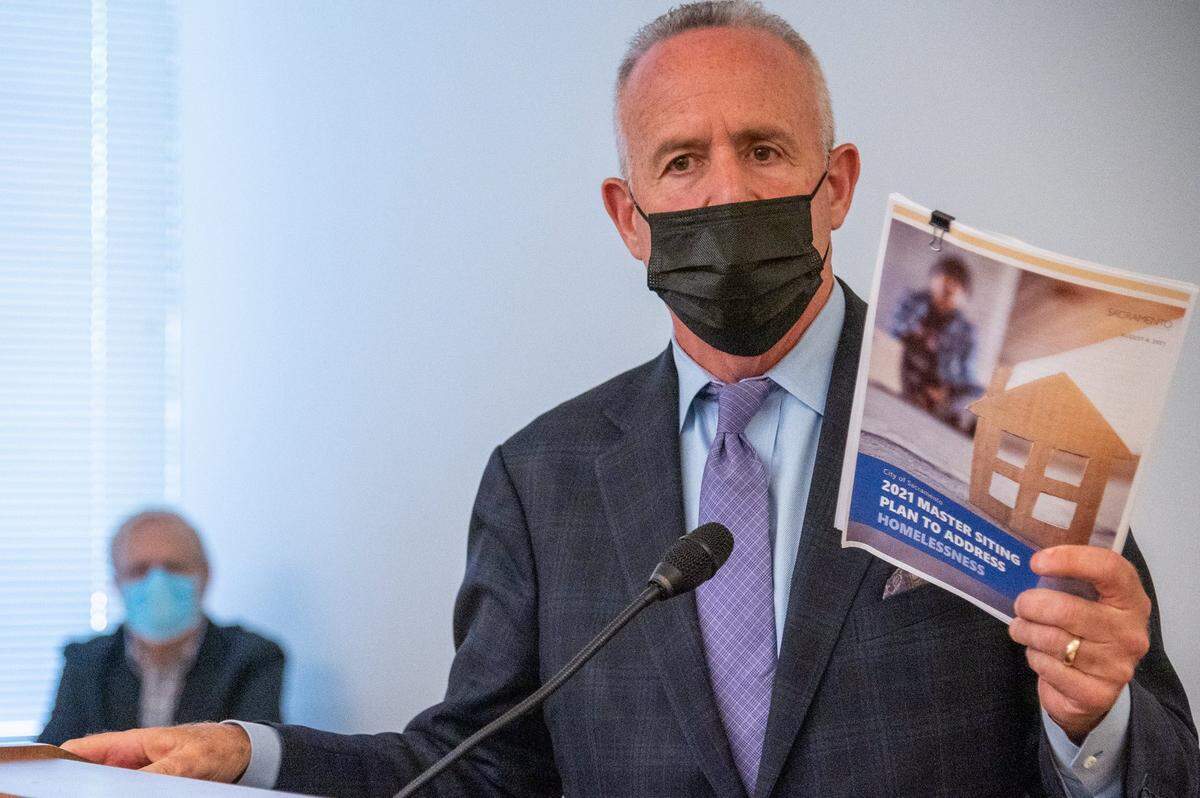
Mayor Darrell Steinberg promised something big when he called reporters to City Hall a little more than a year ago — a comprehensive plan to address homelessness, Sacramento’s most pressing crisis.
Fed up with incremental change and NIMBYism, Steinberg put forward a vision for a significant, citywide plan.
He called for 20 new shelters and sanctioned camping spaces, spread out across neighborhoods in midtown, north and south Sacramento, including some of the hot spots, where tents dot the sidewalks and river banks as far as the eye can see.
He had momentum, too. The City Council immediately backed his proposal, unanimously voting to set aside $100 million in August 2021 for the sites.
“This is the most aggressive plan in the history of the city,” Steinberg said after the council vote. “No question about it.”
Today, the city has not opened a single one of the 20 sites.
One by one the sites failed over familiar obstacles in Sacramento’s longstanding stalemate over homelessness: neighborhood opposition, a lack of ongoing funding and poor communication between government agencies.
The city’s would-be game-changing proposal for 20 shelters and safe spaces faltered as Sacramento County’s homeless population surpassed San Francisco’s and frustration with the crisis peaked.
Over the past year, the Sacramento County Board of Supervisors adopted a tough ordinance banning camping on the American River Parkway. The City Council acted, too, barring homeless tents from completely blocking sidewalks and last week banning encampments near schools.
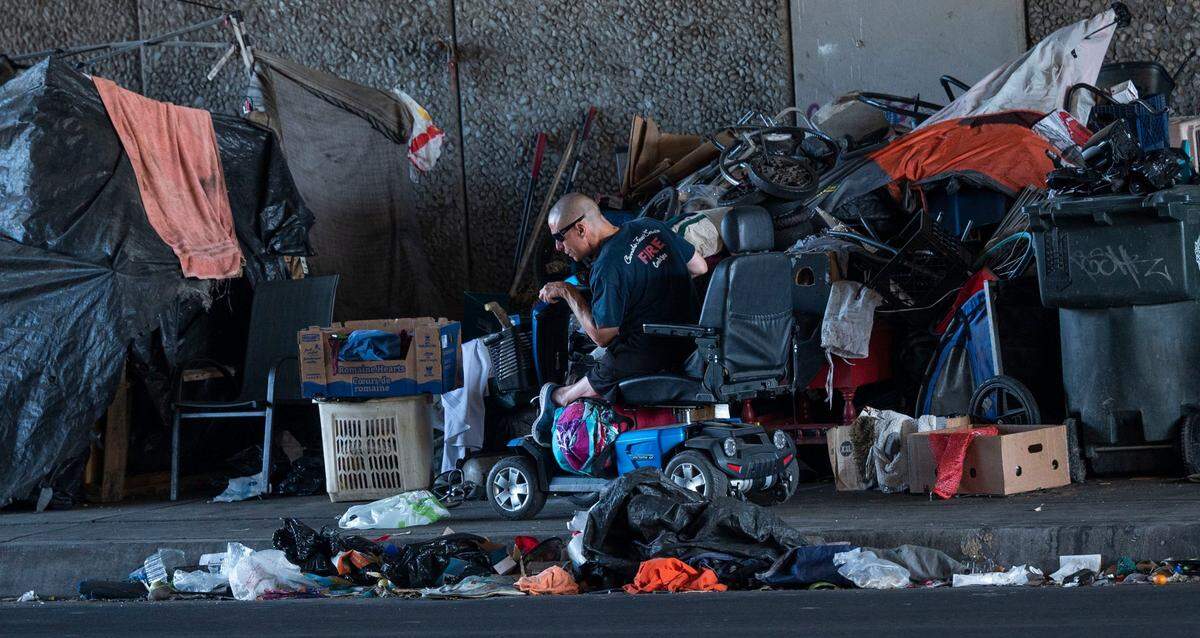
And, this month, Sacramento voters are casting ballots on a business-backed measure that aims to clear more encampments from public spaces while prodding the city to identify more shelter spaces.
But if Measure O passes, proposed shelters and safe campgrounds could meet the same end as the ones Steinberg advanced in his 20-site plan last year. To make a difference, city and county leaders would have to unlock long-term funding to support homeless services and overcome neighborhood opposition to new locations.
As written, the measure will only take effect if the two agencies can make a deal outlining their responsibilities to address homelessness. Talks are underway, but they have not resulted in a pact.
City leaders stress they aren’t sure they can commit to funding the number of beds and camping sites envisioned by the groups who gathered signatures this year for what became the homeless ballot measure.
The measure does not force the city to open a single new shelter bed unless the city has a budget surplus. Recent city budget documents project deficits for at least the next five years.
“We are going to have to use all our existing funding, and all our state and federal grant money, just to keep our existing 1,100 beds open,” said Councilwoman Katie Valenzuela, who opposes the ballot measure.
Advocates for the measure nonetheless say it will make a difference, pointing to the stipulation the City Council added in August that aims to compel the county to fund new homeless services.
The cooperation Measure O now requires would make it more effective than Steinberg’s siting plan, said Daniel Conway, the lead proponent to the measure.
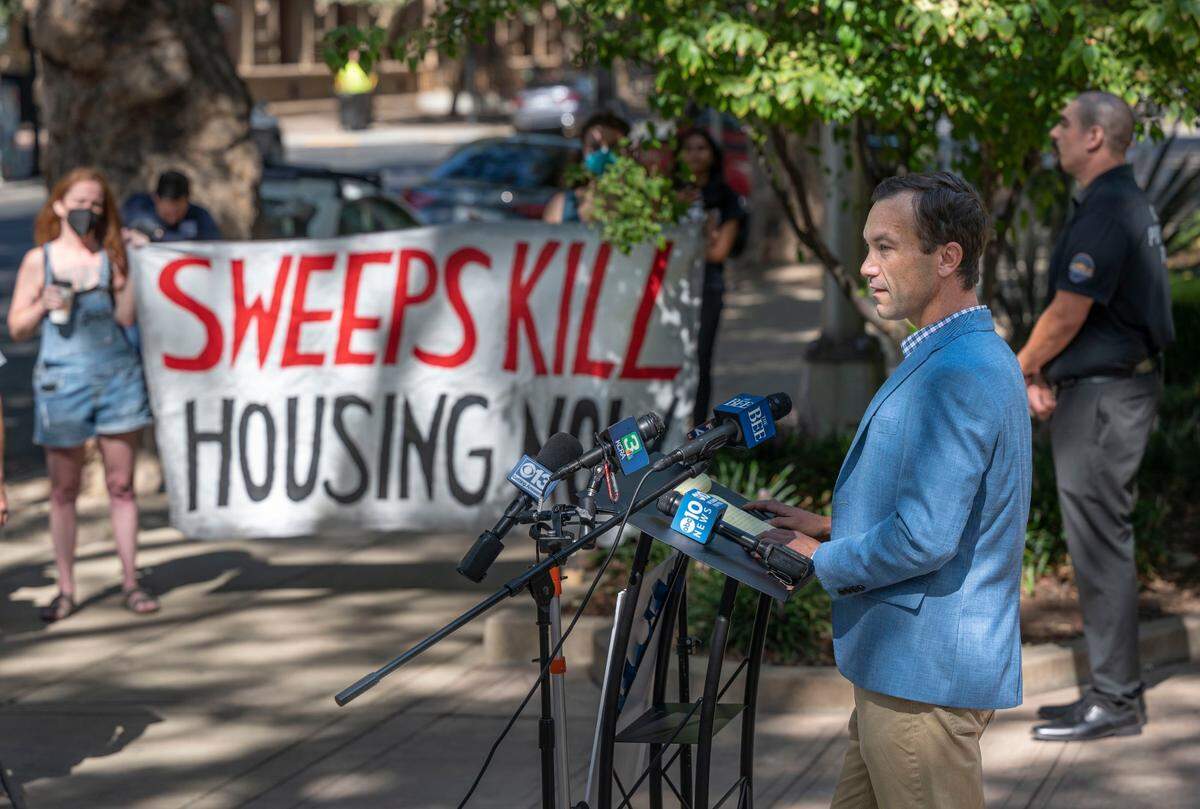
Steinberg’s plan “was certainly announced and got a large amount of media coverage, but I don’t think there was ever any real buy-in from the City Council, the city staff and frankly stakeholders from the community,” said Conway, who was chief of staff to former Mayor Kevin Johnson.
Today, Steinberg does not consider his siting plan to be a failure. He looks at that proposal as one of several he has raised since he won election in 2016 that prompted the city to open roughly 1,000 shelter beds during his administration.
“My ideas is to try to start a discussion and then let a number of flowers bloom, see which flowers bloom, see which spark you can light, and then look back and say, ‘ok what did we accomplish?’” Steinberg said. “What we accomplished was an unprecedented number of beds for homeless people in our city.”
But still it’s not nearly enough, he said. More than 9,000 people experience homelessness in Sacramento County on any given night.
Steinberg is now emphasizing a different approach, planning to fund hundreds of new large affordable housing units while negotiating with Sacramento County to commit to paying for more homeless services.
The two local governments have clashed at times in their approach to homelessness, including recently when the county dropped out of a plan city leaders favored to turn a vacant downtown building owned by CalPERS into a large homeless shelter. Sacramento County’s annual budget tops $7 billion, including funding the Department of Human Assistance, while the city comes in at about $1 billion.
Steinberg said a city-county agreement committing both agencies to homeless services will be the most significant outcome of Measure O if it passes.
“The county has seven times the budget the city does, which is why the partnership agreement is more important than Measure O,” said Steinberg, who supports the measure but did not write it. “That’s the prize here.”
County Supervisor Patrick Kennedy agreed, but disagreed with council members’ often-repeated assertions that the county is not doing enough to address the crisis.
“We have had very productive meetings ... and are very close to having a final version of a partnership agreement to put before the board and council for adoption,” Kennedy said. “This will allow us to go forward in a much more comprehensive and coordinated manner to really make a difference in the homelessness crisis in the city. This process has also given us an opportunity to educate city leaders about the complexities of the county’s budget. In doing so, I think my colleagues on the council now understand that the county is aggressively allocating resources to address the issue.”
‘People had hope’
Steinberg came into the mayor’s office six years ago with a record of making big deals to solve big problems in the Legislature, from leading the 2004 campaign for a tax on millionaires that funds mental health services to navigating budget crises during the Great Recession.
As mayor, he succeeded Johnson, who focused on keeping the Kings in Sacramento and revitalizing downtown. By the time Johnson’s term closed in 2016, Sacramento’s homeless population had hit 3,665 and became difficult to ignore. A man died outside City Hall, and activists came to the chambers each meeting screaming to demand shelter. The city at the time funded fewer than 100 beds.
Steinberg during his campaign talked about homelessness frequently, highlighting his experience as a deal maker and his compassion. He easily defeated Councilwoman Angelique Ashby.
After he had been in the mayor’s seat for a month, in January 2017, Sacramento’s homeless census hit 5,561.
Pressure mounted. He had to move fast.
Later that year he persuaded the council to open a 100-bed homeless shelter in a warehouse on Railroad Drive in North Sacramento. Modeled after so-called navigation centers in San Francisco, it was the first large shelter of its kind in Sacramento. People could bring their pets, possessions, partners, received medical and mental health care, and did not have to pass a drug test to get a bed. Of the roughly 400 people who spent time at the shelter, 268 moved into permanent or temporary housing.
Steinberg had a model and he wanted to replicate. It was expensive, but using his connections he was able to collect tens of millions in state funding, as well as private donations from hospitals. He just needed the locations.
In November 2018 Sacramento voters passed Steinberg’s Measure U, a half-cent sales tax increase that brings in millions for the city for disadvantaged neighborhoods and adds to the mayor’s war chest for homelessness.
A month later, on a cold day outside City Hall, he stood in front of reporters and put a bold challenge out to his colleagues. He asked each of the eight council members to find sites for at least 100 beds in each of their districts.
“I refuse to continue to preside over modest success,” Steinberg said at the time, two months before Gov. Gavin Newsom appointed him to lead a state homeless task force. “We’ve helped hundreds, and now it’s time to turn it into thousands.”
The main results, after a lot of fighting, were three 100-bed shelters — in Meadowview, in Oak Park, and at the since-closed downtown Capital Park Hotel.
The Meadowview one in particular had been extremely difficult — vehemently opposed by both the council member representing the area at the time, and also many residents in the underserved neighborhood. Looking to avoid such bitter fights in the future, Steinberg looked for a new plan.
But then the coronavirus pandemic hit, delivering a blow to city finances, and causing officials to suspend new large congregate shelters where the virus could spread, limiting the options for future sites.
Meanwhile, Sacramento homeless population surged, hitting roughly 9,300 people countywide on any given night this year. That’s almost double the number from January 2019.
‘Where are the tiny homes at?’
As the city started to emerge from the pandemic, Steinberg sought a new course to address homelessness while avoiding the type of neighborhood opposition the Meadowview shelter attracted.
He calculated a proposed shelter had a better chance of withstanding focused NIMBY opposition if he announced a group of them all at once. That’s the concept behind the 20-site proposal he unveiled in August 2021.
The list looked simple, drawing on underused spaces and public property.
Several sites looked particularly easy to open, such as several city-owned vacant lots in North Sacramento, and three underutilized Regional Transit light rail parking lots which, Steinberg said, had already won RT approval.
But in just a few months, almost all of them fell apart.
The city, Regional Transit and Caltrans reached a deal in May to open a homeless safe parking site at a Regional Transit lot at the Roseville Road station near a large encampment, but it has not opened. Other RT sites at the Florin and Franklin stations are on hold.
It quickly became clear that, by giving private directives to staff, council members could kill the projects even though they were identified on the $100 million siting plan they unanimously approved.
Councilman Sean Loloee, for instance, tabled a proposal for a homeless site on a city-owned paved lot at Eleanor and Traction avenues. After council adopted the plan, Loloee indicated to staff that it was “not a priority site,” city spokesman Tim Swanson said.
Other publicly-owned sites fell off the list for other reasons. City staff eliminated the city-owned site at 24th Street and 48th Avenue in south Sacramento because it sits close to Executive Airport, which triggers federal restrictions.
Another proposed safe parking lot in North Sacramento fell off track amid a disagreement between officials from the city and the Central Valley Regional Water Quality Control Board over how many vehicles would be allowed. The city spent $617,000 to fence and pave the site before abandoning plans in April.
Privately owned sites on the list also fell through when property owners declined to sell their lots or challenged city plans.
The city could not negotiate terms with the owner of 2875 Meadowview Road, where 200 tiny homes were planned, Swanson said. Property owners at 3331 Fruitridge Road and also at the intersection of Riza Avenue and Jimolene Drive told the city they were not interested in selling.
Lawsuits filed by private business owners killed tiny home villages planned for under the W-X freeway and at a North Sacramento industrial park.
“You effectively create a skid row,” Michael Malinowski, owner of Applied Architecture, who filed a lawsuit contesting the plan for 200 tiny homes under the W-X freeway, said last year. “I have no objection to taking all measures necessary to try to address this (homeless) problem. But it should be, in my opinion, a full gamut of measures, not just repeating the same measures, which have not been able to solve the problem, over and over.”
Malinowski said homeless people have defecated on his property, have stolen items from his business and attempted to break in — issues he said would worsen when the tiny homes opened. His lawsuit also alleged a violation of the controversial California Environmental and Quality Act, claiming the project would place unhoused people at risk of air pollution.
Caliber Collision, an auto repair chain, made a similar argument when it sued the city in January over its plan for tiny homes on a vacant lot in North Sacramento. The lawsuit claimed the tiny homes would increase instances of break-ins, vandalism and drug use in the area, potentially scaring away customers.
The city leased the lot to the auto shop at no cost, allowing it to be cleared of camps in compliance with a 2018 federal court ruling that generally prohibits government agencies from criminalizing homelessness on public property.
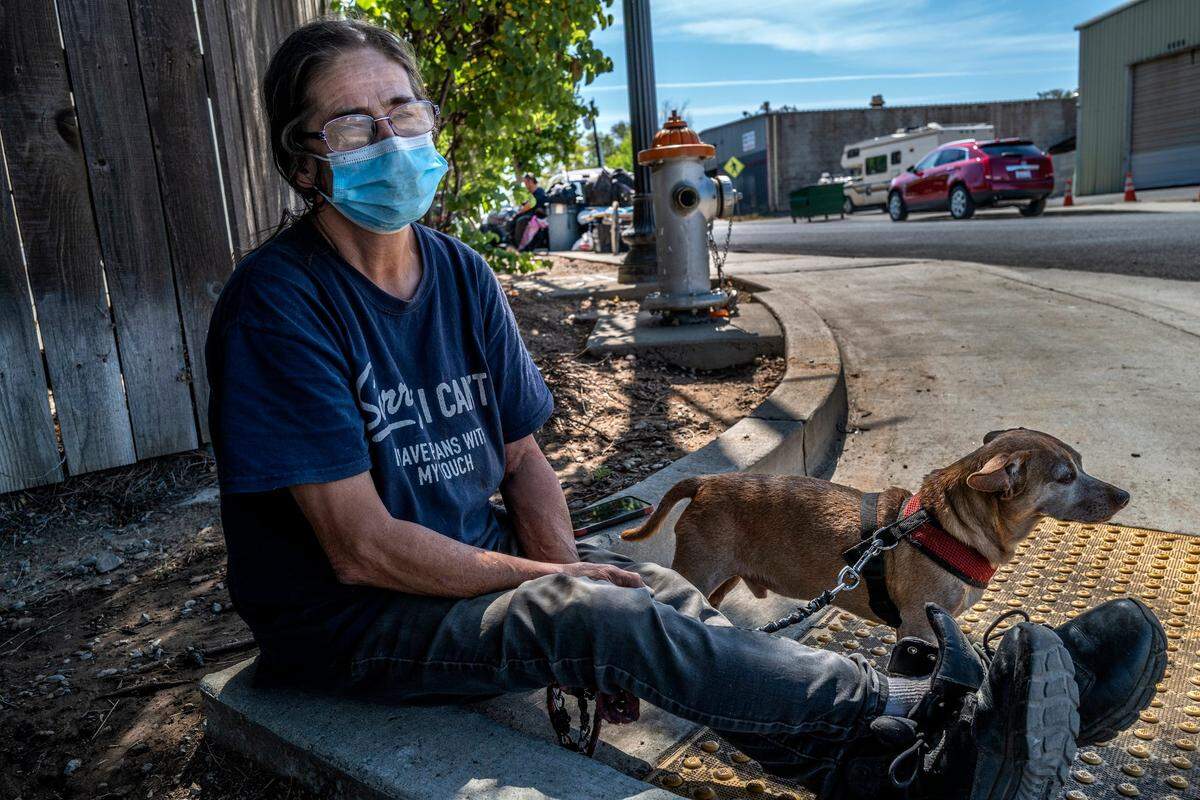
Mary Simmons, 64, was one of the dozen people in May police cleared from the lot.
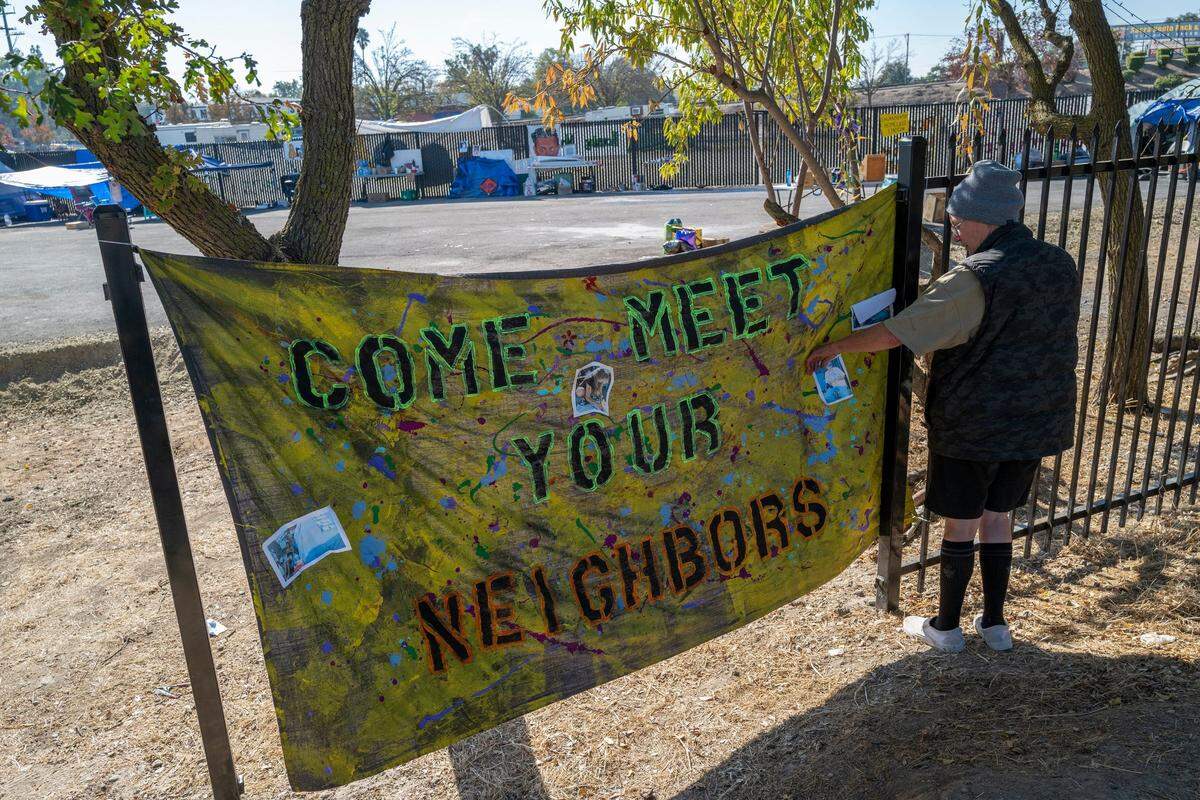
“There’s supposed to be tiny homes,” said Simmons, 64, sitting on the curb holding her chihuahua, Snickers, after police ordered her to pack up and leave the lot. “Where are the tiny homes at?”
The city purchased about 50 tiny homes for the homeless, which have been sitting unused in city storage for over a year, as all shelters are full on any given night.
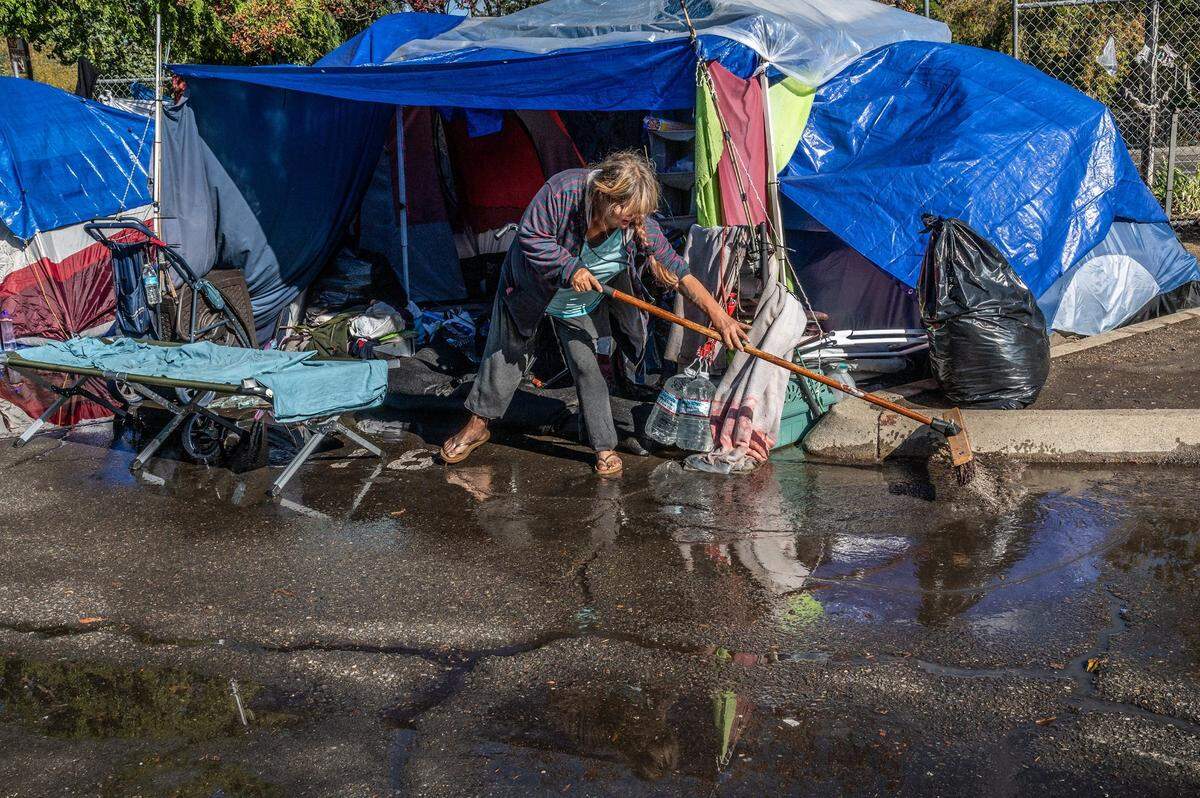
“I think the city should’ve followed through with their original plans and opened these places where these people were safe,” said Sharon Jones, a homeless woman who sleeps in a tent on a city-owned lot on Colfax Street that was planned for safe parking. “We barely even see a trickle effect of the money that comes for the homeless. I think people had hope when the siting plan came out, but nothing came to fruition.”
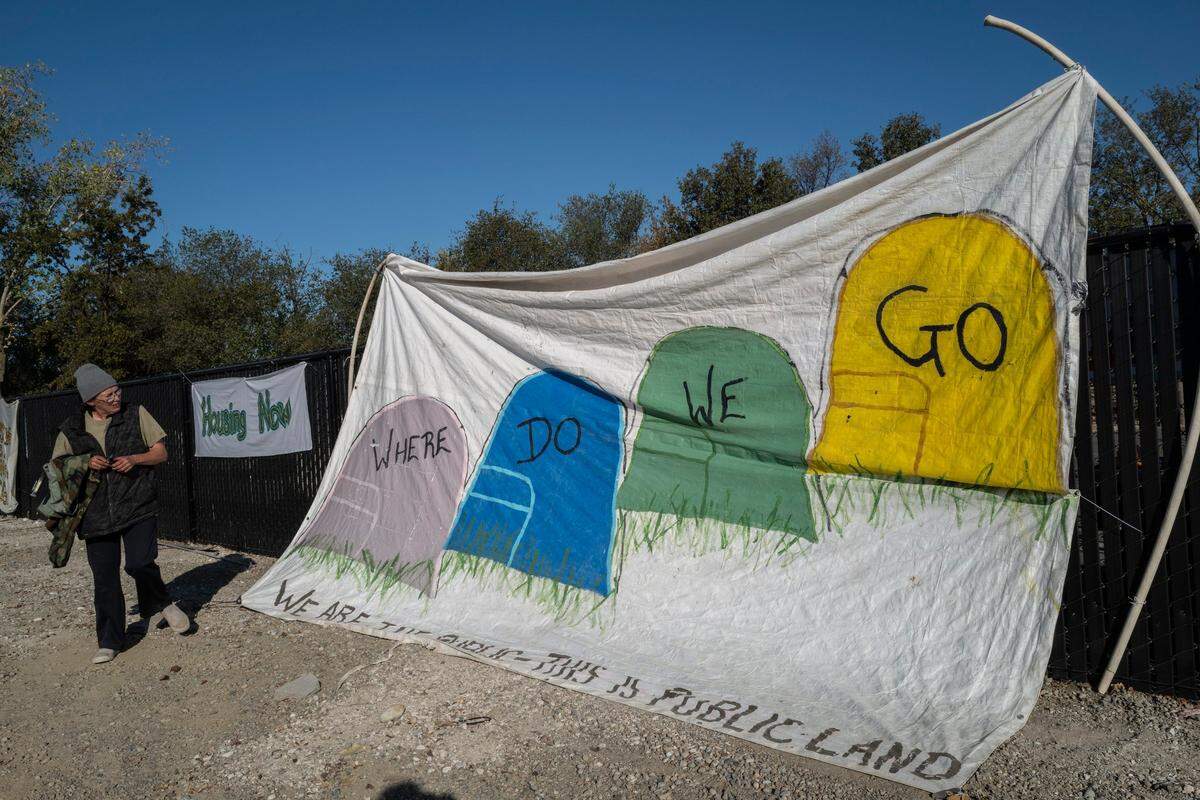
Sacramento’s next moves on homelessness
Since Steinberg took office, the city has opened roughly 1,000 shelter beds and spaces. Some of them were not in his August 2021 siting plan. They include a fifth motel shelter for families, an expanded Miller Park Safe Ground, and a new 50-bed facility at 3615 Auburn Blvd. where people can stay for a few days at a time.
The county funds 1,300 beds, giving a total of 2,400 beds countywide. But that leaves about 7,000 people without a shelter bed.
But with the other proposed shelter sites seemingly stalled, Steinberg now wants to direct more money toward affordable housing. The council Tuesday is expected to consider funding 850 new affordable housing units, reallocating a significant amount of siting plan dollars to support the proposals, Steinberg said. He expects the council to approve those sites, partly because they already have nonprofit and private sector investment, unlike the siting plan sites.
The city and the Sacramento Housing and Redevelopment Agency are also converting two hotels — one in downtown and one in North Natomas — into homeless permanent housing. The North Natomas one opened earlier this month.
Steinberg’s pivot to housing tracks with activists, who for the last year or so have called for new affordable housing, not shelters or Safe Grounds. In Safe Grounds like Miller Park, while homeless people get bathrooms, showers, security, mental health, medical and rehousing services, they are still sleeping in a tent. That means they are not protected from heat, cold and rain. A record eight homeless men died of hypothermia last year.
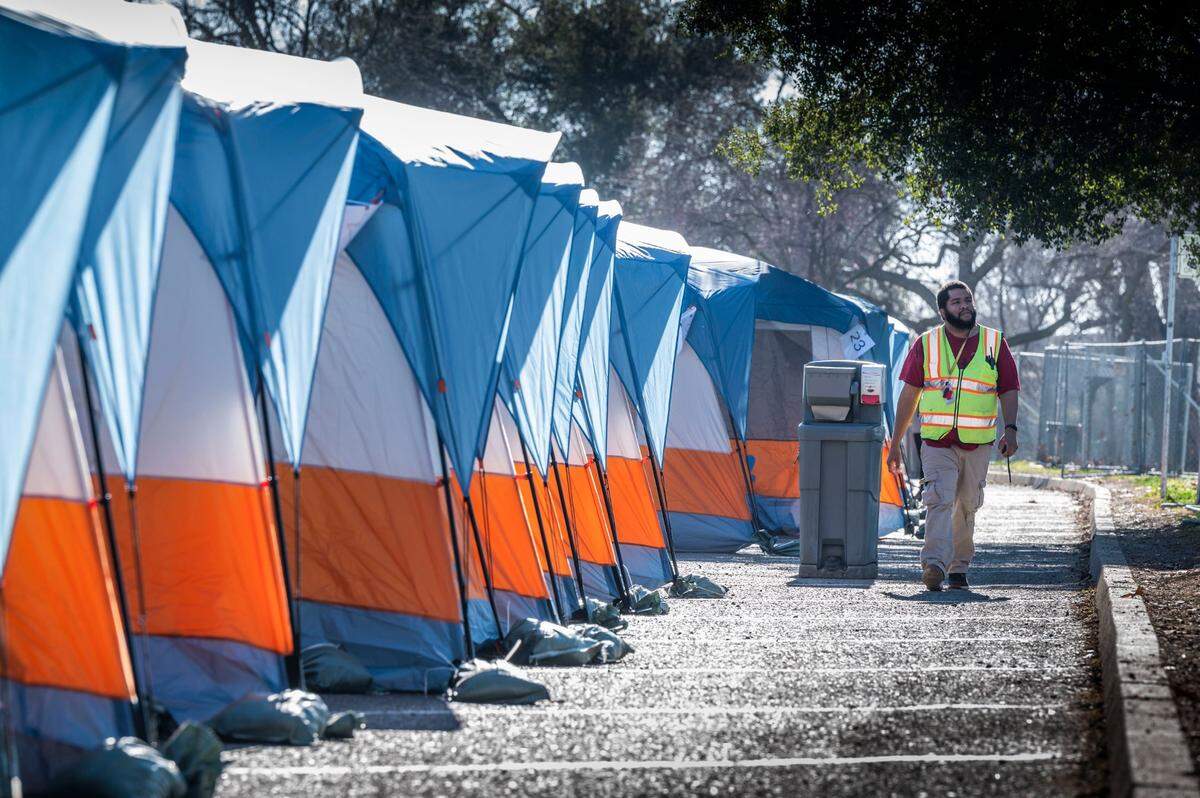
In congregate shelters like the one near the W-X freeway and in Meadowview, people are protected from the weather, but the cots are just feet apart.
“Housing offers people independence, stability and security,” said Crystal Sanchez, president of the Sacramento Homeless Union. “It allows for people to truly be free in their surroundings. Shelter does none of these things. You are placed with people you don’t know, you are forced to follow rules that wouldn’t normally be set upon an independent person. Also it does not allow the protection of a locking door and security. Housing ends homelessness.”
Bob Erlenbusch of the Sacramento Regional Coalition to End Homelessness said it’s good the city is funding new homeless housing projects, but said it needs to build faster, and also keep opening new large shelters.
“You need to do both at the same time,” said Erlenbusch. “You can’t let people die on the streets while you’re coming up with a housing plan.”
This story was originally published October 23, 2022 at 5:00 AM.