Mistrial in death penalty case for killer of Sacramento cop Tara O’Sullivan after jury deadlocks
A Sacramento judge declared a mistrial Friday in the death penalty trial of Adel Ramos, who killed Sacramento police officer Tara O’Sullivan in a 2019 ambush that shocked the capital region.
The jury said it was hopelessly split 11-1, with just one member arguing that Ramos, 51, should not be put to death. After weeks of traumatic testimony and video of O’Sullivan’s murder, several jurors wept and apologized to the rookie officer’s family for not being able to reach agreement.
The jury was impaneled last month to decide whether Ramos should be put to death in the case, even though California has a moratorium on the death penalty, because capital punishment remains on the books and is detailed in law as an appropriate punishment for especially violent homicides.
The jury’s inability to persuade one holdout to vote for the mortal sentence led Sacramento Superior Court Judge James Arguelles to declare a mistrial, ending a monthlong proceeding in which prosecutors tried to convince the five men and seven women that Ramos deserved the ultimate penalty.
Arguelles gave Deputy District Attorney Jeffrey Hightower until Dec. 20 to decide whether to re-try Ramos with another jury. In California, the death penalty can only be imposed by a unanimous panel of citizens.
After the trial, as police officers and family members hugged, Hightower asked O’Sullivan’s parents to come to his office or call him to discuss what to do next.
Jurors, who sat through the shocking and bloody evidence in the trial, and heard detailed descriptions of the impact of the trauma of the day of O’Sullivan’s murder, said they were changed by the experience.
“I’m sorry we failed you,” one male juror sobbed, hugging O’Sullivan’s father, Denis. “We tried so hard.”
Hightower addressed the jurors in the hallway, telling them their duty was “above and beyond what any human should be asked.” He told them they had not failed.
Juror Vera Cvetich, 62, said the trial had forever changed her. An employee at a home improvement store near where the murders took place, Cvetich said she would not be able to consider customers buying products such as a tool to bar a door, without thinking about how Ramos had barred the doors so that police could not stop him as he shot at them.
Cvetich said she is no longer sure what she thinks about her 7-year-old grandson’s desire to become a policeman when he grows up.
Ramos entered guilty plea in August
California has not carried out an execution since 2006, and a moratorium on capital punishment has been in place since shortly after O’Sullivan’s murder. But the death penalty remains on the books, and prosecutors say a future governor could reverse the moratorium and re-open the state’s shuttered execution chamber. More than 600 inmates are under a sentence of death in California, the most in any state.
Ramos pleaded guilty on Aug. 30 to felony counts including murder with special circumstances for O’Sullivan’s slaying and attempted murder of another officer at the violent, bloody scene in Del Paso Heights.
O’Sullivan, 26, who had graduated six months earlier from the Sacramento Police Department’s academy, was showered with bullets by Ramos on June 19, 2019, as she attempted to help a woman retrieve her belongings from a home where he had been behaving erratically. She was mortally wounded and lay on the ground nearly an hour before tactical officers were able to secure her rescue. After an hourslong standoff, Ramos surrendered.
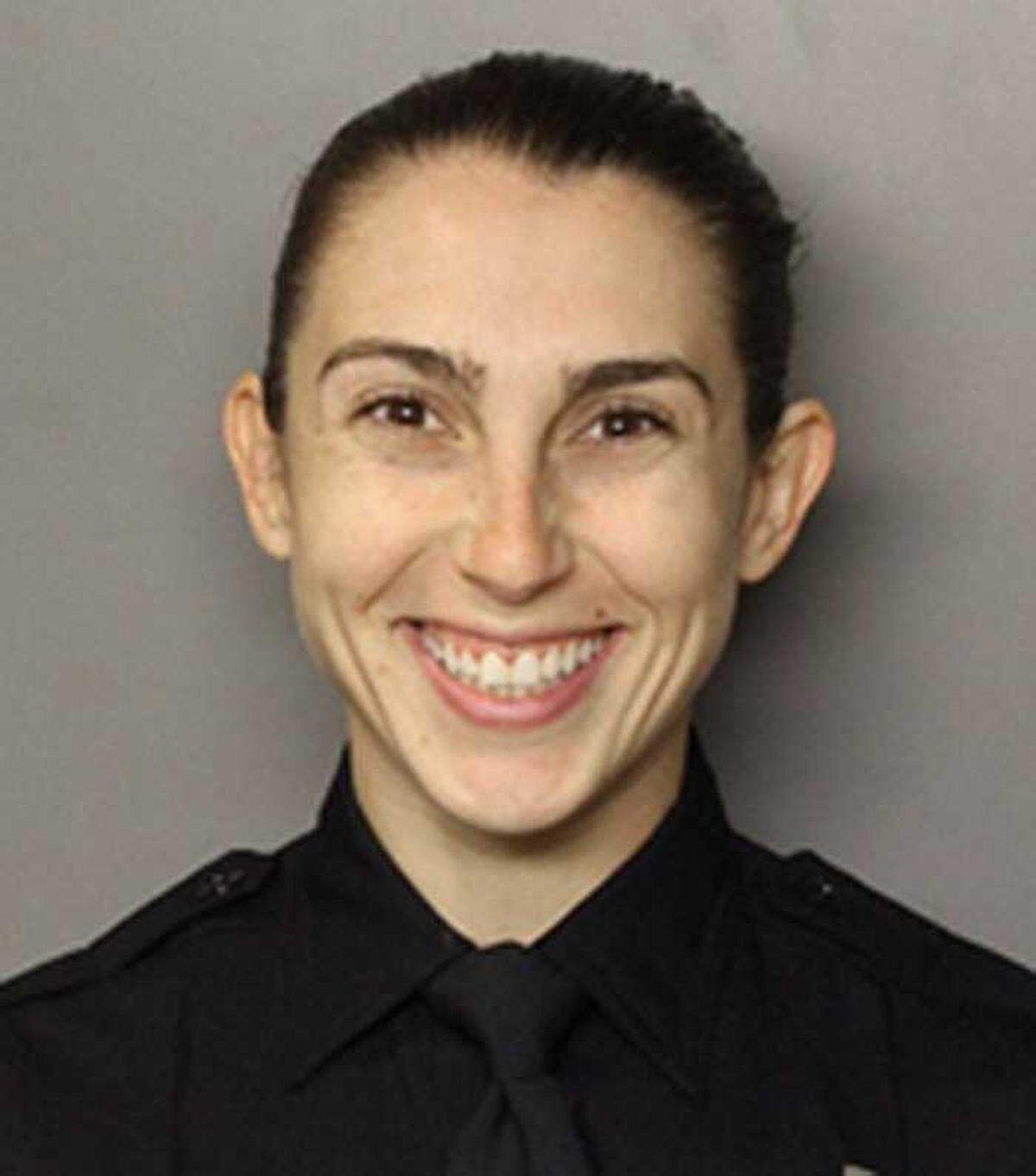
Ramos initially pleaded not guilty, but the trial was delayed as his attorneys argued that he was not mentally competent to stand trial.
O’Sullivan’s murder sent shockwaves through the capital region, and led the city to rename the H Street Bridge over the American River among memorials.
Prosecutor Jeffrey Hightower told jurors that O’Sullivan, who grew up in the Bay Area and graduated from a criminal justice program at Sacramento State, was a devoted young officer who even as a child displayed a keen sense of right and wrong. She was still in training when she urged her partner to respond to a call from Megan Jansa, who at the time lived with Ramos in the Redwood Avenue home she had inherited from her grandfather.
Jansa had left the home amid threatening behavior by Ramos, and O’Sullivan and her partner and training officer Daniel Chipp decided to accompany her there to retrieve some clothing and her dogs. Ramos, Hightower said, was hiding at the residence behind a series of “murder holes” he had drilled into the walls of the house, enabling him to shoot at the officers while obscuring his location.
The officers searched the property to see if anyone was there. Ramos did not respond to their calls, and Chipp even told other officers via radio that the house might be empty. But suddenly he began shooting, striking O’Sullivan and shouting epithets at her as she lay on the ground, bleeding.
He held the rest of the officers at bay for hours, shooting in several directions from his hiding place, making it impossible for them to rescue her.
His lawyers argued that mental illness and a violent and unstable childhood should be considered mitigating factors in the case, and asked jurors not to sentence Ramos to die.
Frustrated juror: ‘He met the criteria for the penalty’
California has spent $313 million on death penalty prosecutions and appeals in the five years since Newsom imposed a moratorium on executions, an analysis by The Sacramento Bee showed. The state has dismantled the execution chamber at San Quentin and moved nearly all of the inmates out of the old death row.
But prosecutors continue to seek capital punishment in the state, saying it sends a message to defendants and can be a comfort to the families of murder victims.
Several jurors said they were frustrated and upset that they had not been able to reach a verdict imposing the death penalty, even though it was unlikely that Ramos would ever be put to death.
That’s because they were instructed specifically by the judge to apply California’s law to the case, without regard to their views of the death penalty, and the evidence. Eleven of the 12 jurors believed the standard for capital punishment was met, said Juror No. 8, who did not wish for her name to be used.
“It doesn’t matter, because based on the law (Ramos) met the criteria for the penalty,” the juror said. To weigh the evidence so carefully and feel in the end they weren’t able to apply that law, “That is not seeing justice,” she said.
This story was originally published November 15, 2024 at 3:08 PM.