
Shooting at UC Davis’ Picnic Day left the city with trauma. What’s next?
Rowdiness, spurred by drinking, marred celebrations across UC Davis’ highly anticipated Picnic Day celebration. Crowds shoved and pushed, overrunning the college town. Police officers, despite calling upon mutual aid agencies, barely contained rampant debauchery.
A Picnic Day about 15 years ago resulted in this violence, prompting university officials to ponder canceling the 116-year-old tradition. Elected officials, Davis business owners and UC Davis officials discussed solutions in 2010, and ultimately enhanced fines in certain areas in the city.
But the problems of Picnic Day faced today have evolved. Violence, mostly contained to downtown Davis in 2010, is no longer the case, Davis Police Chief Todd Henry said in an interview.
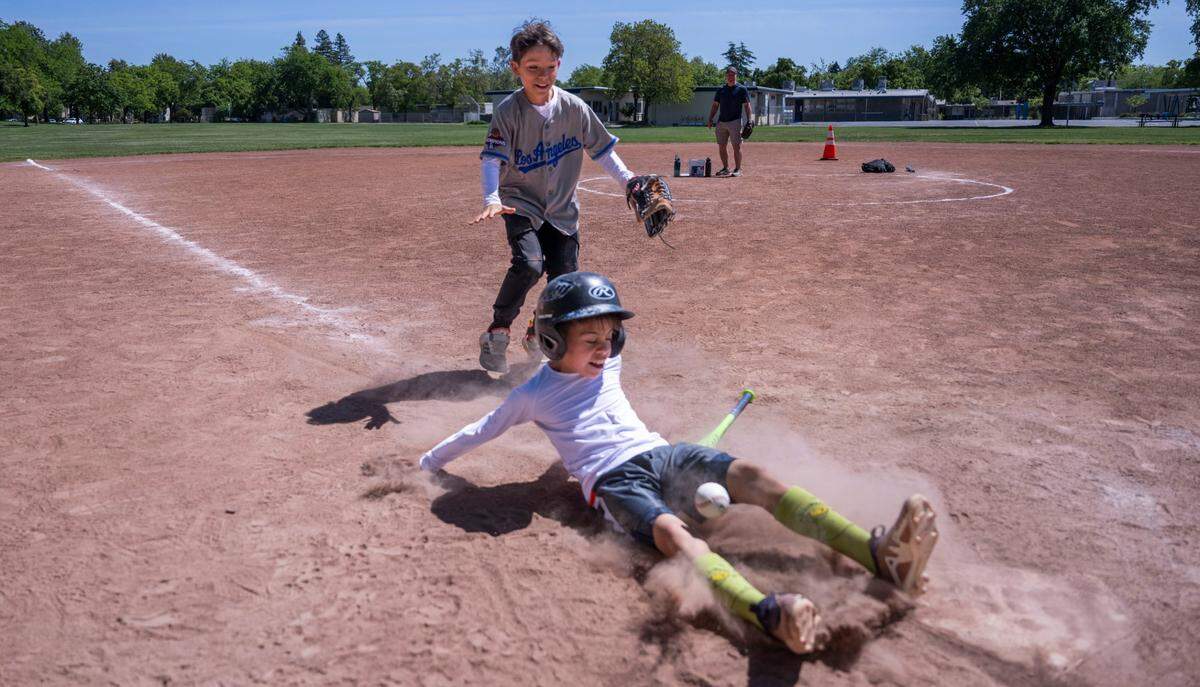
Shooters fired into a crowd April 12 and wounded three people while hundreds partied at Community Park, Davis police said. Parents, after hearing gunfire, ran to shield children with their bodies at a Davis Little League game across the street.
A child at home plate had just tossed a ball to a pitcher when bullets punctuated an otherwise peaceful spring afternoon, according to a video of the shooting posted on Instagram.
“Get down, get down, get down,” parents yelled as players scrambled for safety. Fathers sprinted to children in the outfield as others screamed to run.
Davis swells approximately twice its size as prospective students, alumni and others convene in a city with about 66,000 people on Picnic Day. Law enforcement must contend with unruly parties — some which feature 1,000 people — across city limits simultaneously thrown by fraternities and other organizations without permits, Henry said. Revelries balloon quickly once posted on social media.
“That’s what makes it tough,” he added.
Davis Mayor Bapu Vaitla acknowledged the shooting during a City Council meeting days later. There, he said leaders must serve their constituents better and sought to speak with UC Davis and “partners” to come up with solutions. He did not make himself available for an interview, but the city said in a statement that they are starting conversations “immediately” with UC Davis and improvements to the process of securing permits for parties.
“This has been one of the most painful moments in our city’s recent history,” the city said in an April 17 statement published on social media. “We do not yet have all the answers, but our commitment to every resident, every child and every family is unwavering.”
‘I have to get my kid’
For many, the shooting harkened back to memories of another incident tied to UC Davis, which sowed fear across the city. Former UC Davis student Carlos Reales Dominguez, 23, is accused of killing a widely known Davis resident and a fellow college attendee in 2023. He is also accused of nearly killing a homeless woman. His trial could begin this year as attorneys met Wednesday to discuss updates in the case.
Councilmember Gloria Partida, who recalled the series of stabbings during a City Council meeting, said it was important to recognize the community faced a traumatic event, and unsafe parts of the world can seep into the city.
“It’s a really terrible reminder, and it really shapes people,” Partida said.
Blair Swadley, a mother of three, watched with concern as previous Picnic Days overflowed to parties in Community Park. She lives near the public space, and two of her children are enrolled in Davis Little League.
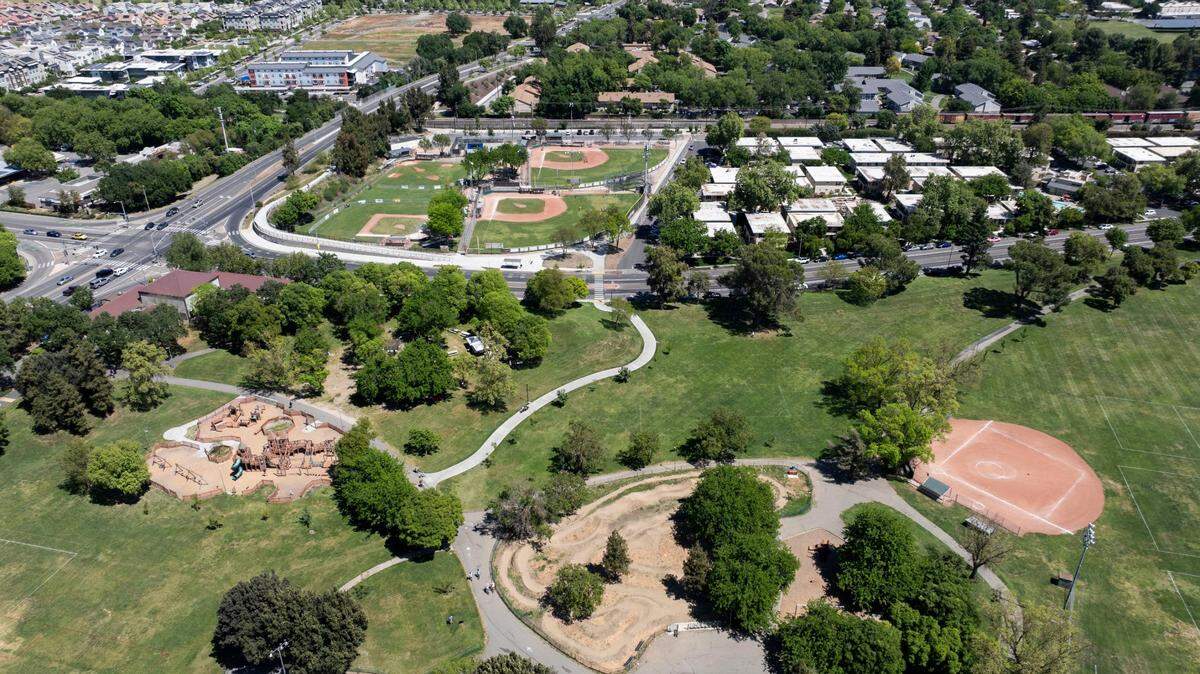
Partygoers smoked enough marijuana that its fumes drifted across the street to the baseball fields, she said. Music blared so loud she could hear it from her home.
On the day of the Picnic Day shooting, she had dropped off her 11-year-old son to watch a friend play baseball. But, after pulling onto F Street, she heard gunshots in the car with her husband and saw a sea of people in Community Park fleeing in all directions.
Seconds later, her son called her screaming, repeating, “Mom, help me.”
“Your primal instinct is just, I have to get my kid,” she said in an interview on her own behalf and not for the league.
Her husband reversed his car and drove back to the Little League fields. She jumped out of their truck, and saw her 5th grader huddled behind a car with another mom who had grabbed about 10 other children to flee.
Navigating the streets was difficult since police blocked off roads, she said. Officers roamed with guns, which further scared her children.
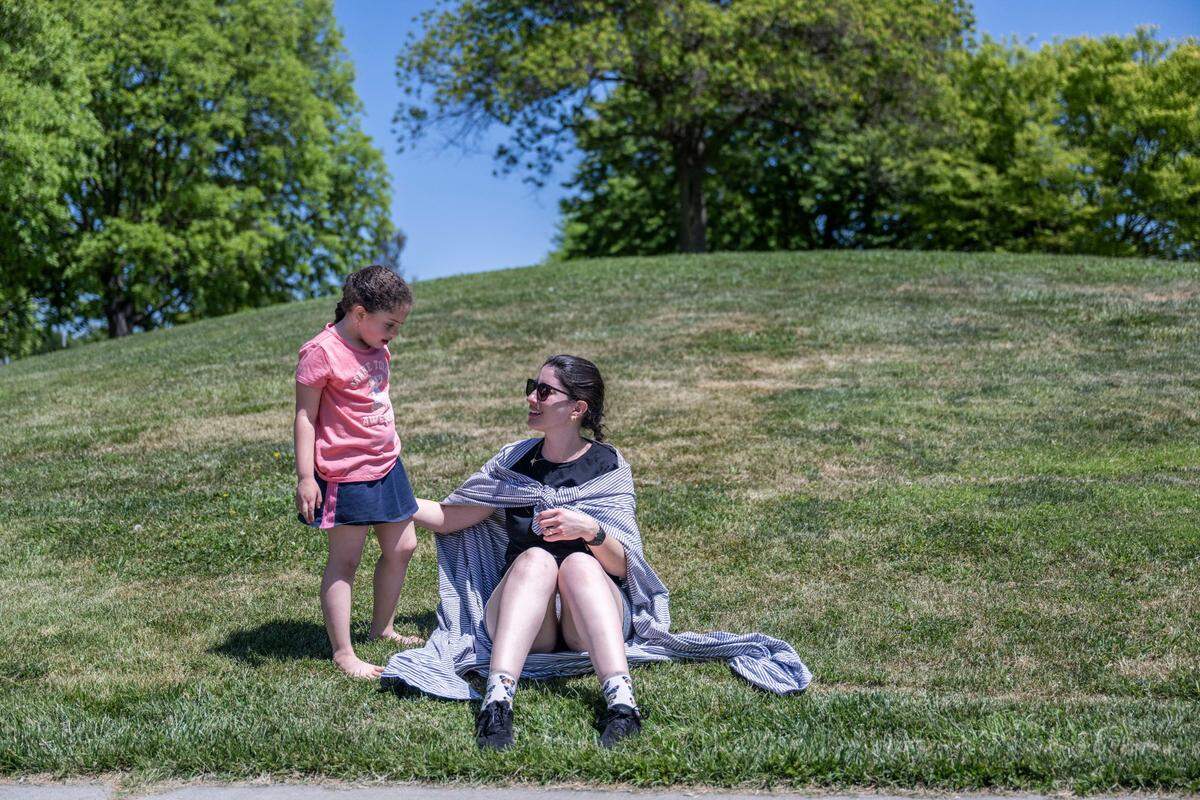
Nightmares of a shooter chasing them haunted her two oldest children. Though, they processed the shooting fairly quickly due in part to security parents provided on Picnic Day, Swadley said.
Her anger mounted at the university, a fraternity and city officials who have not, in her view, taken enough accountability.
“(The fraternity) showed a lot of disrespect for the city, where they’re going to school, a lot of disrespect for the community,” she said. “And I’ve heard nothing from them acknowledging that, apologizing for that.”
The Lambda Kappa Chapter of the Phi Beta Sigma Fraternity did not respond to a request for comment, but posted a statement on Instagram that read in part “it is never our intention for anyone to feel unsafe or endangered.”
Swadley’s son had practice the day after the shooting. He wanted to go, but asked his mother to stay with him.
“He wanted me to stay,” Swadley said. “He’s never wanted me to stay at his practice.”
‘Raunchy evil twin’
Picnic Day, an event which brings about 70,000 to the city, has long held two meanings for the city of Davis.
One is family-friendly fun on campus featuring school life, animals, a children’s discovery fair, parade and other exhibits. One such event this year included a Frisbee Dog Contest.

The other is led by fraternity and community parties outside of campus, responsible to be regulated by city police. One Sacramento Bee headline in 2010 called this portion a “raunchy evil twin.”
Henry, the Davis police chief, said nine regional agencies lent law enforcement officers to help coordinate security at Picnic Day.
UC Davis spokesperson Bill Kisliuk said campus and city police departments “publish a message regarding relevant laws and expectations in the Picnic Day schedule of events.” UC police officers also have mutual aid agreements for Picnic Day, he said.
“The campus event is much different than what’s occurring in the city,” Henry said, adding many of the gatherings in the city are centered around alcohol.
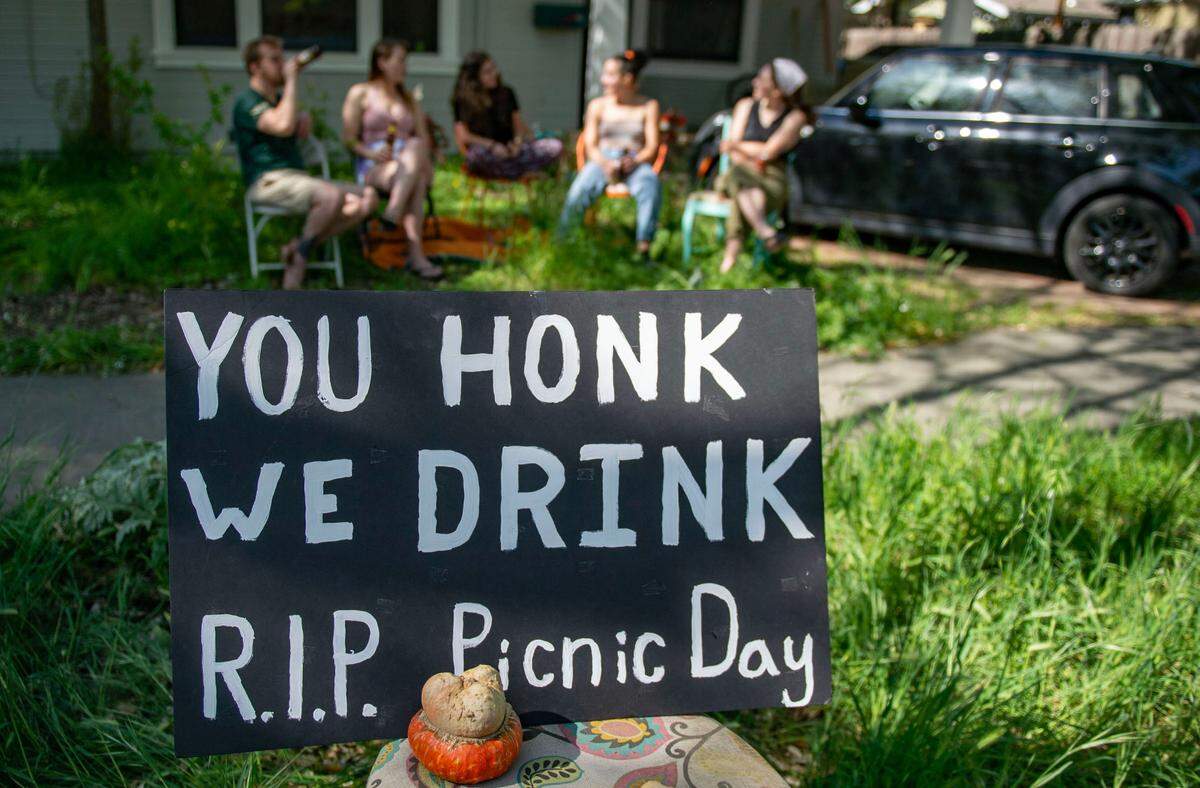
The Lambda Kappa Chapter of the Phi Beta Sigma Fraternity obtained a noise permit which said it would invite 150 people, have a DJ and two speakers, Henry said.
“We felt that was pretty reasonable,” Henry said of the noise permit.
However, the organization — which Henry said has hosted parties in the same spot in years past with no complaints of violence — did not obtain the necessary permit for a gathering of its size. The fraternity invited Stockton freestyle rapper Haiti Babii. Broadcast across social media, the event attracted residents across the region.
If Davis police had known there was going to be a large performance, the city’s Parks and Community Services would not have permitted the event, Henry said.
“We had no idea (Haiti Babii) was coming into town because that wasn’t disclosed by the fraternity,” Henry said.
Community Park on Picnic Day hosted more than just local families enjoying a beautiful spring day. Hundreds of people danced across the green lawn as music blared.
But the joyous atmosphere suddenly changed as gunshots sounded across the serene park.
Partygoers began running, according to videos posted on TikTok. Some didn’t immediately know gunshots had been fired but followed running crowds, said attendee Jayliana Smith, 23. Another attendee broke her wrist as she ran with hordes of people, Smith said.
Both Davis Senior High School and North Davis Elementary School were put on lockdown, according to the Davis Joint Unified School District. A Sacramento County sheriff’s helicopter whirred for several minutes, ordering revelers to disperse.
Smith, a Sacramento resident, went to Davis to practice her photography. Her first Picnic Day ended with her running and calling her loved ones. The experience was one in a long tally of stressful incidents to rock her life, she said.
“This is something so normal, this is something we deal with every day,” Smith said.
Elizabeth Hernandez, a 21-year-old Sacramento City College student, had gone to a party hosted by the fraternity last year for Picnic Day, she said. She sought fun this year, but twisted her ankle while running, with the shooting reminding her of an experience she had at another chaotic situation.
“I just started crying,” she said.
‘Not the best option’
Activity flourished all across Community Park on a recent Saturday afternoon, a week after Picnic Day.
Davis Senior High School — bordering the public space — hosted a track and field invitational meet. Parents clapped and whooped during a Davis Youth Softball Association game played in a field just a few yards from where gunfire broke out. Kids swung across monkey bars and used old cardboard boxes to gleefully glide down a metal slide.
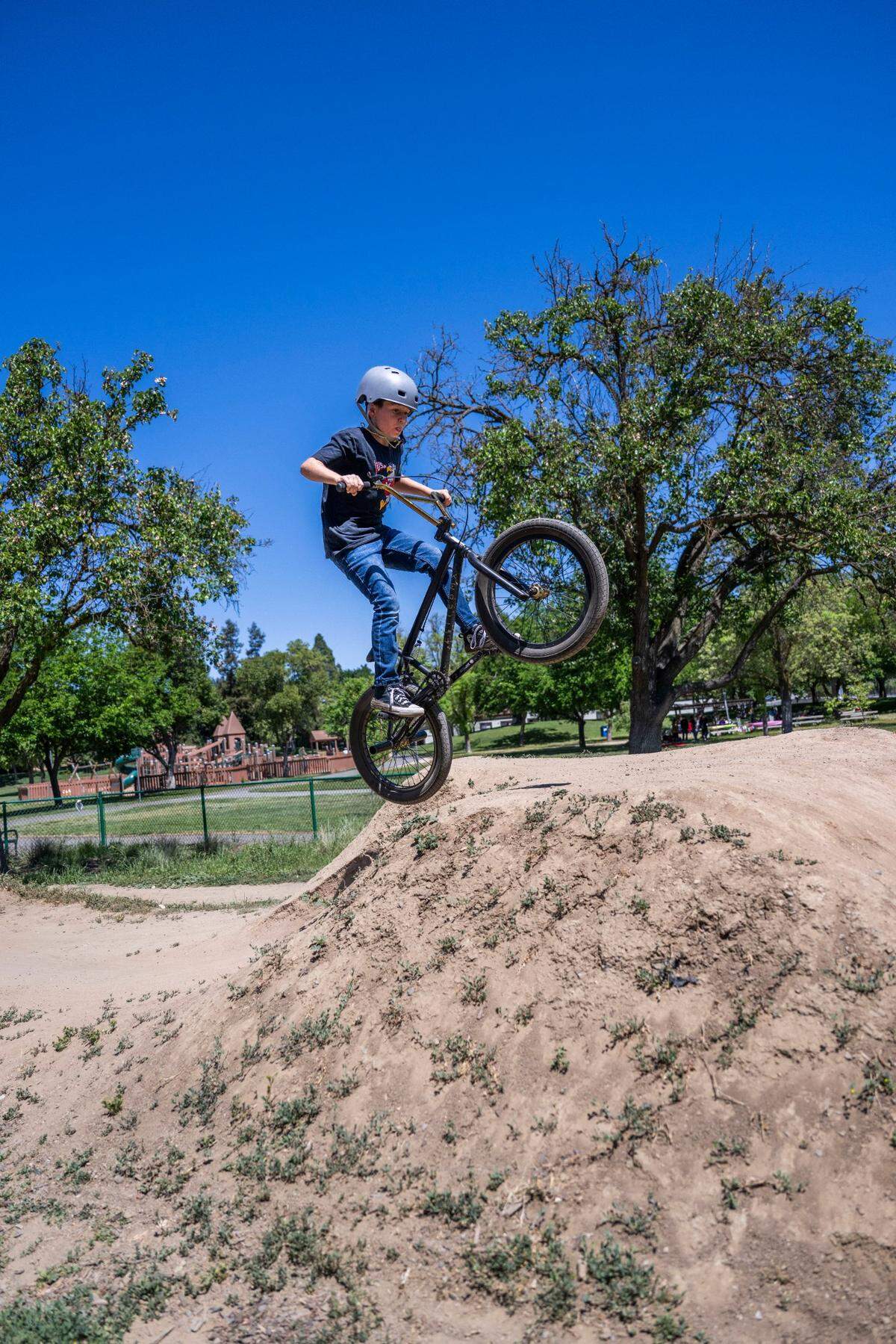
The memories of the shooting on the balmy spring afternoon were not far behind. Nerav Sahay had attended the fraternity’s party at Community Park, but now held a negative perspective of the event.
“I’m never gonna go to this party again,” said Sahay, 21, a statistics major at UC Davis, who watched dirt bike riders at Community Park while speaking about a week after the shooting.
Police have not yet announced a suspect for the shooting, but released a suspect description. The investigation, aided by the FBI, is also focused on a photo released by social media account 916times of a person who appears to be wielding a gun. They said multiple people may have fired into the crowd.
.png "image (2).png")
About 57 officers responded to Community Park when gunfire erupted, which made it difficult to respond to any other incident, Henry said during the April 15 City Council meeting. Officers also responded to another public space, Central Park, after people at the shooting went there to party, he said.
The City Council approved creating a subcommittee to address safety concerns on Picnic Day during which UC Davis said it will discuss the incident.
For Henry, he is looking for solutions to prevent rowdy parties from happening in the first place instead of solely relying on arrests. That tool is more reactive, but may have to be used more frequently, he said.
“We’re looking at all options,” Henry said. “Obviously, arrest is an option. It’s just not the best option.”
This story was originally published April 24, 2025 at 5:00 AM.