
Travel to Sacramento’s past with this popular Instagram historian
Zaved Khan takes you back in time.
Civic nostalgia pulses through @zavedkhanphotos on Instagram, where the photographer-historian overlays Sacramento landmarks with historic photographs of the same site.
Khan, 42, has repeatedly gone viral for these visual juxtapositions of the city’s past and present. He had 200 followers when he uploaded his first post in 2020. Five years later, he’s amassed nearly 25,000 followers and will release a photobook in the fall of 2025.
“All I’ve known is Sacramento,” said Khan. “I was always fascinated with Sacramento local history.”
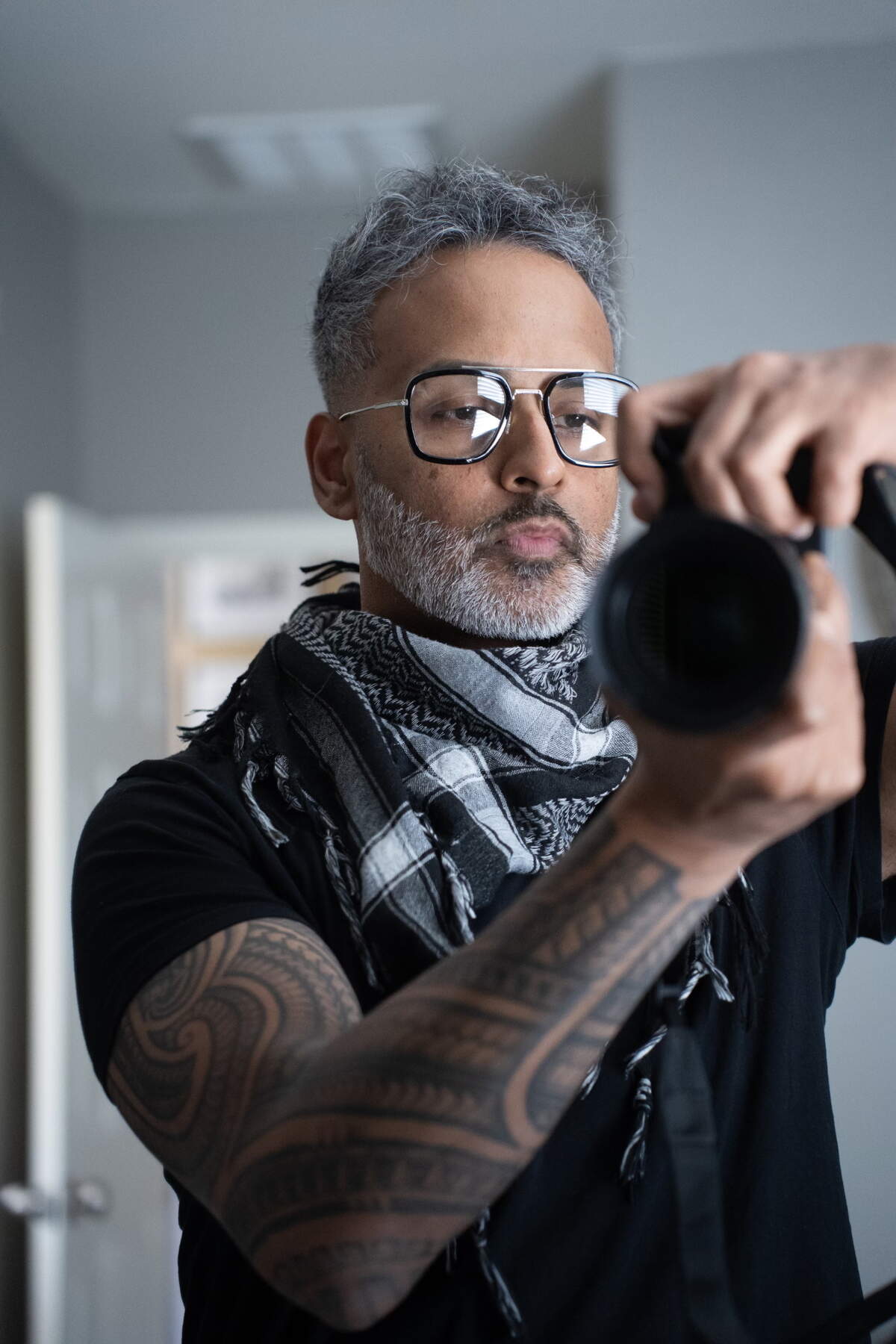
Khan and his family moved to Sacramento from the Fiji Islands when he was 2. In 2000, fresh out of John F. Kennedy High School, Khan picked up a camera and started taking photos. Digital media was on the rise, and he “wanted to be part of that shift.” Photography eventually became a side gig — far more enjoyable than his day job as an IT manager.
Around him, the landscape of the city changed. Florin Mall closed in 2006 and a Walmart opened in its place. The downtown Golden 1 Center supplanted the Natomas site as the home of the Kings in 2016, reshaping the DoCo area. The coronavirus pandemic in 2020 emptied streets and created a blank canvas. Khan saw an opportunity to “bring back some nostalgic memories.”
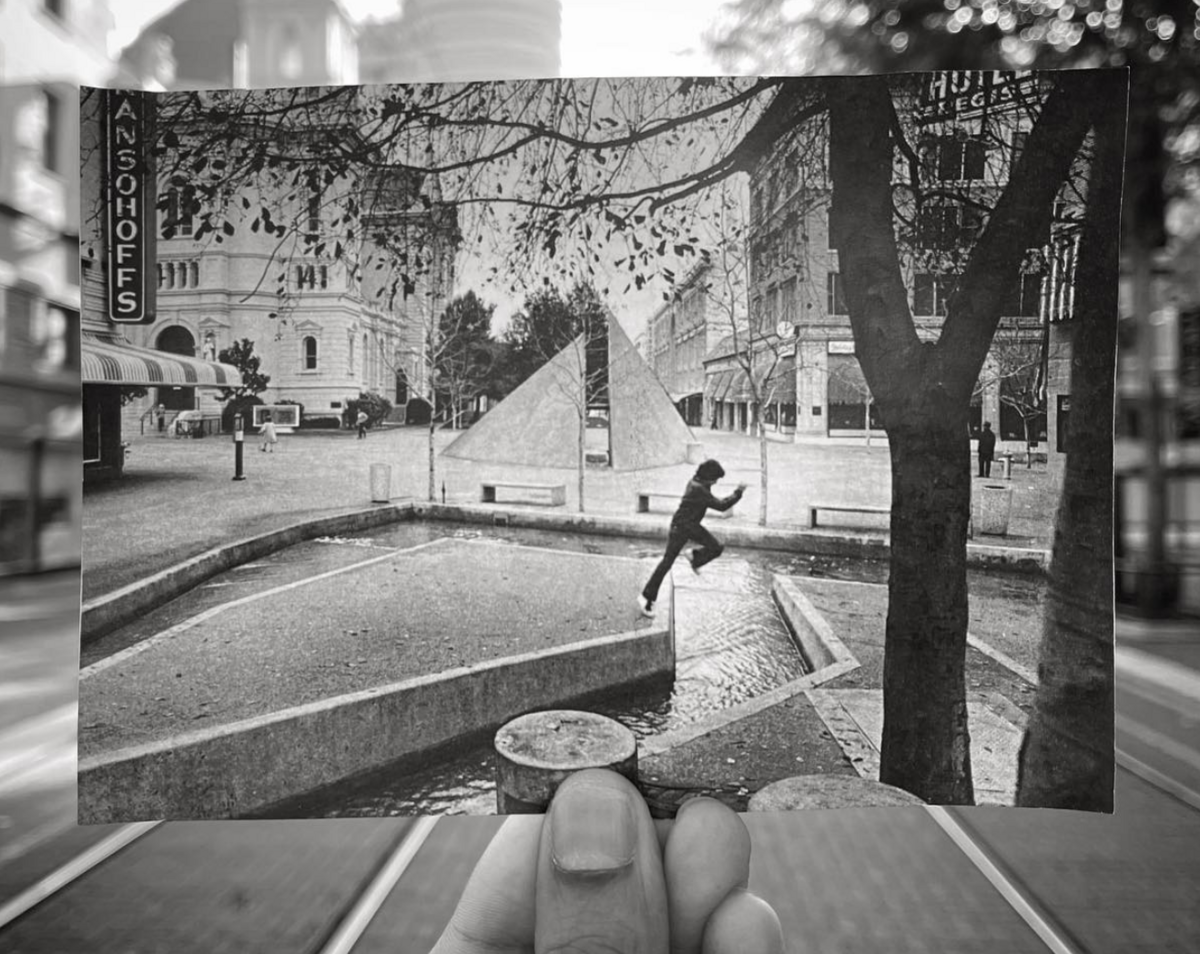
Khan occasionally uses Photoshop to create his posts, but most of his work relies on manually taking photographs of photographs. After traveling to a local landmark, he holds up a snapshot of what the site used to look like, physically overlaying the past onto the present. This bittersweet example of the Carl’s Jr. on Fulton Avenue best illustrates this technique. Khan covers the smiley star logo with a photograph of Coral Reef restaurant — a local Polynesian favorite that, until its closure 1994, resided where the fast food stop now stands.
“Oh man the foil wrapped chicken!!!!!!” commented one user. It’s one of the many shoutouts to the past, the “Wow I forgot about this!” observations that pepper Khan’s comment sections.
Bridging generations
Khan’s audience spans from teenagers to grandparents. He emphasizes that his goal is to invoke nostalgia for as many people as possible — “for my city, with my city, in my city.” But to his audience, his work does more than take them back. Sydney Donnell, a Sacramento native and one of Khan’s earliest followers, describes Khan’s then-and-now approach as “generational.”
“There is a whole generation that, when you talk about how Sacramento used to be, have no idea what you are talking about,” she wrote in an Instagram DM. “My 14-year-old son who knows the current building is now looking at the building my 14-year old-self went to.”
Compared to text-heavy “when I was your age” reminiscences that dominate books and journals, Khan’s project guides younger audiences toward more immediate entry points into local history. He often takes pains to align the lines of buildings in the old photographs with the contours of present-day sites, even if the historic structure doesn’t exist anymore.
William Burg, historian and president of Preservation Sacramento, appreciates Khan’s willingness to draw direct parallels between past and present. Burg occasionally helps Khan determine the location and story behind a photograph.
Most of the historic photographs come from the 1980s and the 1990s, but trips to the Sacramento Public Library and the Center for Sacramento History encouraged Khan to go back further.
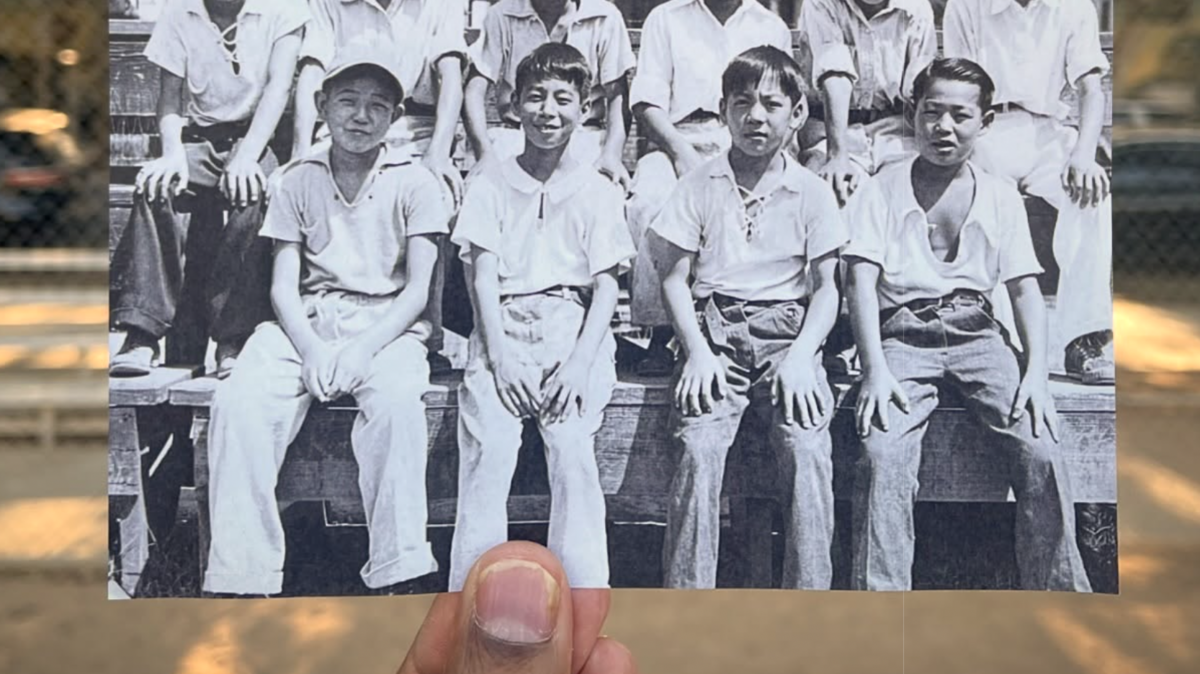
Khan’s project reminds audiences of the various communities that have shaped Sacramento’s past. In one striking post, a Japanese-American youth baseball team photographed in 1930 — six years after Congress banned immigration from Asia, and 12 years before the internment of Japanese-Americans — sits proudly on the bleachers of Roosevelt Park.
“People in general don’t tend to have a long cultural memory if there’s not something to connect them to it,” said Burg. “He gets the stories out there, sets people on a path where they start to discover other things.”
And off they go. In the project’s earlier years, Khan often crowdsourced photographs.The search for a photograph of the Downtown Plaza’s Warner Brothers store, which closed in the early 2000s, lasted a year and a half. A former employee of the store eventually found a photograph she had taken and delivered it to Khan by hand. Cheers resounded in the comment section: “Dude, you finally found it!” On his site is also a video of the location.
Then and now and after
Social media is ephemeral by nature. Posts appear on a user’s explore page before being buried in their likes. But Khan’s forthcoming publication, a coffee table book that will feature major then-and-now photographs from his Instagram and extended commentary, grounds him to a tradition of photography as public history.
Books like these appear once a generation: photojournalist Steve Mellon published Sacramento’s first then-and-now in 1994, Burg released a book of his own in 2008, and Khan will take the helm in the fall.
What were once “now” snapshots in 2008 will likely be “then” shots in his book. And Khan, whose project asks audiences to look back, has already set his gaze forward.
“I’m gonna go as long as I can,” he said. “And once I can do it no more, I hope to pass the baton down to somebody else.”