Sacramento County administrator overseeing COVID food program profited from it
AI-generated summary reviewed by our newsroom.
- County official Stephanie Hopkins approved and received funds from same program
- Audit team included Hopkins despite documented conflict of interest warnings
- County seeks $2.4 million refund after audit found widespread financial missteps
The Sacramento County official who oversaw the troubled COVID-19 food aid program not only profited from it through public money distributed to her private business, but also participated in the audit that concluded the initiative improperly allocated federal funds that the county should demand be returned.
A Sacramento Bee review of the audit and records of the Dine-In 2 program shows that Stephanie Hopkins, a program planner with the county’s Department of Human Assistance, was paid by one of the leaders of the project accused of wrongdoing while approving the very dispersal and the invoices for it.
The payments Hopkins received run contrary to the county’s code of conduct for officials involved in procurement, which prohibits “engaging in personal business with any company that is a supplier to the county.” The Dine-In 2 program paired restaurants with needy people during the pandemic.
The county was warned of this conflict and ignored pleas to investigate before commencing the audit of whether the money was spent improperly. The 34-page Department of Finance audit of the program, released in May, accuses now-former members of the Sacramento branch of the NAACP of conflicts of interest and poor record-keeping and seeks the return of $2.67 million of the $2.75 million of federal funds.
Hopkins was part of the auditing team. The audit did not investigate her oversight of, nor involvement in, the program.
Hopkins received at least $4,550 from the dispersal of funds from Salena Pryor, then-education chair of the National Association for the Advancement of Colored People Greater Sacramento branch. Pryor, through a contract she had with the city of Sacramento, paid Hopkins’ company Destined to Win, according to invoices and other records examined by The Sacramento Bee. Hopkins also approved hundreds of thousands of dollars in invoices from companies controlled by Pryor and Betty Williams, the longtime former NAACP chapter president, and invoiced Pryor for tasks that claimed to be offering assistance to minority businesses.
Hopkins did not respond to a request for comment. County spokesperson Kim Nava said that the audit had been referred to the Sacramento County District Attorney Thien Ho, asking his office to investigate.
Without referencing Hopkins by name, Nava said in an emailed statement: “The county of Sacramento was recently made aware of a potential conflict of interest matter involving an employee. The county takes these concerns very seriously and in instances like these initiates investigations to determine the facts.”
Nava added that the county will review existing policies “and if any changes are appropriate, the county will act swiftly to implement them.”
Elaine Howle, who served as the California State Auditor from 2000 to 2021 under four governors, said she believes Sacramento County’s audit avoided examining questions of official oversight and was a “disservice to the public.”
Eric Havian, a former federal prosecutor, said that fraud schemes involving public contracts frequently use consultant fees for public officials.
“This official had a fiduciary responsibility to provide oversight,” he said. “As soon as she accepted payment through another contract, that is just so compromising. “
Williams and Pryor declined to comment.
‘Betrayal of our community’
The NAACP suspended Pryor and Williams for “financial impropriety” in October 2024.
“This is more than a financial violation of our constitution and bylaws — it is a betrayal of our community, our allies, and the legacy we’ve spent over a century building,” Derrick Johnson, the NAACP’s national president and chief executive said in an email to The Bee.

The warning about conflict of interest involving Hopkins came in January 2024.
Rick Callender, the regional president for the NAACP for California and Hawaii who was tasked to look into what transpired with its Sacramento branch, wrote county Supervisor Pat Hume in an email that the national NAACP had found evidence that “Stephanie Hopkins’s personal company was involved with the program somehow.”
In his email, Callender encouraged the county to investigate. “Ms. Hopkins was in the lead,” he wrote. “I do hope that there is not any situation of public corruption vs lackluster oversight.”
When asked about this correspondence, Hume said he missed the specific references to Hopkins. “I didn’t pick up on that piece,” he said. “I put too much faith in staff to know that was going on. That’s on me.”
One program participant said she tried to call attention to the issue while the program was operating. Ozzie Chavez was the owner of the Paisley Cafe in Orangevale and said she had to sell it because of the financial improprieties of the Dine-In 2 program.
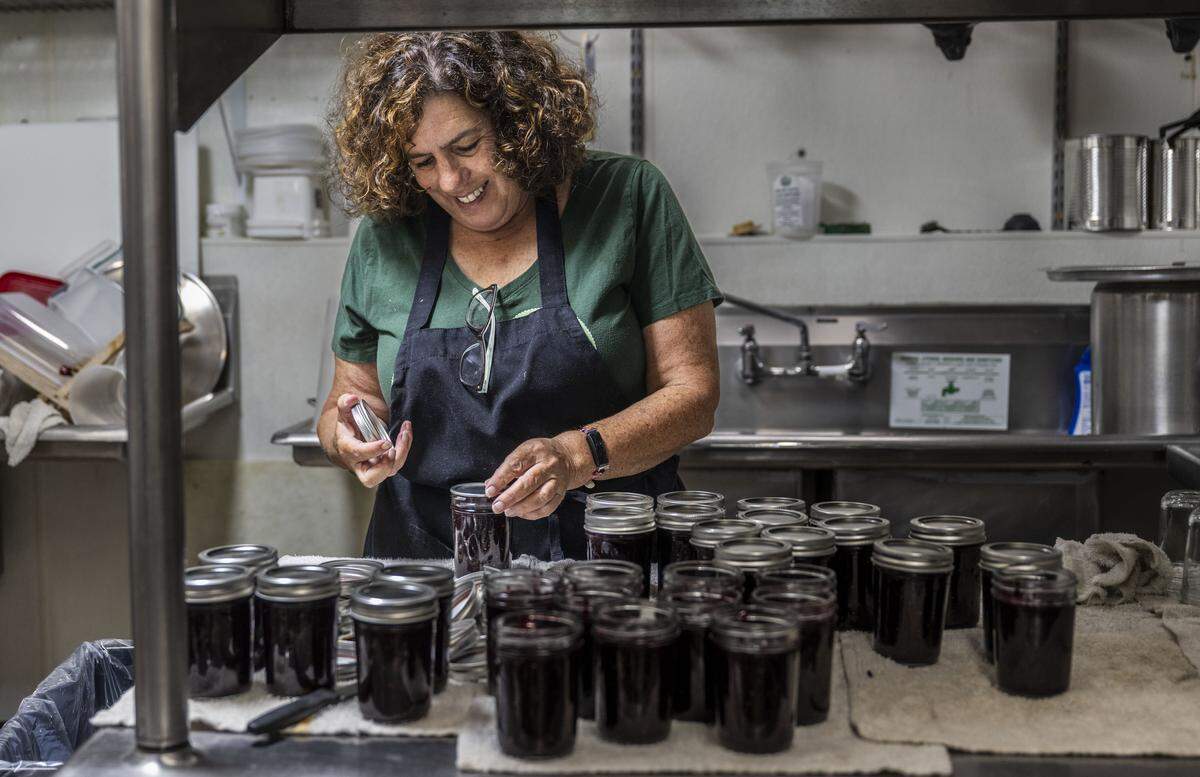
“I told anyone who would listen that there was something very wrong,” she said. “I called the county fraud line. I called my county supervisor. But nothing changed.”
Chavez said she felt worse after reading the audit.
“They got half the story,” she said. “No one conducting this so-called audit ever bothered to call me or any of the restaurant owners to find out what really happened. Why?”
What we found
Despite a specific plea to investigate Hopkins, Ethan Dye, the director of the county’s Department of Human Assistance, and other county officials placed Hopkins on the audit team. County spokesperson Allison Harris said that Hopkins had “supported the audit process.”
An examination of emails and other documents show that Dye and three supervisors were aware of numerous complaints about the Dine-In 2 program. Yet Dye allowed Hopkins to be assigned to the audit team three months after Hume received the email questioning her role.
“This wasn’t just the fox guarding the hen house. The fox was then part of the investigation about the theft of hens,” said Mary Inman, an attorney at the San Francisco fraud investigations firm Whistleblowers Partners.
The Bee’s examination of records show details about Hopkins’ and the NAACP’s roles:
• In 2022 and 2023, Hopkins failed to report on a legally required state conflict of interest statement that she earned thousands of dollars paid by one of the ousted NAACP leaders.
• As noted, at least $4,550 in payments to the Hopkins’ company “Destined to Win” were paid by Pryor to Hopkins.
• Hopkins approved invoices from Jackson Gourmet Goods, a company started by Pryor’s relative, even though the invoices lacked basic details required under the contract. The company’s business license said it was an “online pet treat company.” The company was paid more than $230,000.
• The payments to Hopkins flowed through a federally funded city of Sacramento contract with the California Black Chamber of Commerce led by Jay King. Pryor had $401,475 in federally funded contracts with the city of Sacramento and had a $100,000 subcontract through the chamber to assist Black-owned small businesses.
• According to documents and interviews, multiple restaurant owners said Williams and Pryor retaliated against them when they spoke out against payment delays or questioned how the project was being managed. “The NAACP has knowledge that you have intentionally agitated the payment delay issue,” Williams wrote to one vocal chef she then removed from the program.
• The audit failed to disclose that the former NAACP officials received a $250,000 advance, funds which were needed by restaurants who were providing staff and food costs.
• When The Bee asked about payments made to the NAACP chapter, the county omitted the $250,000 payment and inflated four subsequent payments by $62,500 each. The undisclosed $250,000 advance payment was personally approved by Dye.
• In May 2023, after the NAACP had spent its $2.75 million budget, Hopkins’ approved an additional $10,000 for Pryor billed at $1,000 per hour for accounting. An email from Department of Human Assistance Deputy Director Renee Lowder to Hopkins stated, “as I did have concern with the Business Compliance expense, you reassured me this specific cost is direct and is outlined as such within the contract.”
Shan Wu, another former federal prosecutor and a frequent commentator for CNN, said that because the program was federally funded, it should be investigated by the federal government.
“There is a lot to look at here,” he said. “A prosecutor would be looking to determine whether these payments were bribes or kickbacks to look the other way, allowing for all kinds of unsavory behavior.”
What was Hopkins’ role?
Hopkins registered DTW Investors LLC with the California Secretary of State in 2015. In filings, she has described the company as an investment holdings business company, a real estate investment firm, a commodities trader and, most recently, as a consulting business.
One Destined to Win invoice shows that Hopkins charged taxpayers through Pryor’s contract with the city for a “business plan” for Colo’s Southern Cafe, a North Sacramento restaurant that announced last month it was closing. The invoice did not reveal that Colo’s was part of the Dine-In 2 program that Hopkins supervised.
Rather than assist Colo’s, text messages show that at Williams’ request, Hopkins played a role in Colo’s removal from the Dine-In 2 program she oversaw.
Some of Dine-In 2 clients with Colo’s were shifted to a business in Rancho Cordova. This was the location for Jackson Gourmet Goods, run by Pryor’s relative. Hopkins approved invoices from Jackson Gourmet Goods, some as high as $49,000.
Hopkins, who earned $129,000 as a human services program planner in 2023, according to Transparent California, has started at least two companies while being employed by the county, according to her state Form 700 conflict of interest statements.
The records show that income from DTW and SyncHealth Management, which Hopkins said in filings she co-founded in 2024, exceeded $100,000 in 2024.
Howle, the former state auditor, noted that outside employment by public officials is not illegal, but it’s a “basic issue” that audits typically look at when they are investigating conflict of interest.
How this started
The county awarded the Sacramento Branch of the NAACP $2.75 million through two contracts to run the Dine-in 2 program in March 2022. Leading the effort for the Greater Sacramento NAACP were Williams and Pryor, who rose to prominence during the pandemic. Pryor’s nonprofit, the Black Small Business Association of California, was awarded multiple federally funded contracts.
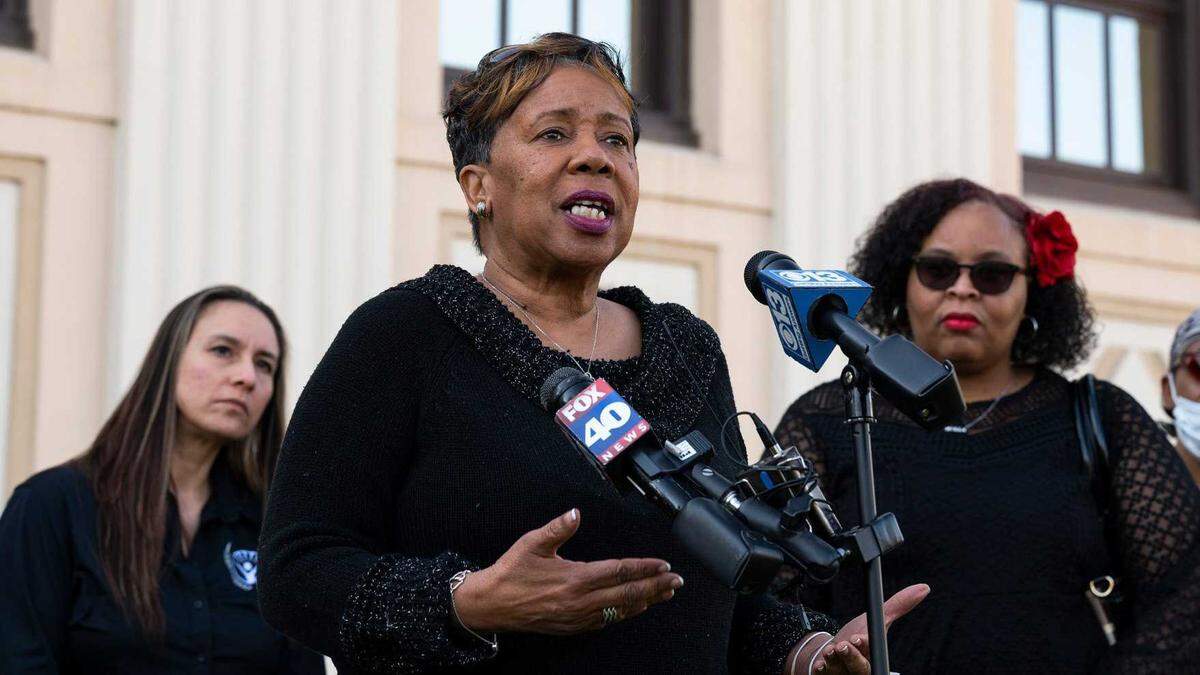
A nonprofit group and a company controlled by Pryor were paid about $200,000 during the yearlong contract as a “business compliance officer” and for other services. Invoices obtained through a Public Records Act request show Hopkins was being paid at the same time by Pryor as a consultant.
While she was receiving money, text messages and interviews with participants show restaurant owners waited months for payments.
Callender, the regional president for the statewide NAACP office, who was also in charge of the Santa Clara Valley Water District until Dec. 16, was tasked to look into what transpired with its Sacramento branch. That’s when he wrote Hume, whom he met at a water conference.
Hume said he spoke to Chevon Kothari, deputy county executive for social services, who he said told him that an audit was already in the works. Kothari did not respond to questions.
Rather than investigate Hopkins, she was made part of the audit team. Along with Dye, Hopkins participated in an April 2024 opening conference in which county officials posed questions to representatives of the NAACP chapter, according to emails. Those representatives did not include Williams or Pryor.
As the county prepared for its audit, in an October 2023 email, Hopkins asked Callender for contact information for Williams and Lorraine Moore, another suspended NAACP chapter official. “All of our contacts are related to the individuals that were listed as removed from office or on leave,” Hopkins wrote. However, Hopkins had been in cellphone contact with both Williams and Pryor during Dine-In 2, and had worked directly for Pryor.
A review of invoices the Black Small Business Association submitted to the city of Sacramento shows that Pryor’s work for the city bled into the county’s contract.
Invoices show that Pryor charged taxpayers to assist Sharon Jackson, whom she identified as an aunt, in her company Jackson Gourmet Goods. Pryor stated in an invoice that she assisted Jackson in obtaining an identity number necessary for obtaining government contracts.
The BSBA’s federally funded contracts with the city of Sacramento paid the organization over $400,000 to provide expertise to minority businesses. Text messages and invoices show that Hopkins’ work for the BSBA assisted with the endeavor.
In a text message to one restaurant owner in the NAACP program, Pryor referenced her contract with Hopkins:
Pryor: “Guess who does the business plan stuff for BSBA? Stephanie is contracted to do that for us and she is dope!”
Restaurant owner: “The Stephanie from the county?”
Pryor: “Yep, Stephanie from the county.”
As Hopkins approved millions of dollars in invoices, she praised Pryor as part of her paid work for her.
Invoices from Hopkins to Pryor show Hopkins charged $1,300 to appear and prepare for two half-hour Facebook Live videos, which were marketed as small business seminars. One seminar was led by Hopkins; in the other, she was a participant. Both seminars were moderated by Pryor.
During one of the videos, Hopkins described her company DTW Investors LLC as a financial firm “that constantly looks for opportunities to help other small businesses or established businesses capitalize on their current assets.”
Also appearing in the video is Jackson, who said during the recorded seminar that she had “problems with follow-through.”
During the 20-minute seminar she led, Hopkins gave cheery business advice and promoted Pryor and her organization, encouraging viewers to visit Pryor’s website.
“Our partners here,” Hopkins said. “BSBA, check them out. They are amazing individuals. Miss Salena Pryor, president and CEO is handling her business.” Although the seminar was facilitated by Pryor, Hopkins did not say she was also supervising Pryor, nor did she identify herself as a county employee.
That month, Hopkins approved a $48,576 invoice from Jackson Gourmet Goods. That figure included an “adjustment” of $22,080 for “additional meal kits approved for August.”
In a lawsuit filed by Pryor in Sacramento Superior Court after she was suspended by the NAACP in October 2023, she claimed she was merely a subcontractor.
“The NAACP accused Pryor of mismanaging funds and using the NAACP’s name and resources for personal benefit, but Pryor was not an officer of the Sacramento NAACP and was not authorized to manage, distribute, receive, or execute funds on behalf of the Sacramento NAACP or the Dine-In 2 Program,” her lawsuit states.
County avoided federal scrutiny
The Dine-In 2 program originally planned to use federal American Rescue Plan Act COVID grants directly. The grants would have required detailed spending reports designed, in part, to detect fraud.
But a March 2022 staff report submitted by Dye said that the program faced “significant challenges allocating ARPA funds to restaurant meal services if the partners were unable to meet the ARPA compliance and reporting guidelines.” The staff report submitted by Dye said the county had a solution to those challenges.
Sacramento County received more than $300 million in federal aid during the pandemic. At the recommendation of Dye and the office of county executive, the Dine-In 2 program avoided federal reporting requirements for its NAACP contract through a loophole that allowed it to place $3.6 million in federal funds into the county general fund. The county then paid the NAACP through the general fund, avoiding federal reporting requirements.
“In order to make the needed general fund available to implement the CFIPP, the Office of the County Executive recommends the board authorize the use of ARPA for revenue replacement,” said the staff report.
Dye did not respond to questions.
The county resolution allocated $109,000 of the federal funds to reimburse it for Hopkins’ position and two other officials’ staff time. Hopkins’ role was described as “critical” and included “contract monitoring ... the planner is responsible for the planning, development, implementation, and evaluation of this complex program.”
According to the staff report, an additional $250,000 of ARPA funds for Supervisor Phil Serna’s district was also used for Dine-In 2. The use of Serna’s district federal funds was only temporary: “$250,000 is expected to be returned,” the staff report stated.
Serna was one of three supervisors who received complaints about the program and how Dine-In 2 was being administered by Hopkins.
Serna did not respond to requests for comment.
On Oct. 3, 2022, Andrea Lepore, then-owner of Solomon’s restaurant, exchanged several emails with Serna’s then-chief of staff Lisa Nava.
“I wanted to make you aware of some issues with the Dine-In 2 program before they become public,” Lepore said. “The restaurants in the program, the vast majority are Black- and women-owned, have not been paid for any of the meal kits including labor yet and we’ve been allocating valuable resources and dollars since July.”
Nava responded that Dye was out that week, but that she was looking into it. “I am inquiring with DHA,” she wrote. “The director is out this week but I am hoping to connect with his deputy director. Let’s see what I can learn to report back.”
Three weeks later Solomon’s still had not been paid.
In an email to Nava, which also cc’ed Hopkins, Lepore said she was pulling out of the program: “We cannot continue to survive with this program’s current payment schedule which has put us in a perilous position with vendors and strained our valuable employees as we have allocated much-needed resources to execute this program.”
The relationship with one restaurant
Another restaurant had similar issues.
Colo’s occupied a plant-filled space that hosted music and comedy events, and was the subject of a Sacramento Bee story about how the owners had overcome obstacles to be successful. It celebrated Tamar and Kevin McCree’s escape from poverty and violence to create a family restaurant.
One of the McCrees’ customers during Dine-In 2 said the meal deliveries from Colo’s were both a lifeline and delicious. The former recipient of Colo’s meals asked that her name be withheld because she fears retaliation. She is a mother of two who worked at Walmart during COVID. She said she was proud of being an essential worker. She appreciated the Colo’s meals.
“You could feel the love in breakfast, lunch and dinner,” she said. “They cared. And all their meals were different.”
But Paisley Cafe’s Chavez recalled that Pryor and Williams said on the video calls that Colo’s was not following procedure.
“She (Tamar) would get singled out for not filling out the paperwork right during Zoom calls,” she said. “It was very stressful for her.”
In October 2022, although the McCrees were leveraging credit cards and savings to keep up with meals and were months behind getting paid, Tamar McCree received a harsh letter from Betty Williams.
“While we appreciate your service to the community, we have serious concerns about the food preparation policies we have created based on what the county of Sacramento has required,” Williams wrote.
Williams wrote that McCree had not properly documented photos of meal kits, signature sheets and receipts. And she said “county participants report that you are serving food as if you are feeding homeless people. Please accept this letter as an official written warning. If the concerns continue, we will terminate your contract to avoid jeopardizing the integrity of the program.”
The McCrees said they were in a difficult position. Like all the restaurant owners in the Dine-In 2 program, they said they had not been paid in months and had to fill out onerous documents to receive a $5,000 loan, later subtracted from subsequent payments.
Colo’s also had conflicts with Pryor. According to text messages obtained by The Bee, Pryor sent a text to Tamar McCree because she had missed a Zoom meeting, in which, according to Pryor’s text, “Stephanie stated someone wrote an anonymous letter to the Board of Supervisors. And the end result was them wanting to cancel the meeting all together.”
Two weeks after being warned by Williams, Tamar received a text and a call from Williams instructing her to call Hopkins.
“Tamar was sharing all the stress she was under,” recalled Chavez, who, along with the other local businesses, said she had not been paid. “Tamar told me that Betty was screaming at her because she had accepted work with another county COVID food aid program run by Clay Nutting. I think she was worried that this would subject the NAACP to more scrutiny because that program was run properly. “
Nutting, a local restaurateur who owns Canon and Franquette, said in an interview that he has a passion for giving back to the community through food aid programs involving the creative talents of restaurants.
Williams told Tamar McCree over text to call Hopkins and provided the county official’s cellphone number. Forty minutes later, Williams wrote again, saying that Hopkins had told her “you were not given a choice. ... You are with Clay now, not with NAACP after speaking with Stephanie.”
A detailed invoice from Hopkins’ Destined to Win that same month to Pryor noted an hour billed for “consultation appointment Tamar McCree.”
Nutting said he remembered a call from Hopkins informing him that McCree would no longer be working with the NAACP.
“What she said didn’t exactly make sense to me,” he said. “Basically, she said the restaurants could either work for the NAACP or for us, otherwise, it was a conflict. I can see that serving the same clients would be a conflict. But that wasn’t what was happening. I told Stephanie of course I would take Tamar. Tamar is awesome.”
Being fired from the NAACP was a loss for Colo’s as it had fewer clients, though the pay was on time.
It was also a major loss for Colo’s’ former Dine-In 2 client, who looked forward to the meals after long shifts at Walmart. The meals changed radically overnight.
Who took over for Colo’s is unclear. The recipient said they were delivered by someone affiliated with Daddy O’s Smokehouse, another restaurant in the NAACP program. A review of invoices shows that Daddy O’s and Jackson Gourmet Goods both shared the same Rancho Cordova address.
Wherever the meals were from, Colo’s former client said they were barely edible. She took photos and texted them to a friend in disbelief.
“Breakfast for the kids” she wrote over a picture of a gray meal that consisted of instant oatmeal and cold sausage.
Oz Kamara, Daddy O’s owner, said that he had rented his space to Jackson Gourmet Goods and they worked at different times. “There wasn’t overlap,” he said.
Kamara said that he did not know that Jackson Gourmet Goods was managed by a Pryor relative, or that the company’s now-expired business license was for an online pet treat company.
Working from the same kitchen, the two businesses billed taxpayers as much as $90,000 per month.
Colo’s former recipient of meals said she tracked down Hopkins’ phone number and called to see if Colo’s could be reinstated or if she could receive food aid from another restaurant.
“She told me that was not possible and that there was a waiting list of people who wanted to be part of the program,” she said. “I told them to give them to someone else. They were worthless.”
The Bee’s Darrell Smith contributed to this story.
This story was originally published August 4, 2025 at 5:00 AM.
CORRECTION: This story was updated Aug. 4, 2025 to correct the spelling of Elaine Howle.