Giant, hairy spiders are crawling across California. Are they dangerous?
Beware, Californians: It’s tarantula season.
September and October are peak months for spotting male tarantulas as they roam day and night in search of mates, according to the National Park Service.
The giant, hairy spiders investigate “every potential burrow, looking for a female ready to lay eggs in her specially prepared nest,” the federal agency said on its website.
Here’s what to know if you cross paths with a tarantula this fall in California:
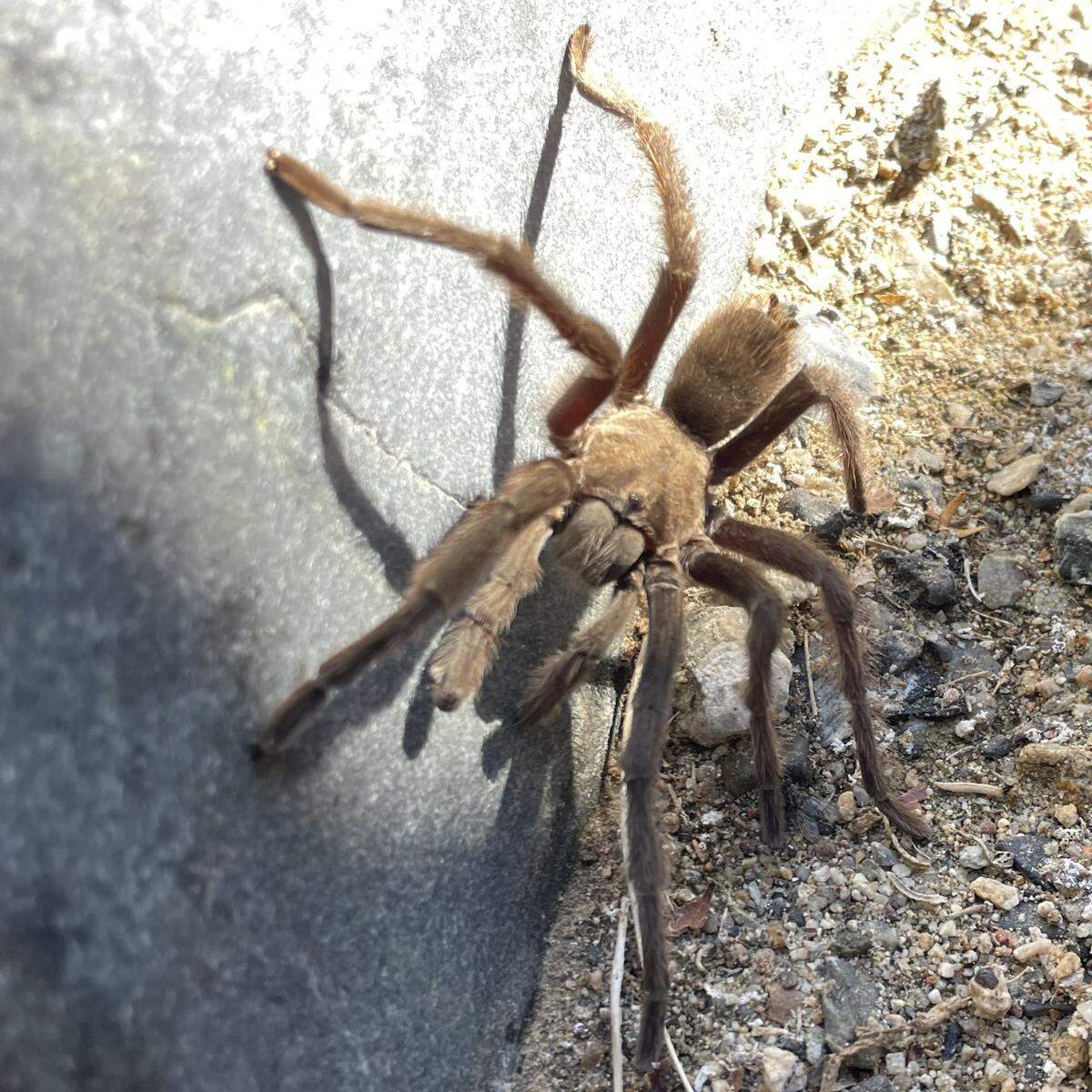
What do tarantulas look like? How to identify big, hairy spiders
Tarantulas have eight eyes ands eight legs and large, hairy bodies, making them easy to spot, according to Ryan Perry, a lecturer in entomology at Cal Poly in San Luis Obispo.
“There really shouldn’t be too much confusion with any other spiders, generally based on their size,” he told The Sacramento Bee in 2024.
Adult tarantulas usually grow to about 5 inches long, but with their legs stretched out they can reach up to 11 inches — or roughly the size of a human hand, according to the National Wildlife Federation.
These slow-moving, dark brown spiders live all across California, Perry said.
Where are tarantulas most commonly found in California?
According to the National Park Service, tarantulas are present in California year-round but tend to keep a low profile.
“They spend their days in burrows, emerging only at night to hunt,” the agency said. “At any time of the year, if you look carefully for small holes lined with silk, you might find a tarantula looking back at you.”
The large spiders are most active in the late summer and fall, the Los Angeles Times reported.
Tarantulas usually dig their burrows in brushy areas with sandy soil.
They’re often seen in the desert, mountains and along the Central Coast. However, they can also turn up in other parts of California — including the Sacramento area and Madera County near Fresno and Merced.
Which kinds of tarantulas can I see in California?
There are 10 distinct species of tarantulas throughout California, including the Chilean rose tarantula, the California tarantula and the desert blonde tarantula, according to Los Padres ForestWatch, a Santa Barbara-based conservation group.
The most common tarantula in California is the North American brown tarantula.
Are tarantulas dangerous to humans?
Tarantulas “pose few threats to humans,” according to the National Wildlife Federation.
Their diet mainly consists of insects, birds and small mammals such as mice.
Though tarantulas might look intimidating with their big jaws and fearsome fangs, Perry said, the spiders’ venom is only strong enough to take down small insects.
What should I do if I get bitten by a tarantula?
If you’re bitten by a tarantula, you’ll usually experience nothing more than minor swelling or a rash.
You should use caution when handling the arachnids.
When tarantulas are threatened, Perry said, they can release barbed hairs from their abdomens that can irritate skin and eyes, leaving you itchy and uncomfortable.
If you are allergic to tarantula venom, the Mount Sinai Health System said, you can experience more severe symptoms, including:
- Difficulty breathing
- Loss of blood flow to major organs
- Eyelid puffiness
- Itchiness
- Low blood pressure and collapse
- Rapid heart rate
To treat a tarantula bite, wash the area with soap and water, then use an ice pack wrapped in a cloth to help with pain and swelling.
In extreme situations, get medical help right away. You can also call the national Poison Control hotline toll-free at 1-800-222-1222 from anywhere in the United States.

What should I do if I see a tarantula?
If you spot a tarantula on a trail, Perry said, give it space so you don’t interrupt its mating journey.
If you’d like a photo of the spider, move in slowly from the side, he said.
“Generally, as long as you don’t rush up to them, they’ll just kind of do their thing,” Perry said. “You can come in, take a few photos and then move on.”
Is catching a pet tarantula in the wild legal?
Though tarantulas aren’t listed as “fully protected animals” by the California Department of Fish and Wildlife, they are protected by local regulations in specific areas of the state.
In Mount Diablo, it is illegal to catch and remove tarantulas.
Taking wildlife such as plants and animals from state and national parks is illegal and can result in penalties, including fines and imprisonment, according to the California State Parks Department and the U.S. Environmental Protection Agency.
If you want a pet tarantula, it’s better to buy one from a breeder or store.