
Videos, texts show how the Sacramento NAACP pressured restaurants in COVID program
AI-generated summary reviewed by our newsroom.
- Videos show NAACP officials misled restaurants in Dine-In 2 program about audit delays.
- County audit found $2.4 million in improper payments, prompting lawsuit.
- Restaurants suffered financial harm, delayed payments
Betty Williams, the former president of the Sacramento branch of the NAACP, erupted with displeasure in a video call with a half-dozen restaurant owners participating in a COVID food aid program, criticizing them because they had “gone over my head” to complain to county supervisors about money they were owed.
“I don’t need no s--- in the middle of my negotiations,” she said to the stunned owners in the March 2023 Zoom session.
A Sacramento Bee investigation last month revealed that Stephanie Hopkins, the Sacramento County program planner with the Department of Human Assistance who oversaw the program, also profited from it as she was simultaneously being paid by Salena Pryor, the official who, along with Williams, led the project for the NAACP. Hopkins approved millions of dollars in inflated invoices submitted by Pryor. The 34-page audit of the federally funded pandemic program — Dine-In 2 — concluded the county should seek $2.4 million refunded from the program. Hopkins also participated in audit of this program she oversaw.
One of the restaurateurs involved has provided nine videos, which were consensually recorded by Pryor and shared. Text messages, videos and other documents shed light on how the program was conducted, the interactions the participants had with the NAACP and their frustration and stress from not being paid.
What the records show:
- Over nine recorded meetings and in multiple communications, Pryor and the other NAACP repeated that delays in payments were due to an ongoing county audit. However, there was no audit at the time.
- As restaurants took out loans to pay workers and, in several cases, eventually went out of business because of money owed and ruined credit, the NAACP had not submitted invoices to the county.
- In texts, emails and videos, Williams and Pryor told participants not to tell elected officials or others in an oversight capacity what was happening with the Dine-In 2 program.
- Text messages support the account of a restaurant owner who said Willliams, Pryor and Hopkins sought thousands of dollars in cash for a reimbursement for an alleged overpayment, and threatening repercussions from the county if the debt was not paid. The county said it has no record of an overpayment or attempt to recoup the funds.
The audit, released in July, alleged that the program with the NAACP, a venerated civil rights organization, was rife with improper record-keeping and other irregularities. The national NAACP has sued, seeking $2.75 from Williams, Pryor and Loraine Moore, another former NAACP official.
In the civil complaint filed last month in Sacramento Superior Court, the NAACP states: “This case is a story about individuals who chose one of our country’s bleakest periods to line their pockets at the expense of vulnerable seniors living in isolation and families suffering from food deprivation. But unlike many other COVID-related schemes, the perpetrators hid behind the name and reputation of the nation’s premier civil rights organization to carry out their wrongdoing.”
Hopkins remains a county employee. County officials said she has been on voluntary paid leave since publication of The Bee’s story in August. Williams and Pryor have declined to comment.
Frustrating weekly Zoom meetings
Pryor, as business compliance officer, led the weekly Zoom meetings, shown sitting at a well-appointed desk underneath a logo of the Black Small Business Association, one of the organizations through which she earned at least $150,0000 as a part of the COVID food aid project. Dine-In 2 paired restaurants with needy people during the pandemic.
Williams, who often was referred to in the meetings by Pryor and other NAACP staff as “madam president,” would, in three of the nine videos, join late. She did not attend others
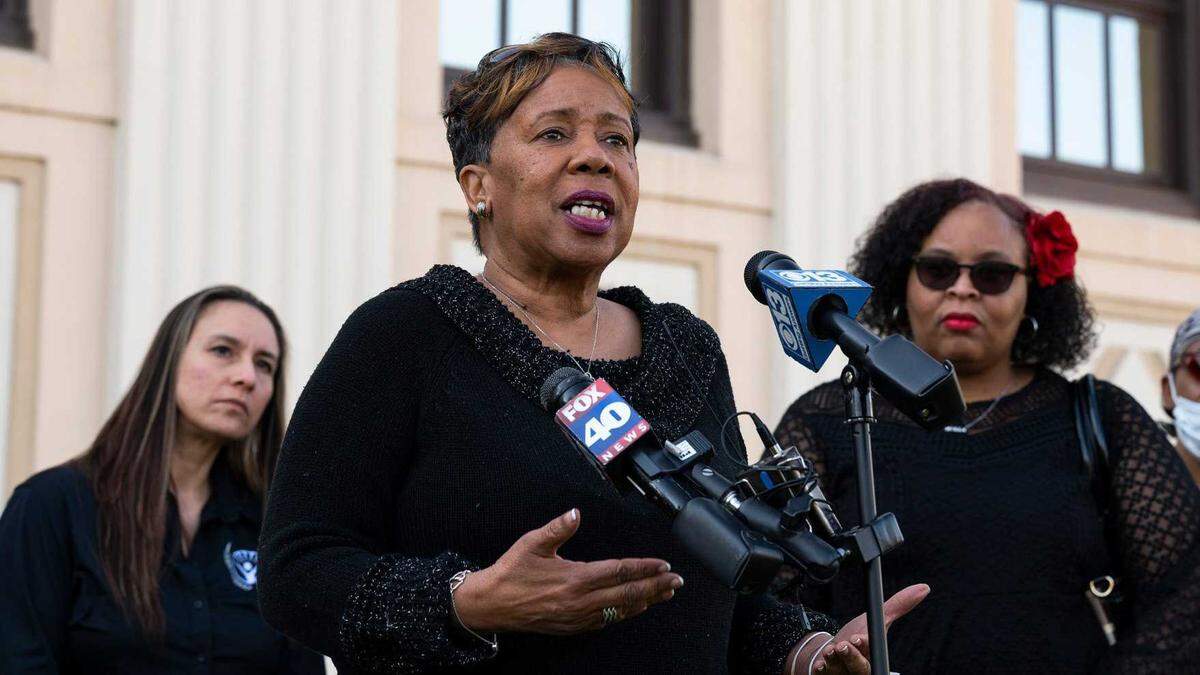
For the March 2023 meeting in which she warned participants not to go over her head, Williams popped in from a wedding.
“Pray for me as I go into this wedding that I have a better mindset than I have right now,“ Williams said before cursing at the restaurant owners.
On the call, Williams said she was in intense negotiations with all five members of the Board of Supervisors about extending the program. She said that complaints about months-long delays in payments were undermining her efforts.
“You guys are f------ it up in the middle of my negotiations. Talk to me if you have an issue.…So for anyone to skip that opportunity pisses me off, to be quite honest, for such a great program.”
During multiple video calls, Pryor and Williams blamed months-long delays in payment on a county audit of the NAACP’s Dine-In 2 program. However, the county was not conducting an audit at that time, according to a county spokesperson.
A source close to Williams, who did not wish to be identified because she was not authorized to speak on the matter, said “mini-audits” were holding up payment. The source did not specify what they were.
“When we asked questions about payments, Stephanie Hopkins blamed us, saying we weren’t filling out our paperwork properly and repeated this lie about an audit,” said Ozzie Chavez, a participant in the program and the former owner of the Paisley Cafe. “The way this was described wasn’t a mini-audit. It was a great big audit that was holding up all payments. Stephanie made it clear we needed to go through Salena and Betty, that there was no one to turn to at the county.”
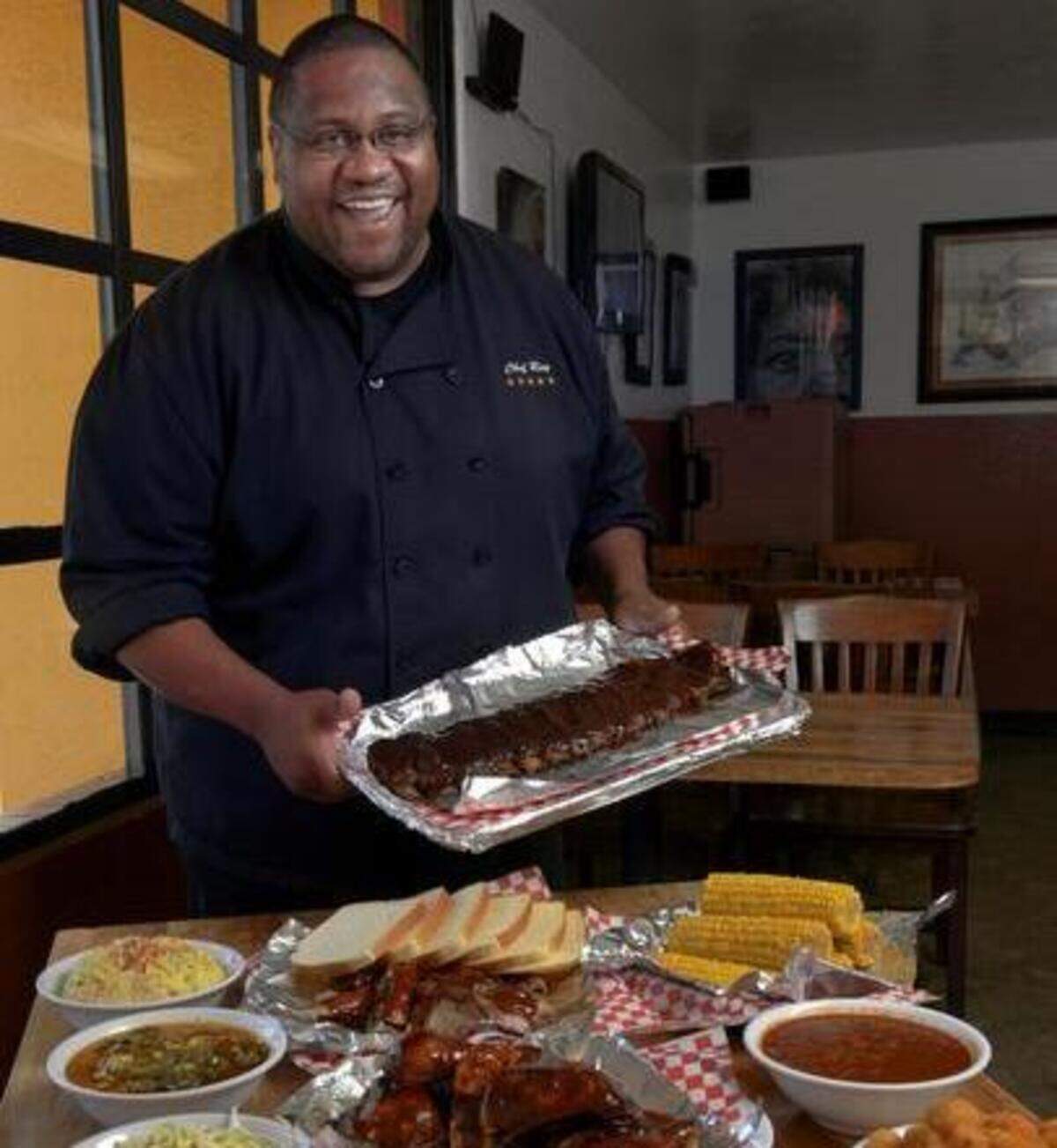
Rodney Ray, the owner of T&R Taste of Texas Restaurant, asked in a March 2023 call why the restaurants had not been paid in January, Pryor said that the delay was due to the audit.
“We did submit January and February, so we are not behind,” she said. “It’s not us.”
In one exchange on a April 2023 call, several restaurant owners pressed her about why they still hadn’t been paid for work they performed in January.
“Everything is dependent on the audit,” Pryor said.
In another call, she repeated an audit was holding up the payments. “We thought the audit would be done months ago when we first started it…. So we are on top of it, and we’re doing our due diligence and making sure that we have the information that they’re asking for,” she said. “But it’s just, it’s a process.”
In response to written questions., Allison Harris, a spokesperson for the county, said in an email that the delays were because of the NAACP’s actions.
“The recurring delays in NAACP’s submission of invoices contributed to the timing in which the payment was sent out by the department.” she wrote.
Despite telling restaurants that delays were because of an audit, the NAACP did not submit invoices for January and February until March 22. “The County was not conducting an additional audit of the NAACP,” Harris said in an email. Harris also said the invoices had to be resubmitted twice because of errors, and were finally paid on April 18.
Eric Havian, a former federal prosecutor who specialized in procurement fraud as a prosecutor, and is currently a partner at the San Francisco law firm, Whistleblower Partners, said that any of these taken in isolation were probably not illegal. But taken in totality, he said, they raise questions about the legality of the actions.
“If you specifically instruct employees to not report to public officials who have oversight, you probably have a good case of conspiracy to defraud the government,” he said. “Of course, the people who gave these directions not to speak to anyone would probably say, ‘well, we just didn’t want a bunch of bad publicity. We weren’t really trying to scheme or anything like that.’
“But assuming that the real intent here was to defraud,” he continued, “all of these actions together arguably could be considered an overt act in furtherance of a conspiracy to defraud.”
Follow-up messages
In one tense Zoom meeting, Pryor told the participants that she had been trying to track down the cause of the problems with payments.
“I have been on the phone all morning,” she said, “and all yesterday, and all the day before, just trying to see where we’re at in the process.”
The NAACP leaders of the Dine-In 2 program sent a memo to all the restaurant owners who had been waiting months for payment on April 13, 2023.
“In response to the frustrations expressed at today’s meeting, we would like to offer this update to ensure we are all on the same page.
“The GS (Greater Sacramento) NAACP Dine-in 2 team is working diligently with the County of Sacramento to expedite payment for services rendered in January and February 2023. Betty, the program Executive Director has been advocating and escalating the serious concerns we all share. As a result, the accounting department and supervisor in charge have been placed on notice that this lack of payment to date has caused hardship for our providers and threatens the very existence of the program. The County is working to address this issue immediately.”
Records show that payments shrank for most restaurants because they had clients removed by the NAACP. Three businesses, though, with close ties to Pryor and Williams, billed hundreds of thousands of dollars, often for meals delivered to homeless shelters, with records that lacked details. Other restaurants were required to deliver to families and seniors at home and to keep detailed records.
For example, Jackson Gourmet Goods, a company which incorperated after the Dine-In 2 program began and said on its business license application it was as an “online pet treat company,” was paid over $230,000. The company was formed by relatives of Pryor.
Multiple restaurant owners interviewed said quantifying the harm and stress they endured was difficult. One said they took out a second mortgage on their home to pay staff.
“I took out several loans just to pay staff,” said Chavez. Her restaurant closed following her Dine-In 2 experience and Chavez said she was forced to move in with relatives to repay debt incurred.
Pressure on a restaurant
In October 2022, Tamar McCree, chef and owner of Colo’s Southern Cafe, said she had told Hopkins her restaurant was in dire straits due to months of delays in receiving payments. She had threatened to take the issue to others at the county, McCree said.
Pryor subsequently wrote her in a text: “Stephanie stated someone wrote an anonymous letter to one of the supervisors and the end result was them wanting to cancel the program all together.”
Days later, documents show, she received a written warning from Williams threatening to fire her.
Williams wrote that McCree had not properly documented photos of meal kits, signature sheets and receipts.
“...county participants report that you are serving food as if you are feeding homeless people,” she wrote. “Please accept this letter as an official written warning. If the concerns continue we will terminate your contract to avoid jeopardizing the integrity of the program.”
Clay Nutting, the chef and owner of several Sacramento restaurants, including Franquette, worked with McCree on another county food program. He said that didn’t sound like her. “She is uniquely dedicated,” he said in an interview. “From the sound of it she was being gaslit.”
Colo’s was removed from the NAACP’s program in November 2022.
On Jan. 4, 2023, McCree received a text from Williams which she said astonished and confused her.
“Good morning I would like to know a good time to talk to you about the overpayment, let me know what’s best for you,” Williams said in the text message.
McCree responded in a text, “an overpayment?”
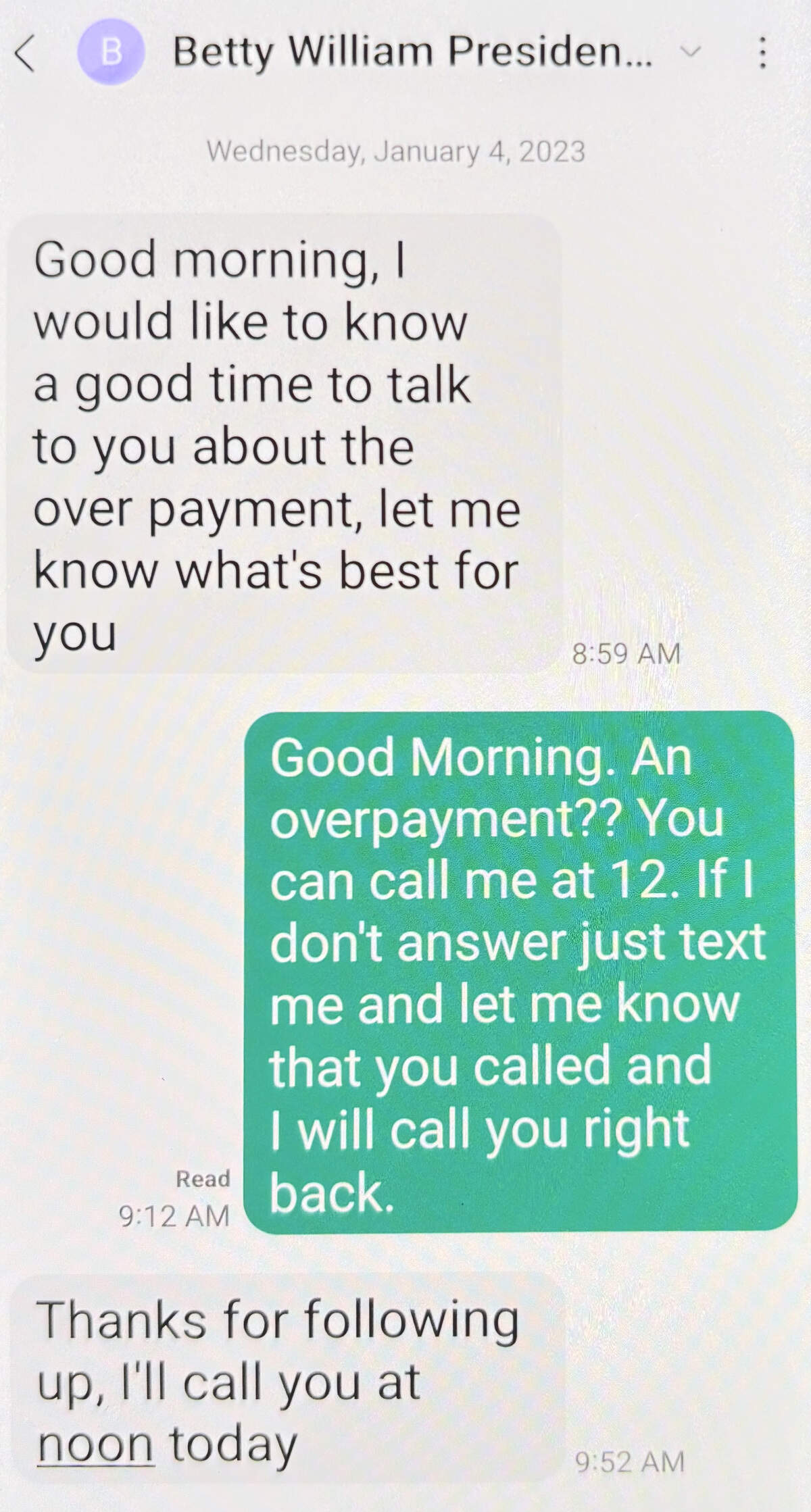
McCree said that in a subsequent phone call, Williams said that Hopkins had discovered a $12,000 overpayment to Colo’s. McCree said the demand for repayment was upsetting and confusing because she and her husband, co-owner Kevin McCree, believed that they had been shorted tens of thousands of dollars.
According to McCree, a few days later Williams and Pryor and another person from the NAACP visited her restaurant with Hopkins. The source close to Williams said that Hopkins, Pryor, Williams and another person traveled to Colo’s to discuss the overpayment and that Hopkins had presented the details to McCree.
“Stephanie (Hopkins) was showing me all these numbers and documents which were basically impossible to follow.,” McCree recalled.
McCree said that Pryor and Williams did not participate in this discussion.
“Salena and Betty were giggling, giggling and showing each other cell phones, like this conversation was nothing,” she said. “And I’m just sitting here crying my eyes out, asking ‘how did you all overpay me when you all have accountants? I’m not understanding what’s going on here.
“They made me feel like a damn waiter in my own restaurant. They made me feel so low as a black woman with a business and that s---- did not feel good.”
According to McCree, Hopkins told her she needed to repay the money. McCree said that she was told if she did repay the money, the county would cancel its license and shut down her restaurant.
“This is the NAACP, the NAACP,” she said. “They’re supposed to be helping black businesses, minority businesses. And here it is, you defraud us. This was something that these people clearly planned, and that hurts.”
She shared a text message she sent to a number listed as “Betty’s Assistant” on March 14, 2023. In it, she asked if the person could “come by tomorrow and get the county’s payback?”
Betty’s Assistant responded, “yes.”
According to McCree, Williams said they could pay back the debt over time and said she only wanted the payments in cash. McCree and her husband Kevin said they paid between $100 to $500 per week over months.
Eventually, following news about NAACP Dine-in 2 program, “Betty’s Assistant” stopped coming by for the money, McCree said. By then, the McCrees said they had paid over $6,000.
Harris said in an email response to the claims that Hopkins had demanded thousands of dollars from the struggling restaurant that the county “has no information to substantiate this allegation, and this is the first time it has been brought to our attention.
“The County’s contract was with the NAACP, not individual restaurants. Any overpayment recovery would be formally documented and directed to the NAACP. The only overpayment issue under review involves the NAACP, and the County has issued letters requesting reimbursement.”
But McCree and seven other people who said they were harmed by the Dine-In 2 program said that no one from the county or any criminal investigators had contacted them about what they experienced. Several said they were willing to offer their account along with any documents that would be helpful.
Colo’s closed in August. The McCrees are fixing up a new space in Del Paso Heights and hoping to rebuild. They said they wonder if they will recoup all that was lost during a program that was supposed to feed the hungry and offer a boost to minority businesses.
This story was originally published September 19, 2025 at 5:00 AM.