
Sacramento County development threatens a giant, shy snake. Why does that matter?
AI-generated summary reviewed by our newsroom.
- Sacramento County development plans threaten Natomas Basin habitat and conservancy.
- The habitat conservation plan balances 8,050 acres of development with mitigation.
- Giant garter snake serves as wetland health indicator and faces genetic decline.
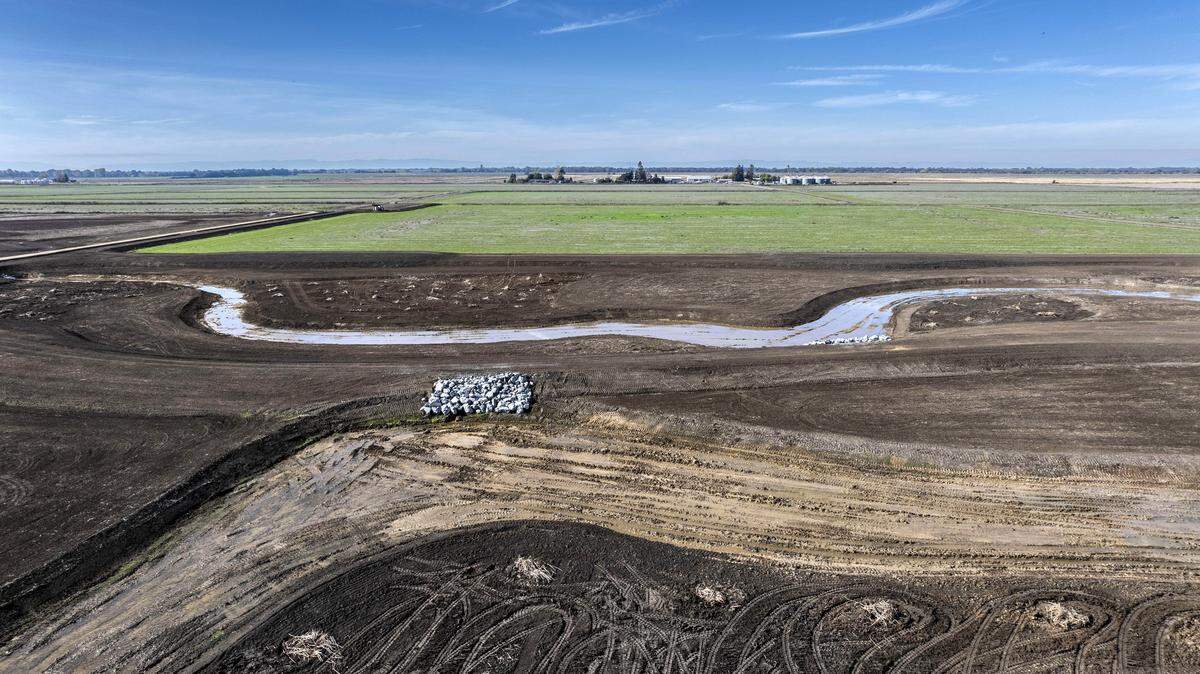
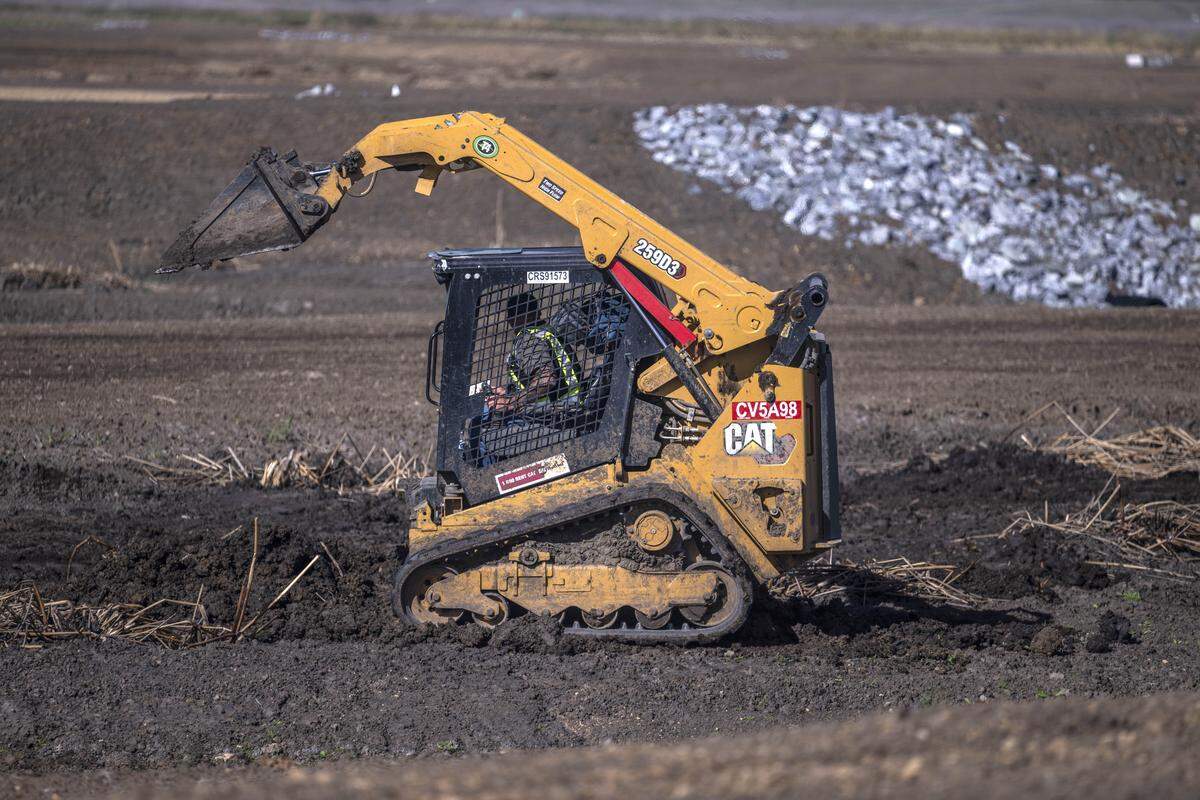
Even the elusive giant garter snake may have trouble hiding in the empty expanse of dirt and mud as it was earlier this month at a conservation property on the Sutter County end of the Natomas Basin.
Any movement or sign of life stood out in the still, barren landscape where rice once grew, tucked away northeast of Sacramento International Airport. The stark contrast of dryness for what its planners intend as lush wetlands habitat was by design, temporary and soon to change, as water fills the earthen bowls and vegetation covers the land now brown.
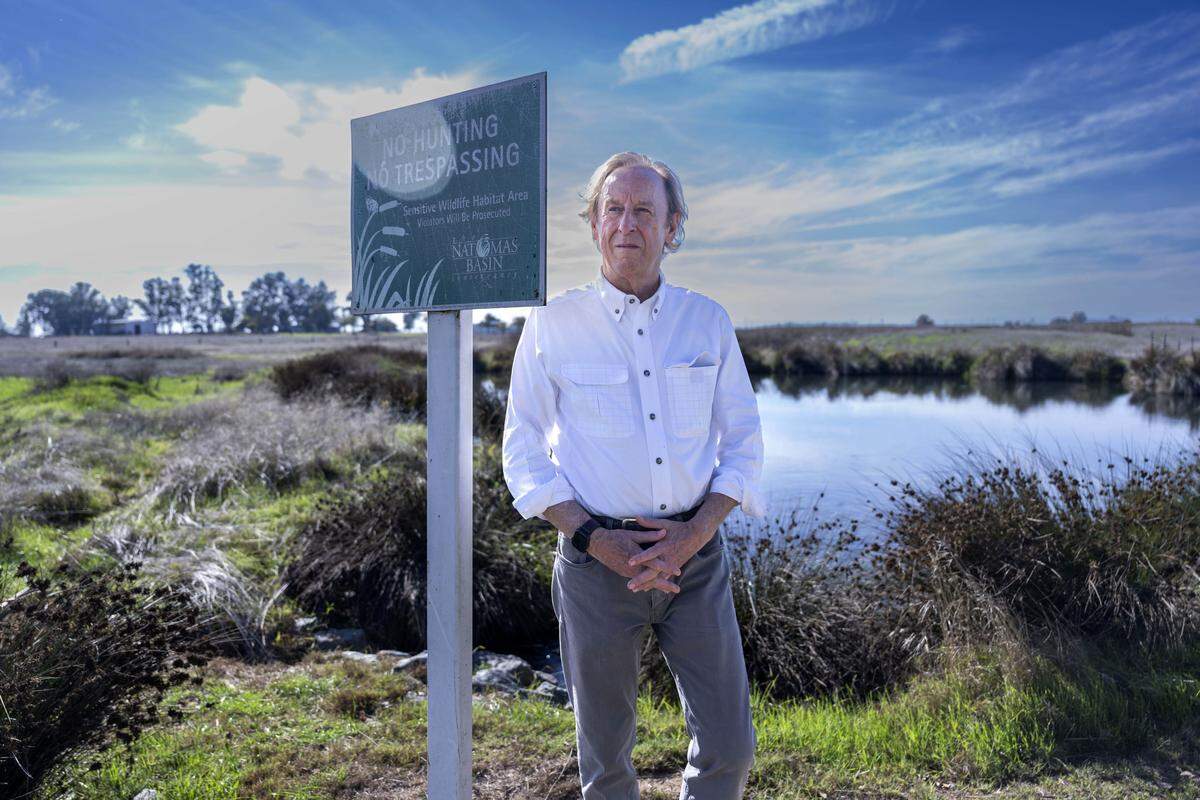
“You’re seeing things now that nobody in our lifetime will have the ability to see again,” said John Roberts, executive director of The Natomas Basin Conservancy. “In a matter of months this will be completely flooded. Completely. And you won’t get to see the contours of the channels, or the marsh complexes.”
Known as the Nestor Tract, all 105 acres or so were once prime habitat for species native to the Central Valley, including giant garter snakes, and relatively abundant in the Natomas Basin. This is, historically, a flood-prone swath of wetlands along the Sacramento River, running from the southern rice fields of Sutter County down to the north of Sacramento.
In a matter of time, virtually all of what’s now an extraterrestrial-like surface will turn wet or green, restoring habitat. If all goes as planned, that restoration may create a better habitat than would have existed in the basin had nature run an unabated course without thousands of acres of neighborhoods and freeways, corporate warehouses and an international airport.
The balance between developing the land for the shelter and economics of people while protecting the 22 wildlife species native to the basin’s wetlands has resulted in thousands of acres of development, countered with approximately half as much land protected from such endeavors.
That balance, made possible by greater levees and flood protections, has existed for more than 20 years, as bartered by Sacramento and Sutter County, and orchestrated by The Natomas Basin Conservancy. But proposals from Sacramento County now threaten to upend that arrangement, leaving the capital city, Sutter County and dwindling species like the giant garter snake with uncertain fates.
Three housing and commercial developments proposed by Sacramento County leaders, totaling more than 7,600 acres, have put at risk the future of the conservation plan integral to the protection of wildlife in the Natomas Basin, as well as the development of long-planned Sutter Pointe.
While the Sacramento project that had advanced the most stalled this summer after strongly-worded pushback from city officials, stewards of the Natomas Basin Habitat Conservation Plan — a 50-year effort to build in the basin while preserving habitat for its native species — wonder whether the agreement can endure the county’s unexpected influx of construction.
Only so much land exists in the basin for the conservancy to protect its required part, which Roberts said could not happen if the county’s developments were to move forward.
“No more of this. It’s a complete end to this.” Roberts said, waving to the intricately carved dirt lot, seeing the wetlands to take its place. “We’re certain that we cannot implement any more of the (habitat plan) if these developments take place. And we’re not equivocal about that. We’re resolute.”
The giant garter snake
Before considering the importance of the giant garter snake, an animal whose name evokes an intimidating size despite its shy and unharmful manner, consider who cares about the fate of such a species, and why its survival matters.
One answer to the question of “who cares” if taken literally, is Eric Hansen, a wildlife biologist and environmental consultant of more than 25 years in the Central Valley. The answer to why the species matters is complicated.
“Giant garter snakes, if you don’t see them as being important on their own — many people don’t. It’s a snake. I get it,” Hansen said. “But they’re an indicator of system health and that system not only supports the snake, it supports us as well.”
California listed the giant garter snake as a rare species in 1971, and it was listed as threatened by the state and federal government by 1993. Researchers by then pegged the roughly 54,000-acre Natomas Basin as one of the highest giant garter snake densities for a species that had once stretched north to Chico from what were once Tulare Lake near Fresno and Buena Vista Lake near Bakersfield.
Populations of the giant garter snake, which last month became California’s official state snake, have dwindled in the decades since its listings.
Hansen, 54, was born the same year as the state’s listing, of which his father, George Hansen, played a pivotal role monitoring throughout the 1970s. Since then, both the father and son have seen the snake gradually disappear from parts of its historic habitat range.
‘They’re very difficult to find’
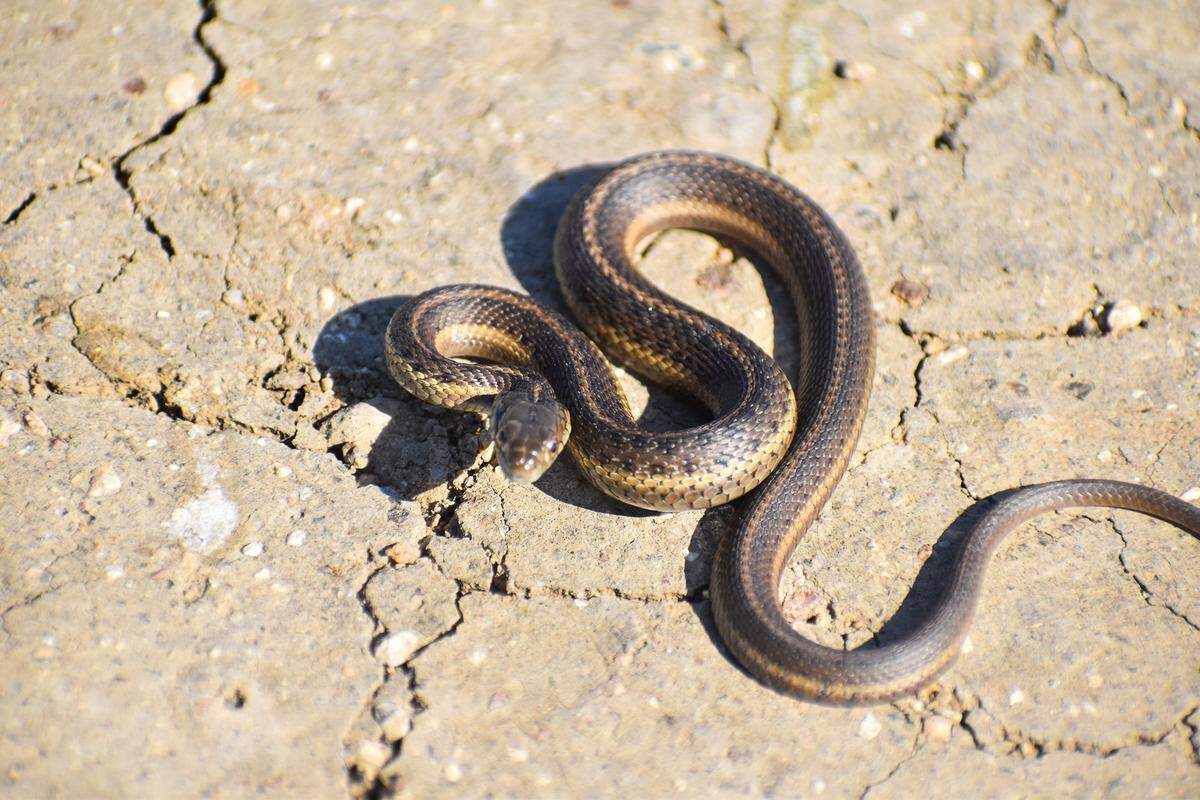
The giant garter snake’s name comes from the females of the species, which at up to more than 60 inches long, grow larger than most of the other 18 to 30-something — depending who you ask — garter snake subtypes, and significantly larger than the males.
Shades of yellow or orange striping on the back and each of its sides distinguishes the aquatic snake, which sneaks around waterways in Central Valley marsh and wetlands from the spring through the early fall, at which point the species lies low in a state of brumation, similar to hibernation. The standoffish snakes are effectively harmless to whomever may have the rare occurrence of spotting one.
Early natural historians, of the shotgun-and-gamebag variety, noted the species as “exceptionally wary and very difficult to shoot,” Hansen said. That was among the earliest descriptions of giant garter snakes, before the species had its own classification.
“They’re very difficult to find, very difficult to census,” Hansen said.
Those challenges existed even when the species was more plentiful.
“You could go out and find them using your naked eye,” Hansen said. “If you were really good you would capture them by hand.”
Even for giant garter snake specialists, visual encounter surveys no longer work very well, necessitating floating aquatic traps, sometimes thousands of them. When traps don’t work, researchers rely on environmental DNA to test the landscape for traces of the species.
The snakes have historically lived in wetlands, emergent marsh and tule marsh found in shallow waters of the Central Valley; low-gradient, still streams and murky runoff flood water that would stay pooled on the valley floor during summers.
More effective flood protection and urbanization have reshaped much of that landscape in the Central Valley.
“This is one of the big reasons the snake is threatened,” Hansen said. “We’ve reclaimed somewhere between 92 and 95% of wetlands in California, so habitat loss is the big threat to giant garter snake. It’s the reason we don’t have them in Buena Vista and Tulare any longer, where they were first identified.”
Understanding the Natomas Basin
Historically, the waterways that naturally surround the Natomas Basin would spill and the basin would flood. Together they formed something like a kidney-shaped bowl, enabling and protecting a pocket of valued marsh and wetlands.
Years of flooding, water pouring out of the rivers and cycling back over time, formed natural levees, embankments of soil and sediment which have since been greatly reinforced and expanded. The cycles of flooding also formed wetlands of hydric soils in the Natomas Basin, Hansen said, fostering tule marsh common to the Central Valley and prime for giant garter snakes.
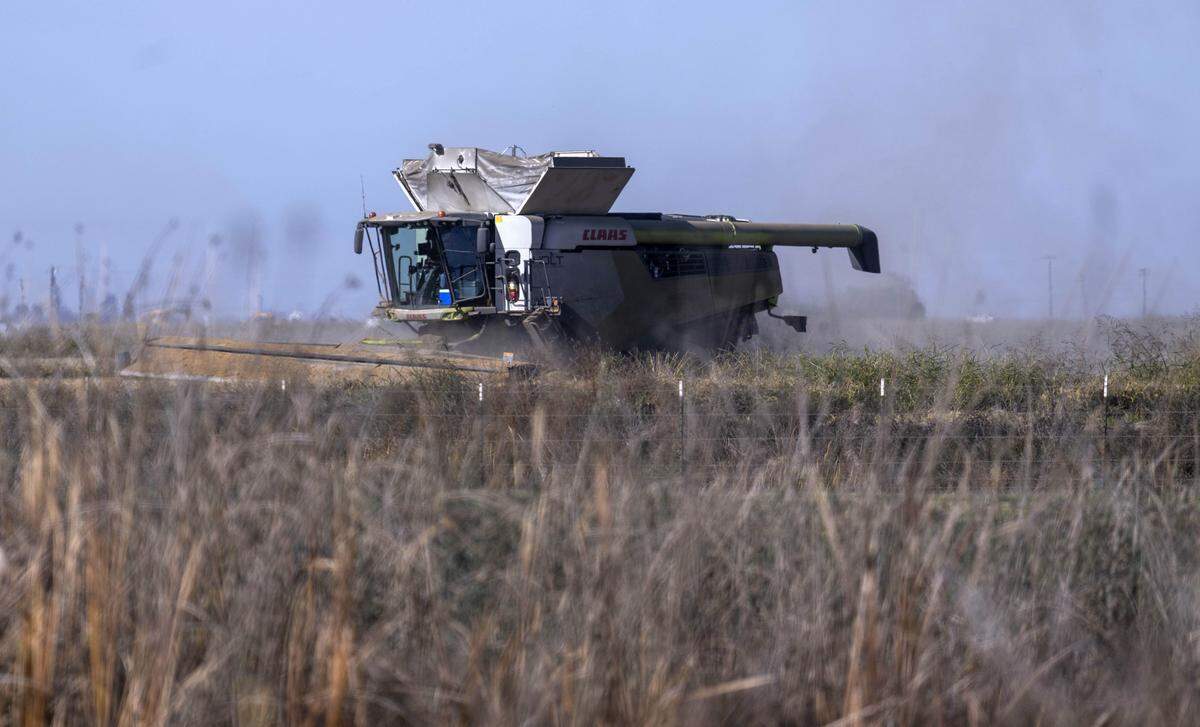
Short of the mosaic of wetlands habitat that would emerge throughout the valley from years of flooding, rice farming now puts the most water onto the Natomas Basin.
“We wouldn’t have water on the landscape if it weren’t for rice agriculture in the Central Valley,” Hansen said. “And we wouldn’t have the conditions for rice if we hadn’t had that floodplain habitat and those hydric soils in the first place.”
Under the current mixture of development throughout the basin, rice farming generally promotes more, and healthier, habitat for giant garter snakes. But rice has become less common in the basin, and some evolved methods of tending to the land are less conducive to its longevity.
The mechanisms that protect parts of the valley, such as the Natomas Basin, from flooding have also fortified control of California’s water, abundant in the north and gradually more scarce as it runs south to the San Joaquin Valley and Southern California.
More control of the water has given more control over where the water ends up, whether flooded in a rice field or sold farther downstream. Water in California is valuable, and many a farmer has had to do without. In turn more ways evolved to manage farmland, some of which may help or harm the land’s health to varying degrees.
“We put a lot of water on the landscape in the summertime and move a lot of water around through the ditches and drains through the conveyance infrastructure, which is where the snakes spend the majority of their time,” Hansen said. “That is really the anchor habitat for them anymore. Rice has become extraordinarily important for giant garter snake.”
The degree to which rice farming promotes healthy makeshift habitat depends on how a grower works a given rice field: the amount of water, seeding and flooding techniques, among other factors.
Similarly, those methods may affect the balance of habitat suited for giant garter snakes, Hansen said, affecting the aquatic ecology of an area, from microbes to vertebrates, and from prey species to predators.
“I don’t want to make the case that all rice is wonderful no matter what,” Hansen said. “It’s better than a parking lot, but depending on how it’s grown, it may or may not be providing benefits to giant garter snake, and could in fact provide more of a habitat sink, something that draws snakes in but that snakes can’t thrive in.”
For as good as the Natomas Basin was for rice farming and niche wildlife habitat, in time it proved fertile for more modern forces.
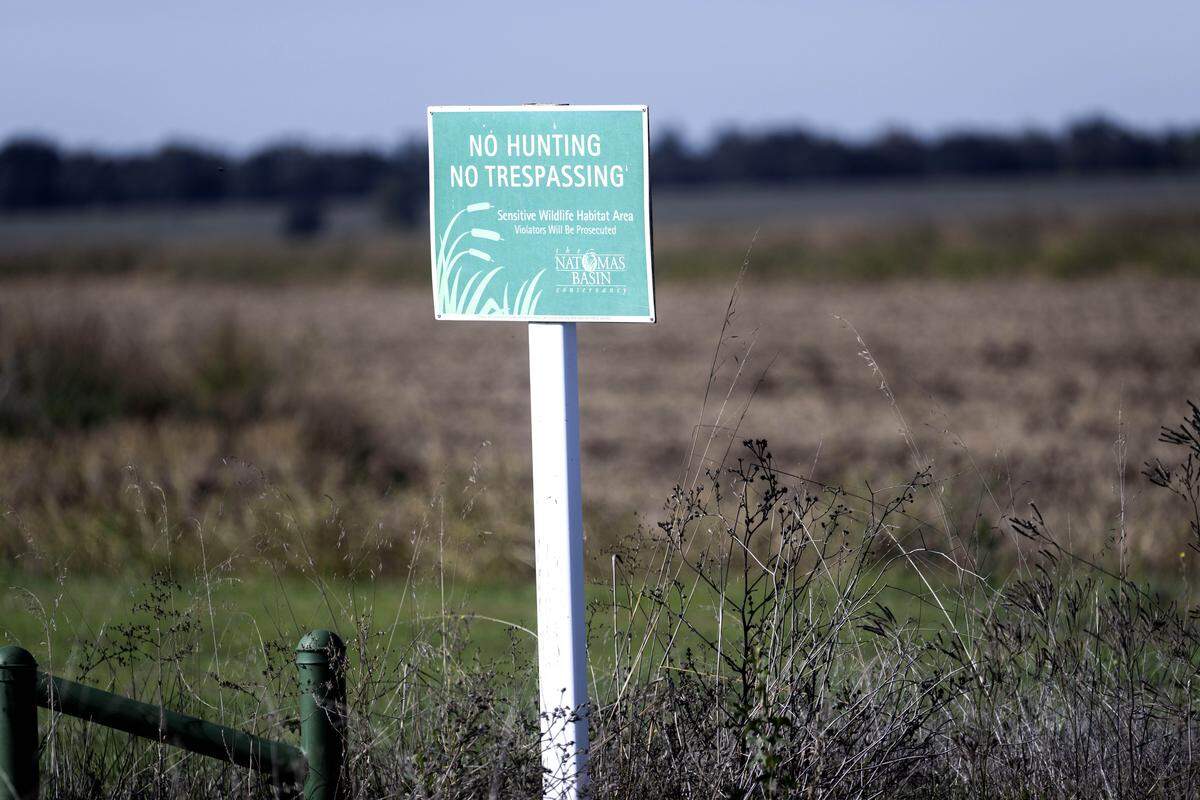
A confluence of interests
The Natomas Basin coincided with a confluence of forces besides those of the rivers which flooded and shaped the surrounding land.
The growing capital city expanded north as it did in other directions. The nearby airport and proximity to downtown made for attractive real estate. Sutter County, the majority of which is either designated floodplain or consumed by the Sutter Buttes, had prime land in the basin at its southern border.
“We have very few areas where we can build,” said Steve Smith, Sutter County administrator. “This Sutter Pointe development that is right on the Sacramento and Placer borders is one of the only locations we are able to develop.”
State and federal wildlife protections dictated a solution for both counties and the city to build in the basin while making up for the wildlife habitat disrupted by construction.
The result was the Natomas Basin Habitat Conservation Plan, originally agreed to in 1997 and revised in 2003, which held together amid legal challenges at the time, and required builders to pay to mitigate a half-acre for each acre of development.
The conservation agreement was one of the first of its size and scale under the Endangered Species Act, Hansen said, and it was driven primarily by two species: the giant garter snake and Swainson’s hawk.
Under the agreement, the conservancy collects mitigation fees from developers and manages the land. Half of the land stays in rice production, which the conservancy leases to tenant farmers. The conservancy manages a quarter of the land as marsh habitat, such as the Nestor Tract, for the giant garter snake’s benefit. The remaining quarter is dedicated to foraging for Swainson’s hawk, for example, growing fields that promote rodent populations for hawks to eat.
The arrangement granted the city 8,050 acres to develop, of which 6,919 had been graded as of September. Sutter County may develop nearly 7,500 acres, but has so far only begun development on about 500 acres, with officials expecting to issue building permits for age-restricted homes in that planned community next year.
Sacramento County entered a separate habitat conservation plan for the conservancy to mitigate land disrupted in Metro Air Park construction, about 2,000 acres near the airport.
Between the two agreements, 17,500 acres has been designated for development. The conservancy had acquired nearly 5,400 acres through 2024, according to a conservancy report.
Sacramento County, which was not party to the habitat conservation plan, entered a separate agreement with the city of Sacramento in 2002 that gave the city the lead on development in the basin.
Supervisors in August postponed a vote on the county’s Upper Westside Project after receiving a letter from the city outlining a litany of concerns, including a lack of public safety, infrastructure and education planning. The county has not yet scheduled another vote on the matter, according to a county spokesperson.
The county’s other two projects remain in earlier stages, but have the conservancy concerned about its ability to continue its mission should the developments advance.
“Absent that 8,000 acres, how do we prove a path forward to implement the (habitat conservation plan)?” Roberts said. “Quite honestly, I don’t have an answer.”
‘Death by a thousand cuts’
You would struggle to find a giant garter snakes at the Cosumnes River Preserve south of Sacramento, Hansen said, although that wasn’t true 20 years ago. In a matter of a couple of decades the snakes disappeared from the wetlands south of Sacramento.
“It took about two decades for that to happen, and it happened due to low water availability and invasive plants converting wetlands to meadows,” he said.
The species had disappeared from Tulare and Buena Vista lakes by the time Hansen’s father began studying the snake in the 1970s. But giant garter snakes still existed in Merced and Fresno counties, relatively far south into their range. That was until the 1980s and 1990s when he saw snake populations in those areas erased, and the boundaries of the species continue to collapse, a trend that continued as Hansen continued his father’s line of study.
Today, one known breeding population exists south of Stockton. And fewer snakes have coincided with fewer prey species of fish and frogs.
“It happened really quickly,” Hansen said. “We’re starting to see the hallmarks of that decline repeat themselves in the Sacramento Valley.”
The trend is clear. Its cause? Less so.
“I think we have a pretty good sense of what the general factors are, but not really their ranking, and how they’re working together to result in the loss of these species,” Hansen said. “You can’t just pinpoint one cause. I would describe it as death by a thousand cuts.”
Years ago researchers found inbreeding in all remaining giant garter snake populations. That’s a marked change for a species whose genetics indicate a history of breeding with a mix of populations throughout the Central Valley.
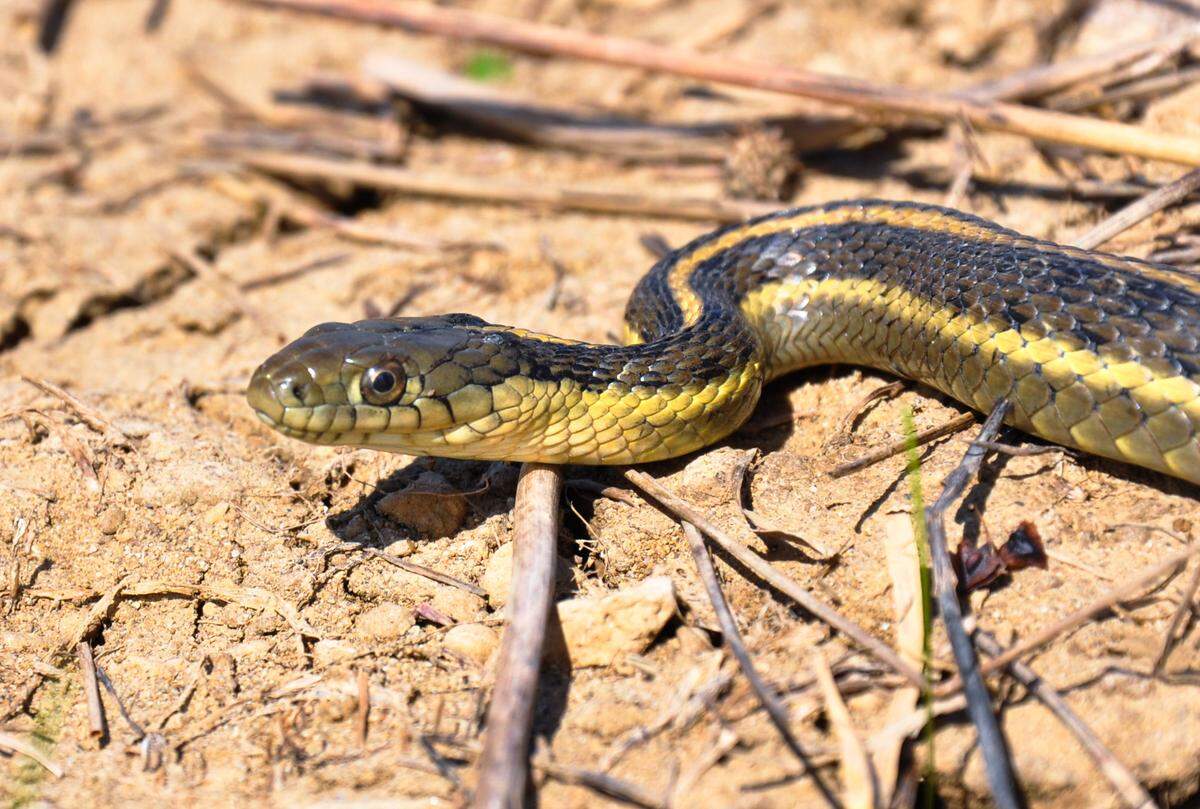
Wildlife ecologists have found fewer pregnant female giant garter snakes. Those found are often smaller than their historic measurements, Hansen said, with some failing to reach half of their potential size. Smaller snakes have fewer offspring, which consequently have lower survival rates, although the cause of that decrease is unclear.
“With the creation of the levees we’ve curtailed flooding, so the populations that we have left are small, and they’re isolated and their genetics don’t paint a healthy picture,” Hansen said.
Inbreeding has affected the genetic fitness of the species, but researchers still don’t know what effect that has on populations.
“Which means that the snakes we have remaining in Natomas become even that much more important for the long-term conservation of the species, because we’re losing snakes in places where, by all accounts, we shouldn’t,” Hansen said.
Water shortages seem to have affected the managed lands where the species declines have been noticed, but the phenomena of not just fewer snakes, but of more health problems — lower birth weights and newborn survival rates — are relatively new.
“There are mitigation banks to the north that are being affected by this, where we seem to have population crashes in lands that are being managed for giant garter snakes in the middle of extremely dense rice agriculture,” Hansen said.
What’s at stake
In just over a year as a field supervisor with The Natomas Basin Conservancy, Eric Dubovik has seen giant garter snakes, he’s just yet to spot one himself.
The signs are subtle: a flicking tongue, an irregular patch of grass. The snakes hide well in their environments, and will quietly evade a predator, or person. But at the right moment, when first spotted by a trained eye, you may catch an eyeful of the species.
“It’s not uncommon at all to just see them basking in the sun everywhere,” Dubovik said. “It sounds contradictory but you can see a ball of giant garter snakes in the shoreline, whether they’re feeding, whether they’re babies.”
Jeremy Lor, an assistant field supervisor of more than 10 years, learned to identify the species, and is among those who may point out a low-lying giant garter snake to Dubovik.
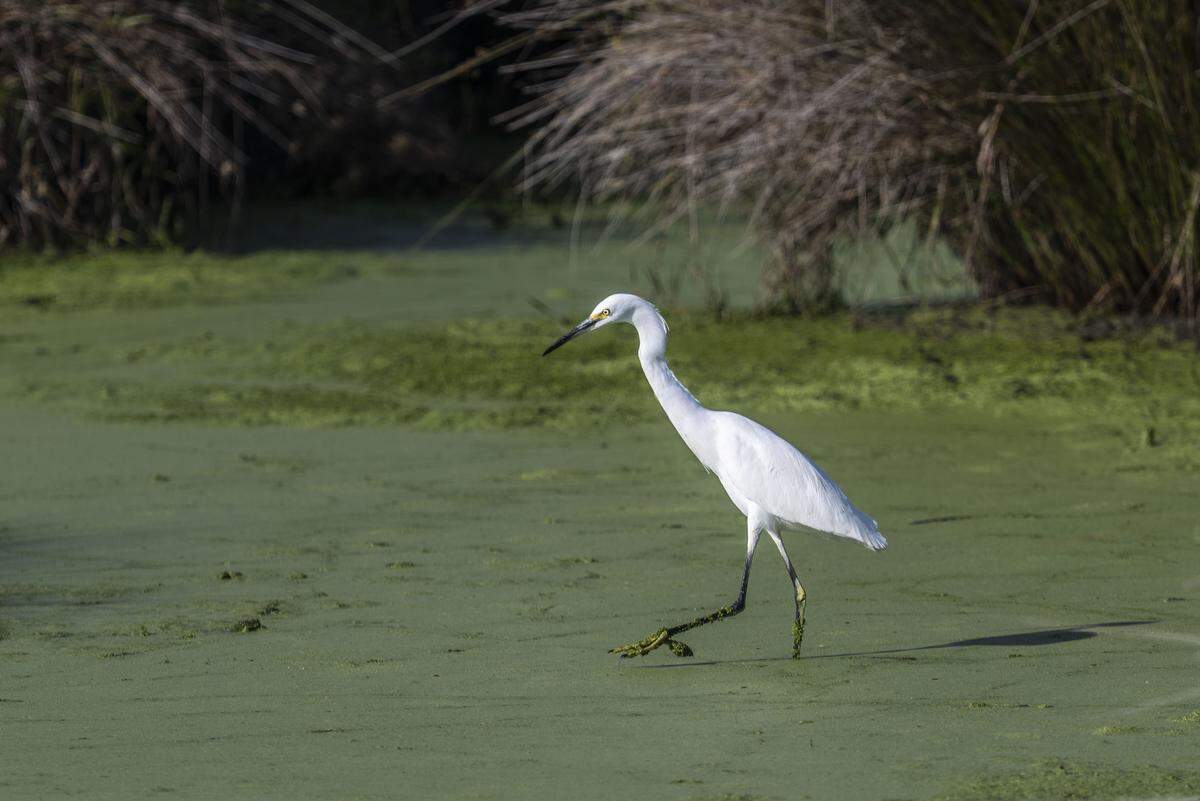
“You see Swainson’s hawk, egrets, burrowing owls, barn owls, great-horned owls, giant garter snakes,” Dubovik said. “If you’re not looking hard, you’ll miss them. But if you come to the marsh, you’ll find them.”
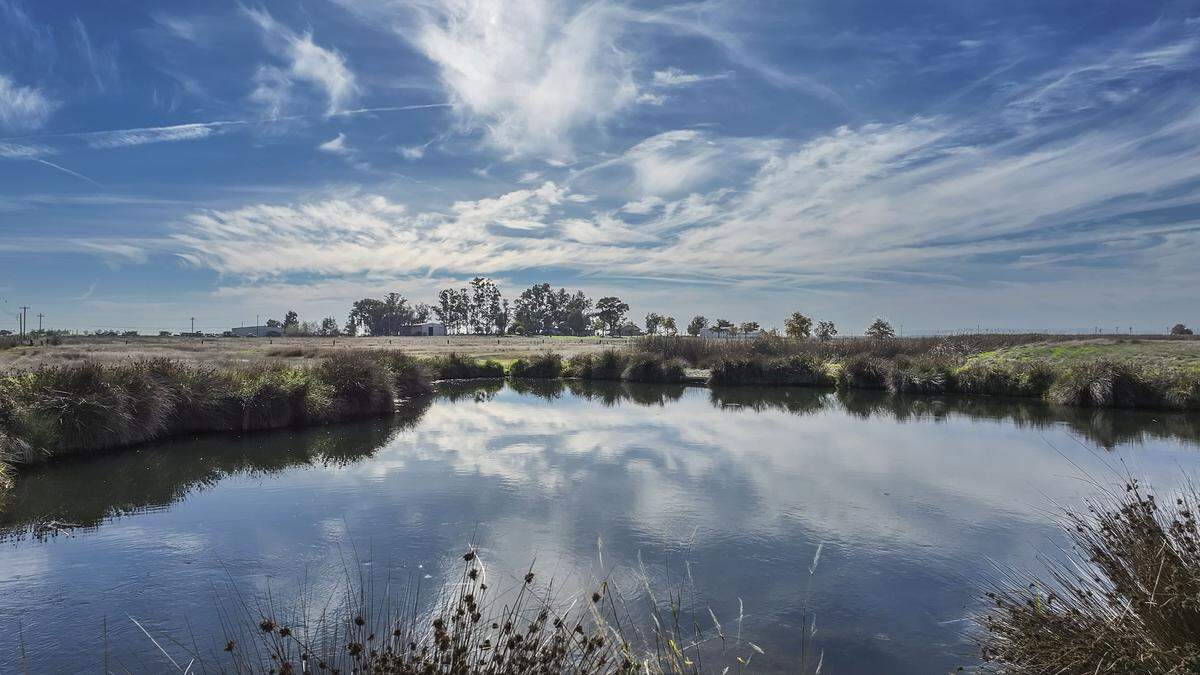
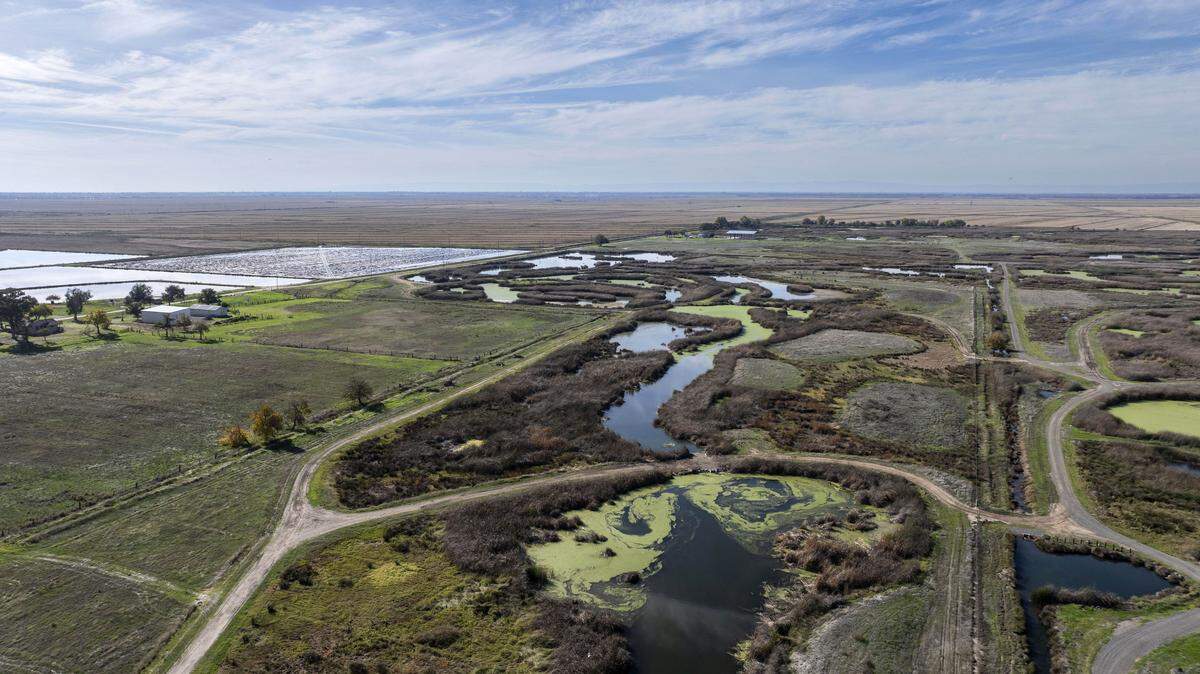
What the conservancy calls its BKS Tract represents one such marsh where you may find a giant garter snake during the right time of year.
The relatively warm water flowing into that reserve comes from an unlikely source: a caviar factory straddling the border dividing Sutter and Sacramento counties.
The factory’s runoff warms the bodies of giant garter snakes, helping them to thermoregulate more quickly, and serving as an example of the ingenuity at hand when redesigning natural landscapes to provide more for more species than the land’s natural state.
“Water’s precious,” said Roberts, the conservancy director. “You just can’t waste water in this business.”
At more than 330 acres, the conservancy’s flagship property of more than 25 years doubles as a showcase of the enhancement work that compensates for the half-acre the conservancy mitigates per acre of development.
Before the conservancy developed the BKS Tract, turning the natural land into something akin to the vast dirt expanse currently under construction, federal wildlife officials looked and failed to find giant garter snakes at the property, Roberts said.
The conservancy now estimates several hundred of the species at the preserve, an inverse of the snake’s broader population trend, albeit for a relatively small sample of the basin.
The snake species has declined and developed health issues throughout the Central Valley, including the Natomas Basin, but contextualizing those trends becomes more complicated when applied to conservancy properties, where some species counts have increased.
“Well they’re not dying off in places like this,” Roberts said. “So, the key would be, do more restoration enhancement and try to mimic their natural habitat where they thrive and the more of that we do, the more chance that we’ll be able to sustain (their populations).”
Why it matters
A live-bearing species, giant garter snakes enter the world vulnerable and small, antithetical to their namesake. In environments where very small newborns of any kind, even ones who will grow into predators, make for excellent prey, evolution favors having lots of offspring.
That manner of birth struck Dubovik, the field supervisor. With no husbandry, the snakes named for giants adapt to the surroundings into which they are born, first as tiny prey and then as so-called giant predators.
“They just immediately go into survival,” he said.
Perhaps that instinct has, or will, help the species adapt to the ongoing changes to its environment, regardless of whether the habitat conservation plan designed to protect it remains.
Overlooking an animal whose name strikes fear, that shies from human contact, comes naturally, and may easily happen when considering the more human-centric interests in the region. But the people who know the species best, and whose affiliation to the land is one of protection, despite — and because of — the inertia of modernity, they make a case for why you should also care about the giant garter snake.
“They’re an indicator of wetland health,” Hansen said. “And wetlands are an important component of our health.”
Sure, there are economic incentives and considerations that, to many, outweigh the natural dividends healthy wetlands provide to surrounding ecosystems.
But what about the importance of legacy, an idea to which Hansen is partial? Or the idea of adding to the world to which you were born, even if that runs counter to the inevitable decline of the natural world due to forces almost entirely outside your control?
Species don’t live so much as survive. They thrive less than adapt. And some don’t make it, irrespective of human interference.
“As humans, we have a tendency to set ourselves aside from these systems as something separate, but we depend on the ecosystem services that these systems provide as much as the organisms that live there,” Hansen said.
People care about a lot of ideas, traditions and institutions whose value, even when pressed, are difficult to justify. In nature, the justification is more clear: Once it’s gone, it’s not coming back.
“My father worked to conserve this species and that left a legacy for me, left me something,” Hansen said. “I would like to leave this behind for my own children, my own grandchildren. Not just the snake, but the things it represents.”
Roberts, standing beside the forebay funneling warm water into the system of ponds and conveyances that connect the conservancy’s flagship property, drew a succinct point: “When you see a water conveyance and you don’t see predators, what you get is an absolute disaster.”
“Which is better, a water body that’s completely inert and filled with poison, or a water body that’s fairly clean and rich with biological life?” he added. “And what does this mean to humanity? Well I think the answer is pretty clear. You’d rather have this richness.”
This story was originally published November 20, 2025 at 5:00 AM.