Following warehouse fireworks raid, investigators failed to follow trail to Esparto
AI-generated summary reviewed by our newsroom.
- May 21 Commerce raid seized 100,000+ pounds of illegal fireworks tied to Chee.
- Investigators missed link from Commerce evidence to Esparto storage before July blast.
- State and local regulators failed to inspect Esparto compound despite permits, probes.
A raid on a Southern California warehouse in May uncovered illegal fireworks that belonged to the company whose facility in Esparto exploded a little more than a month later, killing seven people.
Cal Fire’s Office of the State Fire Marshal and the federal Bureau of Alcohol, Tobacco, Firearms and Explosives agents seized more than 100,000 pounds of illegal fireworks on May 21 at a warehouse in the Los Angeles suburb of Commerce. Some of those fireworks belonged to Kenneth Chee, owner of Devastating Pyrotechnics, the company at the center of multiple investigations into the deadly July 1 blast.
The details of the May raid raise questions as to whether officials had information to make a connection between the two properties before the explosion three days ahead of the Independence Day holiday.
“This raid raised a lot of red flags that should have led regulators to Esparto before this tragedy happened months later,” said Charley Weeth, a fireworks and pyrotechnics safety expert. “Scotty can’t beam these fireworks in. It has to come from somewhere.”
Johnny Chek, who operated an import business from the Commerce warehouse, told investigators he allowed Chee — a longtime friend — to store fireworks there, Chek’s attorney Randy Roxson said. Chek told investigators during an inspection that the majority of fireworks belonged to Chee. Roxson said investigators were given a copy of Chee’s fireworks license and bills of lading, which showed the fireworks belonged to the Bay Area resident.
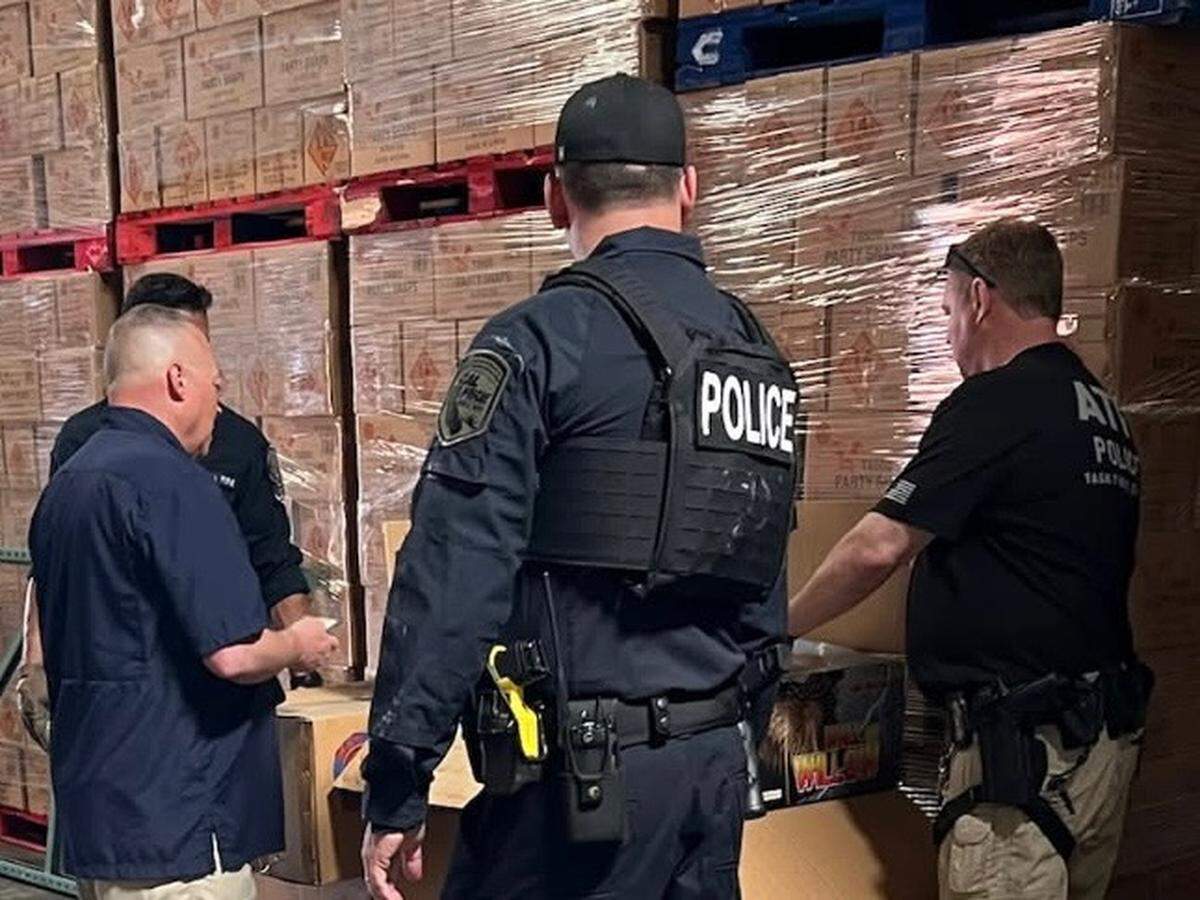
Chek’s inventory in the Commerce warehouse consisted only of legal “Safe and Sane” fireworks, Roxson said.
During a May 2 inspection, Chek told a Cal Fire bomb and arson investigator that the fireworks later deemed “dangerous” belonged to his friend, Roxson said.
“Mr. Chee stored his State Fire Marshal-classified ‘dangerous’ fireworks in a warehouse leased by my client in the city of Commerce,” Roxson said.
Chee’s fireworks were seized 19 days later in the 50-ton haul, according to Roxson, who noted that “those all belonged to Kenny Chee, none were my client’s.”
However, thousands of pounds of illegal fireworks remained at the warehouse. According to Roxson, Cal Fire lacked the resources to dispose of them. The EPA announced it helped Cal Fire remove the last of the fireworks in early August.
Two days after the raid, on May 23, the Los Angeles County Fire Department’s arson unit inspected the warehouse, Roxson said. An official report noted the presence of display fireworks, the type used for municipal fireworks shows, citing an “unpermitted high pile storage of hazardous materials.”
“All the display fireworks belonged to Chee,” Roxson said, who added, “It was made very clear to Cal Fire as to who owned the dangerous aerial and display fireworks and who owned the novelties.”
While much remains unknown about what was seized in Commerce, the revelations raise questions about whether the Office of the State Fire Marshal, a division of Cal Fire that regulates fireworks in California, had evidence that should have led them to Esparto before the deadly blast.
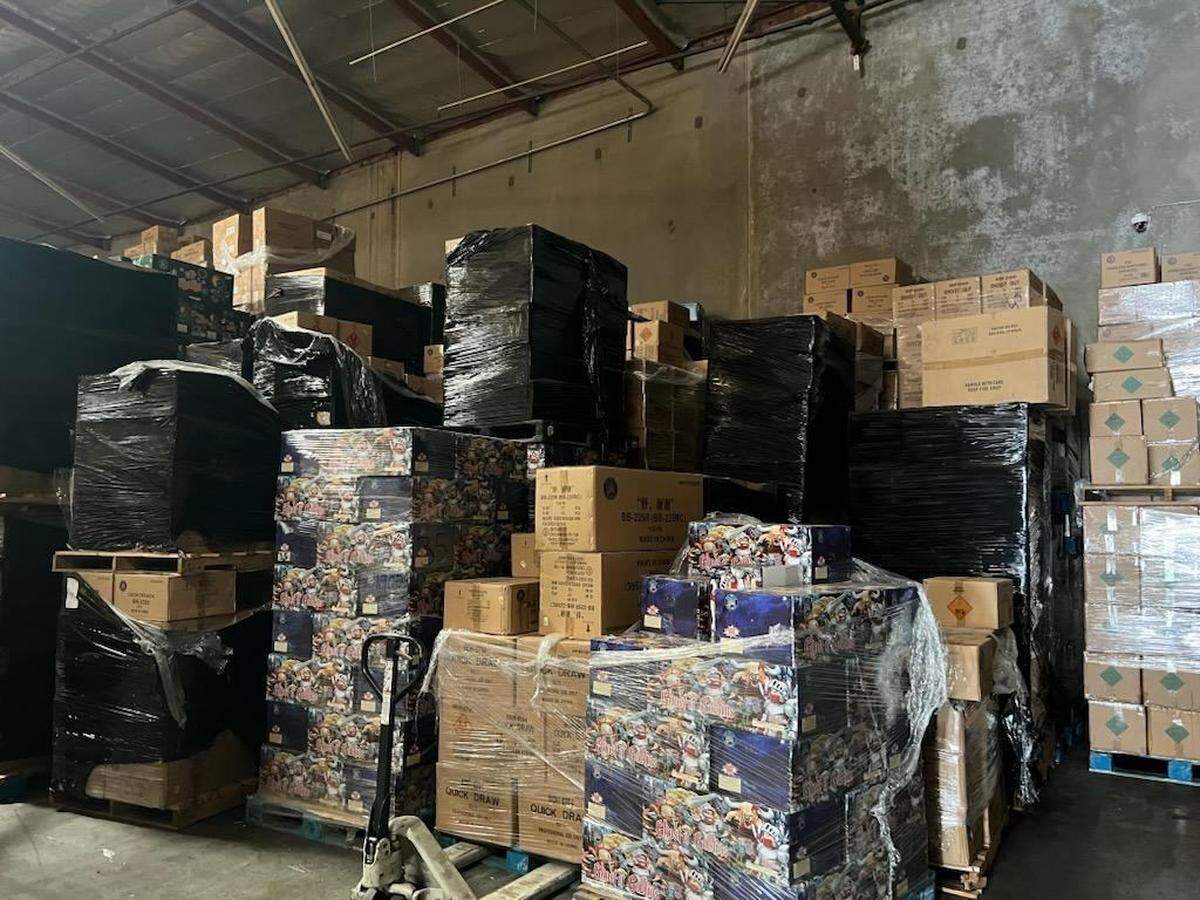
Photographs released by Cal Fire show the contraband included a type of high-grade firework called a “Quick Draw” that was improperly labeled as consumer-grade, according to industry experts.
The products, souped-up Roman candles, are problematic because they are what is commonly referred to as “overloaded” — containing more pyrotechnic material than federal regulations allow.
Weeth said that such fireworks “are a major safety threat.”
“They are so much more powerful than what is permitted in this country under federal regulations and, in particular, under California regulations, which are even more stringent,” Weeth said. “In terms of potential danger, we’re talking about the difference between being hit by a bicycle or being struck by a car.”
Tests conducted by the federal Consumer Product Safety Commission on similar products in 2018 found that some were “dangerously overloaded” with up to 72 times the legal level of explosive material, rendering them “banned hazardous substances.”
Ongoing investigation
In the four months since the blast, scrutiny has intensified around local officials responsible for issuing local permits who knew fireworks were stored on the property. State and federal authorities tasked with regulating fireworks, because of the south state raid, knew the company had violated fireworks laws before the explosion.
While the investigation into the cause of the blast remains ongoing, a Cal Fire investigation found cause to revoke the fireworks licenses issued to Devastating Pyrotechnics and BlackStar Fireworks, the other fireworks company registered to the Esparto compound.
The agency determined that the companies violated state fireworks laws by “not filing proper importation documents to the (state fire marshal), not reporting lost fireworks, possession of fireworks without a local fire permit, and numerous additional allegations that remain part of the criminal investigation still underway.”
Importation records also show that Devastating Pyrotechnics imported chemicals commonly mixed to produce “flash powder” used in fireworks. Experts said those shipments were unusual for a display and wholesale company lacking a federal permit to process and manufacture pyrotechnics.
Roxson could not provide specifics about what Chee allegedly stored at Chek’s warehouse, how long the fireworks had been there or how his client was compensated.
“Mr. Chek trusted that everything that was going on was legal,” Roxson said.
What type of fireworks were there?
Documents show the Commerce warehouse was leased to Tak Ye International Inc. — incorporated in 2006 by Kin Wa Chek. Tak Ye International paid nearly $20,000 a month for the 17,000-square-foot warehouse. Another company, TYI Trading LLC, was also registered to the warehouse. That company was chartered by Sain Chek, who also appears on the warehouse lease. Johnny Chek’s company, TYI Trading LLC, was not listed on the lease, though Chek had operated from the location for years.
Roxson estimated Chek’s financial loss exceeded $1 million, including $750,000 in legal fireworks destroyed during the raid.
Roxson, who specializes in fireworks law and worked in the Office of the State Fire Marshal for over two decades, said his client only stored novelty “Safe and Sane” fireworks.
“Novelty fireworks are snap caps, party poppers and rain caps, the type often placed upon birthday cakes. These are the only types of fireworks that Mr. Chek imports,” Roxson said. “He does not import aerial or public display fireworks (dangerous fireworks).”
On Oct. 9, Chek filed for Chapter 13 bankruptcy protection, in part to fend off an eviction proceeding of the warehouse he has occupied since December 2015, his landlord alleged in court filings. The case was dismissed when Chek failed to file all required paperwork.
On the same day the Chek’s case was dismissed, Cal Fire agents and Yolo County prosecutors executed a raid at a home in East Los Angeles also tied to the Esparto probe. Fireworks and chemical materials were seized near a high school, prompting an evacuation of the neighborhood.
Luis Acosta, the homeowner, was arrested and arraigned last month on charges related to the possession of explosives, explosive materials, high-caliber ammunition, a flame -thrower and a silencer for a firearm. He was released from custody later that evening after posting bond.
Cal Fire spokesperson Kara Garrett confirmed the East L.A. raid was “connected to the Esparto investigation,” but declined to comment further.
“These cases can be very complex and with many tentacles,” she said. “We remain committed to a solid investigation.”
Missed connections?
After the Esparto blast, reports surfaced that the state fire marshal had been eyeing a Southern California link to the Esparto operation. The San Francisco Chronicle reported days after the explosion that authorities were investigating whether Chee had mislabeled powerful aerial fireworks as “Safe and Sane” consumer devices, but did not include details about where in the south state those fireworks were.
Photos provided by Cal Fire of the Commerce raid show boxes similar to those housed in storage containers on the Esparto site as shown in photographs posted online by one of the men killed in the blast. In images from both locations, the boxes show a bright orange shield indicating explosives, a label federally required for the transportation of hazardous material with fire and explosive danger.
“I would describe Esparto as an absolute tragedy, waiting for a spark to happen,” said Weeth, the pyrotechnics expert. “It’s not just the overstuffed fireworks or the presence of chemicals. You had display fireworks being prepped for Fourth of July celebrations.”
“To be doing what they were doing out there, it’s absolutely essential you have ATF-approved process buildings.,” he said. “There were no ATF-approved process buildings that I could see on any of the area photographs — none, zero.”
Garrett, the fire marshal’s spokesperson, said investigators “continue to actively investigate how the Esparto explosion may or may not connect to other fireworks activities.”
But, according to two sources familiar with the investigation but not authorized to speak publicly about it, said the Commerce raid provided early clues that Devastating Pyrotechnics might be using Esparto as a storage hub for black-market overloaded fireworks.
In the hours and days after the blast, Esparto fire chief Curtis Lawrence said that while his department was aware of two fireworks companies being on the Esparto site, they had not formally inspected Devastating Pyrotechnics or the other company, BlackStar, which was created in April 2023 by a former Devastating employee.
Lawrence had assured county staff the property was safe even though he and others had only made informal “site visits.”
Since July, Cal Fire and the Yolo County District Attorney’s Office have executed dozens of search warrants, including that of Esparto fire chief Lawrence’s home and station. Only one arrest — Acosta — has been made.
A request to review the May 2 inspection report that preceded the raid in Commerce was denied by Cal Fire.
“We are unable to share the requested document as it is part of an ongoing investigation,” Garrett said.
Authorities have not said when the investigation is expected to conclude or whether criminal charges will be filed. And what the state fire marshal knew about Devastating Pyrotechnics prior to the deadly series of explosions is not entirely clear.
‘An entirely preventable disaster’
While questions linger about why the Esparto compound was never inspected by county, state or federal authorities, a Cal Fire inspector happened to be in town on July 1 — just hours before the deadly explosion — conducting a routine check of a fireworks stand.
The inspection was part of Cal Fire’s annual checks ahead of the Fourth of July holiday to ensure that temporary stands are not selling illegal or dangerous fireworks.
The stand selling fireworks was on the grounds of the Esparto Fire Protection District, whose fire chief Lawrence had approved the building permit for a warehouse constructed in 2023, where display fireworks were later stored.
“I see the irony that an inspector was there that day,” said Natasha Lopez, who was staffing the stand that day. “But honestly, it was comforting having someone from the state fire marshal in town. We trusted that everyone was doing their job.”
The inspection record filled out by the Cal Fire inspector on July 1 erroneously lists the Fire District as the operator of the stand. In fact, the stand was run by volunteers from the Esparto Little League. By law, all Fourth of July fireworks stands in California benefit nonprofit groups, community chapters for organizations such as the Boy Scouts and Girl Scouts and charities. The record shows a single inspector arrived shortly after noon and stayed for roughly 30 minutes, certifying that all the fireworks at the stand were “Safe and Sane.”
Less than five hours later, explosions rocked the Yolo town and surrounding farmland.
The inspector’s presence that day underscores just how close Cal Fire officials were — geographically — to the site of what would become one of the deadliest fireworks incidents in state history, even as other parts of the agency had begun investigating a sprawling fireworks operation 400 miles south.
Calling the Esparto tragedy “an entirely preventable disaster,” state Sen. Christopher Cabaldon, D-West Sacramento, whose district includes Esparto, introduced legislation in September that would require coordination between state and local officials and require fireworks companies to provide local inspection reports to the state fire marshal.
If a state inspector had visited the warehouse following the Commerce raid, there likely would have been much to examine.
This story was originally published November 11, 2025 at 5:00 AM.