20% of Sacramento shelter guests go on to permanent housing. Is there a better way?
Sacramento city and county together earmarked $120 million in taxpayer money — from a mix of local, state and federal sources — on building and staffing eight homeless shelters with a total of about 950 beds since January 2020.
About one of five of the guests who exited those shelters have gotten into permanent housing or gone to permanently live with friends or family, a Sacramento Bee analysis found.
The shelters permanently housing about 20% is roughly the same for shelters across the country, said Dennis Culhane, a social scientist at University of Pennsylvania and longtime federal adviser on homelessness.
Can the region do better? Likely not with the current approach, Culhane and other experts say.
The general idea under both former Mayor Darrell Steinberg and current Mayor Kevin McCarty has been to quickly open enough shelters for everyone who agrees to enroll. But that has not happened. People lost their housing at significantly faster rates than officials could place them into new temporary shelters. And now, the financial outlook is far more dire: Much of the federal COVID-19 pandemic grant money is obligated, and the city is facing a potential $90 million deficit by 2030.
In October, data from the nonprofit Sacramento Steps Forward showed that there were at least 8,952 homeless people living in Sacramento County. That’s up from 6,679 in August, the nonprofit said.
“The problem isn’t that we don’t know methodologies that work,” said Sacramento City Councilmember Roger Dickinson during a recent public meeting. “It’s that we have more people becoming homeless than the people we’re helping off the street.”
Most of those people became homeless after living with friends and family, not a formal eviction, said Culhane.
That’s partly why he and other experts are pointing municipalities toward another strategy.

Studies: Rental subsidies lead to higher percentages being housed
Time-limited housing subsidies, such as giving people $500 a month to rent a room from a family member or friend, are generally much more successful than shelters, Culhane said. It also eliminates the need for credit and background checks through traditional landlords, which are big barriers to market-rate housing.
Though market-rate housing is more expensive — $1,363 a month on average for a one bedroom in the city of Sacramento, according to Apartment List — just $500 a month is often enough to incentivize family and friends to take someone in, researchers have found.
“What you need to have is a system that is scalable, meaning it can reach a vast majority of people who need it and can be done quickly,” Culhane said. “The only thing scalable that can be done quickly is cash and that means paying people’s rent.”
A study from UCLA’s California Policy Lab in 2023 tracked a group of homeless people in Los Angeles who received two years of rental subsidies. Two years after they were placed in housing, 90% of people were still housed.
City staff defended its program, which includes other components such as 160 new permanent tiny homes where seniors can live permanently (if they spend 30% of their Social Security checks).
“The City of Sacramento is committed to responding to the homelessness crisis in the most effective and efficient way possible,” said Julie Hall, a city spokesperson. “Over the years, we have used data and evidence-based practices to improve our systems to best support unsheltered residents while protecting the health and safety of our communities.”
County staff echoed the sentiment.
“The county’s investment in shelter is born from proven, data driven solutions that the vast majority of people living unsheltered, particularly those that have been unsheltered for a long time, need far more intervention than just rental assistance,” Janna Haynes, a county spokesperson, said. “The assumption that $500 would be useful, assumes that people have somewhere to go — either roommates or family. Many people do not.”
However, a 2023 UCSF study found many people do. That study found 70% of homeless Californians believed that a rental subsidy of just $300 to $500 a month would have prevented their homelessness for a sustained period.
Dr. Margot Kushel, director of the UCSF Benioff Homelessness and Housing Initiative, agreed with Culhane that rental subsidies would help get a significant portion of homeless people into housing.
“We need to do a better job finding people who could say, ‘my brother will take me in if I could kick him $500 a month,’ which I think is a fair number of people,” said Kushel, who’s also a professor of medicine at UCSF. “But we don’t really ask people. We don’t really trust them.”
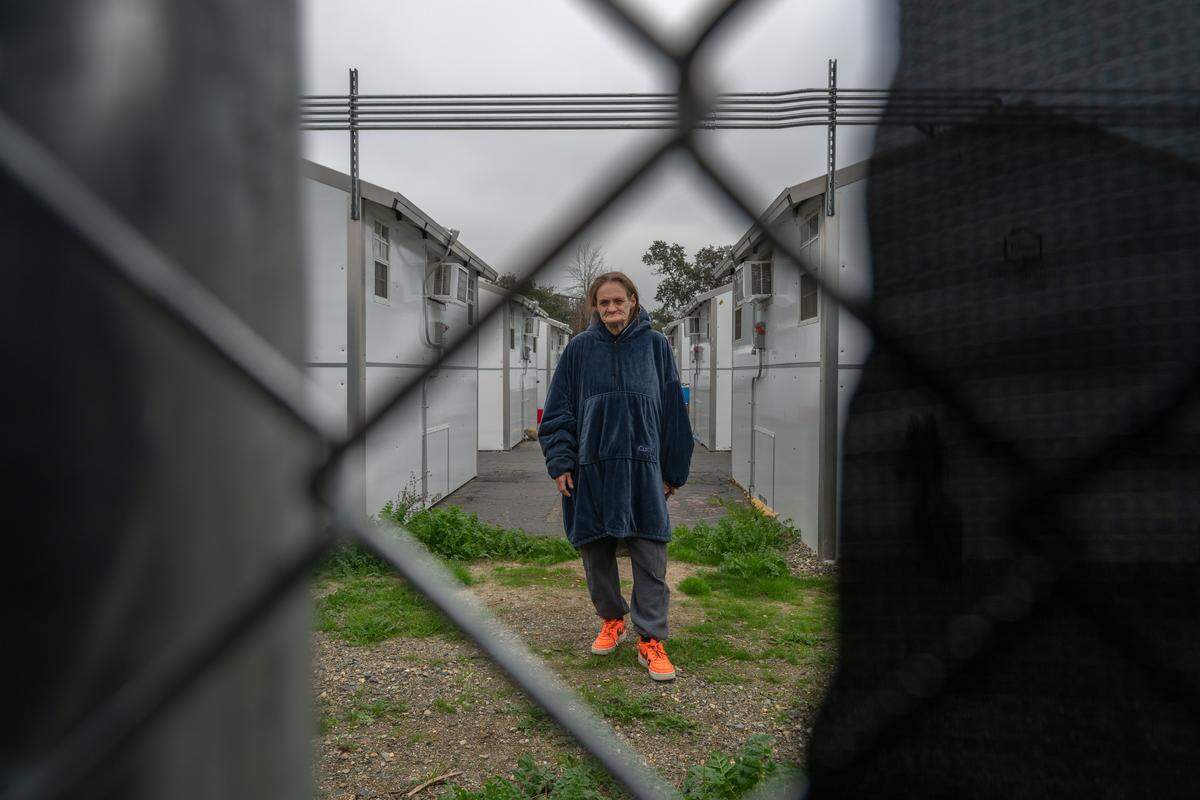
Susan Alhaqq, who’s lived in the city’s Roseville Road shelter for 15 months, said she knows a friend with a spare room who likely would have accepted the rental assistance.
“Getting $500 a month would have been much better,” said Alhaqq, 54, adding she could supplement it with her income from working at Sacramento Scream Park and other jobs.
Large demand for housing, support
Not everyone has a family member or friend they could live with. But if more rental subsidies were available, it would free up more vouchers and public housing spots to be reserved for those who do not have family or friends they can live with, Culhane said.
That would relieve some of the demand on government-subsidized housing. As of Nov. 30, there were over 97,000 Sacramentans on the waiting list for a Housing Choice voucher, formerly known as Section 8, according to the Sacramento Housing and Redevelopment Agency.
County officials also said they need shelters because that’s where people get services like mental health, substance use treatment, job training, ID cards and help clearing misdemeanors and evictions off records.
“The list of supports and services our shelters and staff offer are long and are used by the majority of the people we serve,” Haynes said.
City officials agreed.
“Many people experiencing homelessness have high levels of acuity and struggle with both behavioral-health and substance-use issues,” said Hall. “They need more support than just $500 a month in rental assistance.”
Kushel acknowledged that, but said that for many people, those services are much more successful once the person is actually living in permanent housing.
“I think we have moved into this language sometime around shelter that shelter will fix people and then they’ll go and get housed but the truth is the reason sometimes people aren’t housed is really they can’t afford it,” Kushel said. “Insofar as people need treatment, we know empirically people are much more likely to get it when they’re stably housed.”
The city spokesperson pointed out the city is opening new so-called micro communities where homeless seniors can use 30% of their Social Security checks to permanently live in 120-square-foot tiny homes with shared bathrooms.
“It is clear we need to do things differently to help more people with greater urgency,” McCarty said in a statement. “For the past few years, the city has overpromised and under-delivered. We can’t do everything for everyone. We have a plan to target seniors who are suffering on our streets in a more cost effective and compassionate manner. We need to be smarter with our money and focus on getting unsheltered homeless off the street. Tiny homes cost much less and will allow our unhoused neighbors a safe place to go. A place where they can live with dignity.”
‘Is this the best bang for our buck?’
The 160 tiny homes will cost a total of $14 million to stand up. Providing $500 a month rental assistance checks to the 160 people for two years would have, by contrast, cost less than $2 million.
There is a portion of the homeless community that does need a higher level of care, either those who are elderly, disabled or suffering from mental health and substance use crises. For that population, many need something more similar to assisted living, a nursing home or sober living facility, not a temporary homeless shelter, Culhane said.
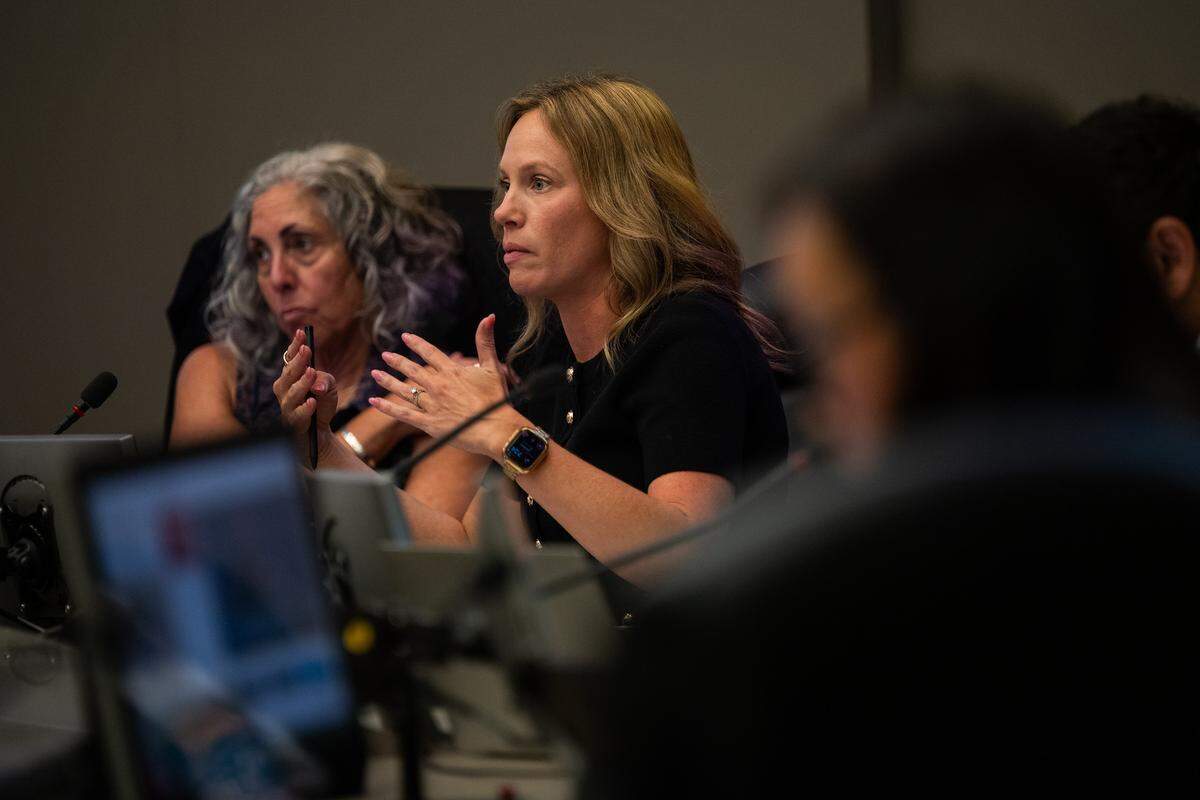
Sacramento City Councilmember Caity Maple recently told her colleagues she wanted the city to consider investing in rental assistance.
“If we took all the money and used it for rental assistance, would that be a more cost-effective program?” Maple said during a Sept. 16 council meeting after hearing staff’s plans to add 1,000 more shelter beds. “It’s something we should explore as we continue down these paths, not to get stuck in one way or another but think, ‘is this the best bang for our buck?’”
The city and county could use more of a new state funding source, called Encampment Resolution Funding, toward rental assistance, and less on shelters, if local officials so chose.
Rental assistance is an “encouraged eligible use” of ERF, said Alicia Murillo, spokeswoman for the California Housing and Development Department, which administers the grants.
Out of the city and county’s four ERF grants, the one that provides people with one to two years of rental assistance to house them directly off the streets has been successful. The $5 million grant permanently housed 100 households who were sleeping outdoors in North Sacramento, the maximum amount of households allowed under the grant, said Hall. All of them remain in the housing.
Large shelters currently central to Sacramento’s strategy
Local officials are using much of the remaining $33 million from the other three ERF grants to open and run shelters, including those on Stockton Boulevard and Roseville Road. Those sites have been open for about one year and two years, respectively. Each has permanently housed fewer than 100 people to date.
The city is currently building a large expansion to its Roseville Road campus, McCarty announced in a September news conference, standing in front of the site.
“This is kind of the future of where we’re headed with our homeless response,” McCarty said at the time
The county is also doubling down on large shelters. Construction is underway on a $64 million, 275-bed shelter in North Highlands.
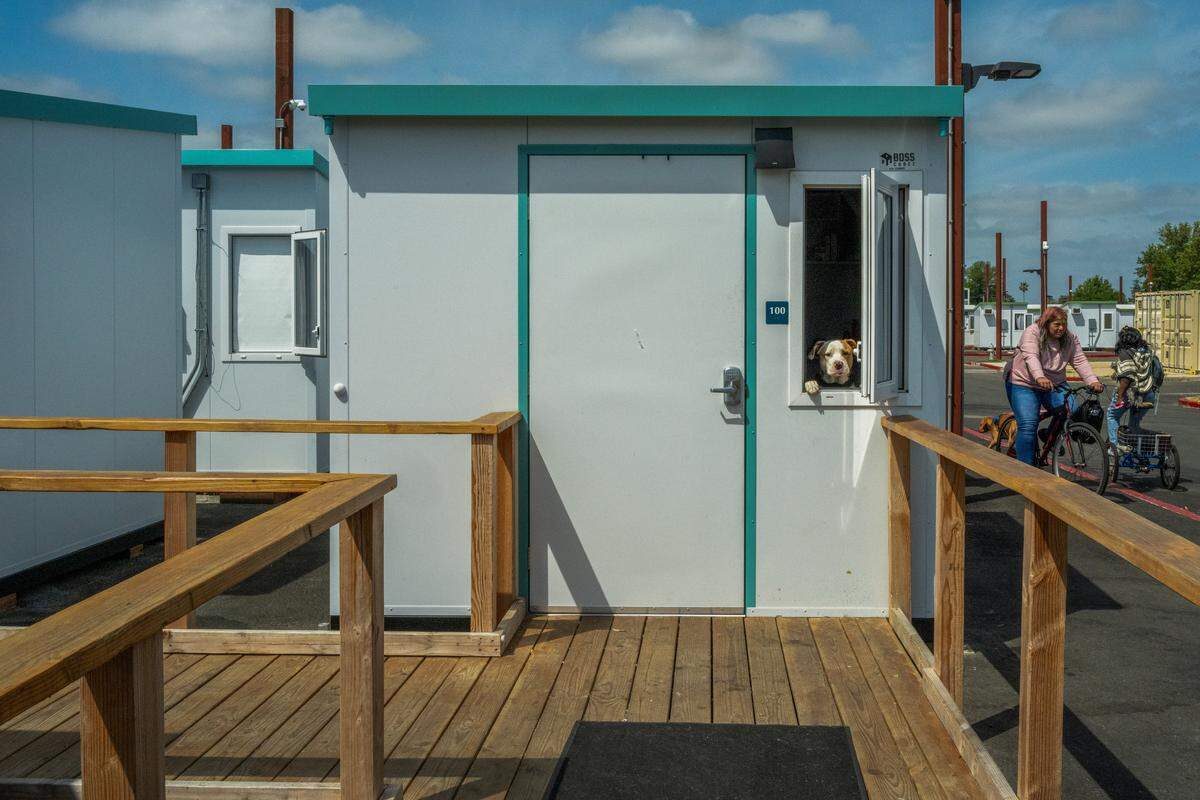
The shelters often include rental assistance component for a few months after they are housed out of the shelter. But due to the cost of opening shelters, the city and county haven’t been able to build enough. There is a wait list of about 4,000 to get a shelter bed. And Alhaqq’s experience of being there over a year, waiting for housing, is not uncommon.
Homeless consultant Andrew Hening said some of the money going to shelters could be better spent on housing people straight off the streets.
“If we spend our entire grant on building this shelter, we don’t have any additional housing resources once they’re in the shelter,” said Hening, who served as a consultant for San Diego for a program housing people off the streets with ERF funds. “If 20% of these people exit to permanent housing, we just spent over $64 million for 80% of people to (not be permanently housed). That is the definition of insanity.”
During a nearly six-hour homeless meeting in late October held by Sacramento County and attended by elected officials from its incorporated cities, Alex Visotzky of the National Alliance to End Homelessness mentioned the importance of rental assistance, especially as federal homeless funding continues to wane under President Donald Trump’s administration.
“We’re gonna need a spectrum of resources to address the crisis. For people with the most acute needs, (affordable housing with services) is shown to be the most effective intervention,” Visotsky said during the meeting. “But there’s also interventions that don’t require capital investments … Things like rental subsidies can get people into existing housing on the private market right now, without having to wait several years for housing to be built.”
The Bee’s Ariane Lange contributed to this story.
This story was originally published December 12, 2025 at 5:00 AM.
CORRECTION: A previous version of this story incorrectly stated that the county and city have not passed rental assistance measures since October’s homelessness meeting.