Projected Folsom Lake levels put salmon, recreation and water planning in focus
During his winter drives up Interstate 80 toward Lake Tahoe, Sean Bigley keeps his eyes peeled. He isn’t just watching traffic — he’s also scanning the highway shoulders to see exactly how much snow has fallen.
To Bigley, the city of Roseville’s environmental utilities director, a bare roadside is an early warning sign.
“You may see snow in the upper reaches of the mountain tops, but you may not necessarily see that (along) Interstate 80,” he said. “And so that may indicate it may not be a good year coming.”
A “good year” is tied to water levels at Folsom Lake. Fed largely by melting Sierra snowpack, the reservoir supplies water to the Sacramento region and much of California through the U.S. Bureau of Reclamation — a federal water management agency. Because of that, Bigley’s roadside observations can offer not only an early glimpse at the water year ahead but also local recreation options and Chinook salmon breeding.
This winter, however, Bigley’s glances could carry extra weight as a critical December threshold could be missed. Folsom Lake is slated to hold 266,000 acre-feet of water at the end of the year, according to a letter sent to Reclamation by Water Forum Ashlee Casey, the executive director Water Forum, an organization that advocates to balance different water needs from supply to environmental.
Typically, Reclamation aims for a 300,000 acre-foot threshold by the end of December — a number the Water Forum deems sufficient to survive a subsequent dry year with minimal implications. Missing the target could disrupt a delicate balancing act, weighing the needs of local water suppliers and environmental advocates against the entire Central Valley Project, which uses reservoirs, dams and canals to feed agricultural needs alongside some urban customers.
When asked about the planning minimum at Folsom Lake, Reclamation spokesperson Mary Lee Knecht said it’s “an important operational consideration,” but not a requirement.
“As conditions evolve, Reclamation must balance water supply, environmental, water quality, flood management and other Central Valley Project obligations across the system,” Knecht said in a statement.
Reclamation’s projected shortfall at the Central Valley Project’s fourth-largest reservoir comes after President Donald Trump signed an executive order last year to maximize water deliveries, specifically mentioning the Central Valley Project. Reclamation posted a YouTube video in January boasting the initiative, saying about 180,000 acre-feet of additional water was delivered to the Central Valley Project last year.
“Essentially what it was is a presidential order to try to maximize water delivery south of the Delta,” said Michelle Banonis, the manager of strategic affairs at Regional Water Authority.
Since March, the federal agency increased water allocations in and south of the Delta, citing operational improvements from the executive order, April storm activity and coordinated reservoir management. The move also coincides with water level concerns raised at the Shasta Reservoir, the largest reservoir in the project, according to a letter to Reclamation from the California Water Board.
Missing the mark by 34,000 acre-feet at Folsom Lake isn’t an immediate cause for alarm, according to RWA Executive Director James Peifer. But if winter deliveries fall short and a drought takes hold, missing the December target could mark the beginning of a troublesome era.
A flashback to previous dry years
For those in the region’s water industry, the prospect of missing the December target brings memories of past woes. The Sacramento area still remembers the 2014, 2015 and 2021 dry years. The 2021 crisis was particularly severe: Folsom Lake plummeted to its lowest level in more than four decades, pushing environmental and recreational woes to the forefront.
During the 2021 drawdown, the shrinking water levels forced at least nine of Folsom Lake’s 13 boat launches to close. It was an echo of the 2014 and 2015 seasons, according to Sacramento Bee archives, when speed limits dropped to 5 mph so vessels or skiers could avoid hitting rocks.
Local businesses felt the economic strain. In August 2014, the late Folsom Lake Marina Manager Ken Christensen reported the El Dorado Hills business was down 40%.
That year, according to Sacramento Bee archives, the marina operated as usual in April, May and June before the declining water levels ultimately prohibited boating. At the time, Christensen said the lake and marina remained open, even as vessels sat parked and many recreationists took their business elsewhere.
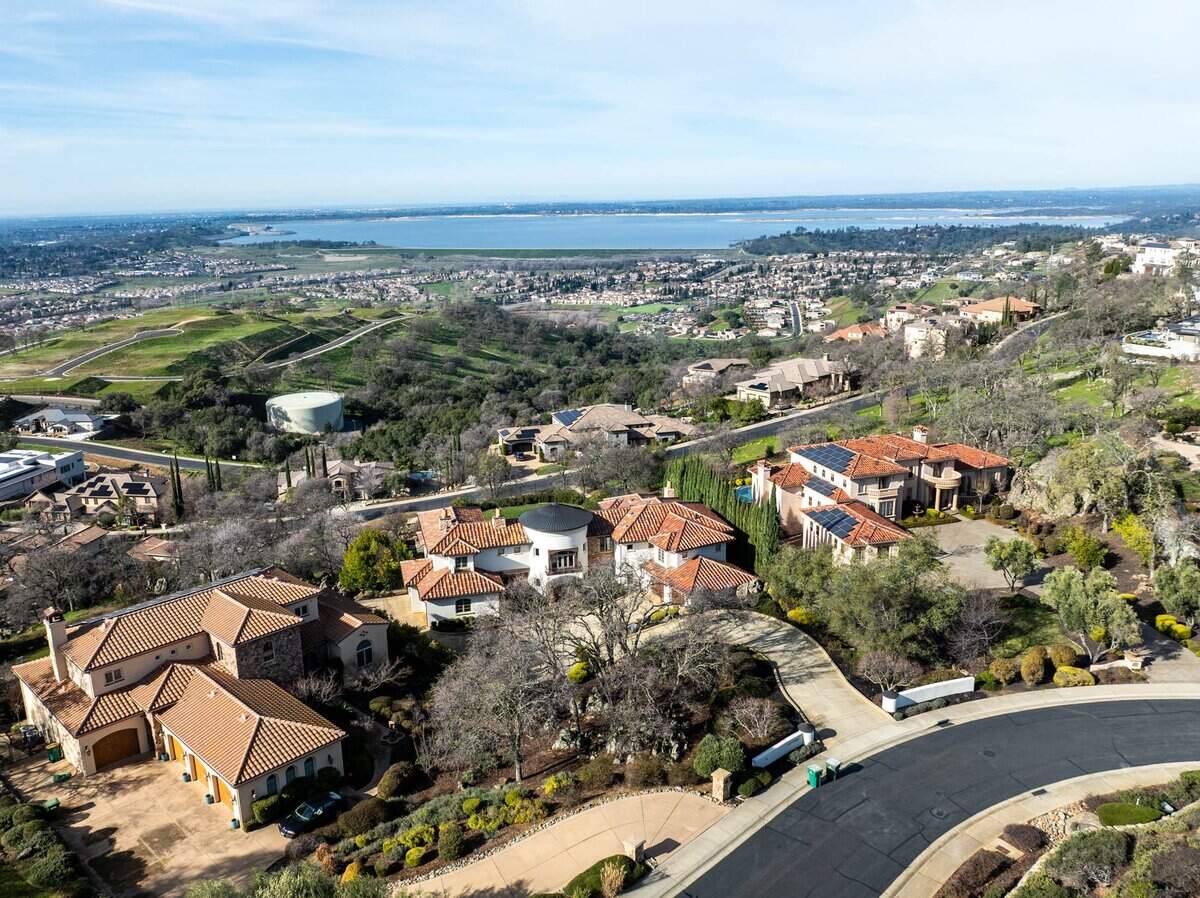
Not just boats are affected. As the reservoir’s water levels drop, it’s easier for water to heat up, reducing the amount of cold water that ultimately flows through the American River.
Before the Nimbus Dam was built, Friends of the American River policy staffer Ron Stork said, Chinook salmon would swim up the American River to colder water. The December target for the reservoir, he said, is one way of replicating those cold water conditions.
Salmon spawning is most successful when water is below 56 degrees Fahrenheit, the Water Forum’s Casey said. Reclamation tries to reach temperature targets that vary year to year. In 2014, Water Forum data shows water temperatures were above 70 degrees in early October and didn’t drop below the 56-degree mark until late November. Casey said a good number of fish arrive in the river by mid-October and are ready to spawn by Nov. 1.
“They biologically need cold enough water for their bodies to be ready to spawn,” she said. “If the water stays warm, they risk dying before they can complete their lifecycle.”
Water chillers — essentially large refrigeration units — were placed at the American River Hatchery near Sacramento for the first time in 2014, according to Sacramento Bee archives, costing nearly $1 million.
Concerns about surface water
If dry conditions persist, however, water experts warn recreation and environmental woes could just be the beginning.
“What we have experienced in the past is first felt as environmental, also a recreational impact, but this region has always had access to surface water,” RWA’s Peifer said. “What we fear most though is a situation where we don’t have that, and the planning minimum helps us achieve that.”
Roseville gets about half of its surface water supplies from Reclamation and the rest from Placer County Water Authority, according to Bigley, who said both rely on Folsom Lake levels.
“In order for us to actually access those two (sources) of surface water supplies, we have to ensure that the lake level is actually sufficient for that water to be transmitted through the American River, through Folsom Reservoir, and into a single intake access point at the dam itself,” Bigley said.
Pipes could play a role, Bigley said, saying water levels below 150,000 acre-feet could damage the infrastructure. If that were to happen, emergency projects would likely take place to pump water out of the reservoir.
“At that time, they were actually considering putting (in) floating barges to access water,” Bigley said, referencing the mid-2010s.
Even if federal allocations drop, cities like Roseville and Folsom have safety nets to keep operations as smooth as possible. For Roseville that includes banking water underground and for Folsom it’s relying on guaranteed contracts. Both cities also asked residents to conserve water in 2021, according to previous Sacramento Bee reporting.
“If the one contract that we get an allocation for was reduced to zero, we’d still have enough water to serve our customers without any reduction,” said Folsom Director of Environmental and Water Resources Marcus Yasutake.
Yet even with these measures in place, water experts ultimately look back to the mountains. While scanning the roadside along I-80 offers a quick, anecdotal glimpse of the winter ahead, local districts maintain contact with Reclamation to track how much runoff will actually make its way to Folsom Lake.
However, the largest factor remains out of human hands.
“The challenge is you’re trying to predict how Mother Nature behaves, which none of us can really do with accuracy,” Bigley said. “I think during that late winter, early spring time, that’s when we really start to understand what we’re up against.”