A Rook would keep Sacramento cops safe, police say. Approval reignites ‘militarization’ debate
Law enforcement leaders evoked scenes of terror in their presentation to Sacramento’s City Council: A man who shot his girlfriend in the face, potentially hiding in the trees. An armed suspect, firing at his neighbors. To defuse violent incidents, Deputy Chief Norm Leong told elected leaders that the Police Department needed a military-style armored vehicle known as a Rook.
During the same Jan. 31 meeting, Leong said that the agency borrowed the Sacramento County Sheriff’s Office’s Rook 13 times since 2019, and used it 10 times. On those two occasions he described, Leong acknowledged the danger was hypothetical — the suspects were elsewhere.
Police face genuine threats in the line of duty, as the city saw with Tara O’Sullivan, the officer killed by an alleged domestic violence perpetrator while trying to help the man’s victim retrieve her belongings.
Leong told the City Council that the SWAT team has been shot at while using armored vehicles in three incidents since 2019. In those three incidents, more than 100 gunshots were fired at the specially-trained officers.
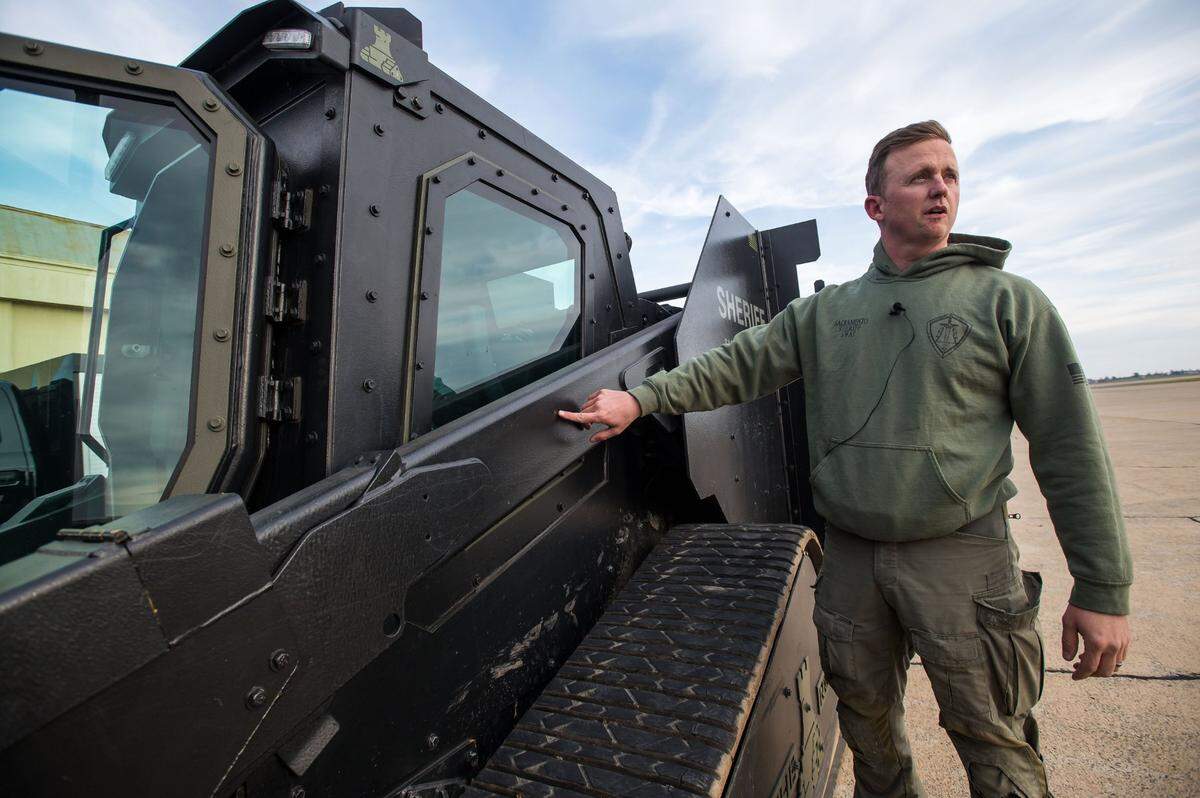
Critics of what they call police militarization heard these stories at the meeting and said the Rook represents the worst impulses of law enforcement: That it was an overpriced extravagance and that, moreover, it violated a state law that demands police only acquire military equipment that is essential.
The January vote renewed attention to the extensive inventory of military equipment maintained by local law enforcement agencies and raised questions about the purpose it serves. The decision and the uproar that followed echoed a lawsuit filed over the police use of rubber bullets, tear gas, flash-bang grenades and pepper balls to disperse Sacramento protesters who gathered after Minneapolis officers killed an unarmed Black man, George Floyd, in 2020.
The debate also took place less than a week after news broke that second-degree murder charges had been filed against five Memphis Police Department officers involved in the Jan. 7 deadly beating of Tyre Nichols, a Black man who grew up in Sacramento. Against the backdrop of renewed national scrutiny of police behavior, the Rook became a symbol of who the police are — and how they interact with the public.
In the end, the council voted 7-2 to allow the police department to acquire its own Rook, using a $440,000 grant from the federal government and setting off a series of frustrated protests.
Council members Katie Valenzuela and Mai Vang voted no. Sacramento Mayor Darrell Steinberg and council members Lisa Kaplan, Sean Loloee, Karina Talamantes, Caity Maple, Eric Guerra and Rick Jennings voted to approve the armored vehicle.
Valenzuela suggested that the new vehicle did not comply with the state law that stipulates police can only have a piece of military equipment when there is no reasonable alternative. Residents who spoke at the meeting said the department clearly had reasonable access to the county’s Rook.
After the vote, Sacramento Community Police Review Commission Vice Chair Keyan Bliss said, “I fail to see how this is anything more than a luxury item.”
Police, residents debate necessity
In September, the Sacramento County Board of Supervisors faced similar criticism when it approved the sheriff’s military equipment policy after then-Undersheriff Jim Barnes suggested that deputies would be forced to kill people if the policy were not approved that day. Without an authorized policy, he said, deputies couldn’t use any of their military equipment, including the Rook and weapons such as beanbag shotguns or tear gas grenades.
“If this doesn’t pass, and our officers may not have a less-lethal option,” Barnes said. “To take it back, and only provide our officers with a lethal option in the interim would set us back.”
The green light from both governments continues a long pattern in the county: In keeping with national trends since the attacks of 9/11 more than 20 years ago, police departments have accumulated more military tools.
And the outcry this winter comes after years of complaints about police use of military equipment in the Sacramento region.
In August 2014, the public learned that the Davis Police Department had acquired a $689,000 mine-resistant armored vehicle while the Sacramento police acquired two helicopters. The equipment was obtained through a federal program — the 1033 Program — that has long dispensed surplus military equipment to local law enforcement agencies.
The protests in 2014 also followed intense national news coverage of police violence.
The acquisitions were revealed just weeks after heavily armored police units violently clashed with protesters in Ferguson, Missouri, where a police officer shot and killed an unarmed Black teenager, Michael Brown. That summer, police in helmets and body armor drove armored personnel carriers through Midwestern streets; they fired tear gas and rubber bullets.
The 1033 federal surplus program was not used to acquire the Rook, which was purchased for $439,894 from a Florida-based company called Ring Power.
Police Chief Kathy Lester said at the Jan. 31 meeting that the purchase of the Rook was funded by a federal Urban Area Security Initiative grant, not city funds. The grant covers only the vehicle’s cost, leaving the city to pay for the maintenance cost of $8,000 a year during the vehicle’s 25-year expected lifespan. Although the department had previously received City Council approval to apply for the grant specifically to fund a Rook, Sacramento agencies could apply for funding for other purposes, including disaster preparedness and response.
At the City Council meeting, Lester said officers expected to use the new vehicle 20 times a year — a six-fold increase from their average current annual usage of the borrowed Rook.
The Sheriff’s Office has used its Rook an average of about 10 to 12 times each year, usually about once a month since it was purchased in February 2019. Newly elected Sheriff Jim Cooper calls the Rook an “invaluable tool” that’s intended to be a rescue vehicle to save lives.
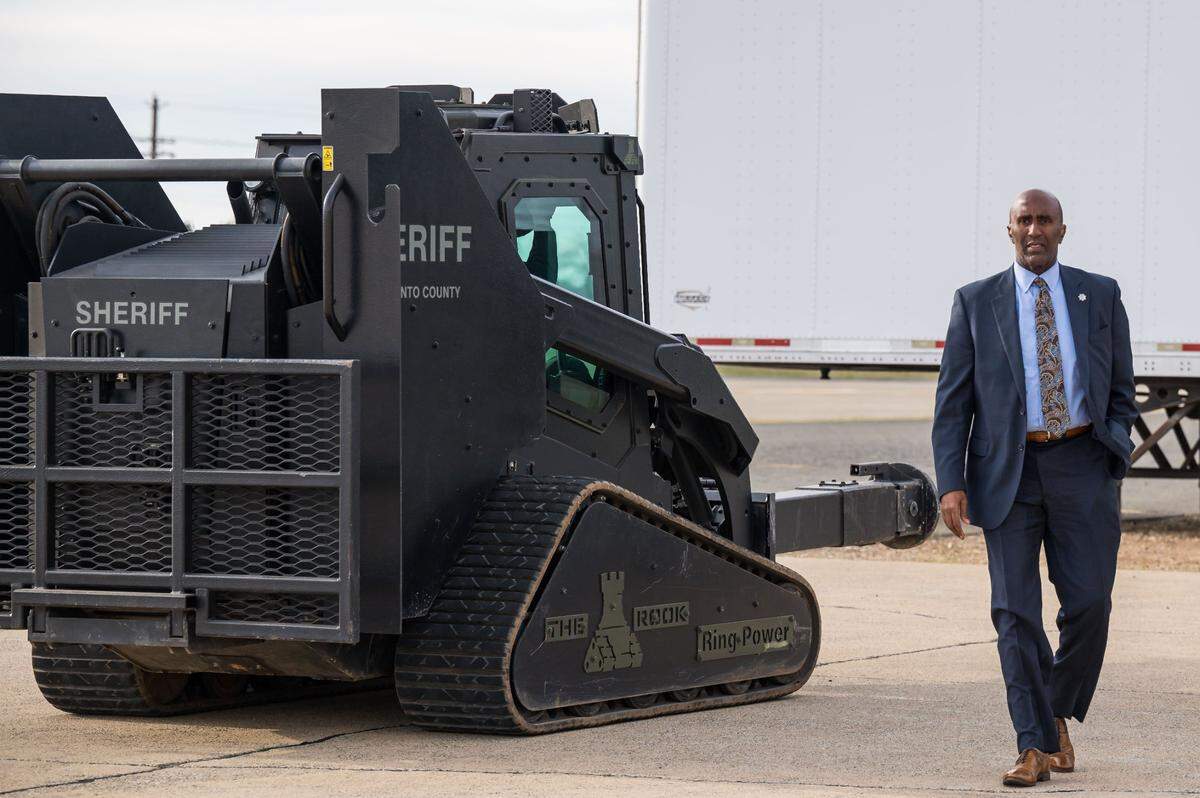
“One time is well worth the cost, because you never know,” Cooper said. “For the folks that were evacuated or people whose lives it potentially saves, they’re forever thankful.”
Lester said that the vehicle has “armored-plating for officer protection,” but it will not be used “in any of the traditional senses of military use.” The Rook allows officers the mobility to gain safe positions of advantage, she said, and it provides opportunities for them to resolve dangerous situations using de-escalation techniques and potentially less force “when dealing with really violent people,” generally barricaded, armed suspects.
‘It’s not a weapon’
Ed Obayashi, a Plumas County sheriff’s deputy and an expert in the use of force and law enforcement ethics training in California, told The Sacramento Bee that the Rook is a practical and defensive vehicle that keeps officers safe in high-risk situations. He said criticism of the acquisition is “misguided” and a reaction “to the optics” surrounding the City Council’s decision.
“It’s not armed. It’s not a weapon,” Obayashi said about the Rook. “It’s got nothing to do with militarization. The term ‘militarization’ is highly inflammatory and disingenuous.”
He said the vehicle is not much different than a Bobcat compact loader with armored plating welded to the front. He added that law enforcement agencies have the responsibility to secure the best technology and equipment available to effectively protect the public. Officers are still bound by the laws and policies that govern the use of force, he said, no matter the equipment employed.
“I’ve said this before: We’re not looking for better ways to kill,” Obayashi said. “We’re looking for ways not to kill.”
That said, other experts told The Bee that evidence shows a more armed police force endangers the public.
“Generally, the research supports the contention that a militarized police response is oftentimes inimical with community-based policing practices,” said Tom Nolan, a criminologist and former lieutenant with the Boston Police Department. “When the police are armed like soldiers, they tend to behave like soldiers, and the militarized response that follows is often not in the best interest of community and public safety. And even officer safety.”
Studies have found that more military equipment is correlated with more lethal force by police officers, but that research appears to have been left out of the discussion in multiple city meetings about the Rook.
Up to the vote, police never provided data or research to support the purchase, said Bliss, who joined the police review commission in 2021 and became vice chair in 2022. “When (the police) presented this information to City Council, in fact, they were simply saying — the layman interpretation that I heard from it was — ‘We need this. Trust us that we need this equipment.’”
A police department spokesman said last week that they were not aware of any empirical research or studies about the use of the Rook or military equipment by local law enforcement.
“We are not aware of any such studies existing,” Sgt. Zach Eaton said. “However, real-world safe outcomes in dangerous situations provided our department with ample evidence of the Rook’s capabilities of achieving safe outcomes in dangerous situations.”
When asked about what empirical analyses he saw, Rick Jennings, who represents District 7 on the City Council and voted for the Rook, told The Bee through his chief of staff that briefings “were focused on the ability of the equipment to protect the public and our officers.”
Nolan, the criminologist, said police often ask for military equipment without presenting a rigorous, evidence-based justification. That, he said, runs counter to best practices.
“Part of criminal justice reform generally — and police reform in particular — is that we move to an area where we have research-based practices and policies,” Nolan said. “So if we want to implement a policy, or if we want to have a practice of this type of armament, we should seek out research that will affirm the need for this kind of equipment. And police departments historically have not done this, and they continue to not do this.”
Researchers have cross-referenced data on police killings of civilians and transfers of military equipment. Two notable studies, one published in the journal Research & Politics in 2017 and the other in Political Research Quarterly in 2018, found that the more military equipment a police department had, the more civilian deaths occurred at the hands of officers.
Critics of the Rook also pointed out it would likely be deployed disproportionately in certain marginalized neighborhoods.
Tobias Smith, a UC Davis researcher who studies policing and militarization, said, “There is a very strong — and bold and underline that phrase, ‘very strong’ — correlation between the use of militarized equipment by police forces and communities that are underrepresented, non-white, underserved and over-policed.”
There is also specific evidence that Black people face more violence at the hands of police in the capital.
A study by the Center for Policing Equity found that between 2014 and 2019, Sacramento police used force against Black people 4½ times as often as they used force against whites. Although only 13% of the city’s population is Black, 43% of people subjected to force by police were Black.
Police leaders acknowledged the Rook was ultimately not deployed or necessary five of the 13 times it was borrowed from the Sheriff’s Office.
A department spokesman told The Bee that three times in 2021, the situation was resolved before the Rook made it on scene: On April 19, an armed suspect surrendered near Cal Expo. Two and a half months later, on July 7, officers used a type of tear gas against an active shooter in Fruitridge Manor, who subsequently surrendered. Then, on Nov. 6 off of Garden Highway by Gateway Center, a home invasion suspect jumped out a window and was apprehended by police before the Rook arrived.
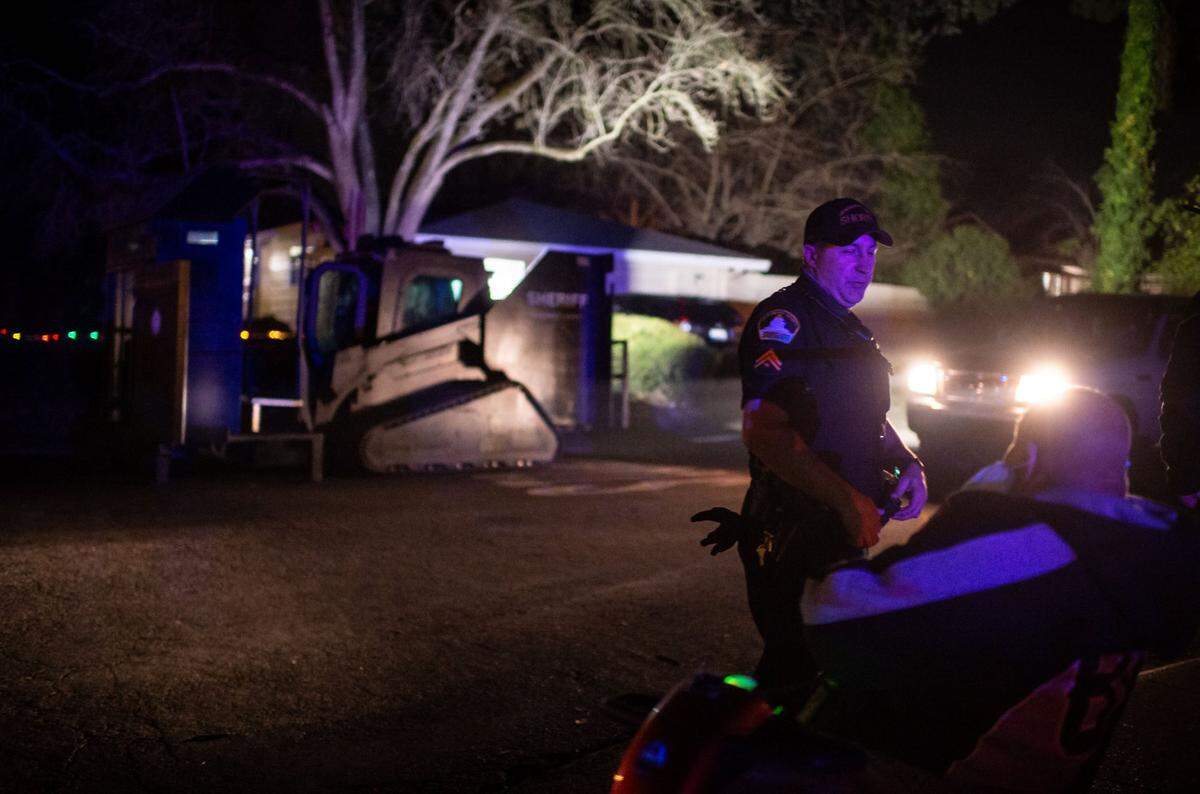
The police also borrowed the sheriff’s Rook twice when a suspect was not present.
Police did, however, clearly describe two times when another vehicle would not have had the same capabilities.
During the June 2019 shootout that killed O’Sullivan, the Rook removed cars and a tree so that other vehicles could move closer to the barricaded suspect; notably, a larger, less nimble vehicle became stuck in the ground.
In April 2022, police used the vehicle to remove a front door and force police entry during a domestic violence hostage situation in a home with a front yard that did not have enough room for a larger armored vehicle to breach the door. That domestic violence suspect shot at the Rook.
“The Rook has become a standard tool for many police departments,” Lester added during the January presentation. When asked by Jennings what happened when the department did not receive the Rook on time, she said, “Without it being there, we just have to find a workaround.”
‘The people are fed up’
In the Jan. 31 meeting, residents and community activists spoke against the Rook purchase, calling the armored vehicle an “earth-moving, wall-breaking sniper tank” that would continue to erode the public’s trust in the police department and further traumatize disadvantaged neighborhoods.
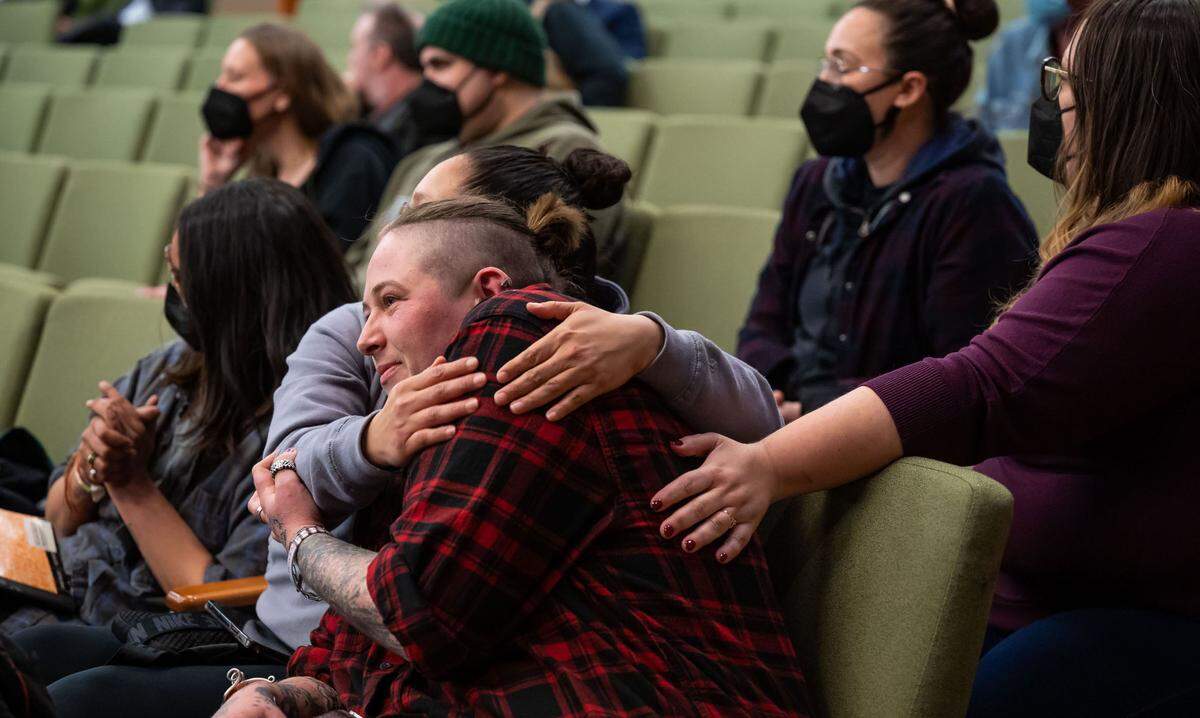
The uproar over the Rook purchase doesn’t seem to have waned in the weeks since. The two following meetings have ended with about a dozen attendees confronting council members.
“From what I’ve seen, these are used outside of people’s homes,” Cesar Aguirre told the City Council at its Feb. 7 meeting. “These are armored military vehicles; they’re not cheap, right? And they’re used to enact violent, aggressive actions on people in our community.”
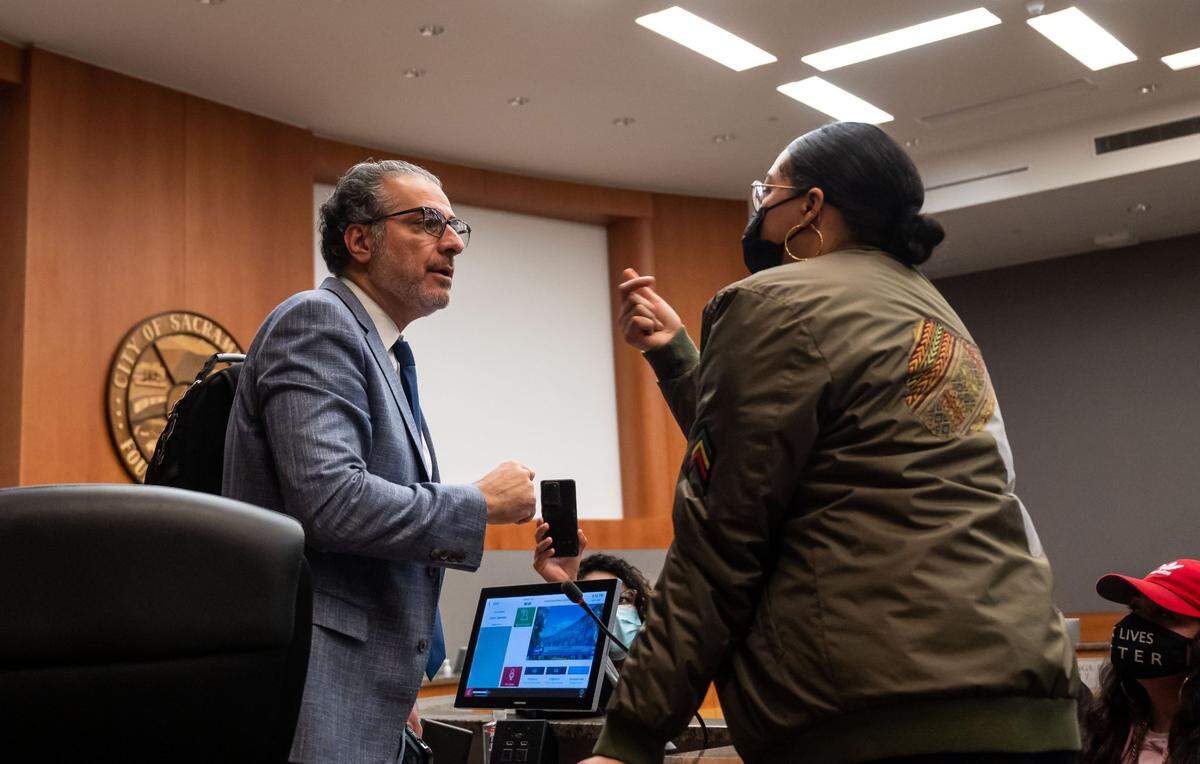
Vice Mayor Eric Guerra adjourned the Feb. 7 meeting early after several audience members shouted from their seats, condemning the Rook purchase. Some of them held up a Black Lives Matter flag as Guerra struggled to maintain control of the meeting.
Opponents of the Rook purchase have presented a list of demands to the City Council that include a moratorium on all military equipment purchases, City Council approval of all Sacramento Community Police Review Commission recommendations on military equipment use, a data transparency ordinance and an end to Sacramento police pretextual traffic stops, when police use a petty infraction as a means to initiate a more serious investigation, which could be based on nothing more than a hunch.
“We are angry that the city continues to fund the militarization of police and the criminalization of people in poverty, primarily Black and brown bodies,” Fatima Garcia said during the Feb. 14 council meeting. “The people are fed up with law enforcement’s practice to resort in deadly force without accountability.”
First controversial issue since November election
The purchase of the Rook was the first controversial issue since the November election created a liberal bloc of four members on the nine-member City Council. In two meetings since the vote, public vitriol over the Rook purchase has been directed at newly elected council members Maple and, later, Talamantes.
Maple, a Sacramento activist who ran last year to represent Oak Park, Hollywood Park and Parkway, said during her campaign that she supported the demilitarization of law enforcement. One constituent from her district said at the most recent council meeting that Maple “betrayed” the people of color who elected her.
Talamantes, who was elected in November to represent South Natomas, was told by one irate community activist not to go to Natomas because that’s where “Black and brown boys” are the ones she’s “allowed to be killed.”
Maple and Talamantes did not respond to these accusations.
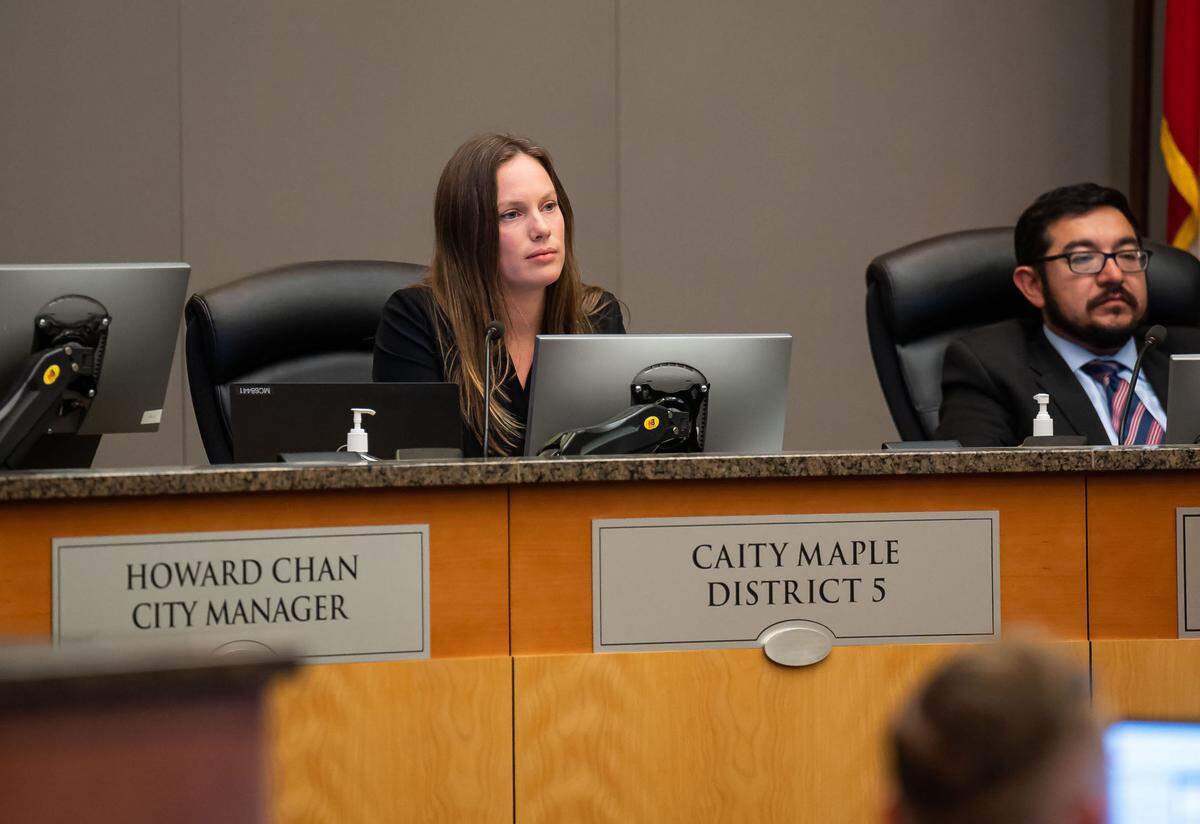
In a thread posted Feb. 1 on Maple’s Twitter account, the councilwoman said she voted to approve the Rook acquisition because she believes the armored vehicle “will help both the community and law enforcement stay safe.” Maple apologized for not doing better outreach to the community leading up to the council’s vote.
In an op-ed article published Feb. 8 in The Bee, Maple wrote that the Police Department did not buy a tank, contrary to what some have called the armored vehicle. She wrote that the Rook is a tractor with a shield and a platform that can be raised to allow entry into higher levels of buildings.
“I wish this violence didn’t happen at all and I firmly believe we need to invest in mental health care and interventions to prevent it from occurring in the first place,” Maple wrote. “But while we still live in a world where this violence does occur, we must prepare for it.”
Maple hasn’t spoken publicly about the controversy since; she did not respond to a request for an interview for this story.
Anticipated uses of armored vehicle
The police anticipate they will use the Rook to serve “high-risk search warrants” and to address “hostage situations, barricaded persons and other dangerous circumstances,” according to a city staff report. It’s identified as a “rescue vehicle” with a platform that can lift officers to a building’s second story.
The vehicle has a “grapple claw” that can lift 4,500 pounds, to remove obstacles such as fortified doors or burglar bars. The Rook can move or immobilize a vehicle and other large obstructions.
Lester has said the Rook allows officers to get into tight spaces. It’s smaller than the two armored Bearcat SWAT trucks the department already owns.
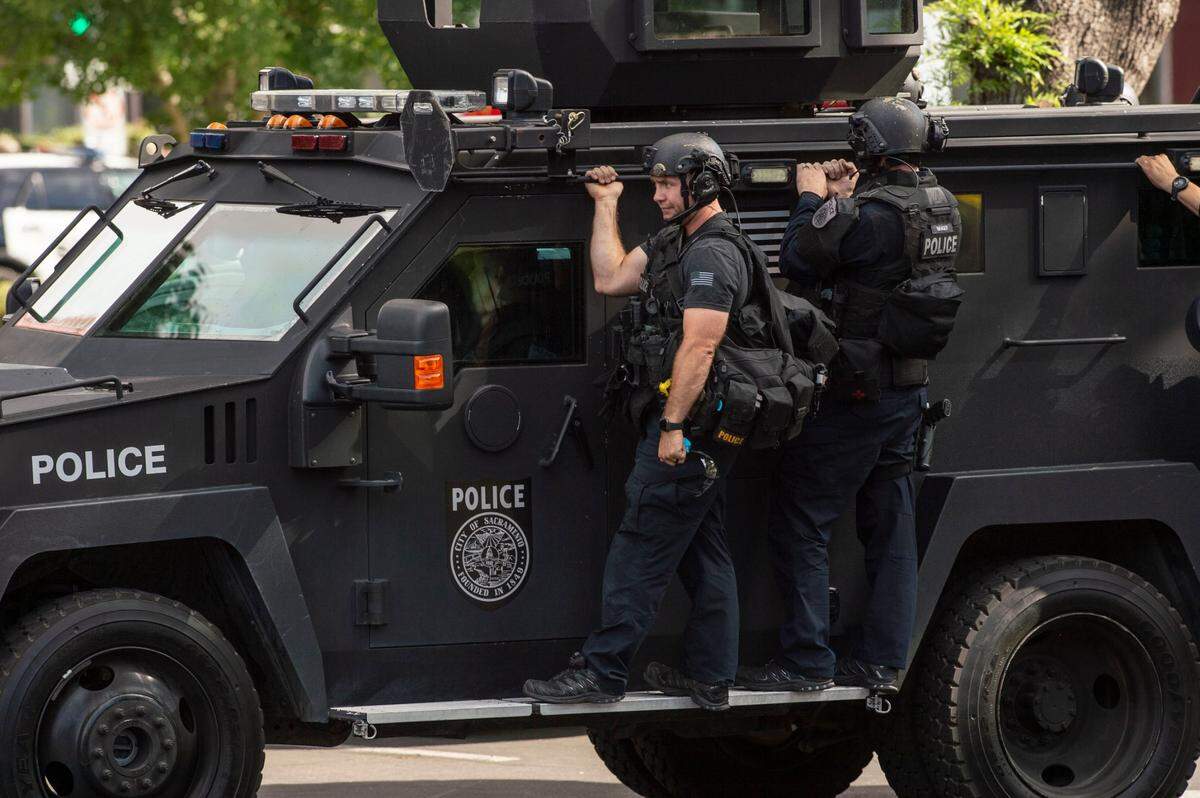
As part of the City Council’s approval of the purchase, the Police Department was told to work with Sacramento Community Police Review Commission members to define limitations on usage of the Rook and provide reports of its usage to the City Council and the residents in whichever area it’s used.
Eaton, the police spokesman, said the Rook will be operated by the department’s SWAT team.
In response to public concerns, Eaton said the department has begun sending notifications to residents “within a predefined radius” during armored vehicle deployments.
“The notifications will advise residents which equipment is being used as well as a brief explanation of why the equipment is being used,” the police spokesman said. “Additionally, our armored vehicles are frequently brought to community events to educate the public on their capabilities and use.”
State law governs police military equipment
Assembly Bill 481, approved in 2021, requires law enforcement agencies to seek community feedback on the acquisition, funding and use of military equipment. It is aimed at giving the public a voice in the acquisition and use of military-grade material that could have a negative effect on communities, according to the legislation.
Sacramento police’s military equipment use report — posted on the department’s website — lists its inventory of equipment that falls under AB481.
Eaton noted that equipment such as pepper-ball and beanbag shotguns, which are considered military equipment under state law, were implemented by law enforcement in response to the public’s request for equipping officers with additional less lethal options during dangerous situations.
“The use of such equipment has prevented officers from resorting to lethal force during dangerous situations,” Eaton said in an email to The Bee, “and has ultimately saved lives many times.”
In local government meetings, representatives from both the Police Department and the Sheriff’s Office have emphasized that military equipment is not used in every incident, and said that many types of equipment are used to de-escalate violence. As Barnes said in September, much of their equipment is classified as non-lethal or “less lethal.”
Bliss saw it differently: “The deployment of military equipment in any situation,” he said, “is an automatic escalation.”
City police leaders vowed to continue documenting the use of such tools in the hope of persuading the public that purchases such as the Rook won’t be platforms for weaponry but are instead meant to protect officers. Opponents, meanwhile, vowed to continue protesting this new vehicle at City Council — the next meeting is Tuesday evening.
The Rook itself is expected to be delivered to the city in November.
This story was originally published February 19, 2023 at 5:00 AM.