Final approval expected for divisive California ethnic studies curriculum model
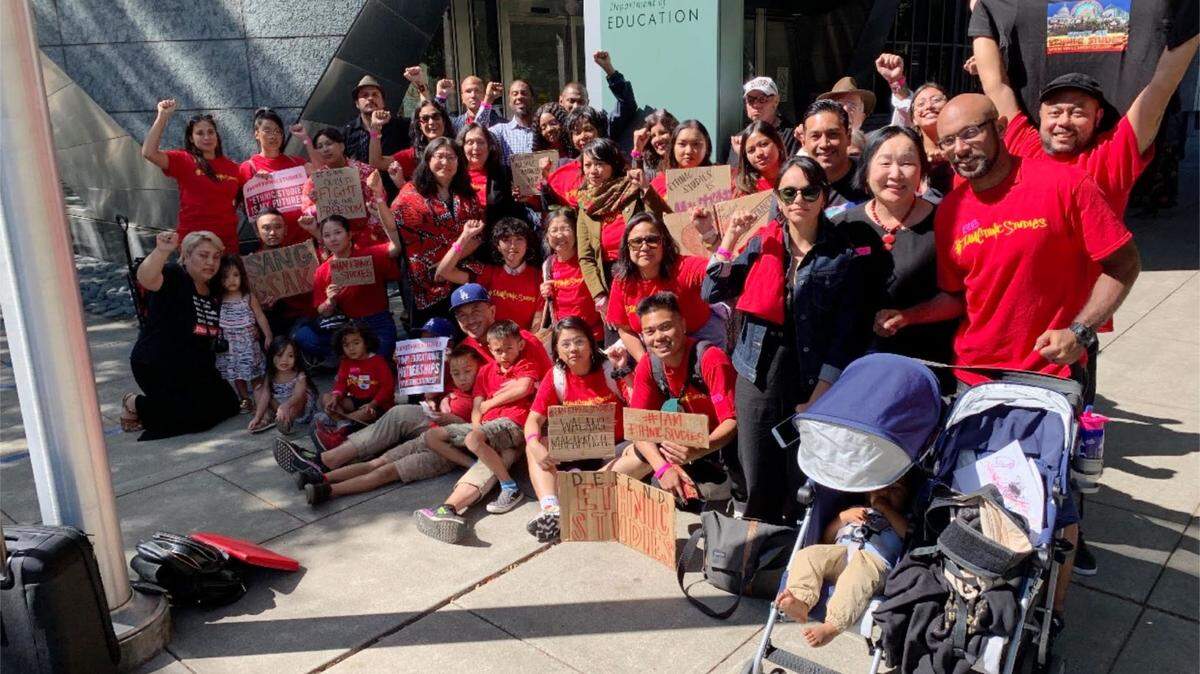
California’s Board of Education is expected Thursday to pass the Ethnic Studies Model Curriculum for high schools, after nearly four years of heated debate, division and rewrites.
The curriculum was created with the intention of covering four areas: Black/African American studies, Chicano/a studies, Native American studies and Asian American studies. It is a guidance document for districts to adopt lesson plans.
But discussions in developing the final draft included debate over whether additional lessons on other ethnic groups would detract from the study of those core groups.
Public comments during a 12-hour meeting in November included dozens who demanded Arab American studies be included in Asian American studies, reigniting the debate surrounding how Arab American narratives, particularly those for Palestinians, would be included in that draft.
Jewish students and leaders also stressed the importance of including strong definitions of anti-Semitism within the curriculum.
“We have been candid with folks that we need to hold some fidelity to these four groups, these four disciplines, that have made ethnic studies,” California State Superintendent of Schools Tony Thurmond said last year. “But we have also tried to create a nod to many other groups that faced oppression of some kind, and also sending a message about interconnectivity among groups.”
State education officials put additional lesson plans on those groups into what they called a “bridge,” previously labeled an “appendix,” that included Arab American, Jewish American, Armenian American and Sikh American studies.
In the past 18 months, the Board of Education has received tens of thousands of public comments regarding the model curriculum. More than 38,000 of them were related to the sections of the curriculum centered on Jewish Americans and/or anti-Semitism, nearly 26,000 regarded Arab Americans and close to 10,000 focused on Armenian Americans, according to a summary chart attached to Thursday’s meeting agenda.
The model curriculum would be voluntary guidance, not mandatory, for California school districts. Gov. Gavin Newsom in October vetoed a bill that would have made ethnic studies a requirement for high school graduation.
California Secretary of State Shirley Weber, in a guest commentary for CalMatters earlier this month, endorsed the model curriculum final draft and wrote that it “will give educators the tools they need to illuminate the struggles and contributions of historically oppressed communities.”
Others continue to strongly disagree, saying elements of the curriculum will stoke hatred or even prompt harm for students.
The AMCHA Initiative, a nonprofit organization with a goal of combating anti-Semitism in colleges and universities, said in a statement this week that “a Critical Ethnic Studies-based ESMC can’t help but incite division, hatred and harm to many students, especially Jewish students.”
The Jewish Community Relations Council’s Bay Area chapter, though, called the final draft of the curriculum “greatly improved” over earlier drafts.
“An initial draft of the curriculum both excluded Jews and included anti-Jewish, anti-Israel components. Subsequent drafts removed the denigrating content and included two lesson plans on Jewish Americans,” the JCRC statement continued.
Numerous groups have called for additional revisions and rewrites, but the clock has run down on that, with the state Legislature setting an April 1 deadline to pass the curriculum.
This story was originally published March 17, 2021 at 11:25 AM.