
California public school enrollment drops. See which Sacramento area districts fell the most
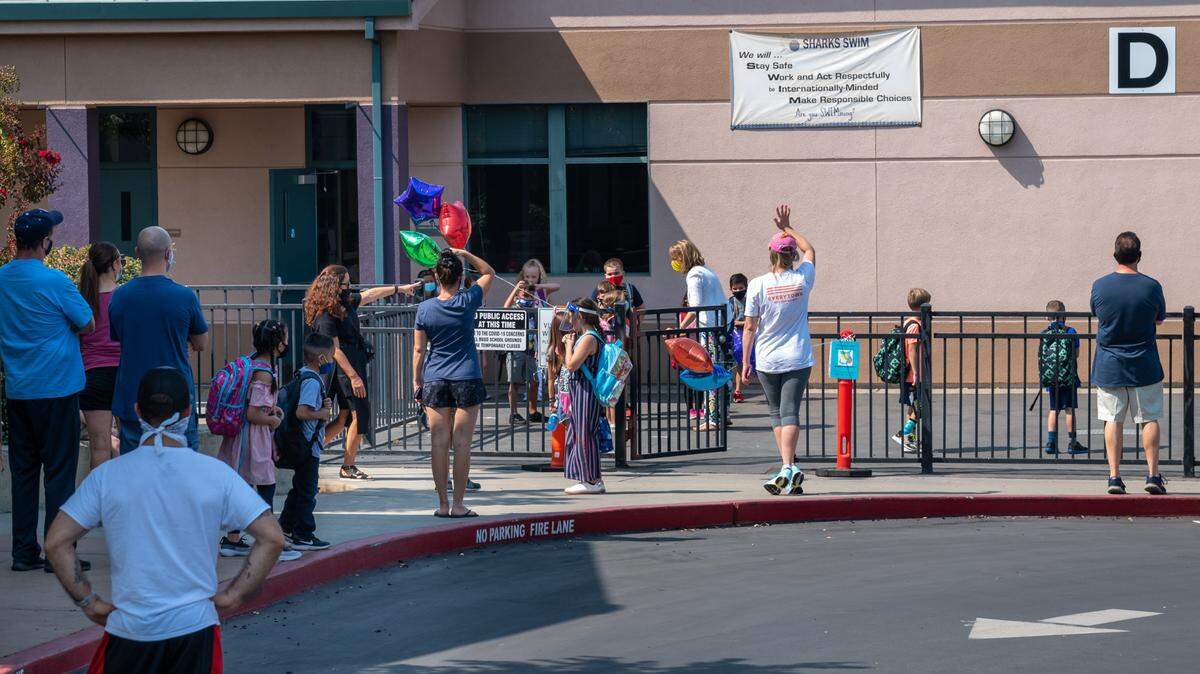
California public school enrollment in K-12 classes declined by more than 160,000 students in the 2020-2021 academic school year.
The California Department of Education released new data that revealed students left public and charter schools at a much higher rate this school year than in previous years. There are currently 6 million students enrolled in California schools.
In the four-county Sacramento region, enrollment dropped by about 6,500, or 1.7%, from 2019-20 to 2020-21. Drops were largest in El Dorado County, where enrollment declined by 3.2%, and smallest in Sacramento County, where enrollment dropped by 1.4%.
White parents pulled their children out of public school at a higher rate than parents in most other ethnic groups. White student enrollment fell by 4.7% in the four-county region from 2019-20 to 2020-21, compared to a 3.3% decline in Black students and a 0.7% decline in Latino students. The number of Asian students enrolled in public school rose by 3.2%.
Among local districts with at least 5,000 students, the largest enrollment declines were in Rocklin Unified (-6.1%), Dry Creek Joint Elementary (-5.2%), Buckeye Union Elementary (-4.4%), Roseville City Elementary (-4.2%), Davis Joint Unified (-3.7%) and Sacramento City Unified (-3.4%). With the exception of Sacramento City Unified, each of those districts is located in relatively wealthy, suburban areas.
In Sacramento City Unified, schools with at least a 14% decline in enrollment included Sam Brannan Middle; Sacramento Charter High; Bret Harte Elementary; Caroline Wenzel Elementary; The MET and Tahoe Elementary.
State Superintendent of Schools Tony Thurmond said the CDE will redouble its efforts to work with school officials in understanding why a steep decline in enrollment occurred.
“In a year that has been so challenging for educators, students, and families, it is concerning to see this decrease, especially those in our youngest grades,” Thurmond said in a press release. “While there are many reasons to stay optimistic that enrollment will rebound as conditions improve, allowing more schools to safely return to in-person instruction, we also must help schools identify opportunities to engage with families who either sought new options for their students during the pandemic or need additional resources and support to connect with school and succeed.”
The data is collected annually in the fall and shows a snapshot of enrollment on Census Day in October.
The sharp drop in enrollment statewide accelerates a steady decline. In 2019-2020, about 23,000 students left California public schools. The year before, 34,000 students left.
Trends across grade level
Students in K-8 classes represented the largest dips in enrollment. State data shows that 88% of the statewide decline took place in elementary schools..
Between the 2019-2020 school year and the 2020-2021 school year, more than 60,000 fewer students enrolled in kindergarten and transitional kindergarten.
The data confirms that many parents did not enroll their young children in non-mandatory classes such as transitional kindergarten and kindergarten as the coronavirus pandemic continued through the fall, keeping campuses shuttered across the state and forcing students to engage in online learning.
The state also documented enrollment trends among race and ethnicity. Officials found enrollment for Black students dropped by 4.5% and enrollment for white students dropped by 5.6%. Enrollment for Latino students fell by 1.8% and fell by 0.5% for Asian students.
Where are students going?
While it’s unclear what factors caused the decline in enrollment, state officials say there is a complex list of possibilities: families are leaving California, and others are enrolling in homeschooling programs and private schools.
Private school affidavits in the 2020-2021 school year doubled from the previous year, as private schools welcomed thousands of new students while many public schools remained closed in the fall.
In 2019-2020, there were 17,000 private school affidavits, and the following year, there were more than 36,000.
It’s unclear how many of those filings are home school programs, but the CDE does not collect data on private schools identified as home schools, and assumes that any school with fewer than six students is likely a home school.
School districts across the state are working on a tiered re-engagement strategy, according to Rachael Maves, deputy superintendent of instruction and measurement. School districts will begin to identify students who have not returned to public and charter schools, and may have lost access to education during the pandemic.
Note: Story updated at 10:54 on 4/23 to correct that declines listed in the Sacramento region are among districts with more than 5,000 students, not more than 10,000 students.
This story was originally published April 23, 2021 at 8:41 AM.