Classes without books? Sacramento teachers, parents allege poor conditions at St. Hope Charter
READ MORE
St. Hope series
Read our past coverage below:
Expand All
St. Hope leaders have responded to criticism as Sacramento City Unified School District considers renewal of their charter by pointing to public displays of support for their school and citing their success in closing the achievement gap among students in underrepresented groups.
Black students, who make up the majority of the school’s population, have higher test scores, graduation rates and college acceptance rates than their peers in Sacramento City Unified. Latino students have also demonstrated better standardized test scores than the state and county averages.
The success stats are meant to speak for themselves — Sacramento Charter High School boasts not just higher graduation rates than among seniors attending Sacramento City Unified schools but better post-secondary results as well. In the past couple years, nearly every one of the charter’s graduating seniors met the requirements to attend a UC or CSU. In 2022, the school had the second highest admittance rate to a UC campus among all public high schools in the region, according to the school.
In the weeks prior to their charter renewal, school leadership is contending with a damning third party audit report that alleged several major violations in the school’s governance and fiscal structure. St. Hope recently made a number of changes in response to the concerns detailed in the district’s letter, including personnel shifts and increased accountability measures for its vendors.
Concerns raised by former Sacramento high teachers and parents about teacher turnover, unqualified staff, steep enrollment decline, a lack of curriculum, high suspension rates and chronic absenteeism were in part what sparked Sacramento City Unified, the chartering authority, to commission the audit. The independent auditor alleged a range of major violations plaguing St. Hope Public Schools, including conflicts of interest among its top officers, improper use of public funding, an out-of-compliance special education program, deficient accounting processes and the employment of a largely unqualified teaching staff.
The district’s letter and the accompanying audit report only include investigations of issues under the district’s purview as the charter authorizer, but what about the other concerns parents and teachers have brought to the table?
A school without curricula
One pain point for past and current teachers: St. Hope Public Schools does not provide curriculum or textbooks for the majority of subjects. Teachers are largely expected to create their lesson plans from scratch.
When he was first hired in 2021, former Public School 7 teacher Nicholas Brundage said he received a list of state science standards and a benchmark exam for the end of each quarter. No textbooks, no lesson plans, no other class materials. In his first year at PS7, Brundage said he worked between 60-80 hours per week — about as much as his wife, who was a first year medical resident at the time.
“That’s a huge lift, it’s an incredible amount of work,” he said. “They already have an extended school day and school year, so you’re already asking a teacher that’s working more than a Sac City or Elk Grove teacher and you’re asking them to write a whole curriculum, which is something that people with masters and doctorates do.”
Another former Sac High English teacher who requested privacy out of concern for her career prospects, said that there was “no curriculum support whatsoever.” A former PS7 teacher who requested privacy for a similar reason, said that as a first year teacher on a short-term teaching credential, they were told at the beginning of the year that an adviser would check on their lessons every week. That stopped about three weeks into the school year.
“Test scores were coming out poor because I didn’t really know how to fix it as a new teacher, and they weren’t helping me with any resources,” they said.
Like this teacher, the staff members tasked with developing their own curriculum, lesson plans and all other instructional materials are often inexperienced. An investigation by Sacramento City Unified found that the rates of teachers with appropriate credentials started low and plummeted in recent years. In the 2020-21 school year, about 52% of PS7 teachers held an effective credential and two years later, that number fell to about 35%. Sacramento Charter High saw an even steeper decline, with around 63% in the 2020-21 school year, falling to around 26% by 2022-23. For context, the rate of credentialed teachers at Sacramento City Unified, Sacramento County and statewide stayed relatively consistent, all hovering at around 83%.
Superintendent Lisa Ruda acknowledged St. Hope schools’ long established practice of having teachers create their own curriculum.
“The idea being that as a teacher, when you create your own curriculum, it tends to be far more aligned. You as a teacher have internalized it more because of the rigorous process you go through, and then, most importantly, your delivery of it,” she said. “You get to refine that based on what sticks with students.”
However, she noted that when she joined the school in 2022, staff vacancies and a cultural shift among the teacher labor force inspired her to reconsider the practice. Last year, PS7 debuted English language arts and math curriculum for elementary students and they have since purchased curricula for other subjects and grade levels.
“I’m not saying either the teacher-made approach or the commercial approach is the silver bullet, but I am saying I recognize those teachers who said, ‘we need some help,’” Ruda said.
Receipts obtained through a public records request show that St. Hope in spring 2024 spent $67,000 on commercially-developed middle school English language arts and math curriculum and high school math curriculum.
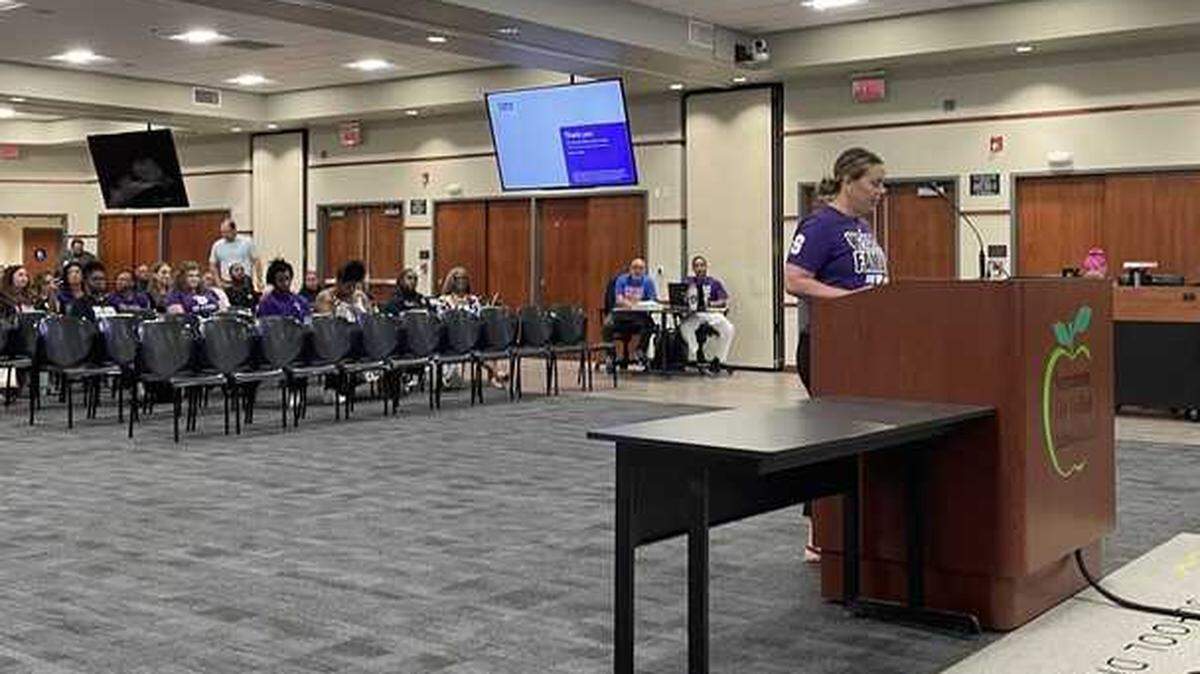
It’s not just teachers who have been affected by the lack of curricula. In a May letter to the district, St. Hope parents wrote that they often observe their students being taught from packets and worksheets, and that their children often do not have access to books at school, let alone other classroom supplies like paper, calculators and lab supplies, concluding that this was “not a recipe for the success of our children or their educators.”
The issues caused by inconsistent lesson plans from teacher to teacher are exacerbated by the issue of poor staff retention rates at each school. Last year, at least three teachers quit or were fired in the middle of the year at Sac High. If a teacher leaves mid-year, their curriculum goes with them, and the substitute teacher arriving in their place has few resources to work with.
Brundage is now a science teacher within Sacramento City Unified and said that the difference between his experience was “night and day.” He no longer works outside of his contracted work hours and gets to rely on a provided curriculum complete with textbooks and other materials.
“Teaching is a difficult job and it requires difficult things, and the way that it works at St. Hope is not sustainable and you can see that in their turnover,” he said.
A library without books
Not only does the school typically not provide curriculum, it doesn’t provide textbooks either. Several former teachers have said they “begged” the school for the books that were rumored to be held in storage behind a locked door.
“We do not use traditional textbooks because it is not the most innovative way to educate our scholars,” Lisa Yarbrough, who provides public relations services for St. Hope, wrote in an email. “Our curriculum provides printed materials, digital access, and parent resources.”
Parent Giovanett Ombler pulled both of her children out of St. Hope schools this year, choosing to enroll them in another nearby charter school. Among the many concerns she had with the school, Ombler found it difficult to help her struggling junior with packets of homework without being able to refer to a textbook. She contacted her son’s teachers and principal to learn more about his class lesson plans to no avail.
“I need to see what you’re teaching him so I can help him at home,” she said. “How am I supposed to help when he’s just sent home with a packet that I don’t understand?”
Another parent, who does not want to be identified out of fear of retaliation because her son still attends the school, said that she was shocked to learn that her child didn’t use books in the classroom. She was under the impression during his first few years that they used textbooks in class but assumed he didn’t bring any home because they were class sets.
“Last year when I visited (Sac High), I don’t remember seeing books at all,” she said.
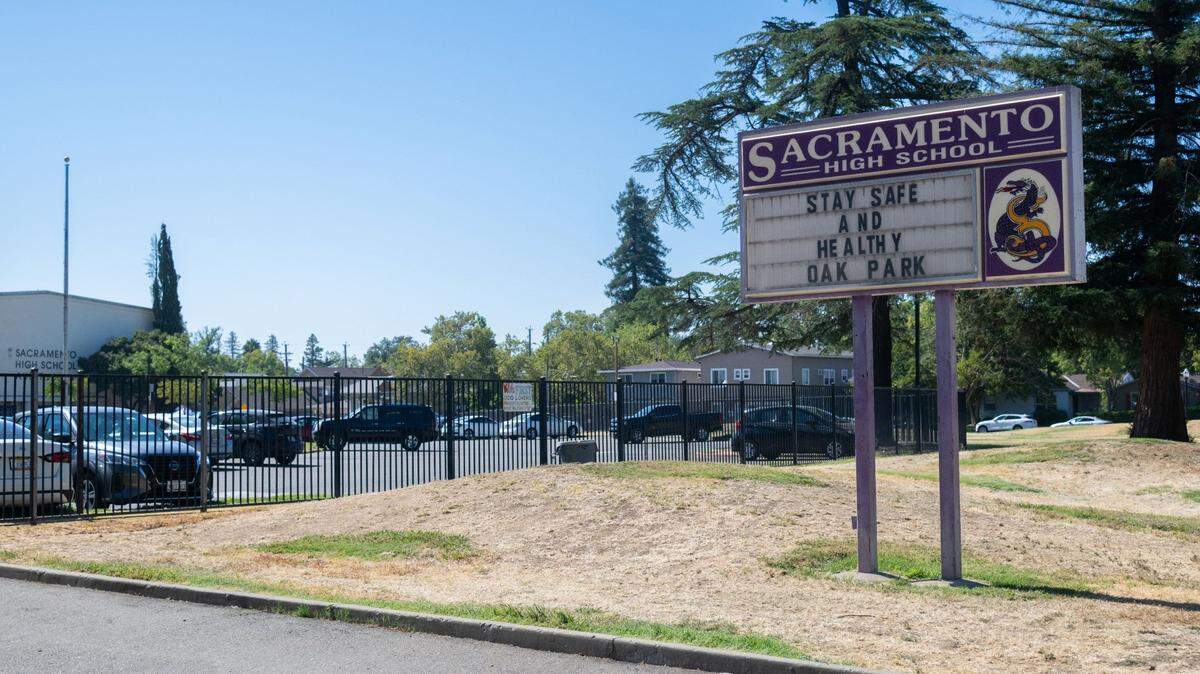
Sac High has a campus space they refer to as a library, but it does not function like a library.
In 2018, St. Hope solicited donations from the public through Sacramento’s Big Day of Giving to modernize the library, which served three schools at the time: Sac High, PS7 Middle and Oak Park Prep, which has since closed. The goal was to redevelop the library into a multi-purpose space where students and staff could work and study. The school secured $60,000 in donations, almost half of which came from then Sacramento Kings player Garrett Temple.
Yarbrough described the library as a “multi-use space used to hold assemblies, professional development, staff meetings, and family events such as orientation.” All former teachers interviewed for this story said that students were not able to check out books from the library.
St. Hope leaders refute claims that students do not have adequate access to books on campus. They point to their Accelerated Reader program where middle school students visit the school library several times a week for independent reading and to borrow books to take home. Students take short comprehensions assessments on the books they read to earn points toward rewards. When asked directly if students were free to borrow books from the school, they sent a video of the PS7 Middle library.
The former Sac High English teacher said that the only books made available to her were a limited selection of classics. She had to bring books from home to fill her classroom.
“There was nowhere for them to go to get books,” she said. “I had former students coming back as seniors asking to borrow books, because my classroom was one of the only places you could get them.”
Former teachers say classroom materials were also few and far between.
“At the beginning of the year we would get binder paper and maybe a box of pencils, and that was pretty much it,” she said. “Everything else came out of my own pockets.”
Another former Sac High teacher, who also asked for their identity to be private, received “nothing at all” for their class. They further questioned how their course, which they created themselves as a new teacher, should be considered A-G eligible.
Declining graduation rates
In a recent interview with ABC 10 News, Superintendent Ruda said that “when 100% of your students are graduating A-G college-eligible and 95% are getting into four-year colleges, you’re doing something right.”
But this is only true of the seniors who walk away with diplomas, which was 61 of 71 seniors in 2023. This graduation rate (86%) marks a decline for the school, which was boasting graduation rates in the 90s just a few years ago.
Sac High isn’t just suffering from a declining graduation rate, but from kids leaving prior to senior year, which isn’t reflected in the state’s method of calculating a graduation rate. Sac High’s enrollment decline over the past decade — 926 students to 355 — doesn’t appear to be caused solely by fewer freshmen enrolling, but is also the result of students leaving before senior year.
The class of freshmen entering in 2019 was more than twice the size of the 2023 graduating class at 137 students, meaning that 44.5% of kids entering Sac High as freshmen graduated from the school.
It is not uncommon for a freshman class to be smaller than a senior class when accounting for transfers and dropouts, but Sac High’s decline in enrollment among the same class seems to be higher than surrounding districts. In Sacramento City Unified, 66% of 2019 freshmen graduated four years later.
This cannot entirely be attributed to COVID-19-related enrollment drops, as the numbers are consistent with pre-pandemic rates. Sac High graduated 118 students in 2020, while the 2016 freshman class consisted of 256 students, or a rate of around 48%. Sacramento City Unified again graduated 66% of their 2016 freshmen in 2020.
St. Hope attributes the high transfer rate to its student population’s economic status.
“We have a high percentage of students who self-identify as homeless,” Yarbrough said. “Many of our SHPS scholars have unstable home environments which contributes to them moving frequently and can require them to leave their school midway (through) their education journey.”
Ombler’s son is one student who transferred from Sac High prior to his senior year. She said that she was disappointed with the classroom instruction at the school and the lack of support for her son’s disability, despite certain accommodations required in his Individualized Education Plan.
Sac High has also seen declining graduation rates in recent years, but they still exceed the district and statewide averages by several percentage points. Results for African American students (85.9% graduating) still far exceed graduation rates for African American students district (73.3%) and statewide (77.9%).
High suspension rates
St. Hope schools have suspension rates of two to three times higher than the district average. Where 6.2% of students in Sacramento City Unified received one suspension in 2022-23, for Sac High it reached 16.2%. At PS7 20.6% of students were suspended in the same year.
Black students were suspended at a higher rate at Sac High (18.5%) and PS7 (26%) than the district at-large (15.2%),
The school also had much higher rates of willful defiance suspensions, justifications for which included dress code violations, being late to class or talking back to teachers. This type of suspension was recently banned by the state due to the disproportionate effect that defiance suspensions have on students of color, LGBTQ students and students in other underrepresented groups.
At Sac High, 57% of all suspensions given were defiance-only suspensions. Black students received 68% of these suspensions while Black students in the district received about 40% of these suspensions.
How St. Hope students find success in spite of conditions
Despite school conditions like low access to books, high teacher turnover and high suspension rates, which are typically associated with poor academic performance, St. Hope students achieve graduation and passing standardized test scores at a higher rate than their peers at Sacramento City Unified.
St. Hope leaders credit the school culture they have cultivated and extracurricular opportunities for their students’ high UC/CSU eligibility rates. They said that the school offers credit recovery opportunities for students who fall behind and need to retake classes, individualized support for struggling students and a dual enrollment college program.
Sac High and PS7 also spend more time in the classroom. St. Hope employs an extended school day and year, along with after-school academic programs provided by third party vendors.
“St. Hope Public Schools has high expectations for academic achievement and conduct that are clearly defined, measurable and make no excuses based on the background of students,” Yarbrough said. “Students, parents, teachers and staff create and reinforce a culture of achievement and support, through a range of formal and informal rewards and consequences for academic performance and behavior.”
This story was originally published September 4, 2024 at 12:26 PM.