Did Sacramento charter schools misuse public money? Report alleges major violations
READ MORE
St. Hope series
Read our past coverage below:
Expand All
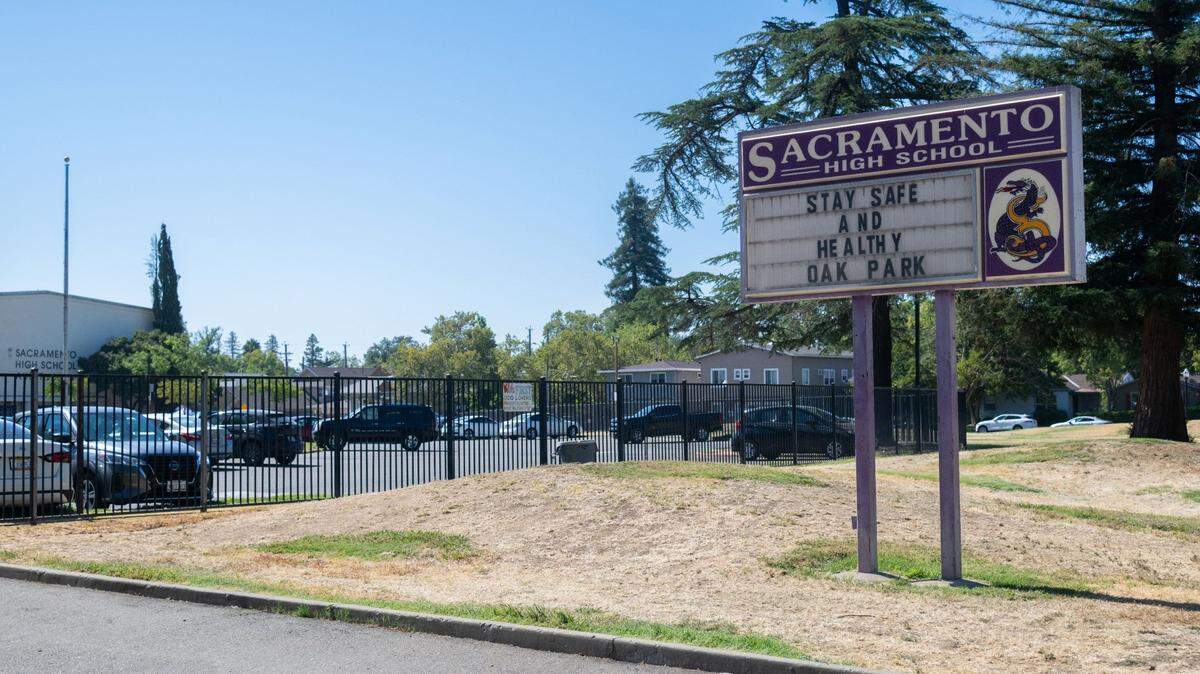
A new bombshell report investigating St. Hope Public Schools could threaten the existence of the two charter schools it operates in Sacramento. The report alleges a range of major violations plaguing St. Hope Public Schools — including conflicts of interests among its top officers, improper use of public funding, deficient accounting processes and the employment of a largely unqualified teaching staff.
The report, provided to the Sacramento Bee by a source familiar with the findings but unauthorized to discuss details, was completed just weeks after Sacramento Charter High School and St. Hope PS7 applied to renew their charters with Sacramento City Unified School District, their charter authorizing authority. District Superintendent Lisa Allen sent a letter detailing the violations to St. Hope administrators July 26, giving them 30 days to respond to the violations. If the charter school organization fails to both account for its issues and draft a plan to fix them, it could affect the district’s decision to renew the charters in September.
Concerns were most recently raised about St. Hope in spring. A group of current and former St. Hope educators and a group of parents both sent letters to Amanda Goldman, who oversees charter schools within the district, detailing their concerns about the organization’s finances, governance and operations. In early May, the district opened an investigation into some of these concerns, enlisting the services of a third party auditor, Christy White and her namesake firm.
This investigation marked a renewed interest in the organization’s activities, but St. Hope has been embroiled in controversy since it first got involved with Sacramento City Unified. Founded by then basketball star and later Sacramento mayor Kevin Johnson, a St. Hope entity has been barred from receiving federal grants following a 2008 investigation by the FBI; administrators and students have walked off campus in protest of higher leadership; and in 2023 the Public Employee Relations Board issued a complaint against an administrator for attempting to undermine the schools’ newly formed union.
The school has also struggled with enrollment in recent years. Ten years ago, Sacramento Charter High enrolled 926 students — last year, the number was only 355.
Many of the violations involve the relationship between St. Hope Public Schools and its related entities, St. Hope Academy and the St. Hope Development Center. The Academy and Development Center are each nonprofits that contract with St. Hope Public Schools to provide services. The auditor found that all St. Hope entities’ finances were so intertwined that they could not consider the Academy and Development Center “independent of St. Hope Public School in any practical way.”
The auditor also took issue with overlapping leadership — St. Hope Public School’s board chairperson, Cassandra Jennings, is also CEO of both St. Hope Academy and St. Hope Development Center. The former provides back-office support, such as accounting services, and the latter provides property management and IT. In 2022-23, St. Hope Public Schools had $1.8 million in service agreements with the two other entities.
Most of the report’s findings have to do with fiscal and governance issues, but school staffing is also at play. The report found that the amount of teachers with appropriate teaching credentials has plummeted over the past few years.
St. Hope administrators, however, take issue with the content of the report, saying that the findings do not represent the reality of the institutions. Lisa Ruda, St. Hope Public Schools Superintendent was critical of the way the firm gathered information, claiming that Christy White did not make direct contact with St. Hope administrators until about a week before the report was filed. She said that some of the data included in the report is either out of context or is inaccurate, however St. Hope leaders substantiated, after publication of this story, inaccuracies related to the number of credentialed teachers. Even though the number is higher than the report stated, it’s still well below the district average.
Ruda also expressed disappointment that the report was overshadowing the two schools charter renewal, which she said should be a “straightforward” and “celebratory” process.
“We felt that this was kind of a last minute effort to cloud that process,” she said. “To learn of some of these issues on the eve of the charter renewal was disappointing, but that being said, we always welcome the opportunity to look at concerns, review them.”
If Sacramento City Unified ultimately chooses to deny either of the schools’ charters, the St. Hope Public Schools would then have to apply for a charter through the Sacramento County Office of Education. If that petition is denied, the charter could appeal the decision to the State Board of Education. Without an authorizing authority, a charter school cannot operate.
Financial violations ‘cast serious doubt’
The report describes a number of alleged fiscal violations that “cast serious doubt” on St. Hope Public School’s ability to properly manage the public funds it receives.
The report found that the last two annual independent audits of the charter organization’s financials showed poor accounting practices and a “material weakness” in their finances, indicating that auditors believe there is a higher likelihood that incorrect financial information could go undetected. St. Hope Academy handles the school’s back-office operations, including its finances, to the tune of $1.3 million per year.
Auditing firm Christy White wrote in the report that St. Hope Academy was keeping a basic checking account record but not full financials, including reviewing bank statements and locating accounting records.
In addition to the auditing firm’s findings, Sacramento City Unified takes issue with the man tasked with this accounting, David Chavez. He was hired as St. Hope Academy’s chief financial officer in November 2023 while his CPA license was on a three-year probation by the California Board of Accountancy. The causes of his discipline included gross negligence, inadequate audit documentation and failure to comply with professional standards.
The district questions whether “the charter schools’ use of SHA as a back-office service provider, including the employment of a CFO with a probationary status on his accountancy license, is a prudent choice,” and suggests that St. Hope Public Schools should consider whether St. Hope Academy possesses the competence to manage public funds.
Lisa Yarbrough, communications consultant for St. Hope, said that school leaders are already aware of the material weakness and have been working with St. Hope Academy to ensure compliance in the upcoming school year.
Fiscal concerns are elevated by allegations that personnel in the three St. Hope entities may hold conflicts of interests.
Governance structure ‘concerning and vulnerable to financial abuse’
Education code 47604 stipulates that charter school employees are included in the laws that strictly prohibit public employees from making contracts that benefit them financially. Sacramento City Unified argues that Cassandra Jennings’ roles as both board chair of St. Hope Public Schools and the CEO for both the Academy and Development Center represent a conflict of interests.
Jennings recused herself from board votes on the back-office service agreements with both of the nonprofits she heads, but signed the contracts. The auditor finds this problematic because over 50% of St. Hope Academy’s revenues and 100% of the Development Center’s revenues came from these service agreements in the 2022-23 school year, suggesting it could prevent the charter school organization from seeking cheaper or better services in the marketplace.
Lawyer Lee Rosenberg, who represents St. Hope Public Schools, disputed the allegations that Jennings’ roles conflict with one another.
“What we’re talking about is three nonprofit public benefit organizations — we’re not talking about for-profit corporations, we’re not talking about organizations that have shareholders or that exist to make a profit,” he said. We’re really talking about three independent nonprofit organizations that are working together for a common public good, and California public policy and the law actually encourages that.”
Rosenberg argued that Government Code 1091 allows nonprofit officers to serve on public boards without disqualifying their organizations from contracting with those public entities, given that proper procedures (disclosure, abstention from voting on the contract) are followed.
Jennings is not the only executive under scrutiny by the district. Kevin Hiestand is a board member of the St. Hope Endowment, a fourth entity which supports St. Hope Academy’s charitable activities. He served as legal counsel to St. Hope Public Schools, including investigating allegations of school staff providing alcohol to students. Auditors found the resulting report suggested a reasonably thorough investigation, but said that this working relationship is another example of “interrelatedness” between all the St. Hope entities.
“At the very least, Mrs. Jennings’ and Mr. Hiestand’s personal financial interests have the potential to create divided loyalties between SHPS and the other SHPS-connected entities that are directly compensated by SHPS for the services they provide,” Allen wrote in the letter to St. Hope administrators. “Taken in conjunction with the fiscal reliance of SHA/SHDC on SHPS described above, the potential for conflict of interest is heightened. The district still finds this structure to be concerning and vulnerable to financial abuse by those managing and serving in leadership positions within the various entities.”
Hiestand’s history of holding possibly conflicting roles within St. Hope dates back nearly two decades, previously holding dual roles as Johnson’s personal lawyer and the school’s Title IX officer. After a 17-year-old Sacramento High student reported in 2008 that Johnson, interim principal at the time, inappropriately touched her, a Sacramento Bee investigation found that Hiestand questioned the student before the authorities were notified. This was a major violation of the school’s responsibility as a mandated reporter. The lawyer was also a part of a three person “impartial” panel that found the claims unfounded.
Teacher Erik Jones, who originally reported the incident to administration, said that Hiestand told him to delay filing the report until the school conducted its own investigation. Jones eventually resigned due to the way the matter was handled by the school.
Legal experts said at the time that there was a possible conflict of interest in Hiestand’s representation of both the school and Johnson, the target of the complaint. Prior to and since this incident, Johnson has been accused of sexual misconduct by at least five women, several of whom were underage at the time of the alleged acts.
Lack of competition for nonprofit services
The district takes issue with the extent to which St. Hope’s entities rely on one another, the lack of competition for the services the nonprofits provide and how the money is (or is not) being accounted for. The auditor found that neither nonprofit provided a detailed justification for the $1.8 million in service agreements charged to St. Hope Public Schools in 2022-23. Next year’s new agreement had more detail, but still lacked specificity on estimated hours of service and how performance would be measured.
“The quality of the accounting and financial reporting services provided by St. Hope Academy appears inferior to industry norms, plus SHPS paid premium rates,” the report reads.
Additionally, auditors took issue with a category of services provided by St. Hope Academy which included community engagement, internships, community service, parent education and management of the student store, and accounted for $610,000 annually. These services were not included in the Local Control and Accountability Plans, which sets goals and allocates resources to meet those goals, for either school and do not tie directly to measurable student outcomes. They wrote that it is particularly concerning if public funds were used for charitable or other activities not related to educating their students.
Ruda and Jennings argue that despite these initiatives not being included in the LCAPS, they are essential to Sacramento Charter High’s mission.
“The internships are invaluable,” Jennings said. “We do a summer program, and I mean it just warms my heart to see a 15-year-old who could not swim now know how to swim. We are trying to build a community and confidence in these young people that will last them forever, that will give them safety and security and a launching pad for the future.”
Falling short on teacher credentialing
California charter schools are held to the same standards as public schools for teacher credentialing, but St. Hope schools appear to be falling short.
An investigation by the district found that only three of 29 teachers employed at PS7 this year possessed “clear” teaching credentials, which signify that all education and program requirements for the credential have been met. The report also said that several PS7 teachers are serving under permits that expire by September and are not renewable, but St. Hope officials said that these teachers are in the process of receiving new credential documents for a higher level credential that will be effective Aug. 1.
At Sacramento Charter High, three current teachers have clear credentials. Some teachers are operating on preliminary credentials, and the rest are teaching on short-term credentials. Clear and preliminary credentials are considered “effective,” while teachers using an internship, short-term or emergency credential (or nothing at all) are considered “ineffective.”
It hasn’t always been this way. At both PS7 and Sacramento Charter High, the rates of teachers with appropriate credentials started low and plummeted in recent years. In the 2020-21 school year, about 52% of PS7 teachers held an effective credential and two years later, that number fell to about 35%. Sacramento Charter High saw an even steeper decline, with around 63% in the 2020-21 school year, falling to around 26% by 2022-23. For context, the rate of credentialed teachers at Sacramento City Unified, Sacramento County and statewide stayed relatively consistent, all hovering at around 83%.
St. Hope officials said that these numbers were “inaccurate” on the basis that they did not include intern credentials, arguing that they are considered “effective” under state law. However, the state Department of Education defines any short-term or internship credentials as “ineffective.”
They did say that 86% of new hires for the 2024-25 school year meet the criteria for an effective credential, and that the two teachers who do not possess one are enrolled in a credentialing program supported by St. Hope.
What’s next?
St. Hope Public Schools has until Aug. 26 to address the violations and come up with a corrective action plan. If the response is unsatisfactory, the district could use information in the audit to refuse the two schools renewal.
Despite the district administrator’s concerns, St. Hope administrators tout high graduation and college acceptance rates, especially among students of color, as indications that they are doing things right. Every Sacramento Charter High student was eligible for UC admission last year, and in 2022 the school had the second highest admittance rate to a UC campus among public high schools in the Sacramento region.
Ruda and Jennings are confident that they will be able to answer all of the district’s concerns, saying that they welcome the opportunity to reflect on their practices, even if it comes at an unfortunate time.
On Wednesday, PS7 will be unveiling new classrooms funded by a $35 million investment to transform the South Oak Park campus. Ruda said that the first day of school is the most “magical” day of the year, and that this one is extra special because of the new facilities.
“No one is going to steal my joy,” she said.
Jennings agreed, saying that they don’t plan to slow down.
“We take the investigation and the allegations of the school district seriously. … We have told them that we will be truly cooperative. In addition to that, I would just ask that we focus on the reason that we’re all here,” she said. “We’ve got to keep going. We’ve got to continue to do the right thing for all the right reasons, and be bigger and better and grow.”
The Sacramento City Unified board will discuss PS7 and Sacramento Charter High’s charter renewals at its next meeting on Aug. 8.
Clarification, update & correction (due to a source error): St. Hope Academy was barred from receiving federal grants after a 2008 FBI investigation. In an earlier version of the story it was unclear that the exclusion from federal grants did not apply to all St. Hope entities. The audit found that several PS7 teachers are serving under permits that expire by September and are not renewable. The story has been updated to reflect that St. Hope officials have said those teachers are in the process of receiving new credential documents that will be effective Aug. 1. Sacramento Charter High has three current teachers who have clear credentials. The audit report states that no high school teachers have clear credentials, but the auditors failed to find three credentialed teachers in the database because those teachers were listed under alternate names. Lawyer Lee Rosenberg argued against the audit’s findings of a potential conflict of interest due to Cassandra Jennings’ roles in all three St. Hope entities. He said that each of the three entities is an independent nonprofit. An earlier version of the story contained a typo that implied he said the three entities were not independent.
This story was originally published August 6, 2024 at 11:40 AM.