She just wanted to help women give birth. But she learned California wouldn’t pay her
READ MORE
Midwives in California
Care from midwives is less expensive to health systems than physician care, and studies show it leads to positive health outcomes, including more breastfeeding, fewer episiotomies, lower fetal mortality rates and fewer preterm births. So why is midwifery access a statewide problem in California?
Expand All
She just wanted to help women give birth. But she learned California wouldn’t pay her
‘She made me feel like a human being’: A homeless drug user found hope from her midwife
How the California doctor lobby is making maternal care needlessly scarce and costly
‘This is a right.’ How Medi-Cal can pay for midwifery services and change birth experience
Sue Wolcott watched with excitement as California passed a law that would let licensed midwives like her become Medi-Cal providers in 2014. In her small town in Siskiyou County, she renovated an office, full of hope she would be able to serve birthing people in far Northern California.
The new place should be cozy, she thought, and she painted the walls of the birthing center a soothing shade of blue. Then she spent the next seven years burning through $200,000 in personal savings as she tried to get Medi-Cal to pay for her work.
“When I first was approved for Medi-Cal, I was so excited,” Wolcott said. “This is a very low-income county, and I wanted to help all the women that didn’t want to have their baby at the hospital. Low-income women with midwifery care, they’re more successful at breastfeeding, they’re more successful at parenting. Midwives empower them.”
But she couldn’t get paid adequately for working with those low-income clients, she said, because the Medi-Cal insurer with a virtual monopoly in 14 Northern California counties, Partnership HealthPlan of California, refused to contract with her in-network. As a result, every invoice was a fight — and she frequently lost.
Eight people working in midwifery said Wolcott’s experience is part of a broader pattern forcing more than 550 licensed midwives in the state to practice on the margins. California practitioners, they said, could help fill gaps in maternity care.
Midwives don’t need the same level of training as physicians, and state laws allow them to work with low-risk cases. According to the Centers for Disease Control and Prevention, those patients may have poor outcomes in a hospital: A quarter of low-risk births end in a cesarean section, despite the fact that many of those laboring people likely did not need surgery. In California, 22.8% of low-risk births end in a C-section.
Midwifery care is also less expensive to health systems than physician care, and studies show it leads to positive health outcomes, including more breastfeeding, fewer episiotomies, lower fetal mortality rates and fewer preterm births.
Still, said Los Angeles midwife Kimberly Durdin, “It hasn’t been a given that, OK, now you’re licensed, you’re gonna be integrated into this larger health system.”
Durdin and her business partner co-founded Kindred Space LA, and both midwives enrolled in the state insurance program. But it wasn’t particularly appealing, Durdin said.
“Their reimbursements are so poor, and the hoops you have to jump through to get covered are so great, that a lot of providers just say, ‘Hey, I can’t accept Medi-Cal,’” she said. “We have to fix the system, because honestly, truthfully, our Medi-Cal population wants our care. The majority of our clients are Medi-Cal. They want our care, they want access. And we provide good care, and we need a better system so that we can serve more people.”
Enthusiasm, then defeat
Wolcott found significant demand for midwifery services in Mount Shasta. To keep her practice afloat, she sometimes attended five births a month, mostly at her small birth center in Mount Shasta. She said she collected around $30,000 a year in reimbursements through Medi-Cal and couldn’t afford to pay a second midwife, so she was on-call almost full time for seven years.
“They pay $500 and change for the labor, birth and the postpartum period, whether you’re there four hours or you’re there 24 hours,” she said. “I thought that it would work out with Medi-Cal. I thought I’d be able to get a facility fee, and I thought I could financially swing it.”
Instead, she closed her doors in September 2020, feeling defeated. She was never able to become an in-network provider in the only local Medi-Cal plan, caught in administrative battles she said went nowhere.
Because she was out-of-network, billing was always overcomplicated, she said. “Just the hoops and the fighting — pretty soon you’re working eight hours a day for a week to get reimbursed $60,” Wolcott said.
She said she was stonewalled by Partnership HealthPlan of California, which provides Medi-Cal benefits to 600,000 people in 14 counties in Northern California, including Siskiyou.
Notably, the plan serves Modoc and Trinity counties, which each have zero working OB-GYNs, according to their respective public health departments. Mendocino, Siskiyou, Humboldt and Lake counties — four other counties served by Partnership — have some of the worst infant mortality rates in the state; another four Partnership counties have too few births to publicize annual data.
The California Department of Health Care Services clarified in 2018 that Medi-Cal plans, including Partnership, are required to have at least one licensed midwife and one certified nurse-midwife in-network. A spokesman for the department, Anthony Cava, said the state agency “verifies that (managed care plans) meet the minimum contracting requirements for certified nurse-midwives and licensed midwives” and “follows up quarterly” to make sure plans are building their midwifery networks.
But Partnership has only six licensed midwives in-network in a territory that stretches from the Bay Area to the Oregon state line — three in Humboldt County, two in Yolo County and one in Sacramento County. All six work in physician practices.
In a statement to The Bee, Partnership confirmed it requires licensed midwives to collaborate with an obstetrician, although it has been legal for eight years for licensed midwives to practice without physician supervision.
Midwifery access a statewide problem
Currently, California is trying to end maternal health disparities in the state, and midwives are part of the plan.
On Oct. 4, Gov. Gavin Newsom signed the “Momnibus Act,” which, among other things, aims to expand the midwifery workforce by channeling money to schools. Local health departments in seven counties in California said they currently have no obstetricians. Many other counties are on track to become maternity care shortage areas by 2025.
The Momnibus Act seeks to counter these trends by training more midwives. But half of births in the state are covered by Medi-Cal, creating a structural problem for those who might be graduating from school.
“In order for midwives to be the provider for most people, it has to be a legitimate job where a person can survive doing this job, raising kids, not necessarily being married,” said Andrea Ferroni, a midwife based in Tuolumne County. “It’s just not like that. I have a little bit of an equity issue about people going into midwifery care with the profession being what it is.”
Ferroni, like Wolcott, said she has struggled to get Medi-Cal plans to pay her for her services. Over the years, she said, she’s lost about $23,000 in billable hours. She provided The Bee with paperwork from 2021 showing she’d billed a plan $2,500 for a vaginal delivery and the plan paid her $544.28, the minimum amount under Medi-Cal.
“Routinely, I’ve called 10 times, the person having the baby has called 20 times, her husband has called 20 times,” she said. “It’s hours and hours and hours. Sometimes I spend more time faxing records, sitting on the phone waiting and calling and calling and appealing than I do at the birth.”
Madeleine Wisner, the only independent midwife in Sacramento taking Medi-Cal, echoed Ferroni. Wisner described the hurdles she was forced to clear to get in-network on local Medi-Cal plans — 200-page faxes, mass-messaging plan employees on LinkedIn, repeat administrative law appeals, maddeningly circular phone calls. She sent three administrative law judge decisions to The Bee from 2018 and 2020, all of which were the culmination of months of appeals and all of which were found in Wisner’s favor: The insurance plans had to pay her.
Her colleague, student-midwife Chloe Girot, said Wisner’s South Sacramento birth center stays open largely because Wisner is “the most headstrong person I have ever met.”
But Wisner has also benefited from the diversity of Medi-Cal plans in Sacramento County. These days, she can direct prospective clients to enroll with the insurers who now contract with her. Farther north, Wolcott’s only option was Partnership.
Wolcott provided The Bee with a letter Partnership sent her in 2019 telling her she wouldn’t be reimbursed for a drug she gave a patient, which cost her about $150 for each dose. The pregnant woman needed the dose of Anti-D to prevent her immune system from producing potentially harmful antibodies, and the drug is recommended by the American College of Obstetrics and Gynecology.
Still, the insurer wrote to Wolcott that it was not going to pay her because “licensed midwives cannot provide perinatal services.”
In a statement to The Bee, Dustin Lyda from Partnership’s office of communications wrote: “We recognize that this particular denial from 2019 was made in error. ... Since that time, our (process) has been updated to ensure similar denials would not occur.”
A history of marginalization
Data collected by the Medical Board of California and the Department of Health Care Access and Information show that among 6,825 out-of-hospital live births in 2018 and 2019, there were no maternal deaths and eight infant deaths.
Notably, midwives are licensed to work only with “low-risk” birthing people — generally, no twin births, no breech births and no health conditions in the birthing person that are likely to have a negative consequence in the outcome of the pregnancy. And while the surveys don’t capture every out-of-hospital birth, the rates licensed midwives report to the Medical Board are better than the statewide numbers.
And California has known since a 1960s project in Madera County that midwives improve birth outcomes.
According to an analysis of the project published in the American Journal of Obstetrics and Gynecology in 1971, doctor and nurse shortages at a small hospital in the county left young families there with a problem. Pregnant women weren’t getting adequate prenatal care, too many of their babies were born premature, and babies born in the understaffed hospital were dying more than babies born at other hospitals nearby, the researchers wrote.
As an experiment, state officials sent two nurse-midwives to manage low-risk pregnancies starting in 1960. By 1963, the nurse-midwives were attending 78% of births. With the option of midwifery care, more mothers came in for checkups; fewer babies were born prematurely; and, best of all, more babies lived.
The statistics said the experiment was a resounding, life-saving success. But, as the researchers from the California Department of Public Health and Emory University wrote, “The California Medical Association refused to support a permanent change in the state law which would have permitted nurse-midwives to practice as they had during the program.”
So the nurse-midwives left the hospital, and the early infant mortality rate tripled.
Nurse-midwives are a separate category of midwife — they are registered nurses who are regulated by the nursing board, and they’re more likely to work in a hospital or medical setting; a law allowing them to work in the state was enacted in 1974.
Licensed midwives were also outlawed in California; their work wasn’t re-legalized until 1993. Before then, they were prosecuted for practicing “without a license” that they could not obtain. For 20 years after legalization, many were forced to operate in a gray area, because until 2013, the law required them to have physician supervision, but it was almost impossible to find a doctor who would agree to do that.
Stymied laws
That hostility between midwives and doctors has mellowed, but it still exists. Individual physicians in the state can “fire” their patients from care if they find out they’re planning an out-of-hospital birth, multiple midwives said. And at the regulatory level, licensed midwives are currently in a six-year stalemate with the Medical Board of California.
The standoff has created a bureaucratic morass: Midwives and the board have been unable to agree on who can decide whether a pregnant woman can safely have a VBAC, a vaginal birth after one or more C-sections. The board contends only a physician can approve a VBAC, while midwives say they are capable of evaluating clients.
Consequently, the board has not passed regulations laying out licensed midwives’ scope of care, and so midwives cannot practice independently — or bill independently — as “comprehensive perinatal services providers.” The law passed in 2015 allows them to provide these services under Medi-Cal only after the regulations are finalized.
“We are fierce about protecting access to that care because all over the state, women are forced into repeat cesareans whether they need them or not, in hospitals that basically ban a vaginal birth after cesarean,” said Rosanna Davis, president of the California Association of Licensed Midwives. Those formal or informal bans have a disproportionate effect on Black birthing people, who are the most likely to have a C-section in the first place.
Davis said midwives are sometimes the only provider who will allow a birthing woman to attempt a vaginal birth after undergoing the surgery. Thus, she said, “We refuse to let those regulations pass that way, and the medical associations are being obstinate about it as well.”
“We’re being regulated by another profession — a profession with competing interests and no knowledge of what midwives really do,” said Tosi Marceline, a midwife based in Davis. She was one of the first to get licensed when her profession was legalized in California in the 1990s.
Medical Board public information officer Carlos Villatoro said competition is irrelevant to any decisions because “the mission of the Board is consumer protection.“ Villatoro said the board “has not taken an official position on VBACs” and has not discussed the matter for two years.
At that meeting in November 2019, board members discussed a potential state law to ban VBACs at home, but Villatoro noted that they ultimately decided not to pursue the legislation.
Currently, Davis is lobbying the board to support licensed midwives in forming their own separate governing board — and being able to tap the fund set aside with all the licensing fees paid by midwives.
Midwives are doing the work regardless. The comprehensive perinatal services include midwifery basics such as nutrition counseling, coaching parents on breastfeeding and postpartum mental health checkups. But until they have the regulatory framework, insurance plans refuse to reimburse midwives for the hours, which exacerbated some of Wolcott’s issues with Partnership.
Without an independent comprehensive provider, a birthing center can’t get licensed by the state. And without that facility license for Shasta Midwives, Partnership would not pay Wolcott a facility fee — the fee that helps many health care providers actually make a living taking Medi-Cal.
As Ferroni described it, the codes to bill insurers are written by doctors, and doctors assume all births take place in a hospital. Thus, the facility fee — the fee that goes toward the apparatus surrounding a birthing person in a hospital — is primarily what insurance pays for. She said the actual work done by birth workers is devalued.
For a midwife, the base facility fee under Medi-Cal “fee-for-service” was $1,975.74 in 2021, compared to the birth fee of $544.28.
“The birth fee, it’s that classic birth model where somebody walks into a room, they shoot out the baby into your hands, you suture them up, you grab the placenta, and you’re out,” Ferroni said. “That is what birth is in a reimbursement model, but that’s not what birth is in a community midwife model.”
The power of midwives
While California legislators were strategizing on how to get more midwives into the workforce last year, 65-year-old Wolcott was planning to leave the profession and return to working as a registered nurse. Unable to make ends meet, she had given up on the rural birthing center.
In the homey rooms where low-income pregnant people gave birth the way they wanted to, a weed company now has its offices.
Meanwhile, Wisner is still running her birth center in a low-slung building in South Sacramento.
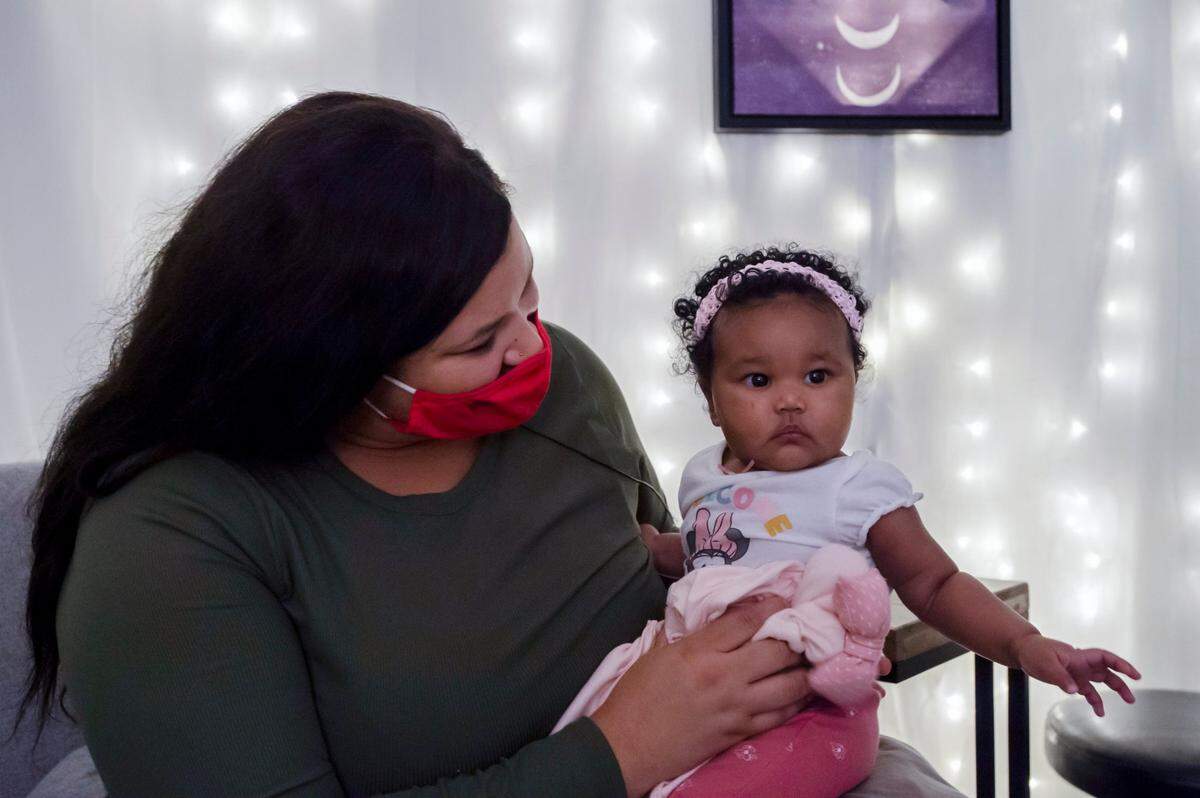
In the twinkly light of a birth recovery room last month, one of her clients, Destinee Campbell, was describing her first birth with Wisner in 2019. That child is now a curly-haired toddler who loves making her new little sister laugh; her birth two years ago was affirming, nurturing — everything Campbell’s first borderline-coerced C-section birth was not, she said.
Holding her third child, born at home over the summer under Wisner’s care, Campbell called over to the midwife, asking how her insurance had worked for that magical birth in 2019.
“They never paid me,” Wisner said.
This story was originally published January 2, 2022 at 5:00 AM.