
How the California doctor lobby is making maternal care needlessly scarce and costly
READ MORE
Midwives in California
Care from midwives is less expensive to health systems than physician care, and studies show it leads to positive health outcomes, including more breastfeeding, fewer episiotomies, lower fetal mortality rates and fewer preterm births. So why is midwifery access a statewide problem in California?
Expand All

She just wanted to help women give birth. But she learned California wouldn’t pay her
‘She made me feel like a human being’: A homeless drug user found hope from her midwife
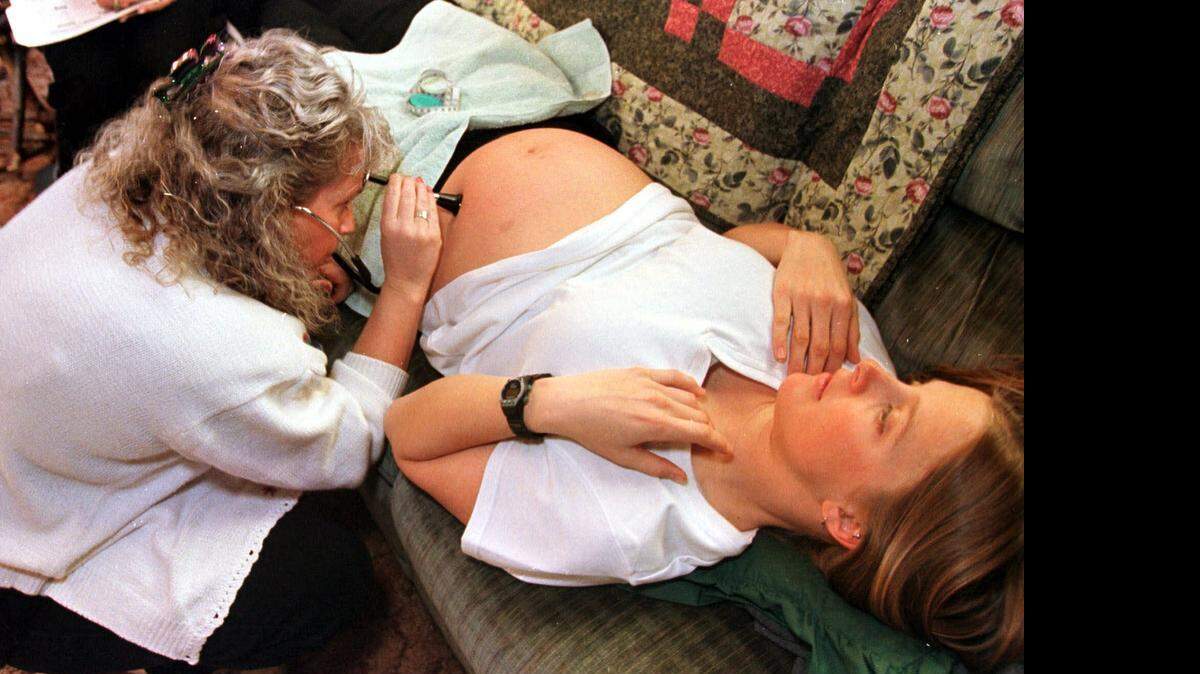
How the California doctor lobby is making maternal care needlessly scarce and costly
‘This is a right.’ How Medi-Cal can pay for midwifery services and change birth experience
The COVID pandemic brought dramatic increases in online searches for information related to home birth as well as the number of Americans who went on to give birth outside hospitals. As specialists in community-based maternity care in private homes and freestanding birth centers, California’s licensed midwives have long been answering this call, both from parents concerned about the pandemic and from people living in maternal care “deserts” that would otherwise leave them with no provider at all. Yet the medical lobby continues to push for legislation that would further restrict access to licensed midwives and enshrine physicians as the arbiters of when and how pregnant people qualify for midwifery care.
The reasons people seek out midwifery care are myriad and extend beyond the circumstances specific to the pandemic. As more hospitals ban vaginal births after cesareans, effectively forcing pregnant people to undergo a surgical birth whether it’s medically necessary or not, more families are looking for evidence-based alternatives to the long-since-debunked “once a cesarean, always a cesarean” rule. Others want the intensive, highly individualized prenatal and postpartum care that licensed midwives provide, while some choose to give birth at home due to their religious or cultural beliefs and practices.
And growing numbers of Californians are simply in need of a maternity care provider who comes to them.
Why would the medical lobby work to limit access to a safe and cost-effective model of care that offers a solution to California’s maternity care crisis? Some reasons are obvious. Maternity care is a multibillion-dollar industry, and even a small increase in out-of-hospital births represents a significant threat to the bottom line.
Other reasons are more insidious. A history of racism, misogyny and xenophobia informs midwifery law and policy in the U.S., a result of a decades-long campaign by organized medicine to eliminate a historically female profession that both drew from and provided care to Black, Brown, Indigenous and immigrant Asian and European communities.
It is thanks to this history that California shares the dubious distinction of being one of four states where licensed midwives remain under the regulatory control of a board of physicians, with no representation from their own profession or members of the public who receive care from them. As the only health care professionals in California who do not have their own board, licensed midwives are denied the right to develop or initiate regulatory, disciplinary or fiscal policies and practices that have a direct impact on their profession and the public they serve.
Given the conflicts of interest that inevitably emerge when a profession is regulated by members of a competing profession, it should come as no surprise that this example of so-called regulatory capture has led to a state of perpetual gridlock.
Rules governing clinical practice guidelines for licensed midwives have remained unpromulgated and in legal limbo since 2014, in clear violation of statutory mandates. Legislation was passed to make licensed midwives’ Medi-Cal qualification contingent on the promulgation of said rules. Another bill would radically limit the number of people who could meet the qualifications for out-of-hospital birth. And legislation to ban licensed midwives from caring for pregnant people with a previous cesarean is threatened on a nearly annual basis.
This cycle of regulatory and legislative dysfunction continues while pregnant people struggle to find the care they need.
It’s time for the Legislature to end the gridlock. It should follow the California Medical Board’s recommendation and create a regulatory board for licensed midwives with the tools to meet the growing demand and critical need for their services.
This story was originally published January 2, 2022 at 5:00 AM.