Sacramento promised shelter options to City Hall sleepers. Why are many unhoused?
AI-generated summary reviewed by our newsroom.
- City banned sleeping at City Hall; few accepted alternate shelter options.
- Many unhoused cited shelter rules, distance, and safety as deterrents.
- City's coordinated access system has 3,000 waitlisted; 40–50 beds open weekly.
Douglas Grieve spent his last few nights outside Sacramento City Hall optimistic, even as he knew his time there was running out.
Grieve, a Navy veteran and Sacramento native, had slept at the property for five months. Like many of the location’s regulars, he was drawn to building’s white lights and sense of safety. The black benches allowed him to lock the brand-new Huffy bike bought this month for his 67th birthday.
Before a ban on sleeping at City Hall took effect, he was approached by city staff, veterans association workers and even some police officers. Each person provided phone numbers and discussed the potential of housing, which led Grieve to remain hopeful he’d have a new place to rest.
But by Thursday — the first day of the ban — reality had set in. Grieve still had no place to go, and City Hall was no longer an option.
“I don’t know what I’m going to do,” Grieve said as he sat in the nearby Cesar Chavez Plaza that evening.
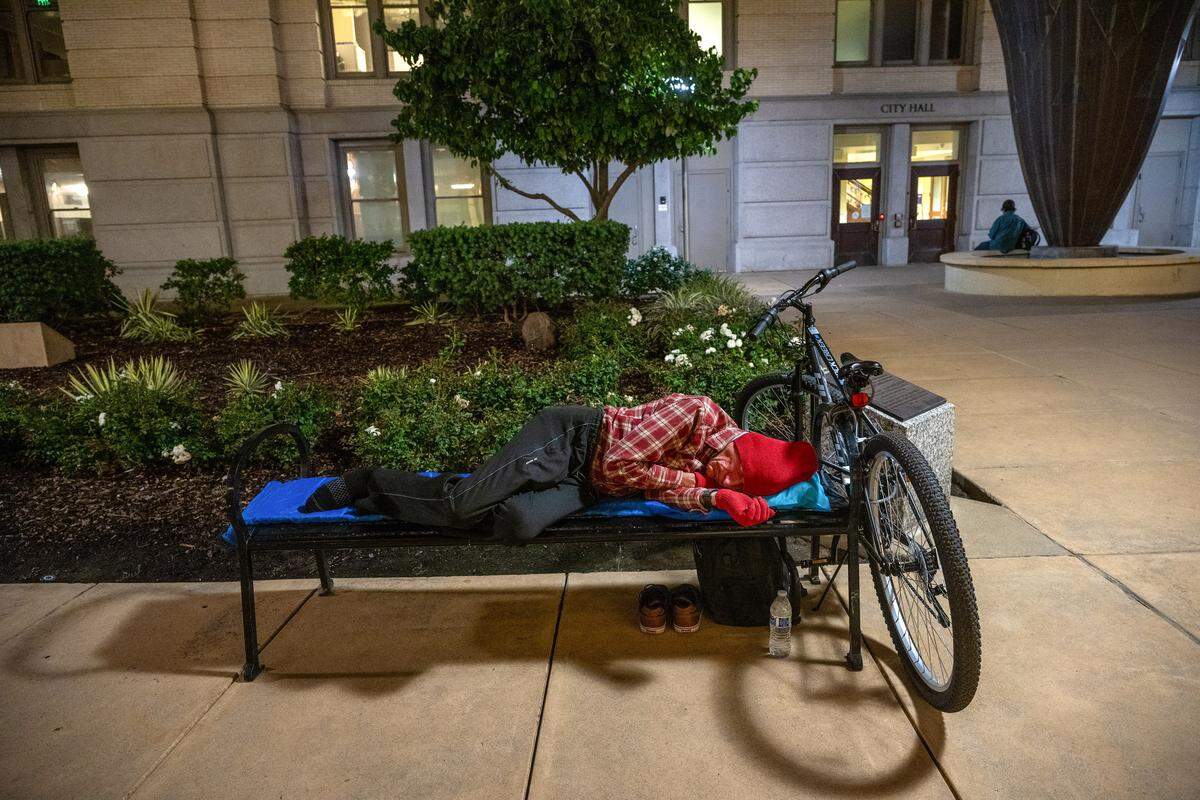
Grieve was one of the roughly 20 homeless people who had spent nights spread across the property and didn’t have housing by Thursday, according to interviews with city staff and more than a dozen homeless people. The gap comes despite promises by city leaders to offer housing to each person who regularly slept near the building when the City Council passed the ordinance last month.
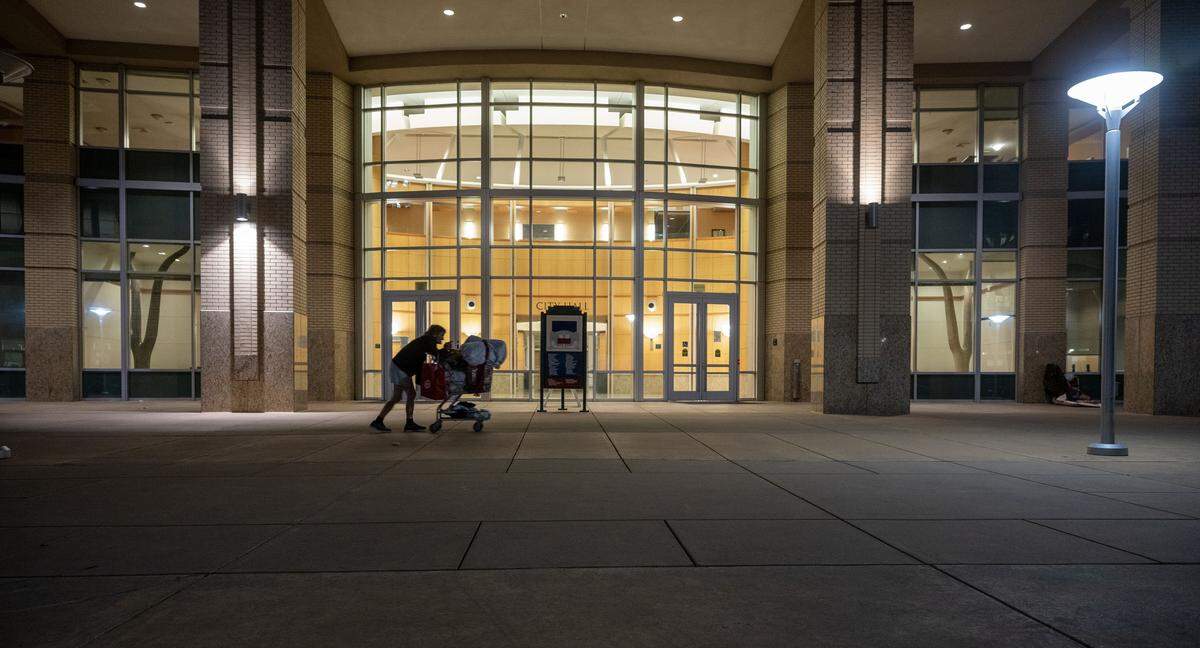
Under the new policy, people are prohibited from sitting, lying down or sleeping outside City Hall during all hours of the day. Violations could carry penalties ranging from $250 to $25,000.
“As this ordinance will be implemented, we’re going to go to those individuals and offer them a place to go,” said Mayor Kevin McCarty on July 29 at the council meeting. The ordinance took effect 30 days later.
Such offers came, but no one accepted, said Hezekiah Allen, a programs manager for the city’s Department of Community Response. The city previously estimated that 20 people routinely slept at the property.
Allen, along with other DCR staff, spent some days throughout August conducting outreach at City Hall. They passed out flyers, signed people up to the region’s coordinated access system and staffed a table to explain the policy change.
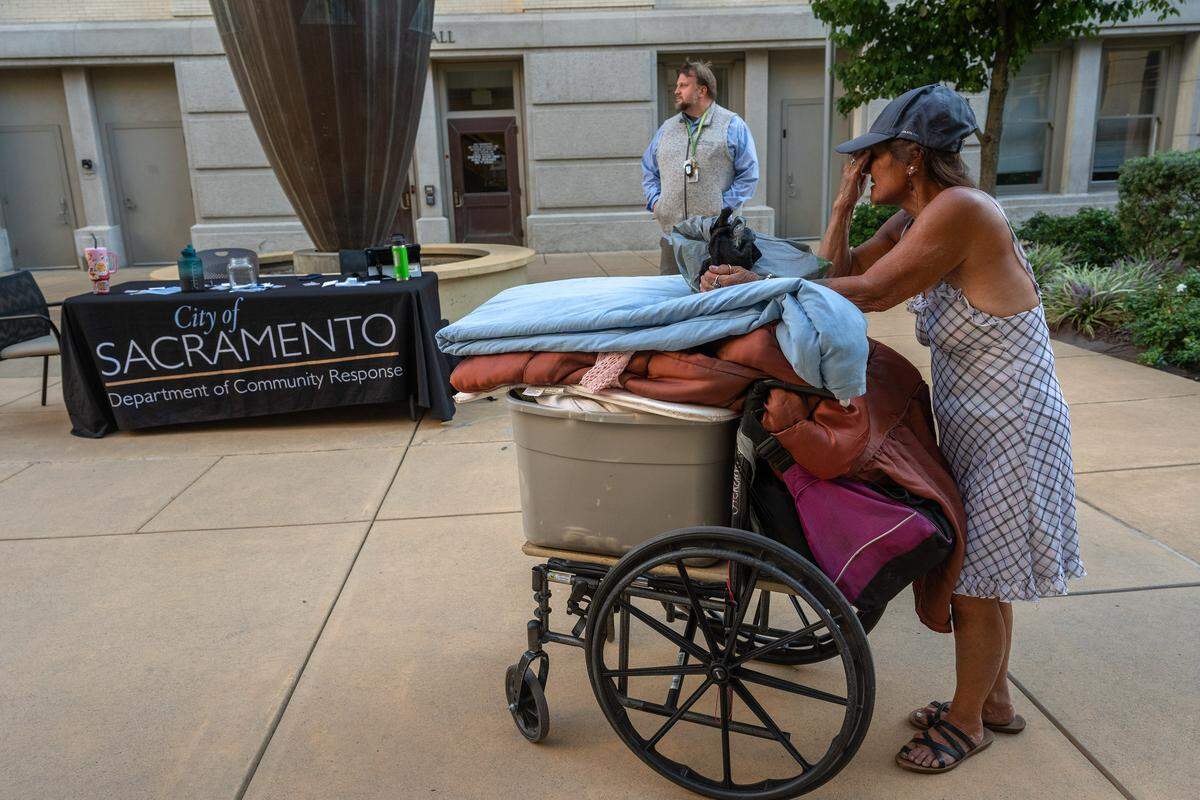
They also informed people of the one immediate shelter available to them — the city’s Outreach and Engagement Center.
The Del Paso Park shelter had roughly 25 beds available for people who regularly slept at City Hall, Allen said. The center opened full-time as a short‑term, overnight respite center in 2022. Typically, 25 to 50 beds are available per night, with priority given to people who have spent the prior evening there.
As of Wednesday night, Allen said “not a single person” had taken the offer. By Friday afternoon, a city spokesperson said six people had accepted the shelter.
People cited the center’s distance from homeless services, 10 p.m. curfew, pets restrictions and storage limits in their refusals, Allen said. Others preferred not to stay in a congregate shelter environment, where individuals typically share sleeping quarters.
“As imperfect as our shelter systems are, I do believe that it’s better than being out here,” Allen said Wednesday afternoon. “I do believe it’s safer and that it produces positive outcomes, but I can understand why folks may choose what’s known and what’s familiar and comfortable.”
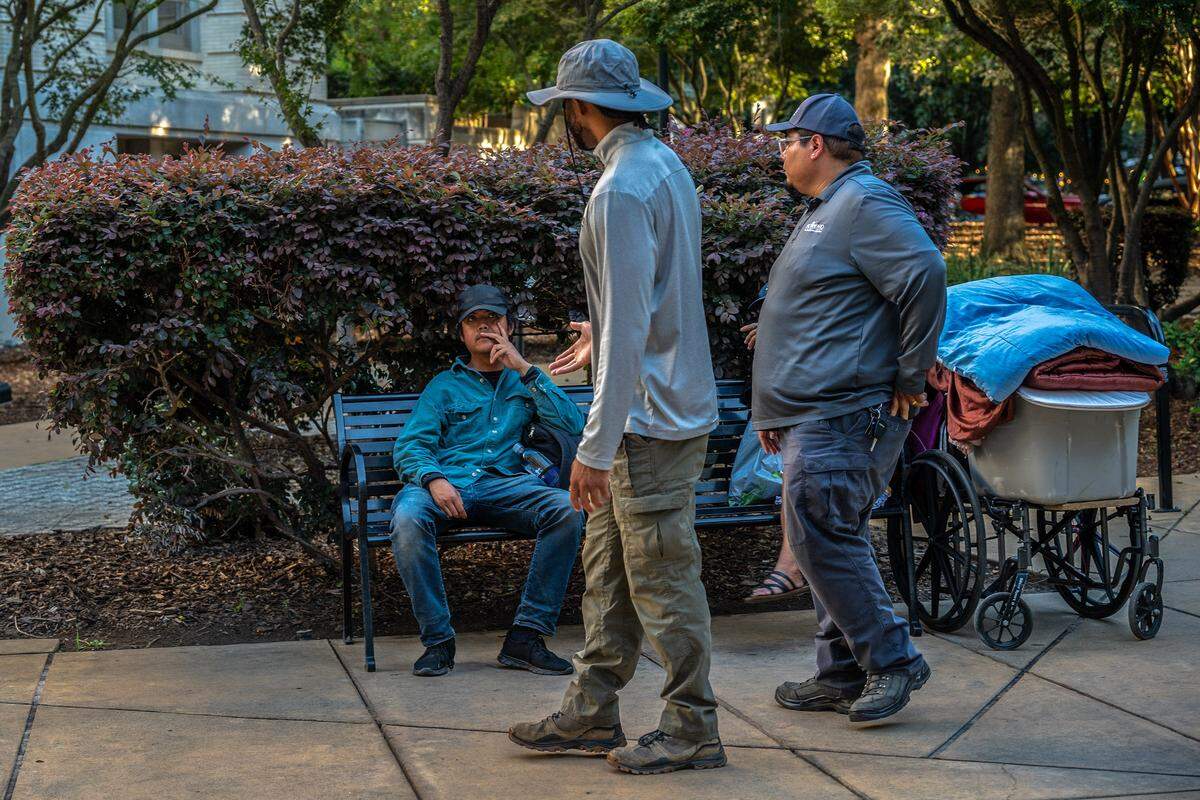
Among those still unhoused was Randy Horn, 72, who had slept at City Hall for almost two years. He grew fond of the location, particularly the safety and quietness. Most of all, Horn loved the building’s arches.
“In the rain, it was beautiful,” Horn said. “It didn’t even touch you.”
Sleeping outside also meant no limit on his belongings, which included clothing collected over decades, a couple queen-sized blankets and two bibles. Many city shelters limit belongings.
“I’ve gone through it all, and I just can’t do it,” Horn said. “I can’t downsize anymore.”
On Wednesday night, Horn still did not know where he would sleep in the coming days. Two Sacramento police officers arrived around 8:30 p.m. to remind him that City Hall would no longer be an option.
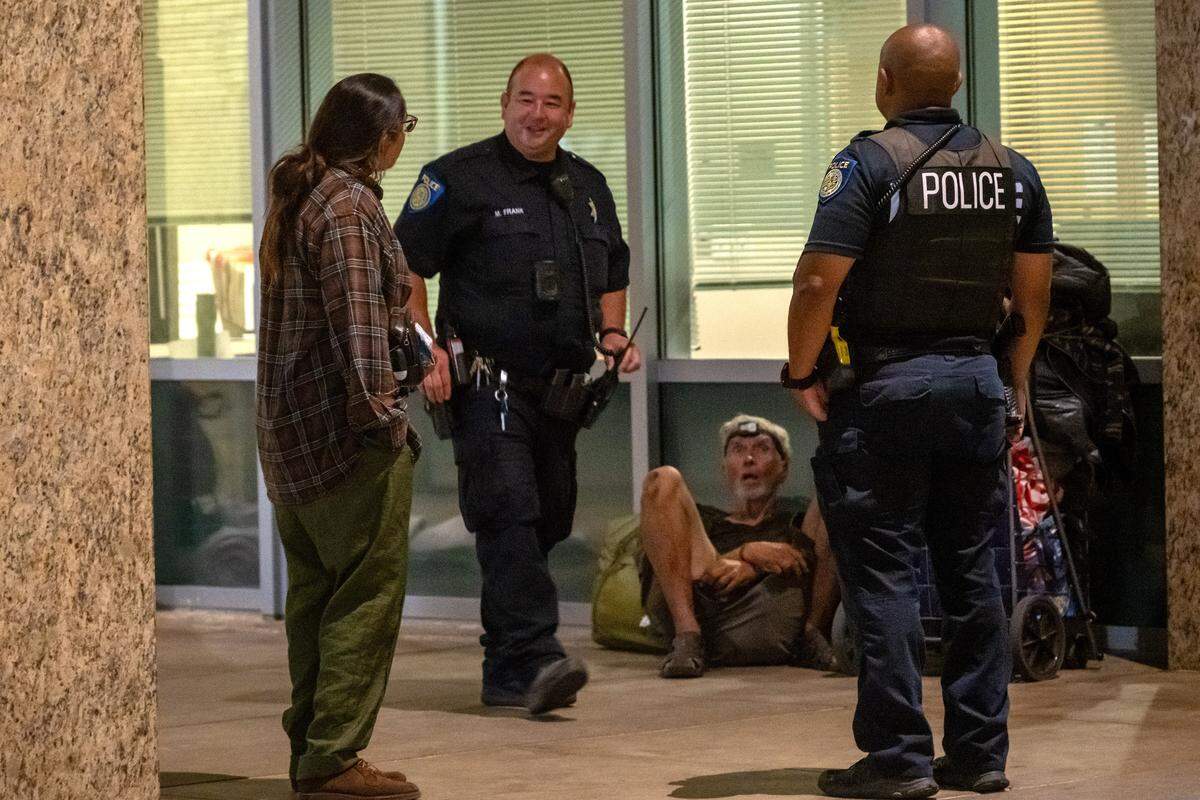
The officers walked around the property, notifying several homeless people that enforcement would begin at 6 a.m. the next day.
“They said, ‘No more. This is it. Tonight is the last night,’” Horn recalled in his brief conversation with the officers.
One person was cited for the new ordinance that first night, said Police Department spokesperson Sgt. Dan Wiseman on Friday afternoon.
McCarty, who spearheaded the change, has previously said that he does not expect many citations will be given out as a result of the new ordinance. He pushed forward the policy as a “common sense approach” that would protect city workers, save money on cleanup services and allow for the reallocation of homeless resources.
Geneva Hutcheson, a spokesperson for the mayor, referred The Sacramento Bee to McCarty’s statements at Thursday’s announcement of 135 new tiny homes at Roseville Road when asked for comment on Friday.
At the announcement, McCarty reiterated his strategy to tackle homelessness. He envisions the city moving away from congregate shelters and instead buying more tiny homes, which he calls a cost-effective strategy to take more of the people off the streets.
“This is kind of the future of where we’re headed with our homeless response,” McCarty said on Thursday.
Gary Kelly, 68, hopes he ends up in one of those new tiny homes at Roseville Road.
He had spent about a year at City Hall with his partner, setting up their tent each night against the building facing H Street. Throughout that time, Kelly said they routinely called 211 — the region’s primary referral line for shelter options and homeless services. The couple said they haven’t got a response back for a long-term housing option.
Allen said the waitlist for the coordinated access system, which utilizes 211, has 3,000 people on any given night. Maybe 40 or 50 beds become available on a weekly basis, he added.
“They haven’t given us no tiny home, no trailer, no nothing,” Kelly said. “And you ain’t got to give it to us. We got money to pay for it.”
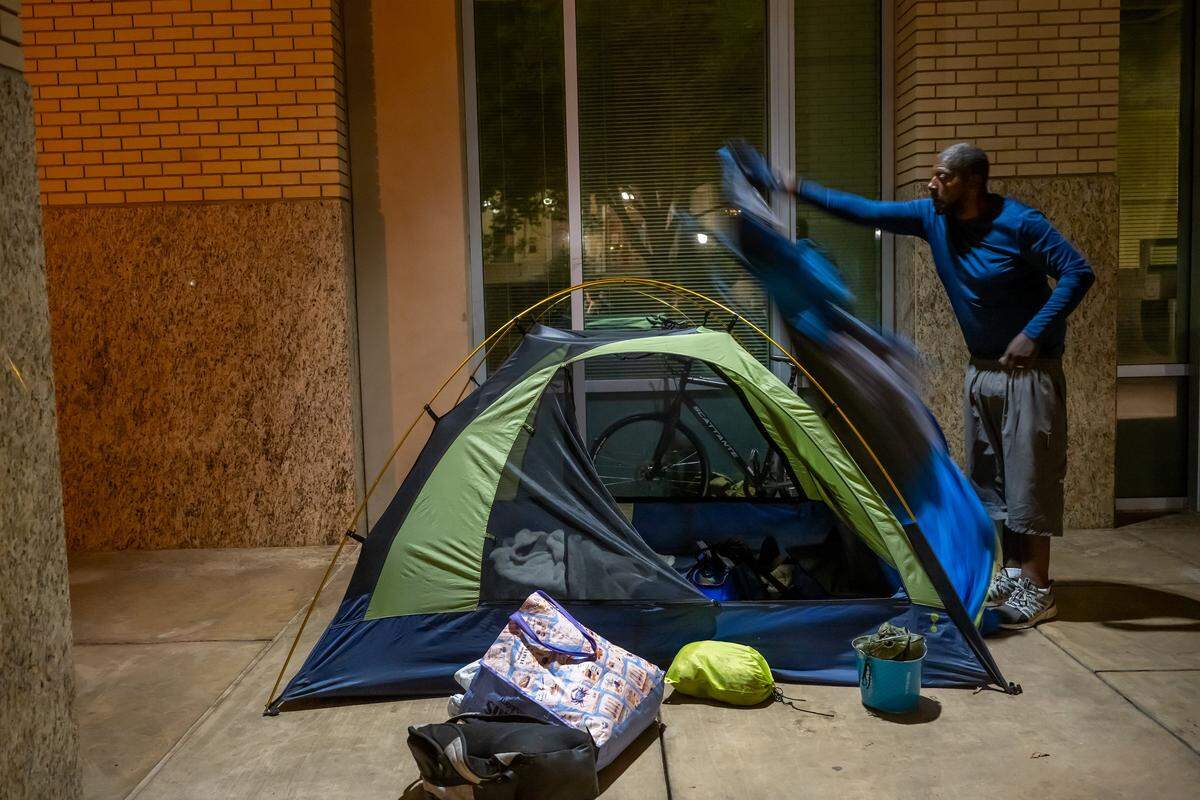
Temporary shelters like the Outreach and Engagement Center aren’t an option for Kelly. He suffers from incontinence, the involuntary loss of urine.
“They don’t want me there,” Kelly said on Wednesday night around 9 p.m. “Every time I go to a shelter, they make me leave.”
On the other side of City Hall, Grieve prepared for his final night by happily listening to the A’s beat the Detroit Tigers.
Classical music piping through the building’s speakers helped wake him up around 5 a.m. on Thursday, though Grieve said his military training hasn’t let him sleep in for more than 40 years. The city has been blasting the music each morning since 2019 to let people know when it’s time to leave the premises.
Then, as he’s done for months, Grieve headed to the shelter Loaves and Fishes for meals and to wash his only pair of Levi’s jeans. He spent the remainder of the day at Cesar Chavez Plaza, across City Hall, where homeless advocates had planned a rally in protest of the ban.
There, Grieve said he met with a veterans association worker and learned that his only option for the night would be a congregate housing shelter on X Street. He refused, citing a recent MRSA infection on his right leg and his post traumatic stress disorder stemming from his time in the military.
“I know the one they were trying to send me to,” he said, “and I don’t do good in those environments.”
As the sun set Thursday evening, Grieve weighed his options.
He first considered City Hall one last time before seeing the roaming security guard. There was also that lighted bus stop in midtown that he had previously spent some nights. But that required him to sleep upright.
He ultimately settled outside the Cathedral of the Blessed Sacrament downtown, where he could chain up his bike and he believed police wouldn’t bother him.
“I’m just about fed up with this whole thing,” Grieve said. “All these people drop the ball a lot. All these agencies. It’s just a facade.”
This story was originally published September 2, 2025 at 5:00 AM.