
Opinion: Sacramento should serve the community and divest money from its police budget
Editor’s note: This commentary is part an ongoing series of journalism produced as part a collaboration between The Sacramento Bee, Sol Collective and other community organizations called the “Community to Newsroom Pipeline.” To learn more or to contribute, email us at voices@sacbee.com.
***
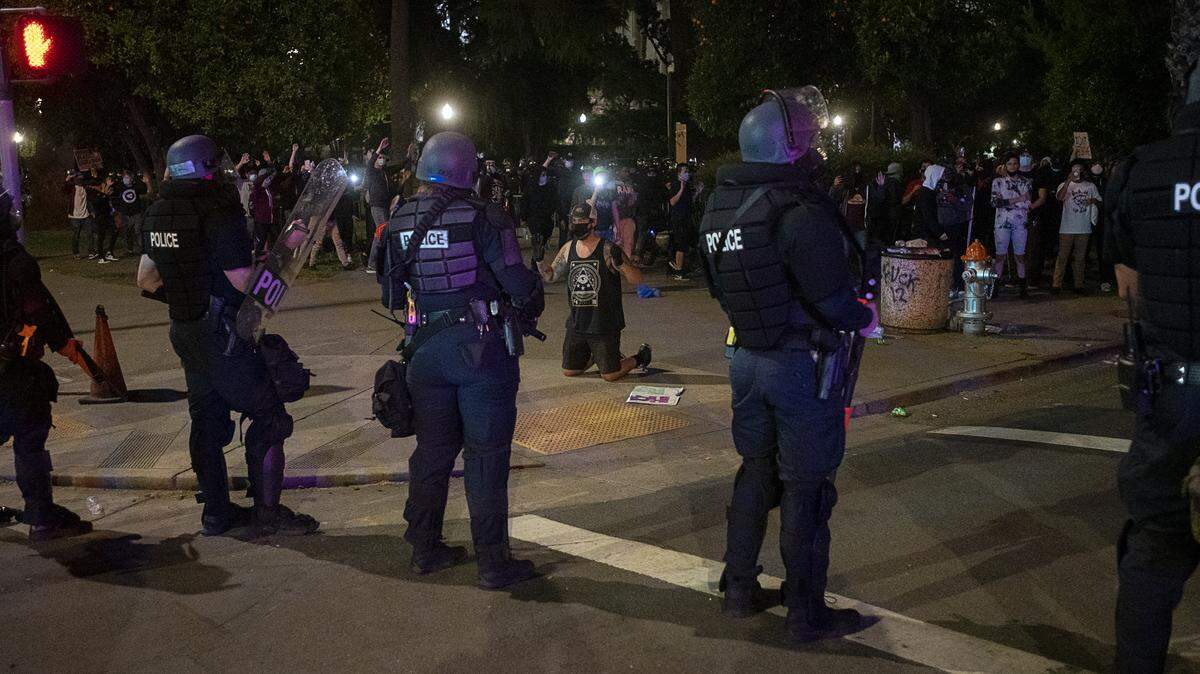
The deaths of George Floyd, Breonna Taylor and Ahmaud Arbery sparked ubiquitous unrest throughout the United States that spread throughout the international political scene. When the rebellion started, cities throughout California enacted curfews to quell large gatherings of people, most of whom were protesting in support of the most recent victims of police violence.
The city of Sacramento declared a local public emergency and enacted a citywide curfew on June 1 that it kept in place for nearly a week. It is hypocritical for local governments to utilize police forces to suppress the people (whom they claim to represent) for their responses to police brutality. It is as if the people of Sacramento have not been highlighting these problems since before Stephon Clark was killed in his grandmother’s backyard.
Since demonstrations began, the city has witnessed numerous occasions of the Sacramento Police Department and the Sacramento County Sheriff’s Office using excessive force on protesters, the most notable being an 18-year-old protester shot in the face by a rubber bullet. A Legal Observer was also struck in the face by a rubber bullet later that night. This reinforces the basis of my studies that conclude the police, during times of social change, will always be the provocateurs and perpetuators of violence.
Calls for the demilitarization of the police have been endemic since before the creation of the Black Lives Matter organization in 2013. In my book “Subservience: Political and Economic Decisions that Created a Global Black Underclass,” I highlight the formulation of the relationship between the military and the police during the War on Drugs. While the relationship was created before President Reagan, it was under his administration that the Military Cooperation with Civilian Law Enforcement Agencies Act of 1981 was amended to strategically target low-income black communities.
My studies would attribute this regulation of violence to the manner by which the United States seeks global hegemony through military occupation. Since the Reagan administration, not only have police budgets increased in funding, but the defense budget has increased as well for US international occupation.
Sitting on the Measure U Community Advisory Committee, I have made efforts to see a breakdown of the Sacramento Police Department budget, which will be roughly $157.5 million in the fiscal year starting July 1. My findings have been interesting.
According to the approved budget for Fiscal Year 2019/20, overall costs for the city have been increasing and will continue to increase due to a number of characteristics. Pensions have been an unsustainable problem for the city of Sacramento since 2014. And pensions will continue to be unsustainable well into the year 2025.
The city’s pension costs in the general fund budget are estimated to increase by $28.6 million - or 27 percent - over the next five years, according to the 2020/21 budget document. Police pensions make up a significant portion of the city’s retirement spending.
The Measure U spending plan for the fiscal year starting July 1 includes $41.7 million for the police department. That’s roughly 46 percent of the $89 million in total Measure U spending. And by 2024/25, police funding from Measure U is projected to reach $48.1 million.
On the same note, economic development is only expected to see 4.7 percent ($4.2 million) of Measure U expenditures next fiscal year, and Youth, Parks, and Community Enrichment (YPCE) just 16 percent ($14.4 million).
The people have also not forgotten that the City Council agreed to move forward with the purchase of a Lenco Bearcat using Measure U dollars in the amount of $404,521 at the March 10 City Council Meeting. A quick search for the description of what a Bearcat is reveals: “The Lenco BearCat is a wheeled armored personnel carrier designed for military and law enforcement use. It is in use by several military forces and law enforcement agencies around the world.”
As a response to the killing of George Floyd in Minneapolis, there has been multiple termination of contracts by various entities with the Minneapolis Police Department. The Minneapolis Board of Education, University of Minnesota, Minneapolis Parks and Recreation Board, and various private entities have severed ties with the Minneapolis Police Department.
The Mayor of Los Angeles also announced that his city will begin to divest $150 million from the police to be reinvested into communities of color, an ask that has been echoed for years by activists all over the nation. If the city has been having sustainability problems with the rising costs of pensions, along with police brutality and rising insurance costs, wouldn’t a more fiscally responsible solution be to begin divesting away from liability costs? In the long run, wouldn’t it be more economically sensible to free up these funds to go towards economic development in impoverished communities?
Studies show that crime is a derivative of poverty.
Maybe we should listen and actually respond to the needs of these communities.
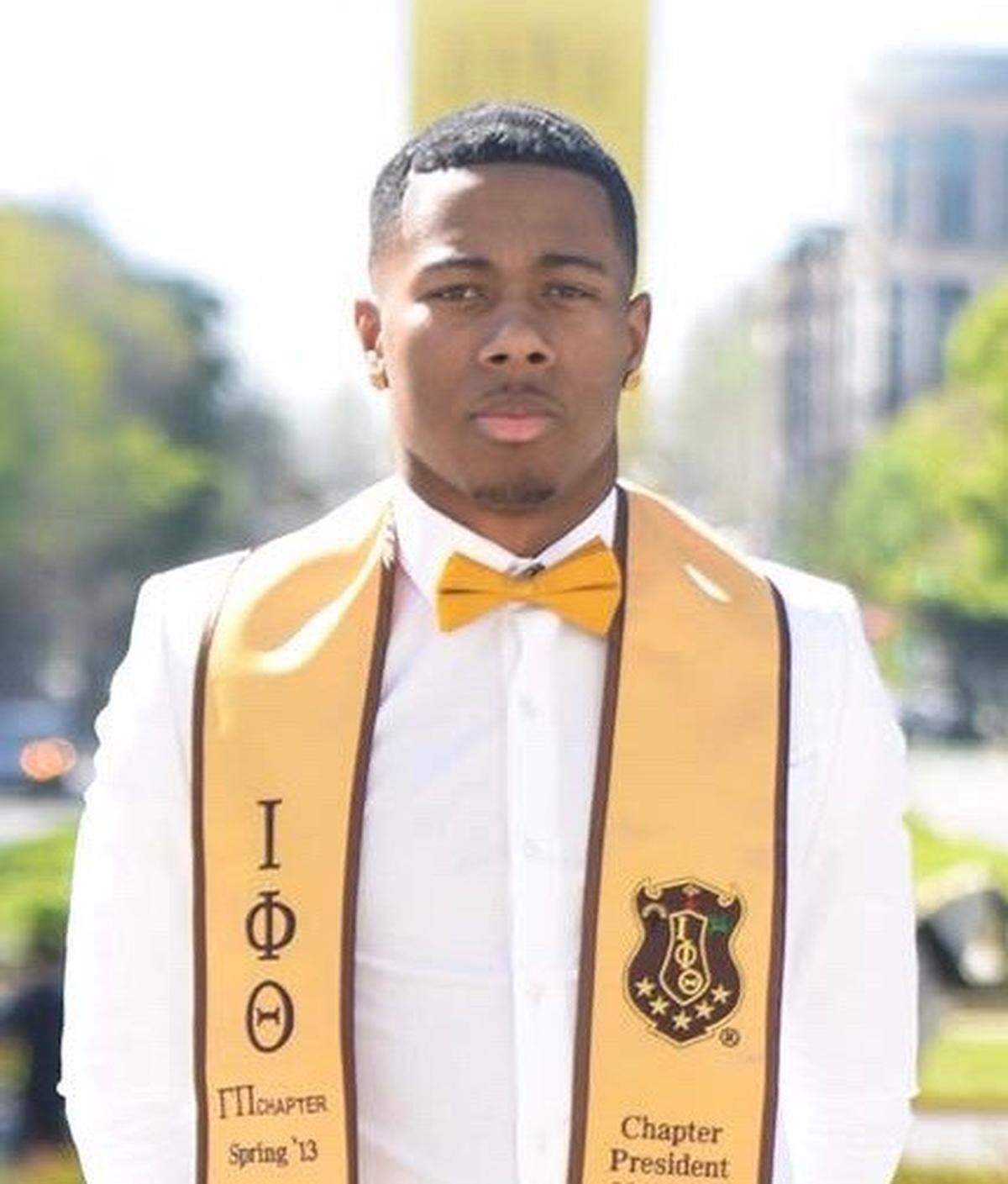
Khalil Ferguson is a native of Richmond, California and a graduate from Sacramento State University. He is a political economist, guerilla intellectual, and Author of “Subservience: Political and Economic Decisions that Created a Global Black Underclass,” which is available on Amazon. Khalil is working towards his goal of earning a PhD in International Political Economy.