California Assembly leaders describe ‘line in the sand’ on safety net cuts
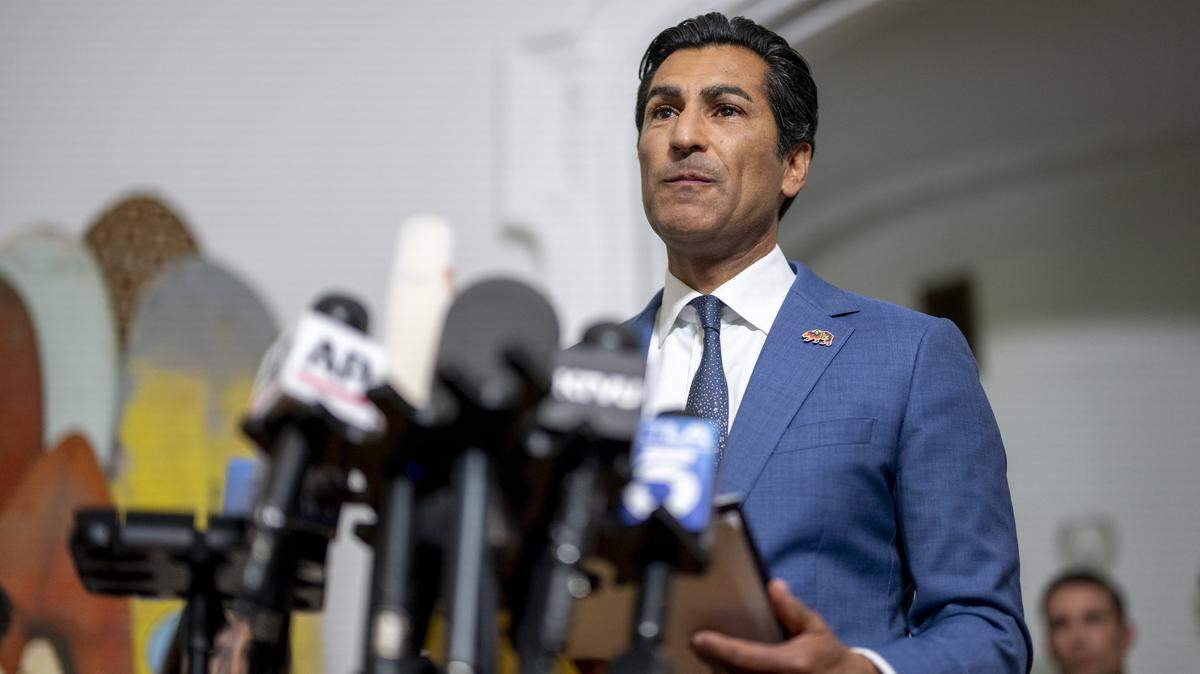
California Assembly leaders released a budget proposal on Thursday that was light on specifics but indicates the chamber will resist any steep cuts to social services and healthcare funding and is open, but far from committed, to raising more revenues from large corporations doing business in the state.
Taken together with a similar proposal released by state Senate leaders in mid-April, the Assembly’s plan suggests lawmakers of both chambers are preparing to resist some of the steeper cuts to Medi-Cal programs, public education and in-home support service programs for seniors and people with disabilities that Gov. Gavin Newsom proposed in January. On funding for K-12 schools and the in-home support service programs, the Assembly leaders specifically rejected Newsom’s cuts.
But unlike their counterparts in the Senate, Assembly Speaker Robert Rivas, D-Hollister, and his top lieutenants did not include any funding figures in their proposal, making a complete side-by-side comparison with the Senate’s plan difficult. Assembly officials described it as a document outlining the chamber’s values and approach to the coming negotiations with senators and the governor.
“In 2026 we will draw a line in the sand, defending the safety net programs such as in-home care, healthcare and dental care, and food aid that California’s families, seniors, veterans and children rely on most,” the Assembly proposal said. Later in the document, the Assembly leaders said they wanted to shore up the state’s food bank program, invest in the healthcare workforce and “soften some of the most harmful proposed cuts to medical and dental care.”
The governor unveils his final budget proposal, revised to incorporate the year’s revenue gains, next week.
Also unlike the Senate, the Assembly proposal does not include a firm commitment to raising new revenues through increased taxes on corporations. The Senate proposal included a $5 billion to $8 billion revenue increase by imposing a fee on large corporations in the state whose employees are left to rely on state-funded Medi-Cal for their healthcare. The Assembly proposal, on the other hand, promises only that “California will take a hard look at corporate tax loopholes to make sure large corporations pay their share.”
Assembly leaders said such a hard look would come only if U.S. Congress doesn’t act to reverse the cuts Republicans passed in last year’s One Big Beautiful Act. There’s no reason Republicans would take such an action before the Legislature and governor conclude drafting California’s budget by the end of June. In comments to Politico, Rivas said he wanted to see how Democrats performed nationally in the coming midterm elections before any debate on new taxes.
Despite that distinct lack of a firm commitment to raising new revenues, proponents of finding new revenue sources to replace federal healthcare cuts cheered the Assembly proposal and described it as aligned with the Senate.
“Assembly and Senate Democrats are united that we cannot cut our way out of Trump’s chaos or roll back our social safety net to address a tough budget year,” Assembly Health Committee Chair Mia Bonta, D-Alameda, said in a statement. “With federal Republicans gutting our healthcare, it’s time to roll up our sleeves and do the tough work to hold corporations accountable for shifting billions in costs onto taxpayers and hiding their profits through tax loopholes.”
Labor unions and progressive lawmakers have been pushing hard for both the tax on large companies whose employees rely on Medi-Cal and for a separate proposal to collect more revenue from multinational corporations operating in California.
“We’ve built a broad coalition in the Legislature and in our communities, urban and rural, north and south, behind a serious revenue campaign to deliver for Californians,” Bonta said.
Assembly leaders also announced that they would seek to put a measure on the ballot either this year or in 2028 asking voters to raise a constitutional cap on how much money the state can put into its reserve account, nicknamed the rainy day fund, during good revenue years. Doing so, the Assembly Democrat’s proposal argued, could better insulate the state during economic downturns.
“California needs more flexibility and a bigger cushion,” the proposal read.
Rivas released his budget proposal one week before the governor unveils the May revision of his budget. The revision kicks off a negotiating sprint ahead of the June 15 deadline for the Assembly, Senate and governor to agree on a balanced budget. Newsom is expected to push for spending reductions and has indicated he will stand by controversial cuts to healthcare funding for undocumented immigrants as well as the Medi-Cal coverage of 200,000 people in the state with legal status for humanitarian reasons — such as political asylees and survivors of torture or sexual violence.
The Senate proposal explicitly rejected both those cuts, citing gains in state coffers since January.
Revenue collection has shot up over the course of 2026, driven by stock market gains by artificial intelligence companies who have benefitted from soaring optimism about the technology’s transformational economic potential. But market analysts are also increasingly sounding the alarm that AI stocks could be the type of bubble that has preceded historic market downturns, such as the dot com bubble.
On Thursday, ahead of the release of the Assembly budget proposal, the Legislative Analyst’s Office published a revenue update in which it urged lawmakers to treat the sudden influx of revenue as an aberration and one that could soon be reversed.
“It is now hard to ignore that the stock market appears, on its face, to be in a speculative bubble, rivaled only by the dot-com boom and the Roaring Twenties,” the report said. “Such speculative episodes almost always end in dramatic reversals.”
Rivas and the chairs of different Assembly budget committees and subcommittees plan to approach budget negotiations under the overarching premise that California’s fiscal outlook is “under incredible pressure,” according to the proposal. The proposal emphasized that the chamber would resist any inclusion of expensive new programs that would increase state spending down the road.
Such resistance may not prove necessary, so far this year, there’s been no indication of major new spending programs, and state leaders seem aligned on that front.
This story was originally published May 7, 2026 at 6:08 PM.