A car accident nearly ripped from us a leading voice in education. He’s back
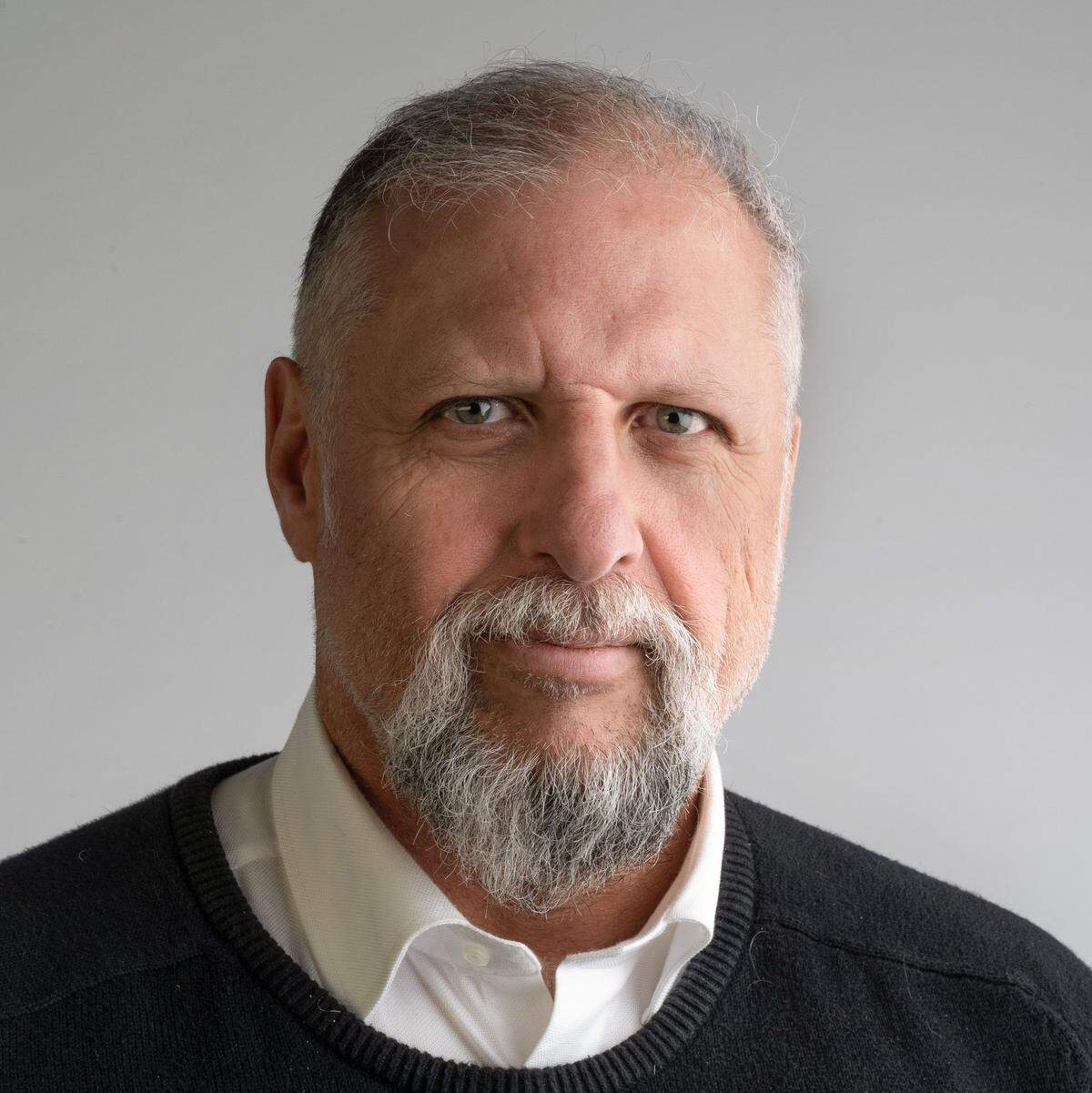
Sacramento City College President Michael Gutierrez is 51 but he seems much younger. He radiates a college counselor vibe more than one of a college president with impressive credentials.
Gutierrez is warm and self effacing, unlike the stereotype of a haughty academic who insists that we genuflect before his resume.
One would never know from meeting him that Gutierrez ascended to his career from generational poverty, environmental racism, and ethnic and class barriers. Or that he made a distinguished life for himself in education despite a complete lack of educational mentors in his formative years. Or that he not only left his Texas barrio when few of his peers did, but that he went onto Princeton, succeeded and assimilated into his new life without becoming ashamed of his old life.
Oh, and one more thing: One would never know to look upon Gutierrez that he narrowly escaped death just months ago in a horrendous car crash on Highway 50 in West Sacramento.
He is perpetually upbeat by nature. A father of teenage son and daughter, Gutierrez is celebrating the holidays with his kids, his wife Ligia and a heightened sense of gratitude this year because he is still around after surviving a four-car accident on Aug 12 – a moment of terror and grace that Gutierrez neither remembers nor can ever forget.
“I’m really happy to be alive,” Gutierrez said recently on the Land Park campus he has run since the summer of 2017.
Every devastating car crash on California highways tells a story of lives in progress interrupted by the sound of metal and vehicles colliding. In that instant, the lives inside, all a sum of accomplishments, setbacks, cherished dreams, complicated relationships and unfinished personal and professional work, are suddenly reshaped. All of that – all that beautiful and flawed humanity – can perish. No one really sees death coming.
Gutierrez never saw the Ford F-150 truck that plowed into the back of his Toyota Camry. He was in the fast lane of westbound Highway 50 near Harbor Boulevard. Gutierrez’s car was stationary at the moment of impact, sitting motionless in a traffic jam when it was hit from behind by the truck traveling at 70 mph.
His back seat was so obliterated in the impact, Gutierrez said California Highway Patrol investigators told him that they initially labeled his accident as a fatality because they couldn’t tell if someone had been in the car with him.
“While I have no memory of the accident, the thought (of what could have happened) if my family had been in the back seat of my car has really been haunting me,” Gutierrez said. “The trauma of imagining my kids in the back seat has been hard to get over.”
Gutierrez slipped into a kind of dream state immediately after the crash.
“I was out for 45 minutes to an hour,” he said. “My first memory is that I felt that I was dreaming. I had fallen asleep in my car and couldn’t wake up. The first thought I had was, ‘Why am I sleeping?’
“I’m trying to wake up and I could hear people talking,” he said. “I could hear the saw cutting open the roof of my car so they could pry the roof open. I was afraid I had hurt someone. Your brain starts doing inventory. Do I have all my limbs? Do I have all my teeth? I knew I was hurt pretty badly because my breathing was really short.”
Gutierrez suffered 15 broken ribs, four transverse fractures in his back, a lacerated liver, a serious concussion, nerve damage to his arms, cuts on his face and the back of his head, and significant bruising that he still feels today.
Later, when Gutierrez became fully conscious, he said he was told the accident happened because the motorist in the Ford truck had fallen asleep after driving all night. But as he was being rescued by first responders, Gutierrez couldn’t answer simple question that was central to his life: Who was he?
“The firefighters kept asking me questions and I couldn’t understand them,” he said. “They asked me who I was and I didn’t know who I was. I was trying to remember and it wouldn’t come to me.”
It was the fragility of life, the randomness of fate and the grace of good fortune all in one moment as Gutierrez grasped to reclaim the strands of his being.
Opportunity through education
Who was he? He had spent his life trying to be someone.
The thesis of his life can be distilled to one word: “perseverance.”
Gutierrez is in Sacramento as a college president dedicated to creating opportunities for others. He arrived at this place by surviving the collisions that might have killed his dreams before he realized them.
That day of the accident, at around 8:30 a.m., Gutierrez was driving to Davis for an off-site retreat. He was carrying a box of Marie’s Donuts to share with colleagues. And he brought with him is undying quest for knowledge that had transformed his life into a kind or miracle of hope and achievement.
Gutierrez had been surrounded by plenty of of peers who didn’t graduate from high school, ran afoul of the law or who had started families before they were emotionally or economically ready.
Gutierrez was raised on Espada Road, in an ancient San Antonio neighborhood where people like his family have lived since before it was Texas.
“My relatives didn’t cross the border, the border crossed them,” he said.
The neighborhood, until very recently, was the site of a sewage treatment plant serving south San Antonio. The smell Gutierrez and his neighbors endured was brutal and, yet, would you believe the local residents were not served by city sewers but were connected to septic tanks?
“You become aware of environmental racism,” Gutierrez said.
Perseverance to Princeton
Gutierrez had to leave his neighborhood to become aware of realities he hadn’t contemplated. His youth was filled with powerful images that only made sense to him later.
As a kid, Gutierrez was bused to school. He and his classmates passed the liquor stores and massage parlors that were prevalent in their neighborhood. His imagination was defined for a time by a mindset restricted by the limitations of poverty. When he was told before the eighth-grade graduation that he was his school’s valedictorian, his first comment was: “What’s a valedictorian?”
He was informed that he had to give a speech and he wondered why, until it was explained that valedictorians represented the entire class at graduation. He didn’t know how to type then, so he wrote his speech longhand.
His theme? Perseverance.
Gutierrez was the youngest of five kids, most of whom didn’t go to college. His parents worked such long hours to support the family that they only saw him play football twice – once, in third grade, and another when he was a senior in high school. From his class of 150 ninth graders, only 98 graduated, Gutierrez said. How many of those went to Ivy League schools?
“I’m pretty sure I’m the first one,” he said.
He flew to Princeton, marking only the second time he had been on plane. He barely made his connecting flight, but one of his bags didn’t. He arrived at Princeton after hours, knowing no one, seeing the campus for the first time at night because neither he nor his parents had the money to do any college visits.
He didn’t know how to study at first, had nothing in common with classmates who came from a kind of affluence that Gutierrez never could have imagined.
“Sometimes you don’t even know what you don’t know and even the people trying to help you don’t know how,” he said.
Gutierrez refused to quit because he remembered neighborhood kids who left but then came home with their tails between their legs, having dropped out of colleges in Texas.
“I had never seen a bagel in my life,” he said. “When I went to college, I got to experience going to the ‘Nutcracker’ at Lincoln Center in New York. I had experiences I otherwise wouldn’t have had, but I was a fish out of water...But I was always proud of where I came from. I’m very proud of my family so I remember thinking that I was going to go to college and be proud of who I was.”
Finding community college mission
He figured out how to study properly by his junior year. In graduate school at the University of Texas, Gutierrez found his passion for community colleges.
“I’ve always felt I should give back to my community and, for a time, I thought my community was in south Texas,” he said.
But in truth, his community was in the mission of community colleges.
“Community college is a democratizing agent,” he said. “People who are citizens or non-citizens can learn English. People in poverty can become educated and move into the middle class.”
“When I moved to Sacramento, I began living in the service area of Sac City College. My kids go to the local school district. I’m all in.”
Can you imagine the loss had that car accident had turned out differently? Luckily, Sacramento doesn’t have to ponder it. But Gutierrez does since he returned to work part time in October and full time in November.
“Doing the right thing has become much more important,” he said. “And making sure that our commitment professionally and my commitment family-wise is what it needs to be.
“If they weren’t what they needed to be before they certainly are now.”
This story was originally published December 26, 2019 at 5:30 AM.