A woman was killed by her CHP officer husband because cops just can’t police themselves
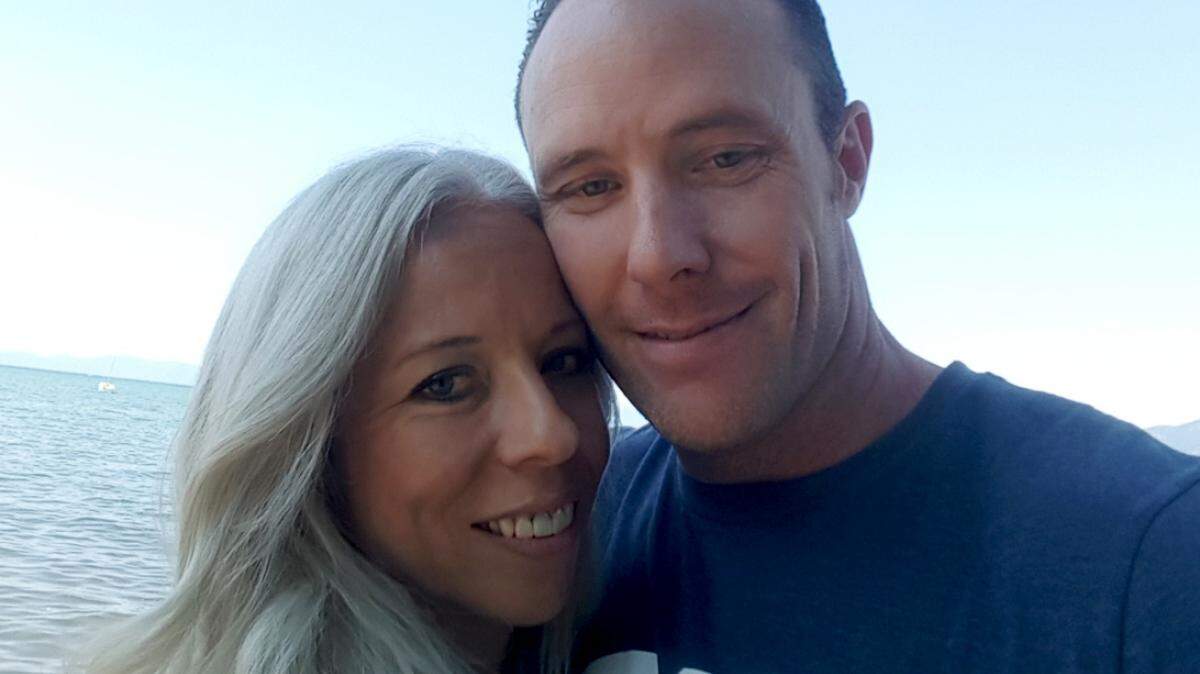
Mary Wheat was killed by an off-duty California Highway Patrol officer who she could not escape as he terrorized her, stalked her, surveilled her, and then shot her to death on Labor Day weekend in 2018.
Wheat’s killer was her estranged husband Brad Wheat, a cop in the CHP office of Amador County. He tracked her down in Sutter Creek and unloaded his .40 caliber CHP-issued handgun on her while she and her boyfriend begged for mercy. Brad Wheat then killed himself, leaving their four children without parents.
First reported by The Bee’s Sam Stanton, the following facts of this horrific case are not in dispute: Before attacking her, Brad Wheat told his CHP colleagues that he planned to kill his estranged wife’s boyfriend and then kill himself. Brad Wheat’s CHP co-workers were concerned enough to take the revolver away from him but later returned it to him.
Did the CHP conduct an investigation of Wheat? No. Did it alert prosecutors to charge Brad Wheat? No. Did it feel he was dangerous? No. Did it feel Brad Wheat committed a crime? No. Did it feel a duty to do anything beyond showing concern for Brad Wheat? No. Did it alert Mary Wheat or her boyfriend of Brad Wheat’s threats of violence? No.
Beyond the killing of a woman by a sworn California peace officer is the unspeakable truth that his colleagues, and his superiors, put a weapon back in the hands of a CHP officer.
Brad Wheat told colleagues that he couldn’t handle that his marriage was irreparably damaged. His anguish was such that he expressed a desire to commit lethal violence with his gun because his wife was involved with another man.
And the CHP did next to nothing until a woman was dead at the hands of one of its own.
CHP ignored domestic violence protocols
As societal understanding of domestic violence has grown because of the work of countless experts and advocates, we know now that when a man with a gun threatens violence, a woman is very likely going to end up dead unless there is a prompt and aggressive intervention.
Heroic groups such as WEAVE, the primary provider of crisis intervention for domestic violence victims in Sacramento County, clearly state a series of steps that must be taken when a man begins making threats of violence as his marriage or relationship is dissolving.
One of the first interventions on that list is to call 911.
In the case of Mary Wheat, there should not have been a need to call 911 because cops knew what was going on but did nothing. One of the questions raised in a civil suit brought against the CHP is whether Mary Wheat would be alive today if the man tormenting her were not a cop.
But because Brad Wheat was a cop, his CHP colleagues gave him the benefit of the doubt that very likely would not have been extended to an armed, suicidal man who was not in the law enforcement fraternity.
“I feel like if it was a normal citizen that had done the same thing they’d probably be in prison,” said Phillip “Trae” deBeaubien, the boyfriend of Mary Wheat, who is bringing suit against the CHP.
It’s a valid point. A whole series of legal reforms, either passed or proposed by the California legislature, intend to hold cops accountable when they use lethal force in the line of duty.
But this case calls out to the legislature for a different type of reform. In this case, the cop was off duty and he killed his wife. It can be argued that this case is more insidious than a case of a lethal killing by police on duty because the CHP hierarchy knew they had a problem with one of its officers and yet gave him his gun back.
The CHP didn’t investigate the situation on its own, it left no paper trail, it lawyered up and its answers to questions in legal depositions truly boggle the mind.
In Stanton’s story and in court documents, the excuses used by CHP officers are many. They start with giving Wheat his gun back so he could do his job properly.
A suicidal cop got the benefit of the doubt
“He needed it,” Amador CHP Sgt. Dan Lopez said in a deposition. “He was being put in the front office in full uniform, and he needed (the gun) to be in compliance with being in his uniform.
“And I certainly didn’t see him as being a threat, just from the interactions that I had with him.”
The man who gave Wheat his gun back, according to court depositions, was Sgt. Jeremy Dobler.
What was the process involved?
“I just told my commander I was returning it to him because he was coming back to work,” Dobler said, in a court deposition. An interesting fact here is that Dobler was a long-time friend of Wheat.
Dobler didn’t think Wheat presented a threat to anyone. Did a psychiatrist get to evaluate Brad Wheat to offer a dispassionate, unbiased, and expert opinion on Wheat’s state of mind? No. That critical analysis was made by work friends of Brad Wheat.
As Stanton reported, on the night of Wheat’s threat, his lieutenant – Todd Brown – wrote in an email: “We do not believe that any crime has been committed that we’ve identified.”
The civil suit brought against the CHP is an inadequate remedy because whatever monetary damages are paid will not bring back a woman who should be alive today. Nor will it fix the lives of four kids who were orphaned in this unspeakable tragedy. But for now, it’s the only remedy available.
If history is any judge, law enforcement interests would fight any attempts by the legislature to respond to Mary Wheat’s death with legislation that compelled future law enforcement agencies to do more than the CHP did here.
But if there is any motivation by the legislature to address the conflicts of interests and cozy relationships that led to a suicidal man being handed a weapon, it is this: Lt. Todd Brown, who didn’t think Brad Wheat was a threat, was part of the hierarchy that stood by until he killed his wife.
He is now captain, promoted to a higher rank.
This story was originally published January 26, 2022 at 5:00 AM.