
What mass shootings in Southern California and Buffalo could tell us about Sacramento’s
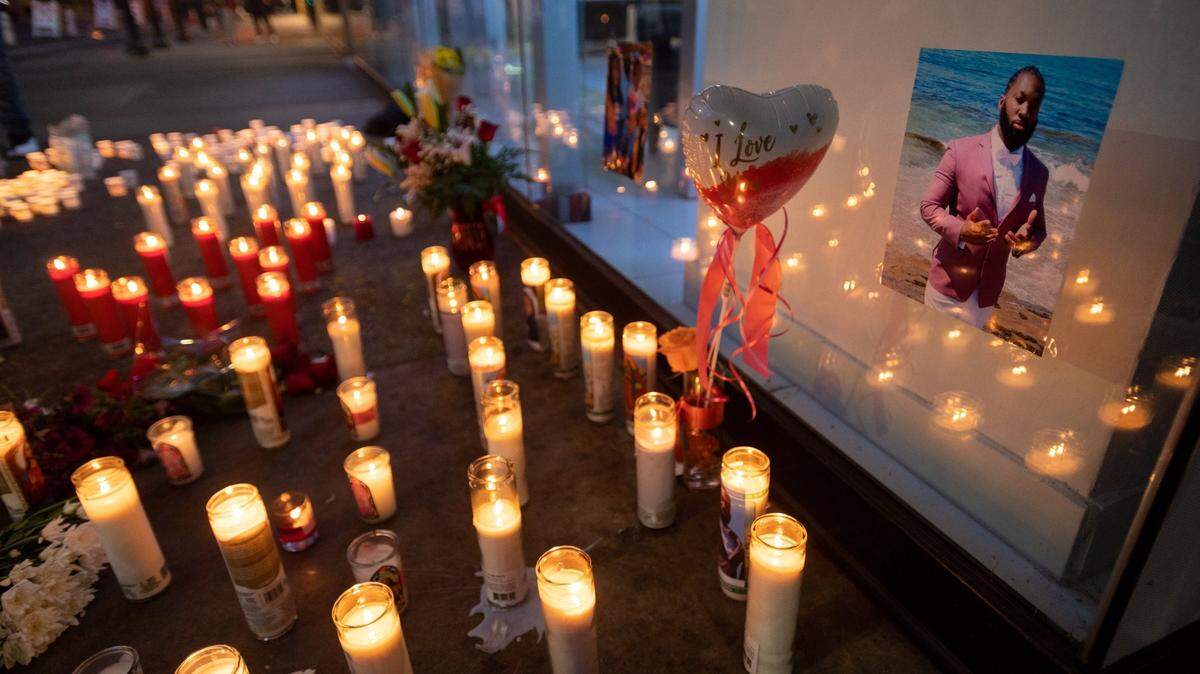
Last weekend, in one of the latest grotesque expressions of American gun violence, a white teenager carried out a meticulously planned racist massacre at a supermarket in a predominantly Black neighborhood of Buffalo, New York, killing 10 and injuring three with an assault rifle before police arrested him. The following day in Southern California, a recently divorced and evicted Chinese American senior citizen apparently motivated by nationalist animosity killed one and wounded five with a handgun in a Taiwanese American church before a pastor and congregants tackled him.
In the mere hours between these shootings, someone opened fire outside downtown Los Angeles’ Grand Central Market, killing a man as patrons and employees of the busy historic food hall ran for cover. The market’s management assured the public that the homicide was an “isolated incident.”
That’s a funny way of describing any shooting in America. Within days of the violence in New York and California, mass shootings erupted at a nail salon in Dallas and a flea market in Houston; after a high school graduation in Arkansas and a basketball game in Milwaukee; and in city parks in Indianapolis and East Palo Alto.
These outbursts of violence invite us to look back at Sacramento’s deadliest mass shooting and marvel at the nonsense that followed. Much of the mind-numbing discourse concerned the particulars of a prison sentence served by one of what police said was at least five gunmen who killed six in the downtown shootout last month.
In the aftermath, The Bee reported that Smiley Allen Martin, one of three men ultimately charged with murder in the shooting, had been released from a 10-year domestic violence and assault sentence after serving less than five years. That provided an opening for Sacramento County District Attorney Anne Marie Schubert, who is running for attorney general, to draw attention to her office’s strenuous objections to Martin’s parole and her lawsuit against state officials’ expansion of good conduct credits to ease pandemic prison crowding.
As it turns out, Martin wasn’t paroled and didn’t benefit from the disputed credit expansion. Rather, he was released due to a combination of his plea deal, time served before sentencing and long-standing, voter-ratified incentives for good behavior and rehabilitative programs. That didn’t stop other politicians from joining Schubert in taking issue with Martin’s release from prison as smoking-gun proof that soft-on-crime policies are turning California’s streets into war zones.
“The best predictor of future behavior is past conduct, and violent people, they’re going to be violent when they get out, and that’s what we’ve seen here,” Sacramento County Sheriff Scott Jones, who is running for Congress, told Fox News. “If we don’t change the way California and the rest of this nation treats criminals … then this is only going to be a continuing trend.”
Assembly Republican Leader James Gallagher similarly noted that Martin is “a violent felon with a long rap sheet who should have been in prison. If he was, this tragedy might have been avoided.”
It seems clear that Martin is not a model citizen and that any number of revisions of the penal code, ballot measures, prosecutorial practice and prison regulations could have kept him in prison a few or even many years longer. The trouble is with the underlying and underexamined premise of all this, which is that we might be able to mass-incarcerate our way out of whatever is making the United States far more dangerous than any other developed country.
The pointlessness of poring over the details of Martin’s particular prison sentence might be measured by the fact that he made up at most 20% of the gunmen in this shooting alone — or that other shootings with multiple victims took place within a few weeks and miles of the scene.
But if that isn’t enough, consider the latest insane variations on the theme of the American mass shooting, which represent a tiny fraction of American shootings overall. The perpetrators, victims, motivations, and locations are as diverse as America itself.
The U.S. Centers for Disease Control and Prevention recently reported that in 2020, amid the onset of the pandemic and record gun sales, firearm homicides surged 35% nationwide to a quarter-century high. Guns are now used in nearly four of five homicides and more than half of suicides in the United States.
The CDC was only recently freed to report such data, which went uncollected for more than 20 years due to a congressional provision prohibiting federal promotion of gun control.
And it is true that cataloging the sheer number and variety of shootings can only lead to the conclusion that the problem is the shooting. Every attempt to turn the discussion to prison sentences, mental illness or domestic terrorism is fundamentally an obfuscation, a misdirection or a distraction.
No country is free of the criminal, the hateful, the sick or the desperate. Few share our enthusiasm for ensuring that they are armed.