
‘Everything is gone.’ Hmong immigrants in Sacramento forced to leave their world behind
This was the day that some in the Hmong community living on Morrison Creek in south Sacramento had kept right on pretending would never come, even after the bulldozers and trucks had lined up to disassemble what the maybe 50 immigrants living off the land here had built.
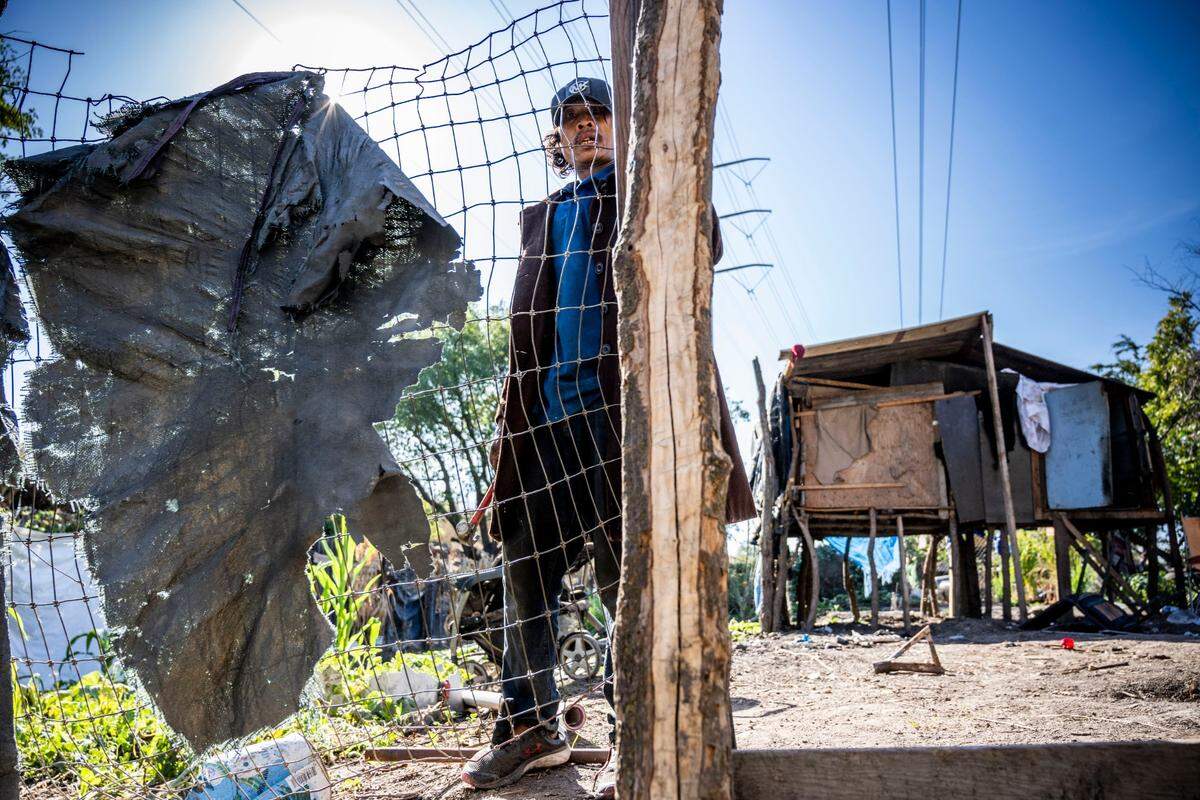
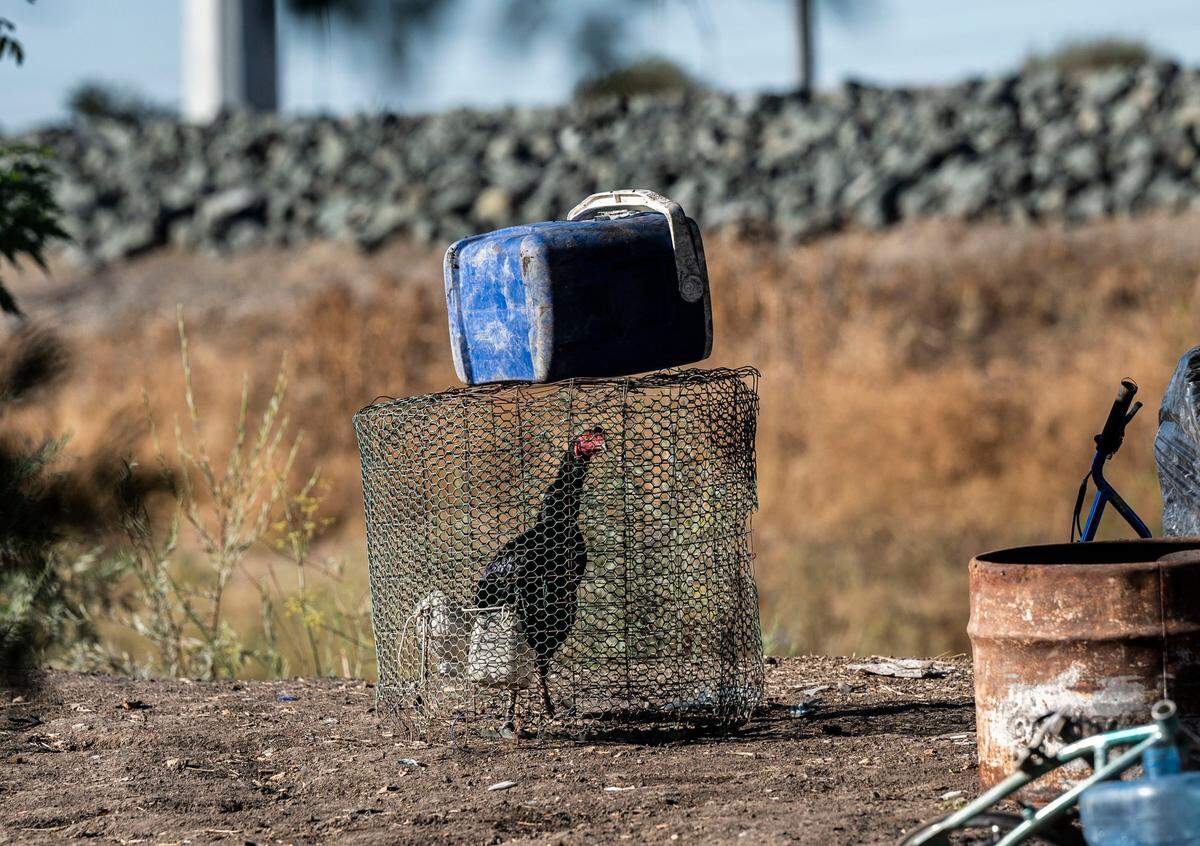
In the days before their unharvested crops, their tents and multi-room wooden and tin houses were knocked down on Thursday, those living here had even pulled out the rock bridge into what had been the almost entirely hidden village where they’d grown lychee, cannabis and summer squash. Where they’d raised chickens and frogs, fished for crawdads, and done their best to recreate the worlds that war had forced their families to leave behind long ago.
They’d pulled that bridge out hoping that might stop the city’s Department of Utilities from starting the absolutely necessary work of rebuilding the levee that keeps this whole area from flooding. It didn’t, of course.
In a way, it would be wrong to say that these people had already been homeless, since this narrow strip of land had been their home for years. And though major repair work did have to happen, especially since those living here had been flattening the levee in an effort to grow more crops, the day they were forced out was still heartbreaking.
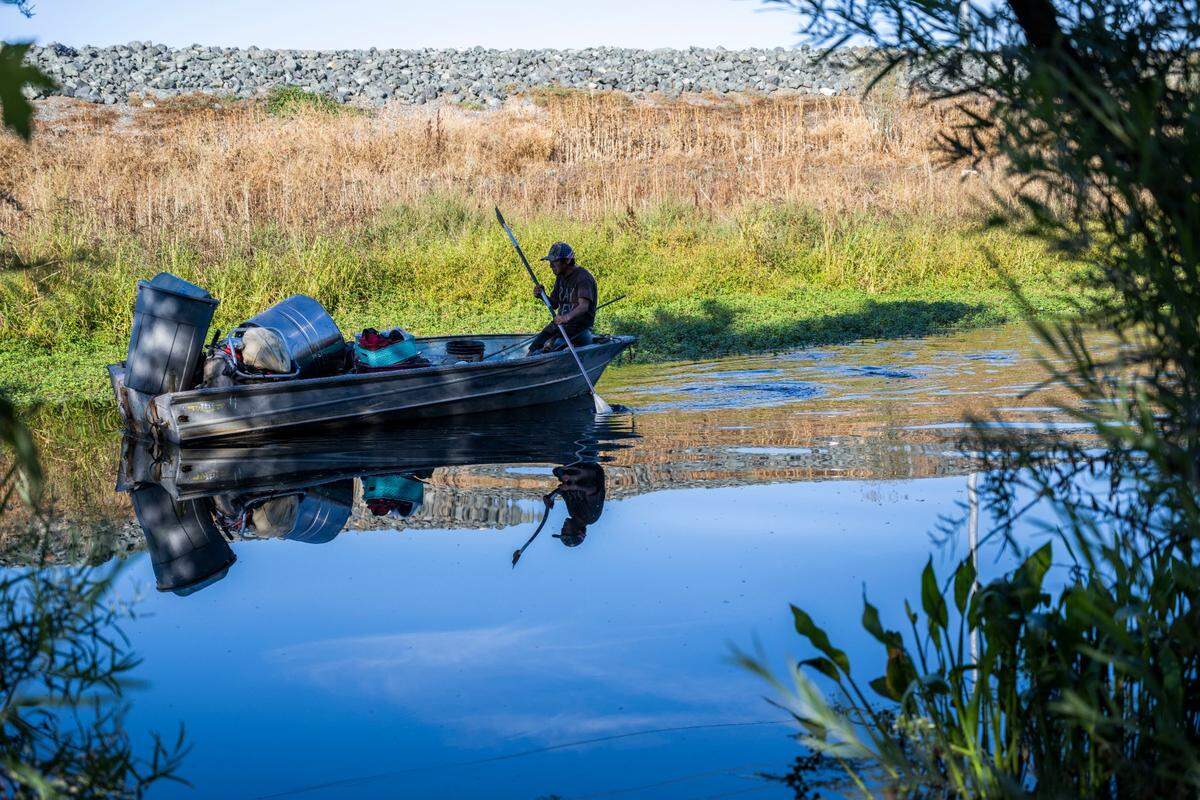
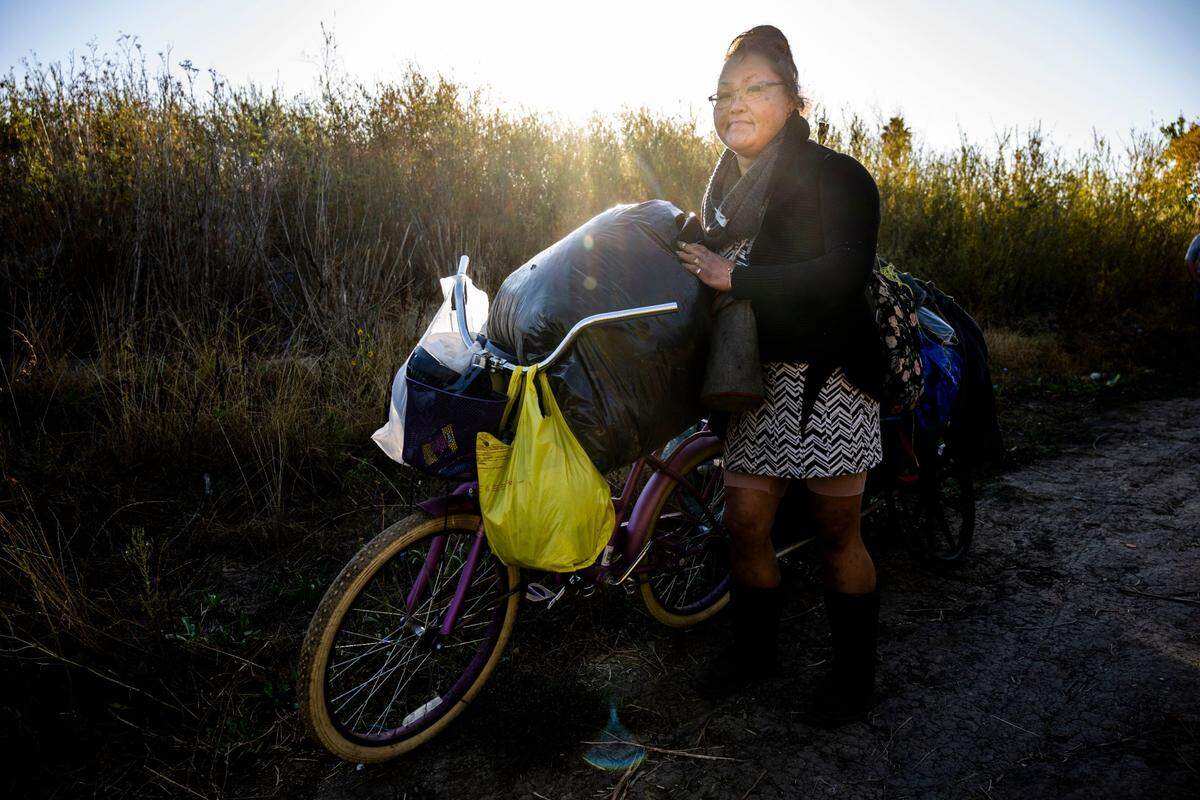
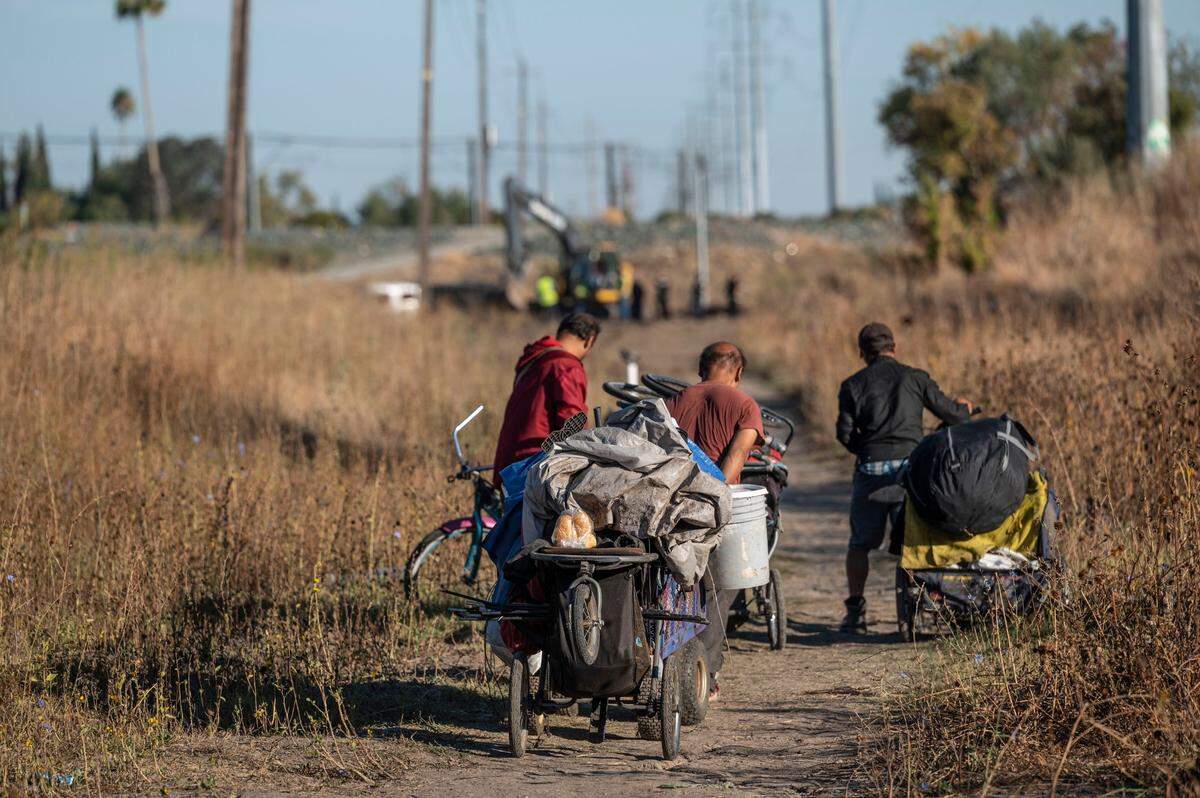
Men and women — there were no children here — pushed handcarts, wagons and bicycles piled high with their belongings along a dirt path to somewhere else. No, one after the other of them said, they didn’t know where they were going. One man rowed his boat away, up the creek, toward another place where repairs are happening soon.
Some dogs and skinny chickens had been left behind, along with one bedridden man, recently released from the hospital, whose daughter came to pick him up not long before the trucks rolled through. Animal control took the other living things to the Front Street Animal Shelter, and a city outreach worker ran to put out a fire that, intentionally or not, had been left burning near some paint and propane cans.
This village wasn’t being wiped off the map, exactly, because it had never been on any map. But those who’d lived here left behind Christmas decorations, a lawn mower, a yellow rowboat and one brand new twin mattress, still wrapped in plastic.
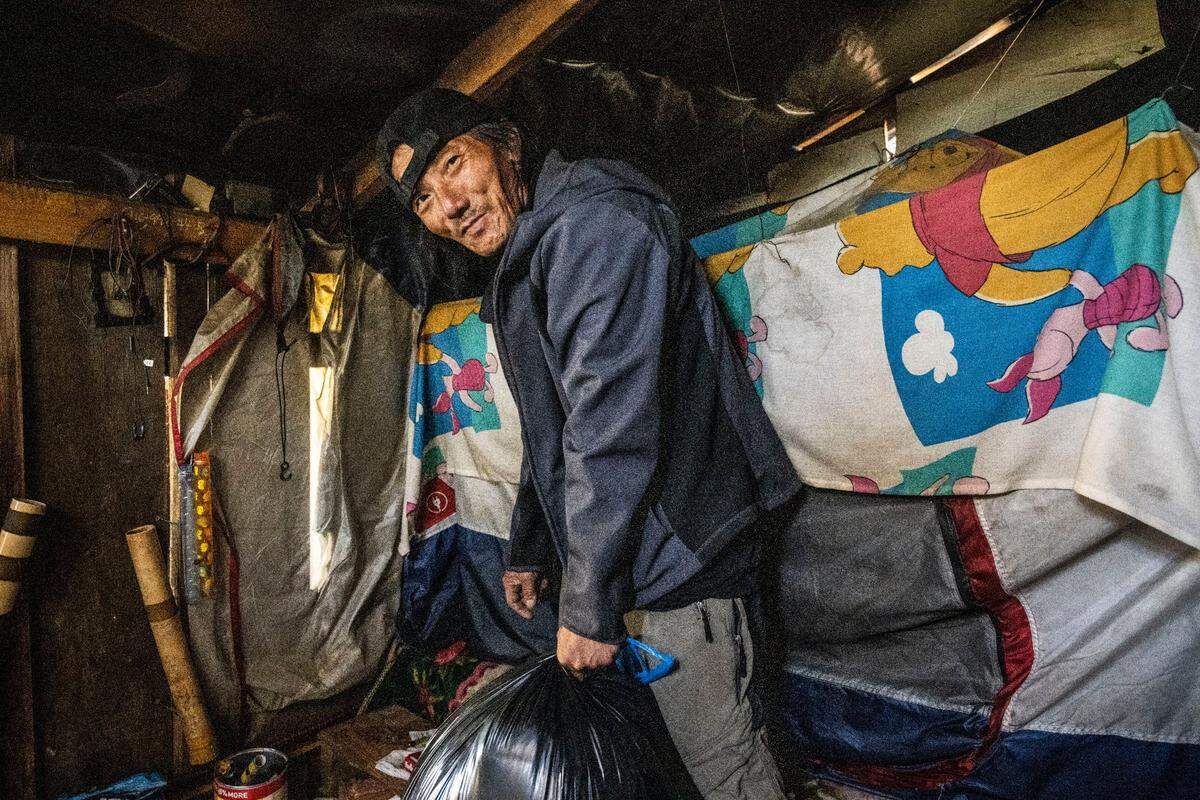
By mid-morning on Thursday, it was already a ghost town, its main dirt path seeded with spilled rice and casino chips.
Soukaxay Siriboutxong was still frantically packing, along with one of his brothers, while a third sibling, Orlando, stayed inside his tent, talking mostly to himself and rolling a cigarette.
“We came here for nothing,” said Soukaxay, whose family had fled the war in Laos almost half a century ago, in 1973. “If they’d take me, I’d go back.” Though most of what his unwell brother Orlando said made no sense, some of it was all too true: “It’s easier to see you than to see me,” he told me.
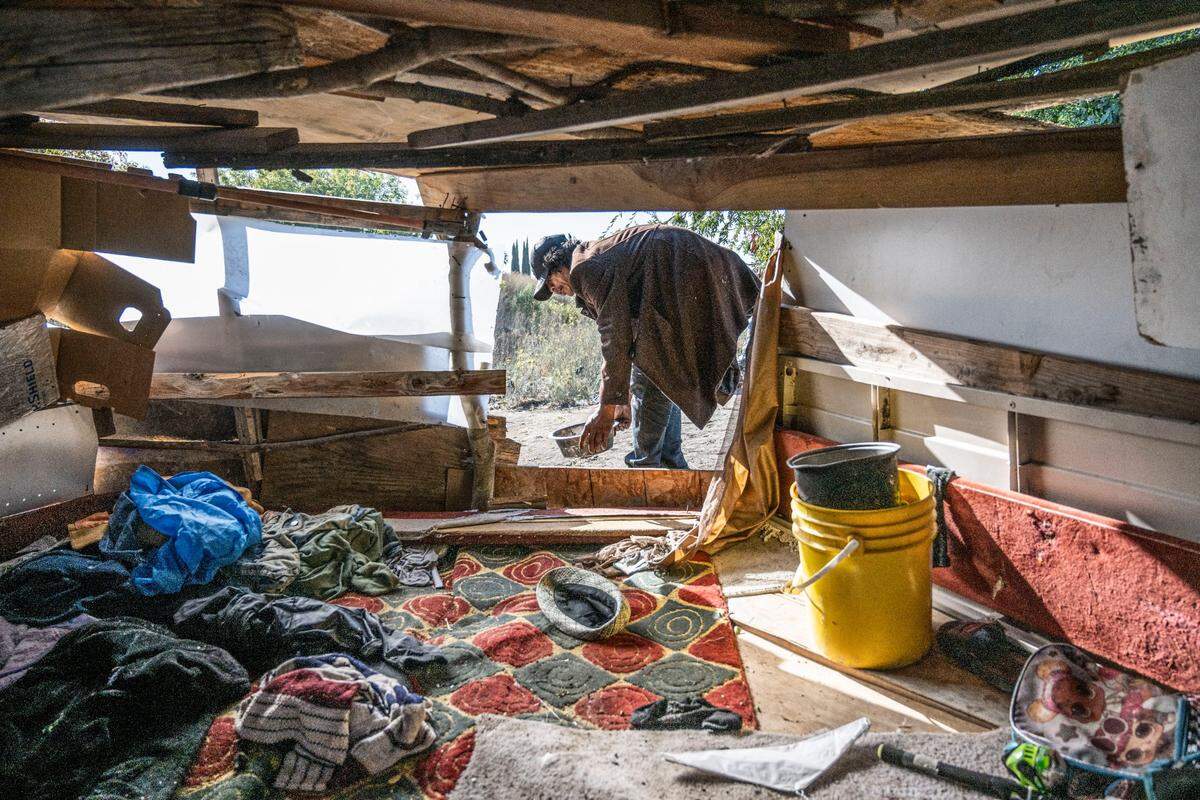
Homeless village suddenly gone
Farm Chao gasped as she watched from the other side of the levee as the row of trees that had shaded her community was ripped out.
“All of a sudden, everything is gone,” she said. “We understand more garbage was getting in” the canal because people were living here, but “we tried to keep the area as clean as possible.” Making a home and not just an encampment had been “hard, hard work,” she said. Work that had taken years. “Before, it was the wild forest.” And now, it’s nothing at all, since even the forest is gone.
The city’s homeless outreach workers, who had tried and failed to find some spot where Farm and the others living here might move all together, weren’t feeling great, either.
Ben Worrall, of the city’s Department of Community Response, said he and his wife had seen the movie ‘Fiddler on the Roof’ again the night before. And “though it’s not a perfect analogy,” he couldn’t help thinking of these immigrants from Southeast Asia, he said, as he’d watched Tevye and his neighbors being pushed out of their homes in the fictional shtetl of Anatevka.
So who are the Cossacks — the Russians the tsar really sent in to drive Jews from their villages in the Pale of Settlement — in this scenario, I asked Ben. “I am,” he said. “I’m the constable,” who sympathized with Tevye and yet delivered the news that he and the others had to leave.
Later, he circled back to make sure that everyone, animals included, had made it out safely. Not one person who’d agreed to wait at the end of the path for a ride to the city’s safe ground for homeless people actually stuck around.
One woman who had moved her stuff into a nearby women’s shelter, the Meadowview Navigation Center, told me she already knew, never having spent a single night there, that she wouldn’t be able to stand it and stay, because her dogs couldn’t sleep in the dorm with her there. A few people had moved to the other side of the levee, where they’ll soon have to move again.
I did not envy either those walking away or those driving the bulldozers in on Thursday. And where those repeat refugees from Morrison Creek are tonight, I don’t know.
This story was originally published October 10, 2022 at 5:30 AM.