
How curious that Sacramento moderates enact landmark police reforms but progressives vote no | Opinion
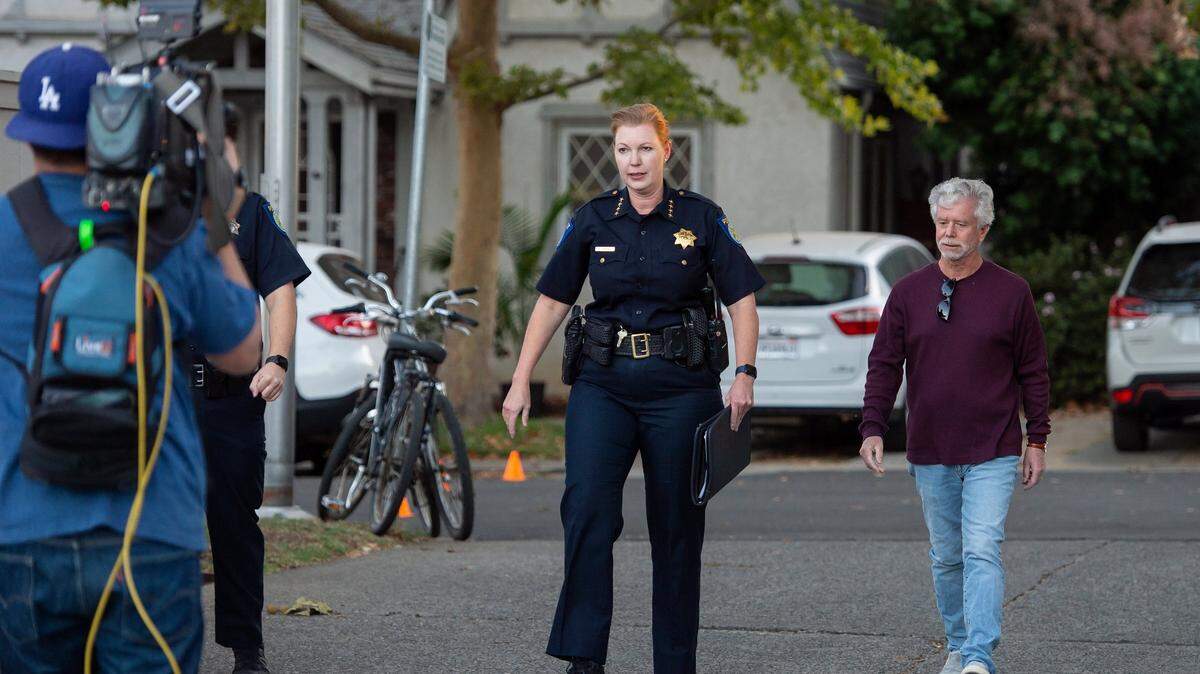
The Sacramento City Council, with a bare majority vote and without the support of its most progressive members, has made a historic investment in improving law enforcement by creating a division to monitor compliance with policing standards and by more than doubling the staff of the city’s independent watchdog.
The structural reforms have the potential to dramatically professionalize the city’s systems to improve police practices. However, it will take much better working relationships among the city staff and with the City Council and engaged residents to make real progress and maintain the investments. This is now Sacramento’s main weakness, and it was on full display at Tuesday night’s meeting.
It was notable and glaring that after years of failures and false starts, substantive reforms of the Sacramento Police Department were set in motion by more moderate and cautious City Council members while an ascending generation of younger progressives somehow couldn’t get to a “yes” vote.
Setting the wheels of progress in motion was the first-ever audit of the Sacramento Police Department in June by the city’s longtime independent monitor, the Office of Public Safety Accountability.
Reviewing two years’ worth of police records, OPSA found, for example, that all 19 police stops for tinted windows involved drivers who happened to be either Black or Latino. OPSA also found instances of officers entering homes without warrants and forcibly seizing cellphones from onlookers during a police stop.
The audit suggested 19 different reforms for the police department, many focused on creating and updating policies to better direct officers on when to stop motorists, how to handle onlookers with cellphones, and when to conduct searches and seizures or handcuff minors.
The process also revealed unresolved tensions between OPSA and the police department. Both Chief Kathy Lester and OPSA’s Dr. LaTesha Watson pledged to work on the next steps.
They produced a first-ever joint recommendation on new reform initiatives, all requiring more manpower.
Lester sought to add four non-sworn police staff to the department to create a new compliance office to internally ensure adherence to policing standards and engage with other governments and OPSA.
“We want to be trusted as our police agency,” Lester told the council. “The community has asked for more data and better transparency. We do want to provide that.”
OPSA, meanwhile, asked to increase its staff from five to 11. “It is a huge number,” Watson said. “My job is to tell you what I need.”
City Attorney Susana Alcala Wood asked for two positions to handle the additional workload resulting from greater compliance and monitoring activities.
In an uncharacteristic moment, City Manager Howard Chan recommended approving these 12 new positions, totaling roughly $2 million a year, without identifying money in the budget for it. He plans to cover the costs with unspent money this fiscal year while building the additions into the budget in the next fiscal year.
“When the audit first came forward, the request was, ‘Let’s really bolster what the resources look like,’” Chan said.
While the wings of city government presented jointly Tuesday night, the internal frictions were on full display. When asked, Watson said that she and Lester have not met since the release of the audit in June. And police department officials don’t routinely attend meetings of the city’s Police Review Commission, comprised of citizens appointed by council members.
“There is a clear break between these two departments (police and OPSA),” Councilman Sean Loloee said. “We have to grow up. We have to act professionally. This back and forth needs to stop.”
Mayor Darrell Steinberg was among the five voting to upgrade the staff for compliance and monitoring. The other four were: Eric Guerra, Rick Jennings, Karina Talamantes and Lisa Kaplan.
“The police department needs real improvement here, and we have a very good police force at the same time,” Steinberg said. “I think these actions will get us to where we need to go.”
The council’s action will increase the staffing of OPSA by 120%, the city attorney’s office by 3% and the police department by less than four-tenths of 1%.
Lester said that her non-sworn professional staff was mostly women, who within the current organizational structure, “hit a ceiling,” she said. The new compliance division “creates a higher career path, which is really important.”
Despite this, progressive council members Katie Valenzuela, Mai Vang and Caity Maple did not support the proposal because of the police augmentation, with Maple abstaining. They were joined by Loloee, who also voted no.
“Every time the police department comes to us and asks for more, we give it to them,” said Valenzuela, who had questions about the request she felt were not answered. “I don’t think it is ideological, but good governance.”
It was telling that the voices on the council who usually call for a different approach to policing could not get to “yes” simply because four new unsworn compliance positions were added to the department. A persistent critic of city police, Valenzuela said her “no” vote was not ideological as Steinberg suggested during Tuesday’s meeting.
We’re not suggesting that council members should not vote their conscience, but the actions taken by the majority of the council were significant and represented an attempt to cut through politics to enact reforms that transcend ideology for the betterment of the city.
Policing is one of the most difficult professions imaginable. Chief Lester has not retreated into a bunker since this OPSA audit but has taken the challenge head-on to move the police department to the next level with new policies and a compliance division that adheres to the industry’s best practices. OPSA, meanwhile, will have the staff to review every citizen complaint of police misconduct and be the comprehensive watchdog the police department has never had. Last year, for example, it only had staff to review 52% of complaints.
A majority of the council, with notable exceptions, has given the staff the tools needed to monitor and advance going forward. If future councils years from now have the fortune to examine the highest level of data on how our officers are engaging the public on the streets, they will have today’s moderate council members to thank.
.
BEHIND THE STORY
MOREWhat are editorials, and who writes them?
Editorials represent the collective opinion of The Sacramento Bee Editorial Board.
They do not reflect the individual opinions of board members or the views of Bee reporters in the news section. Bee reporters do not participate in editorial board deliberations or weigh in on board decisions. The same rules apply to our sister publications, The Modesto Bee, Fresno Bee, Merced Sun-Star and San Luis Obispo Tribune.
In Sacramento, our board includes Bee Executive Editor Colleen McCain Nelson, McClatchy California Opinion Editor Marcos Breton, opinion writers Robin Epley, Tom Philp, LeBron Antonio Hill and op-ed editor Hannah Holzer.
In Fresno and Merced, the board includes Central Valley Executive Editor Don Blount, Senior Editor Christopher Kirkpatrick, Opinion Editor Juan Esparza Loera, and opinion writer Tad Weber.
In Modesto, the board includes Senior Editor Carlos Virgen and in San Luis Obispo, it includes Opinion Editor Stephanie Finucane.
We base our opinions on reporting by our colleagues in the news section, and our own reporting and interviews. Our members attend public meetings, call people and follow-up on story ideas from readers just as news reporters do. Unlike objective reporters, we share our judgments and state clearly what we think should happen based on our knowledge.
Read more by clicking the arrow in the upper right.
Tell us what you think
You may or may not agree with our perspective. We believe disagreement is healthy and necessary for a functioning democracy. If you would like to share your own views on events important to the Sacramento region, you may write a letter to the editor (150 words or less) using this form, or email an op-ed (650-750 words) to opinion@sacbee.com. Due to a high volume of submissions, we are not able to publish everything we receive.
Support The Sacramento Bee
These conversations are important for our community. Keep the conversation going by supporting The Sacramento Bee. Subscribe here.
This story was originally published September 14, 2023 at 5:00 AM.