
How Sacramento County starts to crawl out of a huge budget problem | Opinion
Sacramento County, the largest government in the region, is taking very tentative first steps to avoid financial insolvency that could happen in as little as three years. Health care costs once covered by the Trump and Newsom administrations will become the county’s responsibility and combined with ever-rising jail and labor costs, you have a fiscal bind not seen in this region in years.
The politics will be treacherous. Given how the county’s $9.2 billion budget funds scores of programs, deep budget cutting will be the equivalent of a multidimensional chess game.
The painful cuts will begin as soon as the next fiscal year, with many departments likely forced to operate with less money. And at least for now, a majority of the supervisors don’t want to give up on a county-funded program that provides health care to some undocumented immigrants.
But health advocates should beware because political heavyweights such as Sheriff Jim Cooper and District Attorney Thien Ho, have yet to begin their campaigns to spare law enforcement and public safety from cuts.
“When we hear from the sheriff and the DA, I’m going to be sympathetic when they are going to say that they can’t take their share of cuts in their departments,” said Supervisor Pat Hume. “We need to be serious about fixing this structural deficit sooner than later.”
How Trump and Newsom drive red ink in Sacramento
President Donald Trump’s “Big Beautiful Bill” of 2025, which extended and expanded tax decreases disproportionately for our most fortunate, will be paid for in part by decreasing federally-subsidized Medicaid health care for some Californians by various means via the state program known as Medi-Cal.
When Sacramentans will lose this coverage, that leaves as a last resort the County Medically Indigent Services Program. The county has no choice but to prepare for an influx of local residents axed from Medi-Cal.
“The volume is coming at us,” Timothy Lutz, director of the Sacramento County Department of Health Services, told supervisors.
Gov. Gavin Newsom is doing the county no favors either. While he didn’t call his proposed spending plan the Big Beautiful Budget, his proposed spending plan for the coming fiscal year hurts counties as well.
Newsom is proposing to end Medi-Cal coverage for certain parolees, refugees and immigrants seeking asylum, Lutz told the board. That leaves the county’s last-resort program as their only backup.
The troubled jail: A county money sump
The rising health costs caused by Trump and Newsom, however, pale in comparison to what it takes to provide adequate mental health services to inmates in the county jail.
Accused in federal court of inhumane treatment of inmates, the county entered into a consent decree mandating improvement in mental health and other services. The result is a $137 million increase in related jail costs in the last five years, according to staff, an annual spending hike of about 9%.
Then there are other facility needs all detailed in a county jail master plan, “for which the county has no identified source of funding,” Amanda Thomas, the county’s chief fiscal officer, told supervisors.
The coming fight over a billion dollars
Supervisors have comparatively little flexibility despite such a big budget. Only about a tenth of it, or a billion dollars, Thomas describes as “discretionary.” The county’s biggest enterprise, health care, has largely dedicated state and federal dollars. It is the politically popular stuff, such deputy patrols and public safety, that is disproportionately run with these discretionary dollars, a budget reality that was not lost on supervisors like Hume.
If the board ultimately wishes to spare the sheriff, the district attorney and correctional health of any cuts, the rest of discretionary spending would have to effectively decrease by 11.5%, according to staff And even then, the county would continue toward insolvency, just more slowly, by draining available balances and reserves by $59 million, a little over half the current pace.
This is why the county’s voluntary program to continue providing care to some undocumented residents, which costs an estimated $12 million, will inevitably be pitted against all the other discretionary needs. This budget, as another example, doesn’t include a penny of the county’s discretionary money to maintain the worst network of roads of any jurisdiction in the county.
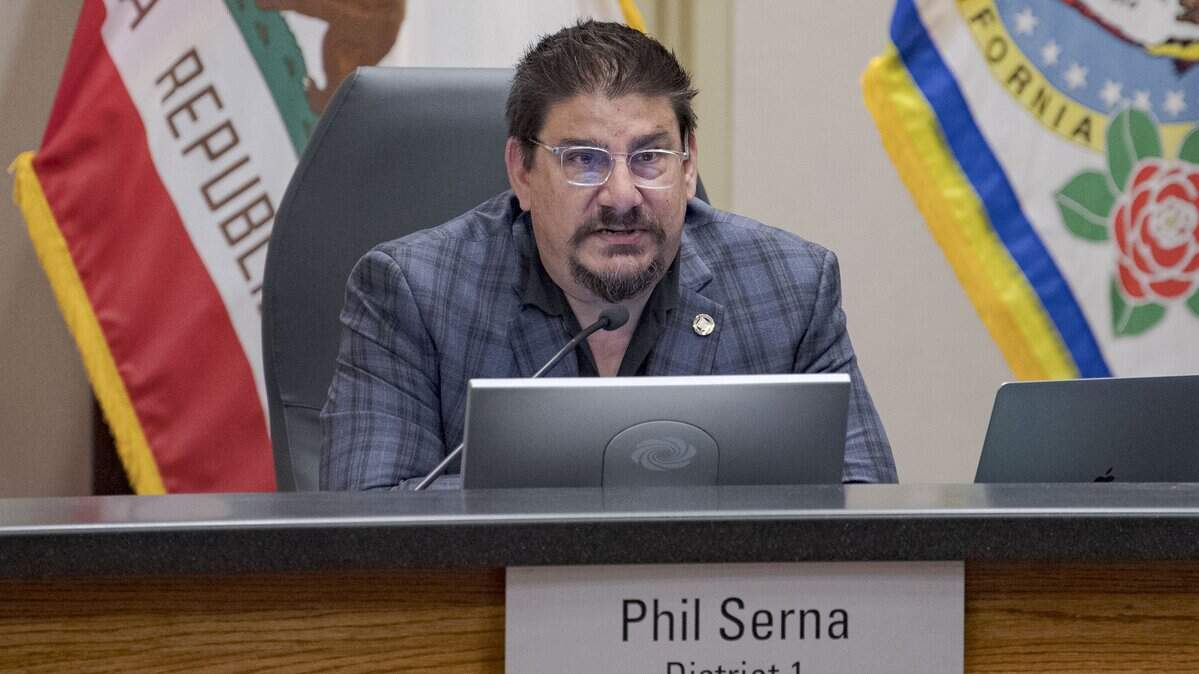
“I don’t want to see it eliminated,” Supervisor Phil Serna said of the Healthy Partners program for undocumented Sacramentans. His sentiments were echoed by supervisors Rich Desmond and Patrick Kennedy.
But Desmond and Serna showed some willingness to continue higher deficit spending than recommended by staff. Hume did not. Many things in the coming months are going to have to give. Give the county credit for starting this process earlier than usual, for spending as usual is simply unsustainable.
“That can’t happen,” said Supervisor Rosario Rodriguez. “It’s dire. It should keep you awake at night.”