
California can avoid a refugee crisis by creating a commission for Slavic-American affairs
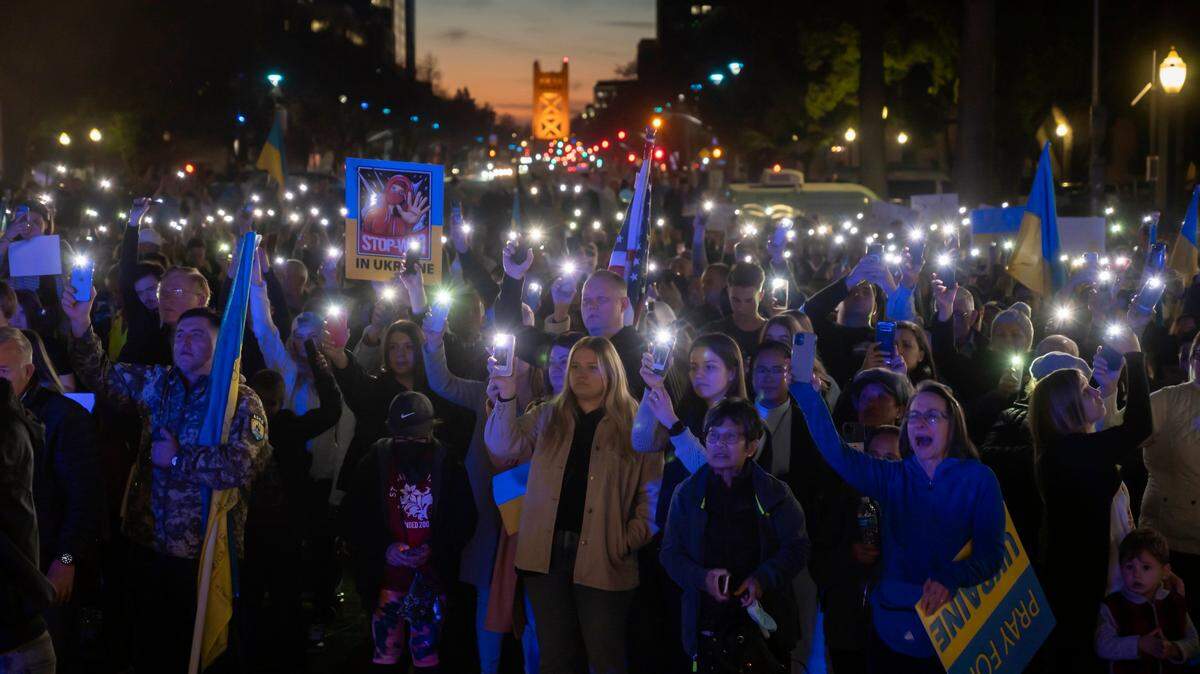
On March 4, Gov. Gavin Newsom signed an executive order proclaiming that “California, which has a long history of welcoming Ukrainian and other refugees, will continue to support resettlement,” and acknowledged that “California is proud to be home to one of the largest Ukrainian populations in the United States.” President Biden expects to welcome as many as 100,000 Ukrainian immigrants through the newly established Uniting for Ukraine program.
Data from the Migration Policy Institute and the Public Policy Institute of California show that California — and especially the Sacramento region — is already home to the nation’s largest concentration of Ukrainian-Americans. The most recent wave of Slavic immigration was during the post-Soviet collapse when Slavic churches attracted émigrés through direct radio broadcasts and the federal Lautenberg Program.
This time, the state is not prepared to receive such a large influx of Ukrainian immigrants. Sacramento is already designated by the state Department of Social Services as a “refugee-impacted county.” Ensuring a new population is well-served and assimilates into their new surroundings is a difficult task even in the best of circumstances.
This new wave of attention has sparked some debate in the Slavic community on whether these are performative gestures, especially given past events. For example, a series of meetings last year between several elected officials with a delegation from the authoritarian government of Belarus raised some eyebrows as to whether our leadership was aware of current intricacies within the Slavic community.
Slavic families are breaking apart over political differences regarding the war in Ukraine. Of course, now people are paying attention to the politics of the post-Soviet bloc. But what about their continued reverberations here in California?
There’s also the all-important question of diversity, equity, and inclusion in a representative democracy: There is no single cohesive forum that represents the community’s voice. The State Advisory Council on Refugee Assistance and Services only had one Slavic member, and their term expired in January.
Highlighting the needs of a quickly-growing and internally diverse population is in the interest of state leaders to ensure social dilemmas are kept to a minimum, and that California continues to be a strong and stable democracy reflecting the makeup and interests of its constituents.
The creation of a California commission on Slavic-American affairs, modeled on the existing Commission on Asian and Pacific Islander American Affairs, could help achieve that. The AAPI Commission was formed during a population increase in AAPI communities, just like what we’re now seeing in the Slavic community.
The commission could advise the government on issues relating to the community and link the community to programs that could benefit the community. More importantly, the commission would act the same way the old California-based Slavic radio broadcasts did: serving as a beacon and central information hub for refugees.
Effective coordination between the state, county refugee coordinators, resettlement agencies, and ethnic community-based organizations is critical to ensure that a “refugee crisis” doesn’t occur.
If formed, the commission should be an adjunct to the state Department of Social Services. The Refugee Programs Bureau has already created a Ukrainian Arrivals Resource page that can be advertised and expanded on. The commission could even serve as the liaison to Ukrainian and other Slavic government officials. President Volodymyr Zelensky himself was in California last year to build on the Ukraine-California Guard partnership.
The governor, state Legislature, and local officials should capitalize on this moment and take a major step toward creating a California that truly serves all people.