A disservice to California students: Weeks after strike, UC threatens lay-offs | Opinion
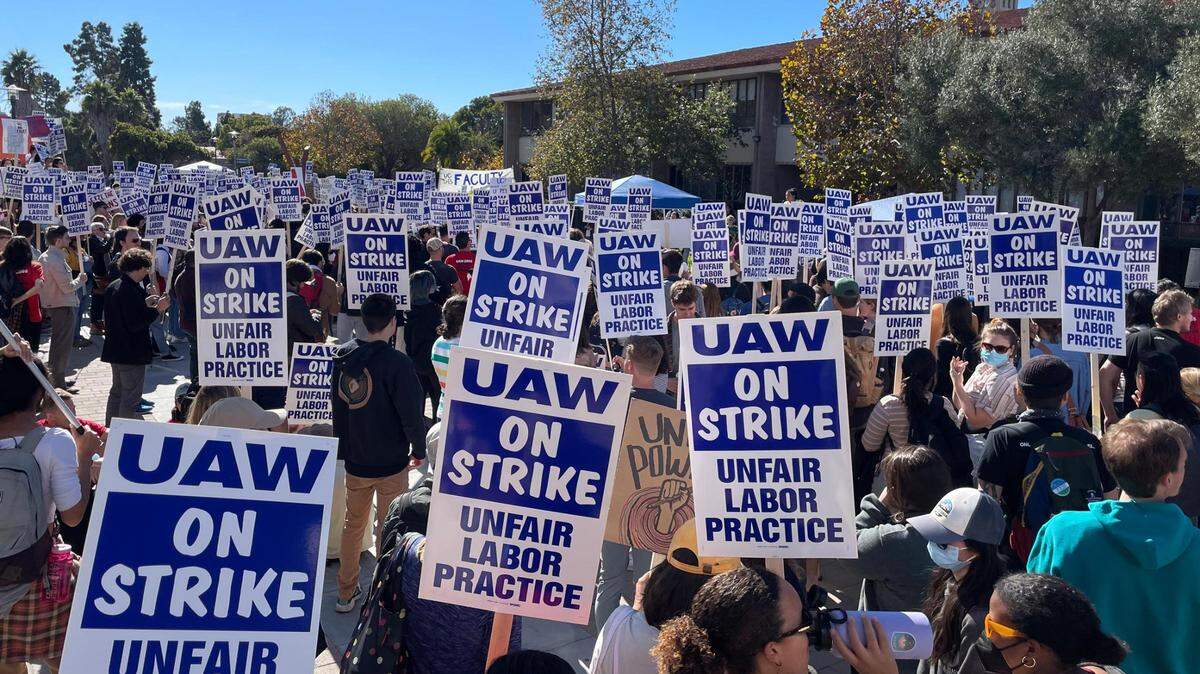
The dust has barely settled since 48,000 University of California workers walked off the job, bringing teaching and research to a standstill across the UC system. But the struggle for accessible and quality higher education continues.
As multiple news outlets reported last week, the UC is considering measures to fund the new agreements that include drastic reductions in the number of academic workers. By threatening layoffs, the UC is peddling the false narrative that it’s only possible to provide quality education at the cost of paying workers poverty wages.
Though no official announcements have been made (which is part of the problem), workers on at least eight campuses have been told of job-cutting measures their departments are considering to deal with the lack of funding from the UC Office of the President to implement the new raises. Though we are sympathetic to the struggles of a public institution with limited revenue sources, it is dishonest to maintain that the largest and most prestigious public university system in the nation cannot afford to pay Teaching Assistants a $34,000 a year minimum salary (up from $23,246) without massive layoffs.
The proposed measures are dramatic. Some classes will reduce the amount of teaching assistants they employ, meaning there will be fewer discussion and lab sections offered to undergraduates. Some departments have been told to expect campus-wide orders to reduce graduate student employment by 20-30%. Workers who did not receive employment guarantees in their admissions offers years ago are now being told they will no longer be eligible for any teaching or research jobs.
Current graduate workers are not the only ones who will be affected: many departments are also considering reducing future admissions. Some are planning to reduce admissions by up to one third, and some are planning to freeze admissions completely next year. These changes are not just coming to the perpetually-underfunded arts and humanities programs, but also to prestigious STEM programs for which undergraduate demand already exceeds capacity, and on which the state depends to educate its high-tech workforce.
As a teaching assistant myself, I know exactly how damaging these changes will be. I have taught four different classes, leading discussion sections and writing tutorials for a total of 14 different groups of undergraduates. We are the first point of contact when students have questions about course content or need help with their writing. The whole premise of discussion sections is that students need time outside of giant lecture halls to talk freely with each other and receive personalized attention from their instructors. As students ourselves, teaching assistants can make difficult content relevant to undergraduates in a way professors often cannot.
Increasing class sizes or eliminating discussion sections altogether — both of which are under consideration — will have catastrophic effects on learning.
The UC is a world-famous engine of economic opportunity, where California’s middle- and working-class families can send their children for a high-quality education. It’s simply not possible to provide education of the quality our state deserves and expects while eliminating up to 30% of teaching assistant positions, especially while the UC also plans to increase undergraduate enrollment by 8,000 by 2027.
Job cuts will damage research, too. Smaller research groups mean less research can be conducted. Critical inquiry into pressing problems — like curing diseases, recycling rare materials like lithium and mitigating climate change — will be slowed or paused. Smaller research groups also means fewer opportunities for students to pursue research, and thus fewer pathways to well-paying research careers.
Put simply, the UC must do better than this.
At a time when the UC is receiving record funding from the state, it’s unacceptable for UC leaders to be cutting jobs that are critical to the institution’s core functions. These proposed job cuts are all the more scandalous when viewed in the context of the UC’s pledge to Gov. Gavin Newsom to expand graduate enrollment in exchange for hundreds of millions of dollars in additional funds from the state — funding that, as of the governor’s January budget proposal, is still being allocated.
Now is the time for UC President Michael V. Drake to show true leadership by stepping up with a plan that uses the UC’s vast resources in a way that both respects the essential agreements the UC has made with its academic workforce, and keeps that workforce employed doing what it does best: doing innovative research and educating the next generation of California’s students, researchers and scholars.