Sacramento’s ‘No. 1 problem’: American River homeless camps test Democrats’ compassion
Cyclists zipped past egrets and oak trees down the American River Parkway on a recent Friday morning. The frigid river rippled alongside them, its Sierra Nevada snowmelt slowly warming under 100-degree heat, just in time for hordes of Independence Day boaters.
They also passed tents, tarps and trash surrounding the worst of Sacramento’s homelessness crisis, repercussions of which are felt throughout the region. It had been just two days since 22 acres of parkway brush burned in a fire that investigators believe started at a nearby homeless encampment.
Months earlier, law enforcement and city officials tried to convince agitated Rancho Cordova residents that the parkway was safe following the brutal sexual assault and slaying of 20-year-old Emma Roark in January, allegedly at the hands of a homeless man living along the river.
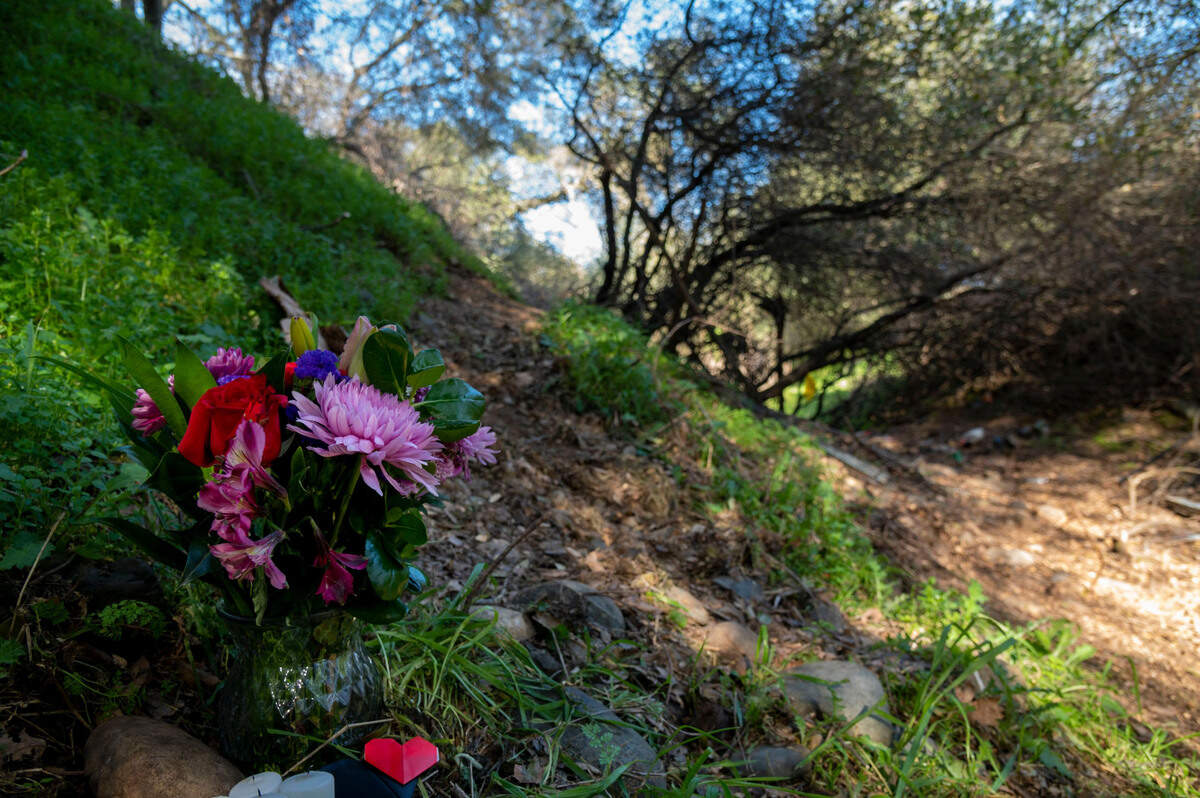
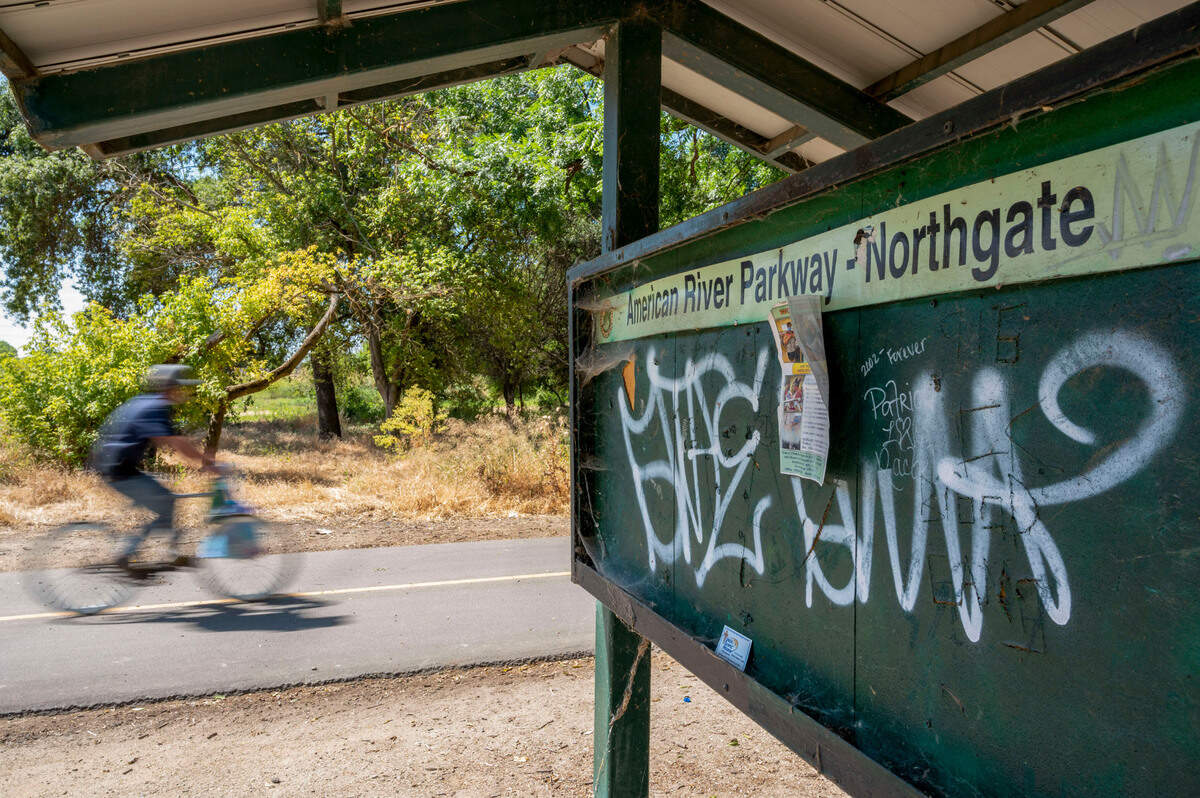
The American River Parkway is often referred to as the Sacramento region’s natural crown jewel, but lately many visitors to the 23-mile strip are having trouble seeing past its homeless encampments.
Now, responding to constituents, the region’s Democratic political establishment is getting behind dramatic efforts to reduce the parkway’s homeless population, including uprooting campers against their will. The emerging efforts signal a change for the parkway that could lead both to more shelter for homeless residents.
Homelessness “is the No. 1 problem I hear from people,” said Assemblyman Kevin McCarty, D-Sacramento. “I go to community meetings and town halls and they want to do something.”
In recent months, a nonprofit foundation volunteered to take over management of the parkway, partly in the interest of clearing homeless encampments. County supervisors didn’t reject the proposal instantly, and one said he supported the group’s intent.
Democratic lawmakers advanced a bill through the state Assembly this spring that would empower county rangers to sweep campers off the parkway, a practice they’ve curtailed since a 2018 federal court ruling restricted local agencies’ ability to move encampments.
And the Sacramento County Board of Supervisors put forward its own plan to clear camps while setting aside millions of dollars to build a parkway-adjacent shelter.
The more aggressive approach by Democratic lawmakers and supervisors mirrors a trend seen in liberal cities across the United States, from Washington state to Washington D.C. As more and more people have become homeless, left-leaning politicians and their constituents have reached a breaking point.
Sacramento County Sheriff-elect and current Assemblyman Jim Cooper, D-Elk Grove, grew up accessing the parkway from his childhood home in Rancho Cordova. Now he’s one of the people tasked with making it a place area residents will cherish, not fear.
“The problem has grown so immense that some action has to be taken. And it’s tough, because as a Democrat you’ve got other folks pushing back and it’s like, it’s just common sense,” Cooper said. “If you ask the average person, it doesn’t matter which party you are, they want something done. They’re tired of it. The status quo is not OK.”
A growing population
City of Sacramento officials first conceived of the American River Parkway in 1915, but it wasn’t established by the Sacramento County Parks Department until 1962, when riverside development began to increase following the completion of Folsom Dam.
The parkway’s natural amenities haven’t changed much since the 2000s, when a 240-page county plan said “(s)ignificant efforts are underway to address illegal camping in the (p)arkway.”
But the number of people seeking shelter along the river has increased drastically.
Nearly twice as many people are experiencing homelessness in Sacramento County today as three years ago, according to the latest point in time count. That count showed 9,200 people are homeless in Sacramento County on any given night, and estimated about 600 people are on the parkway.
The American River Parkway Foundation believes the count underestimated the number of people in parkway encampments. Its leaders believe the number is greater than 2,000, director Dianna Poggetto said.
Many of them live at the parkway’s lower end near downtown Sacramento, but encampments can be seen in Rancho Cordova and Carmichael as well.
Some of those people are drawn to the parkway for its shady trees and natural seclusion, which Sacramento Regional Coalition to End Homelessness executive director Bob Erlenbusch said helps them avoid harassment from law enforcement.
For many others, it’s a last resort.
John “Taz” Parks usually camps off Interstate 5’s Richards Boulevard exit, near Discovery Park. He called the parkway a “floating graveyard” where “terrible things have happened.”
The seclusion offers less community protection for crimes such as sexual assault, a significant threat for women living along the parkway. And while Erlenbusch said people live along the parkway to avoid police, arrests have risen along with homelessness in recent years.
Sacramento County Park Rangers made 215 arrests along the American River Parkway from January-May 2017, according to county statistics.
This year, they made more than 550, including 98 on felony charges such as armed robberies, domestic violence and sex offender registry violations.
Fires are a major concern as well. Approximately 15% of the parkway’s 4,800 acres burned last year, according to the American River Parkway Foundation, in a record 156 unique burns.
.JPG "SAC_DMK_8191 (2).JPG")
When Poggetto began working for the American River Parkway Foundation in 2008, nonprofit staff and volunteers picked up debris around homeless encampments near the Highway 160/Northgate Boulevard intersection once a year.
Poggetto now oversees year-round cleanup events that net 60 tons of trash annually. Discarded hypodermic needles fill up hazardous waste boxes not only in the parkway’s lower end, but up in eastern Sacramento County as well, she said.
“We would do one major cleanup there a year and be able to remove the camps. Now, you walk out there and see 50 camps within your eyesight,” Poggetto said. “The number of the camps is growing, the locations of the camps (are) growing.”
An uneasy relationship between Rancho Cordova residents and those living along the parkway grew more tense after Roark was murdered in late January. Mikilo Rawls, a 37-year-old unhoused man, was arrested on murder, rape, kidnapping and sodomy charges that could ultimately lead to prosecutors seeking the death penalty.

At a meeting in March, about a month after Rawls’ arrest, park rangers and Rancho Cordova city employees tried to assuage about 400 residents’ parkway safety concerns, with mixed results.
A once-idyllic refuge has become untenable, Cooper said.
“I rode that bike trail in the summertime, all the time. We lived out there. That was our playground. And to see it be degraded so badly where folks fear it ... we can’t have that,” Cooper said. “I’m not criminalizing homelessness, but we’ve got to get those people out of there and somewhere else.”
WHAT TO DO?
Cooper has pledged upon taking office as sheriff to increase patrols around the parkway and into homeless camps, aiming to enforce drug laws and work with mental health service providers. He’s not the only one looking to make big changes there.
The Sacramento County Board of Supervisors could vote as early as July on an ordinance banning camping in fire and flood zones as well as near “critical infrastructure” such as levees, hospitals, courthouses, police and fire stations and jails. The board has also set aside $2.5 million to build a parkway-adjacent shelter and $5 million as a reserve for addressing homelessness along the parkway.
Separately, Sacramento city voters in November will see a ballot measure would ban public camping throughout Sacramento city limits if the person rejects the offer of a shelter bed. That proposal, however, would also require the city to build enough shelters or designate enough Safe Ground parking sites to house 60% of Sacramento’s homeless population within three months of passage.
After years of worsening homelessness in liberal cities around the United States, elected officials have become increasingly aggressive. Portland, Los Angeles, Seattle and Washington D.C. all banned camping or cleared camps in public areas over the last year.
California’s top Democrat, Gov. Gavin Newsom, is taking a tougher line, too. Newsom has proposed allowing judges to force people with serious mental illnesses or addictions into treatment, with supportive housing and additional resources for 1-2 years. Called the CARE Court, it passed unanimously out of the Senate last month and headed to the Assembly Committee on Appropriations on Tuesday.
Sacramento-area Democratic Assembly members have also introduced Assembly Bill 2633, which would allow Sacramento County supervisors to outlaw camping along the American River Parkway for a variety of reasons including wildfire risks, wildlife habitat preservation and public health and safety concerns.
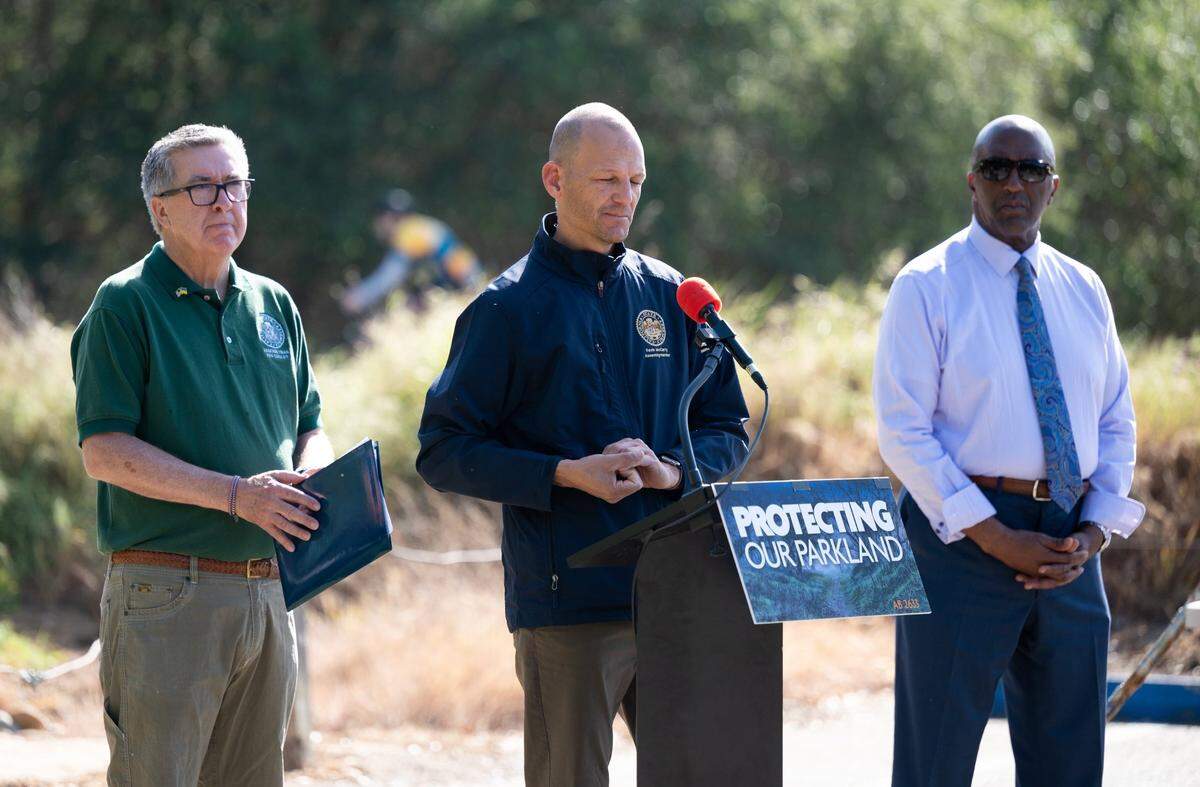
Assemblymembers McCarty and Ken Cooley, D-Rancho Cordova, co-authored the bill. McCarty said he and Cooley have been working on issues related to the American River Parkway for about five years and have long tried to direct attention and resources to the area.
“It became clear to us that the homeless camps there are creating a lot of issues,” McCarty said. “Environmental issues, public access issues, as well as public safety issues.”
The bill passed out of the Assembly in May by a 67-2 vote. With its ultimate future uncertain, though, the Board of Supervisors recently requested county staff draft a similar ordinance banning camping along the American River Parkway.
Clearing camps may be easier said than done because of a court case now familiar to anyone across the U.S. who follows homelessness: Martin v. Boise. The landmark 2018 U.S. Court of Appeals Decision determined that government agencies couldn’t clear homeless camps without having available shelter beds for their occupants.
Sacramento County currently has about 3,400 shelter beds, enough for about 37% of its homeless population. Even if AB 2633 passes, enforcement could put the county park’s department and sheriff’s office in legal jeopardy due to Martin v. Boise.
“If that bill passed and you go in and start moving people — to where? We’re just moving people around because of our failures to create meaningful homelessness programs, shelters, safe parking, tiny home villages, all the rest of it,” Erlenbusch said.
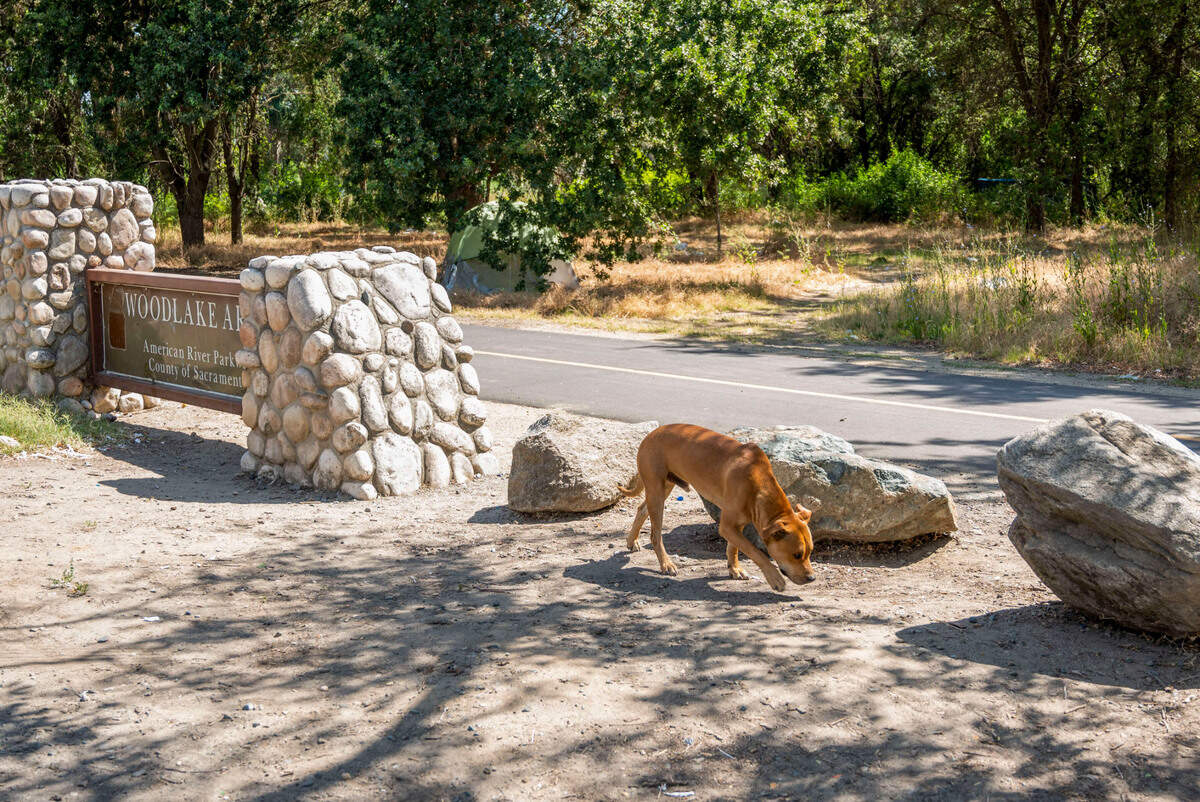
McCarty said he’s been working with Cooley and Sacramento County Supervisor Rich Desmond to secure additional state budget funds that would help the county open up sanctioned camp sites near the American River Parkway that would provide alternative places for people to stay.
“Let’s have locations where people can be assigned space in places to camp,” McCarty said. “Just not on the parkway, where there are no restroom facilities, no trash facilities, no water. It’s not good for anybody. Not good for the people who are living down there, not good for the people who are trying to utilize Parkway.”
The Sacramento Bee’s Sam Stanton and Kevin V. Nguyen contributed to this story.
This story was originally published July 3, 2022 at 5:00 AM with the headline "Sacramento’s ‘No. 1 problem’: American River homeless camps test Democrats’ compassion."